

 £49999Unit price Translation missing: en.products.product.price.unit_price_separatorUnavailableMade to Order
 Free Delivery

 £39999Unit price Translation missing: en.products.product.price.unit_price_separatorUnavailableMade to OrderFree Delivery

 £29999Unit price Translation missing: en.products.product.price.unit_price_separatorUnavailableMade to OrderFree Delivery

 Save 24%£4699£6180Unit price Translation missing: en.products.product.price.unit_price_separatorUnavailable
Tarifa Adjustable LED Wall Reading Light with Switch - Antique Brass
58 In Stock
 Save 25%£21099£28200Unit price Translation missing: en.products.product.price.unit_price_separatorUnavailable9 In StockFree UK Delivery

 Save 21%£11899£15000Unit price Translation missing: en.products.product.price.unit_price_separatorUnavailable3 In StockFree UK Delivery

 Save 21%£5799£7380Unit price Translation missing: en.products.product.price.unit_price_separatorUnavailable
Fernhaven Vintage Curved Arm Tapered Wall Light - Brass White Marble
52 In Stock
 Save 22%£5999£7644Unit price Translation missing: en.products.product.price.unit_price_separatorUnavailable52 In Stock

 Save 22%£7099£9054Unit price Translation missing: en.products.product.price.unit_price_separatorUnavailable75 In Stock
 Save 16%£15099£18000Unit price Translation missing: en.products.product.price.unit_price_separatorUnavailable
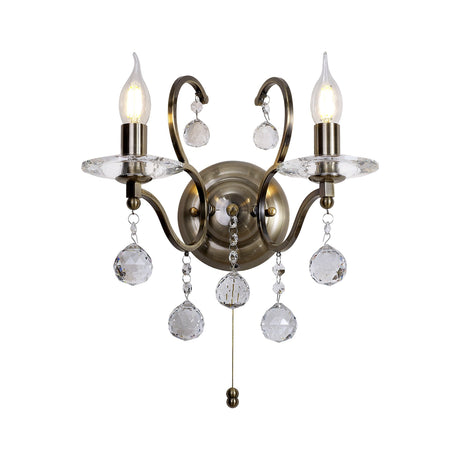
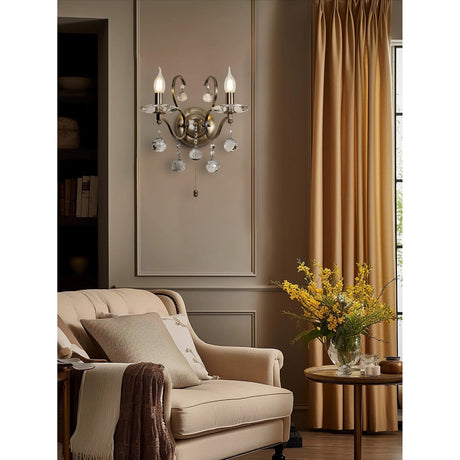
Zinta 2 Light Crystal Wall Light with Switch - Antique Brass
12 In StockFree UK Delivery
 Save 23%£4599£6000Unit price Translation missing: en.products.product.price.unit_price_separatorUnavailable
Willow 1 Light Crystal Wall Light - Antique Brass (Without Shade)
18 In Stock
 Save 25%£9499£12600Unit price Translation missing: en.products.product.price.unit_price_separatorUnavailable
Olivia 2 Light Crystal Wall Light With Switch - Antique Brass Black Shade
16 In Stock
 Save 24%£7499£9900Unit price Translation missing: en.products.product.price.unit_price_separatorUnavailable6 In Stock

 Save 24%£8999£11880Unit price Translation missing: en.products.product.price.unit_price_separatorUnavailable34 In Stock

 Save 24%£8199£10800Unit price Translation missing: en.products.product.price.unit_price_separatorUnavailable26 In Stock

 Save 17%£15999£19200Unit price Translation missing: en.products.product.price.unit_price_separatorUnavailable27 In StockFree UK Delivery

 Save 20%£25899£32400Unit price Translation missing: en.products.product.price.unit_price_separatorUnavailable7 In StockFree UK Delivery

 Save 21%£32199£40800Unit price Translation missing: en.products.product.price.unit_price_separatorUnavailable9 In StockFree UK Delivery
 Save 16%£15099£18000Unit price Translation missing: en.products.product.price.unit_price_separatorUnavailable
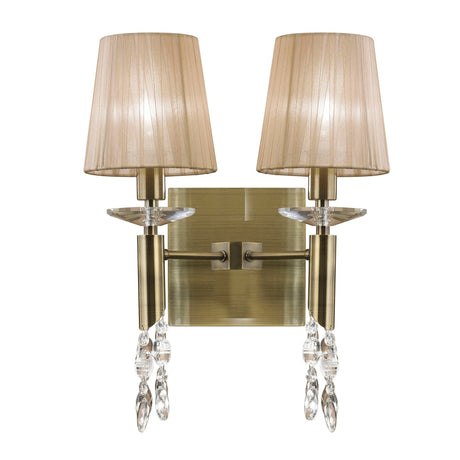
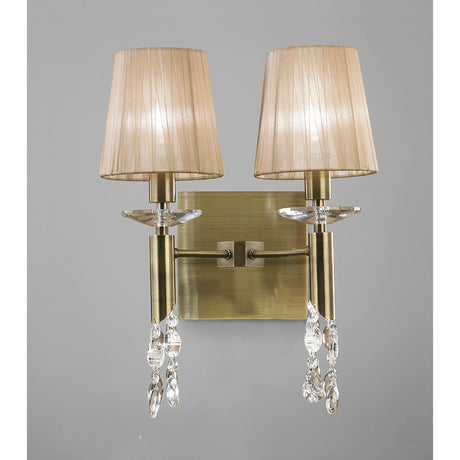
Tiffany 2 Light Crystal Wall Light - Antique Brass with Bronze Shades
4 In StockFree UK Delivery
 Save 25%£9399£12480Unit price Translation missing: en.products.product.price.unit_price_separatorUnavailable
Siena 2 Light Crystal Wall Light with Switch - Polished Brass with Amber Shades
41 In Stock
 Save 24%£4699£6180Unit price Translation missing: en.products.product.price.unit_price_separatorUnavailable117 In Stock

 Save 24%£6099£8040Unit price Translation missing: en.products.product.price.unit_price_separatorUnavailable56 In Stock

 Save 25%£6399£8520Unit price Translation missing: en.products.product.price.unit_price_separatorUnavailable21 In Stock

 Save 23%£4599£6000Unit price Translation missing: en.products.product.price.unit_price_separatorUnavailable31 In Stock
 Save 25%£7899£10500Unit price Translation missing: en.products.product.price.unit_price_separatorUnavailable7 In Stock

 Save 24%£8199£10800Unit price Translation missing: en.products.product.price.unit_price_separatorUnavailable
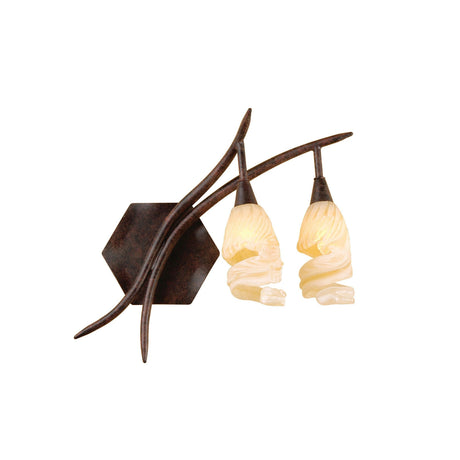
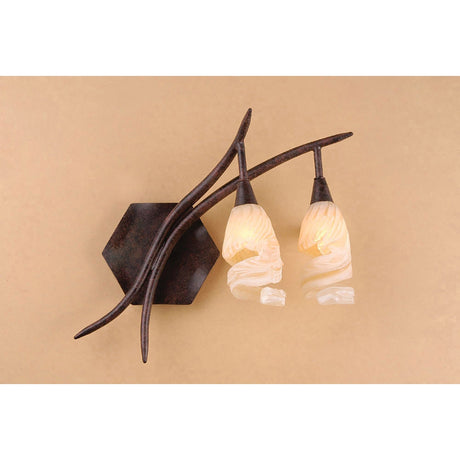
Gaudi Right 2 Light Wall Light with Switch - Brown Oxide & Amber Glass
15 In Stock
 Save 24%£8199£10800Unit price Translation missing: en.products.product.price.unit_price_separatorUnavailable
Gaudi Left 2 Light Wall Light with Switch - Brown Oxide Amber Glass
7 In Stock
 Save 25%£6799£9060Unit price Translation missing: en.products.product.price.unit_price_separatorUnavailable
Florida 2 Light Wall Light with Switch - Brown & Black Oxide
30 In Stock
 Save 25%£8099£10800Unit price Translation missing: en.products.product.price.unit_price_separatorUnavailable5 In Stock

 Save 19%£4399£5400Unit price Translation missing: en.products.product.price.unit_price_separatorUnavailable
Winslow Single Light Wall Light Seeded Glass - Natural Brass
15 In Stock
 Save 21%£11899£15000Unit price Translation missing: en.products.product.price.unit_price_separatorUnavailable
Clarke 1 Light Wall Light With Pull Switch - Warm Brass & Black Metal Shade
29 In StockFree UK Delivery
 Save 25%£15699£21000Unit price Translation missing: en.products.product.price.unit_price_separatorUnavailable
Arti Adjustable Wall Light Clear Glass Shade - Heritage Brass
5 In StockFree UK Delivery
 Save 8%£11999£12999Unit price Translation missing: en.products.product.price.unit_price_separatorUnavailable19 In StockFree UK Delivery

 £13599Unit price Translation missing: en.products.product.price.unit_price_separatorUnavailable278 In StockFree UK Delivery
 £13599Unit price Translation missing: en.products.product.price.unit_price_separatorUnavailable1790 In StockFree UK Delivery

 £16399Unit price Translation missing: en.products.product.price.unit_price_separatorUnavailable120 In StockFree UK Delivery
 £9899Unit price Translation missing: en.products.product.price.unit_price_separatorUnavailable135 In Stock
 £5799Unit price Translation missing: en.products.product.price.unit_price_separatorUnavailable429 In Stock
 £5799Unit price Translation missing: en.products.product.price.unit_price_separatorUnavailable420 In Stock

 £17799Unit price Translation missing: en.products.product.price.unit_price_separatorUnavailable87 In StockFree UK Delivery
 £10799Unit price Translation missing: en.products.product.price.unit_price_separatorUnavailable15 In StockFree UK Delivery
 £28199Unit price Translation missing: en.products.product.price.unit_price_separatorUnavailable42 In StockFree UK Delivery
 £12099Unit price Translation missing: en.products.product.price.unit_price_separatorUnavailable91 In StockFree UK Delivery
 £7599Unit price Translation missing: en.products.product.price.unit_price_separatorUnavailable157 In Stock
 £19699Unit price Translation missing: en.products.product.price.unit_price_separatorUnavailable80 In StockFree UK Delivery

 £15199Unit price Translation missing: en.products.product.price.unit_price_separatorUnavailable117 In StockFree UK Delivery

 £13499Unit price Translation missing: en.products.product.price.unit_price_separatorUnavailable163 In StockFree UK Delivery
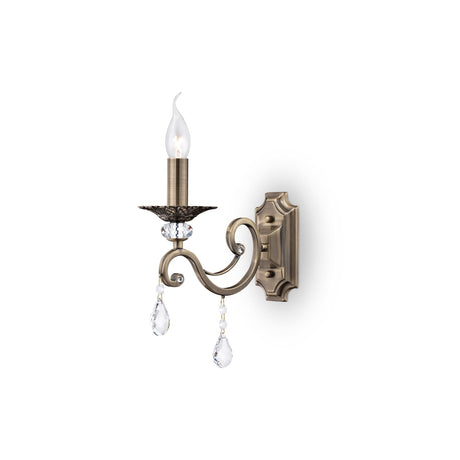
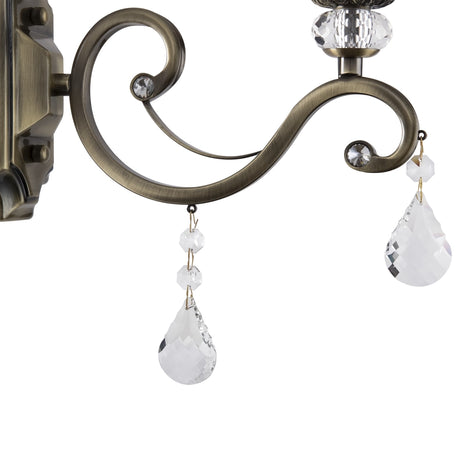 £6699Unit price Translation missing: en.products.product.price.unit_price_separatorUnavailable
Grace 1 Light Wall Light - Antique Bronze with Crystal Droplets
25 In Stock


Which era of vintage wall light suits your home?
Vintage spans several periods, so decide which you are after before you look at finishes. Many of our vintage wall lights lean traditional, with the feel of a Victorian or Edwardian room, and many lean industrial, with the plainer look of a factory or workshop. There are also some art deco designs, some mid-century ones and a few rustic ones.
In an older house, match the era to the building loosely: a terrace with high ceilings and cornicing takes brass and glass easily, and an interwar semi suits art deco. Where the house has no strong period, many of these sit just as well in a modern scheme.
How much bulb should a vintage wall light show?
A wall light sits near eye level, so you look at the bulb, or whatever covers it, far more than you would with a ceiling light. Many of our vintage wall lights have a clear finish, which leaves the bulb on show as part of the design; that works where you pass by or sit at a distance, as in a hall. Some use frosted or ribbed glass to blur the bulb into a glow, and many have fabric shades for the softest light.
Beside a sofa or a bed, where you face the fitting for hours, choose a shade or obscured glass. Crystal, which we stock in many designs, needs a clear bulb to sparkle, so it is best on a wall you look at from across the room.
Bulb caps and filament shapes for vintage wall lights
Most of our vintage wall lights take an E27 bulb and many take the smaller E14, and the cap decides which filament bulbs you can use. E27 covers the large globes, teardrops and tubes that suit clear glass; E14 filament bulbs tend to be candles and small globes, which sit well in a narrow shade. Some take a G9 capsule, compact enough to tuck inside a slim fitting, and a few have a built-in LED, so there is no bulb to choose.
Decorative filament bulbs often run large, so check the bulb's length against the depth of the shade and stay within the fitting's maximum wattage. For the period glow choose warm white or amber; cool white in brass and glass looks clinical.
Matching vintage wall lights to the metal already in the room
Brass is the finish you will see most often here, and many come in silver, black, gold, white or bronze, with a few in nickel. In an older house, let the metal already on show decide: door handles, curtain poles, radiator valves and especially the switch plate on the same wall. Warm brass above a chrome switch looks like an oversight, so match them or change the plates when the lights go up.
Black and bronze are the easiest finishes to mix, sitting with brass, oak and painted panelling alike. Silver suits cool grey and blue schemes, and a white finish nearly disappears on a pale wall, leaving the shape to carry the look.
Sizing vintage wall lights to an alcove, chimney breast or hall
Most of our vintage wall lights are single-light fittings, many are twin-light, and a few carry more lamps than that. Many are small and many medium, with a few large pieces. A small single light suits an alcove, a landing or the wall beside a bed; a twin-light fitting holds its own on a chimney breast or a long dining room wall, where a small one looks lost.
Period features give you lines to work to: keep the fitting clear of a picture rail, set a pair at equal distances from the centre of the chimney breast, and in a panelled room line the backplates up with the panels.
Fitting vintage wall lights to old walls and in bathrooms
Have a qualified electrician fit any wired wall light. In England and Wales this falls under Part P of the Building Regulations, and jobs such as an extra circuit, or added wiring in a bathroom, must be notified, which a registered electrician can do for you. Lath and plaster or soft lime plaster can crumble when a cable is chased in, so settle the positions before you redecorate.
In a bathroom the rating decides, not the style. Many of our vintage wall lights are rated IP44 and some IP65, the protection the zones near a basin, bath or shower call for, while many are IP20 and belong in dry rooms only. Keep fabric shades out of bathrooms altogether.
How to clean vintage wall lights: glass, fabric and brass
Switch off and let the bulb cool first. Where a glass shade lifts off, wash it by hand in warm soapy water and dry it fully before refitting; a soft brush gets the dust out of ribbed glass. Fabric shades want a lint roller, never water, and crystal comes up bright with a barely damp cloth followed by a dry one.
An aged or antique-effect brass finish is meant to look worn, so dust it with a dry cloth and keep metal polish away, as it strips the patina back to a bright finish that is hard to reverse.
Frequently Asked Questions
How do vintage, retro and rustic wall lights differ in a dining room with a round table?
How do vintage, retro and rustic wall lights differ in a dining room with a round table?
Where should vintage wall lights go in a kitchen with little daylight?
Where should vintage wall lights go in a kitchen with little daylight?
Which vintage art deco wall lights suit a dining room?
Which vintage art deco wall lights suit a dining room?
Are vintage wall lights genuinely old?
Are vintage wall lights genuinely old?
Will a filament bulb fit a vintage wall light that takes E14?
Will a filament bulb fit a vintage wall light that takes E14?
Can I keep the vintage look in a bathroom?
Can I keep the vintage look in a bathroom?
Can I dim a filament bulb in a vintage wall light?
Can I dim a filament bulb in a vintage wall light?
Related Collections


BestSellers
-

 £63999Unit price Translation missing: en.products.product.price.unit_price_separatorUnavailable1 In Stock3 In Production · 26 NovFree Delivery
-

 £49499Unit price Translation missing: en.products.product.price.unit_price_separatorUnavailable
Caelith 1 Light Medium Carved Alabaster Wall Light - Brushed Brass
4 In Production · 26 NovFree Delivery In our showroom
-

 £1,31999Unit price Translation missing: en.products.product.price.unit_price_separatorUnavailable1 In Production · 26 NovFree Delivery
-

 £1,07799Unit price Translation missing: en.products.product.price.unit_price_separatorUnavailable
Aleron LED Large Round Alabaster Flush Ceiling Light - Soft White & Brushed Brass
Made to OrderFree Delivery -

 £23999Unit price Translation missing: en.products.product.price.unit_price_separatorUnavailable2 In StockFree DeliveryIn our showroom
-

 Save 8%£49999£54299Unit price Translation missing: en.products.product.price.unit_price_separatorUnavailable
Helia 100cm LED Circular Pendant Light 55W 3000K - Matt Black
Available to OrderFree UK Delivery -

 £80299Unit price Translation missing: en.products.product.price.unit_price_separatorUnavailable1 In Production · 26 NovFree Delivery
-

 £2,96999Unit price Translation missing: en.products.product.price.unit_price_separatorUnavailable
Sorrelis 9 Light Alabaster Chandelier - Soft White & Brushed Brass
Made to OrderFree Delivery -

 £2,96999Unit price Translation missing: en.products.product.price.unit_price_separatorUnavailableMade to OrderFree Delivery
-

 £1,53999Unit price Translation missing: en.products.product.price.unit_price_separatorUnavailableMade to OrderFree Delivery
-

 £1,42999Unit price Translation missing: en.products.product.price.unit_price_separatorUnavailable
Seraphis LED Medium Alabaster Ring Chandelier - Brushed Brass
Made to OrderFree Delivery -

 £2,09999Unit price Translation missing: en.products.product.price.unit_price_separatorUnavailable
Auriel 19 Light Alabaster Cluster Chandelier - Brushed Brass
Made to OrderFree Delivery


Recommended For You
Our Reviews
-

Birmingham Based
British heritage. Worldwide delivery.
