


 £599Unit price Translation missing: en.products.product.price.unit_price_separatorUnavailable1367 In Stock
 £9699Unit price Translation missing: en.products.product.price.unit_price_separatorUnavailable
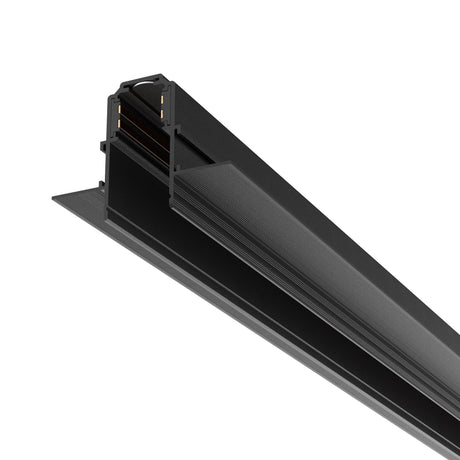
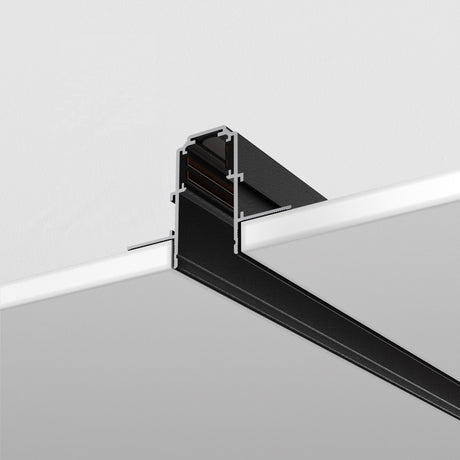
Exility 2m Recessed Magnetic Track for Plasterboard 12.5mm - Black
1733 In Stock
 £1299Unit price Translation missing: en.products.product.price.unit_price_separatorUnavailable1220 In Stock

 £7899Unit price Translation missing: en.products.product.price.unit_price_separatorUnavailable
Basis LED Corner Track Light for Magnetic Exility 24W 3000K - Black
123 In Stock
 £2699Unit price Translation missing: en.products.product.price.unit_price_separatorUnavailable
Exility Recessed Track L-Shape Corner Connector 12.5mm Plasterboard - Black
249 In Stock
 £5699Unit price Translation missing: en.products.product.price.unit_price_separatorUnavailable
Exility 1m Recessed Magnetic Track for Plasterboard 12.5mm - Black
630 In Stock
 £8899Unit price Translation missing: en.products.product.price.unit_price_separatorUnavailable
Focus LED Magnetic Track Spotlight 5W CCT Adjustable 2700-6000K - White
96 In Stock
 £5199Unit price Translation missing: en.products.product.price.unit_price_separatorUnavailable
Points 12W LED Linear Track Light for Magnetic Exility - White 3000K
137 In Stock
 £9699Unit price Translation missing: en.products.product.price.unit_price_separatorUnavailable
Exility 2m Recessed Magnetic Track for 12.5mm Plasterboard - White
1424 In Stock
 £1299Unit price Translation missing: en.products.product.price.unit_price_separatorUnavailable1150 In Stock

 £399Unit price Translation missing: en.products.product.price.unit_price_separatorUnavailable490 In Stock

 £7099Unit price Translation missing: en.products.product.price.unit_price_separatorUnavailable164 In Stock

 £9099Unit price Translation missing: en.products.product.price.unit_price_separatorUnavailable441 In Stock
 £4299Unit price Translation missing: en.products.product.price.unit_price_separatorUnavailable90 In Stock

 £2199Unit price Translation missing: en.products.product.price.unit_price_separatorUnavailable72 In Stock

 £1199Unit price Translation missing: en.products.product.price.unit_price_separatorUnavailable223 In Stock
 £9699Unit price Translation missing: en.products.product.price.unit_price_separatorUnavailable468 In Stock
 £9699Unit price Translation missing: en.products.product.price.unit_price_separatorUnavailable788 In Stock

 £2099Unit price Translation missing: en.products.product.price.unit_price_separatorUnavailable1023 In Stock
 £1299Unit price Translation missing: en.products.product.price.unit_price_separatorUnavailable852 In Stock
 £1199Unit price Translation missing: en.products.product.price.unit_price_separatorUnavailable844 In Stock
 £2699Unit price Translation missing: en.products.product.price.unit_price_separatorUnavailable149 In Stock

 £6399Unit price Translation missing: en.products.product.price.unit_price_separatorUnavailable985 In Stock
 £1999Unit price Translation missing: en.products.product.price.unit_price_separatorUnavailable789 In Stock
 £2699Unit price Translation missing: en.products.product.price.unit_price_separatorUnavailable580 In Stock
 £1999Unit price Translation missing: en.products.product.price.unit_price_separatorUnavailable1054 In Stock

 £6399Unit price Translation missing: en.products.product.price.unit_price_separatorUnavailable586 In Stock
 £1599Unit price Translation missing: en.products.product.price.unit_price_separatorUnavailable1294 In Stock

 £2899Unit price Translation missing: en.products.product.price.unit_price_separatorUnavailable1037 In Stock

 £2099Unit price Translation missing: en.products.product.price.unit_price_separatorUnavailable621 In Stock
 £2099Unit price Translation missing: en.products.product.price.unit_price_separatorUnavailable621 In Stock
 £1699Unit price Translation missing: en.products.product.price.unit_price_separatorUnavailable857 In Stock
 £3499Unit price Translation missing: en.products.product.price.unit_price_separatorUnavailable11 In Stock
 £7799Unit price Translation missing: en.products.product.price.unit_price_separatorUnavailable16 In Stock
 £4299Unit price Translation missing: en.products.product.price.unit_price_separatorUnavailable7 In Stock
 £3499Unit price Translation missing: en.products.product.price.unit_price_separatorUnavailable4 In Stock
 £3499Unit price Translation missing: en.products.product.price.unit_price_separatorUnavailable14 In Stock
 £8599Unit price Translation missing: en.products.product.price.unit_price_separatorUnavailable4 In Stock
 £4099Unit price Translation missing: en.products.product.price.unit_price_separatorUnavailable5 In Stock
 £6399Unit price Translation missing: en.products.product.price.unit_price_separatorUnavailable1 In Stock
 £6099Unit price Translation missing: en.products.product.price.unit_price_separatorUnavailable10 In Stock
 £6799Unit price Translation missing: en.products.product.price.unit_price_separatorUnavailable5 In Stock
 £1699Unit price Translation missing: en.products.product.price.unit_price_separatorUnavailable868 In Stock
 £4299Unit price Translation missing: en.products.product.price.unit_price_separatorUnavailable3 In Stock

 Save 20%£6699£8400Unit price Translation missing: en.products.product.price.unit_price_separatorUnavailable15 In Stock

 Save 20%£6599£8280Unit price Translation missing: en.products.product.price.unit_price_separatorUnavailable
Magneto 7W Dimmable Track Spotlight 20cm Long 3000K 560lm - Gold
16 In Stock
 Save 20%£6599£8280Unit price Translation missing: en.products.product.price.unit_price_separatorUnavailable16 In Stock

 Save 21%£7599£9600Unit price Translation missing: en.products.product.price.unit_price_separatorUnavailable
Magneto 10W Dimmable Track Pendant 20cm Long 3000K 800lm - Black
10 In Stock


Single-circuit, three-circuit or magnetic track: which do you need?
Single-circuit track carries one mains circuit, so its heads switch on and off together, which suits a simple run over a kitchen island or down a hallway. Three-circuit track carries three separate circuits in one rail, and the adaptor on a head picks which one it uses, so groups of track lights can switch or dim on their own. That makes it a common choice for shops, galleries and large open-plan rooms.
Magnetic track is a low-voltage system fed by an LED driver, such as the 48V drivers we stock, with heads that hold on by magnet and move without tools. Depending on the system, track can be surface-mounted, suspended or set flush as recessed track lighting. Whichever you choose, a head fits only the track it is made for: single-circuit on single-circuit, three-circuit on three-circuit and magnetic on its own magnetic track, so check the system named in the title before you buy.
Choosing track light heads: spotlights, pendants and linear
Spotlights are the classic track light, a compact head you can aim at a picture, shelf or worktop. We stock many track spotlights, from integrated LED heads to ones that take a GU10 lamp. A narrow beam picks out one object, while a wide one washes a whole surface. Pendants hang below the track over a dining table or island, and we stock track pendant lights and pendant adaptors.
Linear heads, including ones made for magnetic track, are long bars that spread light evenly along a desk or corridor. Most of the range is finished in black and many fittings come in white: black track lighting draws a crisp line across a pale ceiling, while white ceiling track light fixtures blend in.
LED track lighting and dimming
Most of what we stock is LED track lighting with the LED built in, so there is no bulb to change. Many other heads take a GU10 lamp, which lets you choose the brightness and shade of white.
Many of our track lights are dimmable and many are not. Dimming depends on the head and its driver, and each product page states whether a fitting can be dimmed. Beyond a dimmable head, a mains run needs a compatible dimmer switch, a low-voltage run needs a dimmable driver and a GU10 head needs a dimmable lamp.
Kitchen track lighting
Kitchen track lighting works hardest over the worktops. Run the track parallel to them, just in front of the wall cupboards, and angle the heads so the light comes from in front of you, because light from behind casts your shadow on the worktop. Over an island, pendants or a short run of spotlights give task light and a focal point.
Many of the lights we stock are suited to kitchens, and on three-circuit track the worktop spotlights and island pendants can run on separate circuits. Keep heads clear of the hob, where heat and steam rise.
Planning a run: lengths, connectors and cutting track to length
Sketch a track light ceiling plan first, marking where the supply comes in and where you want the light. We stock track in several lengths and many connectors, joiners and couplers: straight joiners link rails end to end, and L-shaped connectors turn a corner. A run also needs a power feed and an end cap to close the far end, while a magnetic run needs an LED driver sized for the total wattage of its heads.
Many rails can be cut to length with a fine-toothed hacksaw and finished with an end cap, but only cut one whose product page says so. Cut before fitting, never on a live run, and file the end smooth before the cap goes on. Where a rail cannot be cut, combine standard lengths with joiners.
Track lighting kits: the simplest start
A kit is the simplest way to try track lighting in one room. We stock a few track kits, including ones that pair a length of track with a set of GU10 spotlight heads, so the parts are made for each other. Check the product page for what is in the box and whether lamps are supplied.
A kit is also a system you can grow with more heads or rails of the same type, as long as the total load stays within the track's rating. For a high ceiling, we also stock suspension kits that hang the track lower.
Track lighting in bathrooms
Most of our track lighting is rated IP20, which means dry indoor rooms, not the damp zones around a bath or shower. A few fittings carry IP44 or above, but the rating needed depends on the zone around the bath or shower. The closer a fitting sits to water, the higher the rating it needs.
If you want track in a bathroom, choose a fitting rated for the zone it will sit in and have a qualified electrician confirm the zone and fit it. In England and Wales, work near a bath or shower can be notifiable under Part P of the Building Regulations, so use an electrician registered to certify it.
Frequently Asked Questions
Can you cut track lighting to length?
Can you cut track lighting to length?
Are all track lights compatible with any track?
Are all track lights compatible with any track?
Are track lights dimmable?
Are track lights dimmable?
Can you use track lighting in a bathroom?
Can you use track lighting in a bathroom?
Do I need an electrician to fit track lighting?
Do I need an electrician to fit track lighting?
How many spotlights can go on one track?
How many spotlights can go on one track?
What is the difference between single and three-circuit track?
What is the difference between single and three-circuit track?
Related Collections


BestSellers
-

 £63999Unit price Translation missing: en.products.product.price.unit_price_separatorUnavailable1 In Stock3 In Production · 26 Nov
 Free Delivery
-

 £49499Unit price Translation missing: en.products.product.price.unit_price_separatorUnavailable
Caelith 1 Light Medium Carved Alabaster Wall Light - Brushed Brass
4 In Production · 26 NovFree Delivery In our showroom
-

 £1,31999Unit price Translation missing: en.products.product.price.unit_price_separatorUnavailable1 In Production · 26 NovFree Delivery
-

 £2,96999Unit price Translation missing: en.products.product.price.unit_price_separatorUnavailable
Sorrelis 9 Light Alabaster Chandelier - Soft White & Brushed Brass
Made to OrderFree Delivery -

 Save 8%£49999£54299Unit price Translation missing: en.products.product.price.unit_price_separatorUnavailable
Helia 100cm LED Circular Pendant Light 55W 3000K - Matt Black
Available to OrderFree Delivery -

 £79999Unit price Translation missing: en.products.product.price.unit_price_separatorUnavailable4 In StockFree DeliveryIn our showroom
-

 £1,07799Unit price Translation missing: en.products.product.price.unit_price_separatorUnavailable
Aleron LED Large Round Alabaster Flush Ceiling Light - Soft White & Brushed Brass
Made to OrderFree Delivery -

 £80299Unit price Translation missing: en.products.product.price.unit_price_separatorUnavailable1 In Production · 26 NovFree Delivery
-

 £2,96999Unit price Translation missing: en.products.product.price.unit_price_separatorUnavailableMade to OrderFree Delivery
-

 £1,53999Unit price Translation missing: en.products.product.price.unit_price_separatorUnavailableMade to OrderFree Delivery
-

 £1,42999Unit price Translation missing: en.products.product.price.unit_price_separatorUnavailable
Seraphis LED Medium Alabaster Ring Chandelier - Brushed Brass
Made to OrderFree Delivery -

 £2,09999Unit price Translation missing: en.products.product.price.unit_price_separatorUnavailable
Auriel 19 Light Alabaster Cluster Chandelier - Brushed Brass
Made to OrderFree Delivery


Recommended For You
Our Reviews
-

Birmingham Based
British heritage. Worldwide delivery.
