
 £4099Unit price Translation missing: en.products.product.price.unit_price_separatorUnavailable180 In Stock
 £1799Unit price Translation missing: en.products.product.price.unit_price_separatorUnavailable
13A Double Socket DP Switched - Antique Brass (Black Insert)
240 In Stock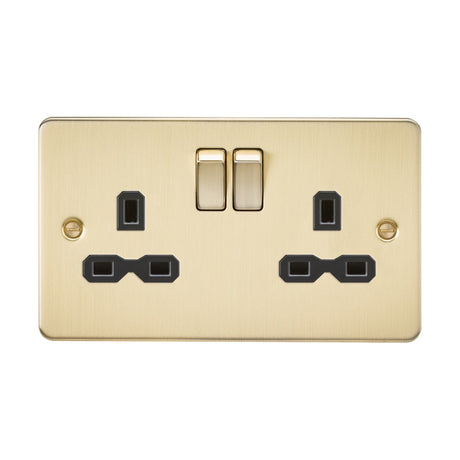 £1599Unit price Translation missing: en.products.product.price.unit_price_separatorUnavailable
13A 2 Gang DP Switched Socket Twin Earths - Brushed Brass Flat Plate (Black Insert)
720 In Stock £2799Unit price Translation missing: en.products.product.price.unit_price_separatorUnavailable
13A 2 Gang SP Switched Socket Dual USB-A & USB-C - Brushed Brass Flat Plate (Black Insert)
240 In Stock £2599Unit price Translation missing: en.products.product.price.unit_price_separatorUnavailable
13A 2 Gang DP Socket + 2 Module Combo Plate - Antique Brass Screwless
60 In Stock £2599Unit price Translation missing: en.products.product.price.unit_price_separatorUnavailable
13A 2 Gang DP Socket & 2 Gang Modular Combo Plate - Antique Brass Screwless
60 In Stock![13A 2G DP Switched Socket with Dual USB-C [65W DUAL FASTCHARGE] - Antique Brass](//niori.co.uk/cdn/shop/files/2039442_2834fc07-6ad3-414c-9677-f630df6ee403.jpg?v=1747070479&width=460) £7199Unit price Translation missing: en.products.product.price.unit_price_separatorUnavailable
£7199Unit price Translation missing: en.products.product.price.unit_price_separatorUnavailable13A 2 Gang DP Switched Socket Dual USB-C Fast Charge - Antique Brass Screwless
120 In Stock £5899Unit price Translation missing: en.products.product.price.unit_price_separatorUnavailable
13A 2 Gang DP Switched Socket Dual USB-A & USB-C - Antique Brass Screwless
120 In Stock![13A 2G SP Switched Socket with dual USB C+A 5V DC 4.0A [shared] - Antique Brass](//niori.co.uk/cdn/shop/files/1940910_84978418-431f-45ad-bbd4-218e71f0c7aa.jpg?v=1747069282&width=460) £2699Unit price Translation missing: en.products.product.price.unit_price_separatorUnavailable
£2699Unit price Translation missing: en.products.product.price.unit_price_separatorUnavailable13A 2 Gang SP Switched Socket Dual USB-A & USB-C - Antique Brass Screwless
300 In Stock![13A 1G Switched Socket with dual USB A+C [18W FASTCHARGE] - Antique Brass](//niori.co.uk/cdn/shop/files/1940906_835ff22d-1c4c-4db5-99c7-9b0980b921f8.jpg?v=1747069224&width=460) £4399Unit price Translation missing: en.products.product.price.unit_price_separatorUnavailable
£4399Unit price Translation missing: en.products.product.price.unit_price_separatorUnavailable13A 1 Gang Switched Socket Dual USB Fast Charge - Antique Brass Screwless
150 In Stock £1899Unit price Translation missing: en.products.product.price.unit_price_separatorUnavailable
45A Cooker Control Switch 13A Socket Neon Indicators - Antique Brass
88 In Stock £2899Unit price Translation missing: en.products.product.price.unit_price_separatorUnavailable
13A 1 Gang DP Lockable Socket - Antique Brass Screwless (Black Insert)
128 In Stock £2799Unit price Translation missing: en.products.product.price.unit_price_separatorUnavailable
13A 2 Gang DP Switched Socket With Night Light - Antique Brass Screwless
90 In Stock £1899Unit price Translation missing: en.products.product.price.unit_price_separatorUnavailable930 In Stock
 £1199Unit price Translation missing: en.products.product.price.unit_price_separatorUnavailable120 In Stock
 £1299Unit price Translation missing: en.products.product.price.unit_price_separatorUnavailable180 In Stock
 £1399Unit price Translation missing: en.products.product.price.unit_price_separatorUnavailable210 In Stock
 £4999Unit price Translation missing: en.products.product.price.unit_price_separatorUnavailable
230V Shaver Socket With Dual USB-A & USB-C - Antique Brass Screwless
60 In Stock £2599Unit price Translation missing: en.products.product.price.unit_price_separatorUnavailable
Dual Voltage Shaver Socket 115V/230V - Antique Brass Screwless
120 In Stock![13A 2G DP Switched Socket with Dual USB-C [65W DUAL FASTCHARGE] - Antique Brass](//niori.co.uk/cdn/shop/files/1982904_4fd9a943-a626-4b79-9980-7395cd017d19.jpg?v=1747069264&width=460) £6999Unit price Translation missing: en.products.product.price.unit_price_separatorUnavailable
£6999Unit price Translation missing: en.products.product.price.unit_price_separatorUnavailable13A 2 Gang DP Switched Socket Dual USB-C Fast Charge - Antique Brass
120 In Stock £1299Unit price Translation missing: en.products.product.price.unit_price_separatorUnavailable
13A 1 Gang SP Switched Socket Dual USB - Brushed Brass (Black Insert)
60 In Stock £2499Unit price Translation missing: en.products.product.price.unit_price_separatorUnavailable
13A 1 Gang Switched Socket with Quad USB - Polished Brass Screwless (Black Insert)
5 In Stock £1699Unit price Translation missing: en.products.product.price.unit_price_separatorUnavailable
13A 2 Gang DP Switched Socket Twin Earths - Polished Brass Screwless (White Insert)
810 In Stock £1699Unit price Translation missing: en.products.product.price.unit_price_separatorUnavailable
13A 2 Gang DP Switched Socket Twin Earths - Polished Brass Screwless (Black Insert)
300 In Stock £1199Unit price Translation missing: en.products.product.price.unit_price_separatorUnavailable
13A 1 Gang DP Switched Socket - Polished Brass (White Insert) Screwless
210 In Stock £1199Unit price Translation missing: en.products.product.price.unit_price_separatorUnavailable
13A 1 Gang DP Switched Socket - Polished Brass Screwless (Black Insert)
300 In Stock £2399Unit price Translation missing: en.products.product.price.unit_price_separatorUnavailable
Dual Voltage Shaver Socket 115V/230V - Polished Brass Screwless (White Insert)
90 In Stock £2399Unit price Translation missing: en.products.product.price.unit_price_separatorUnavailable
Dual Voltage Shaver Socket 115V/230V - Polished Brass Screwless (Black Insert)
90 In Stock £2199Unit price Translation missing: en.products.product.price.unit_price_separatorUnavailable
13A 2 Gang Unswitched Floor Socket - Polished Brass (White Insert)
120 In Stock £2199Unit price Translation missing: en.products.product.price.unit_price_separatorUnavailable
13A 2 Gang Unswitched Floor Socket - Brushed Brass (White Insert)
150 In Stock £1599Unit price Translation missing: en.products.product.price.unit_price_separatorUnavailable
13A 2 Gang DP Switched Socket Twin Earths - Polished Brass Flat Plate (Black Insert)
300 In Stock £1799Unit price Translation missing: en.products.product.price.unit_price_separatorUnavailable
13A 1 Gang Unswitched Floor Socket - Polished Brass (White Insert)
90 In Stock £1799Unit price Translation missing: en.products.product.price.unit_price_separatorUnavailable
13A 1 Gang Unswitched Floor Socket - Brushed Brass (White Insert)
71 In Stock £1199Unit price Translation missing: en.products.product.price.unit_price_separatorUnavailable
13A 1 Gang DP Switched Socket - Polished Brass (Black Insert) Flat Plate
120 In Stock £1199Unit price Translation missing: en.products.product.price.unit_price_separatorUnavailable
13A 1 Gang DP Switched Socket - Brushed Brass (Black Insert) Flat Plate
180 In Stock £2699Unit price Translation missing: en.products.product.price.unit_price_separatorUnavailable
115/230V Dual Voltage Shaver Socket - Polished Brass Flat Plate (Black Insert)
60 In Stock £2699Unit price Translation missing: en.products.product.price.unit_price_separatorUnavailable
Dual Voltage Shaver Socket 115V/230V - Brushed Brass Flat Plate (Black Insert)
120 In Stock £1299Unit price Translation missing: en.products.product.price.unit_price_separatorUnavailable
5A Unswitched Round Pin Socket - Polished Brass (Black Insert)
115 In Stock £1299Unit price Translation missing: en.products.product.price.unit_price_separatorUnavailable
5A Unswitched Round Pin Socket - Brushed Brass (Black Insert) Ultra Flat
150 In Stock £1299Unit price Translation missing: en.products.product.price.unit_price_separatorUnavailable
5A Round Pin Unswitched Socket - Antique Brass (Black Insert)
210 In Stock £6299Unit price Translation missing: en.products.product.price.unit_price_separatorUnavailable
13A 2 Gang DP Switched Socket Dual USB-A & USB-C - Antique Brass Rounded Edge (Black Insert)
150 In Stock £4799Unit price Translation missing: en.products.product.price.unit_price_separatorUnavailable
13A 1 Gang SP Switched Socket Dual USB-A & USB-C - Antique Brass (Black Insert)
66 In Stock £2499Unit price Translation missing: en.products.product.price.unit_price_separatorUnavailable
13A 2 Gang SP Switched Socket Dual USB-A & USB-C - Polished Brass Screwless (White Insert)
240 In Stock £2499Unit price Translation missing: en.products.product.price.unit_price_separatorUnavailable
13A 2 Gang SP Switched Socket Dual USB-A & USB-C - Polished Brass Screwless (Black Insert)
150 In Stock £2799Unit price Translation missing: en.products.product.price.unit_price_separatorUnavailable
13A 2 Gang SP Switched Socket Dual USB-A & USB-C - Antique Brass Square Edge (Black Insert)
330 In Stock £2799Unit price Translation missing: en.products.product.price.unit_price_separatorUnavailable
13A 2 Gang SP Switched Socket Dual USB-A & USB-C - Polished Brass Flat Plate (Black Insert)
150 In Stock £1699Unit price Translation missing: en.products.product.price.unit_price_separatorUnavailable
45A DP Cooker Switch & 13A Socket Neons - Polished Brass Screwless (White Insert)
120 In Stock £1899Unit price Translation missing: en.products.product.price.unit_price_separatorUnavailable
45A DP Cooker Switch & 13A Socket with Neons - Polished Brass Screwless (Black Insert)
60 In Stock


![13A 2G DP Switched Socket with Dual USB-C [65W DUAL FASTCHARGE] - Antique Brass](http://niori.co.uk/cdn/shop/files/2039442_2834fc07-6ad3-414c-9677-f630df6ee403.jpg?v=1747070479&width=460)

![13A 2G SP Switched Socket with dual USB C+A 5V DC 4.0A [shared] - Antique Brass](http://niori.co.uk/cdn/shop/files/1940910_84978418-431f-45ad-bbd4-218e71f0c7aa.jpg?v=1747069282&width=460)
![13A 1G Switched Socket with dual USB A+C [18W FASTCHARGE] - Antique Brass](http://niori.co.uk/cdn/shop/files/1940906_835ff22d-1c4c-4db5-99c7-9b0980b921f8.jpg?v=1747069224&width=460)


![13A 2G DP Switched Socket with Dual USB-C [65W DUAL FASTCHARGE] - Antique Brass](http://niori.co.uk/cdn/shop/files/1982904_4fd9a943-a626-4b79-9980-7395cd017d19.jpg?v=1747069264&width=460)


Three brasses, and they are not interchangeable
Antique brass is darkened and slightly mottled, warm and low in contrast, and it sits naturally in a period room or against dark paint. Polished brass is bright and yellow with a mirror surface, the traditional choice, and it draws the eye. Brushed brass is the muted modern one: the same warm colour with a fine directional grain that kills the shine and reads closer to a satin gold. Put them side by side and nobody would call them one finish. If you are matching existing ironmongery, match it to the handle you already have rather than to the word on the label.
The insert colour changes the whole plate
The insert is the plastic face around the pin holes, and it is either black or white across this range. A black insert disappears into the socket apertures and lets the brass read as a solid piece of metal, which is why it is the more popular choice on antique and brushed. A white insert gives a sharp two-tone contrast that suits polished brass on a pale wall and matches white switches elsewhere in a room. The plate is identical underneath; the insert is what people actually see from across the room.
Single and double, switched and unswitched
Doubles outnumber singles here and are the sensible default in any room where things get plugged in and unplugged. Singles suit a tight reveal or a fixed appliance position. The switched and unswitched choice is separate: a switched socket lets you isolate an appliance without pulling the plug, while unswitched sockets are used behind built-in appliances and inside cupboards where the isolation is handled elsewhere. Unswitched also gives the cleanest face, which matters on a brass plate that is meant to be looked at.
Sockets with USB
A brass socket with built-in USB keeps a bedside or a worktop tidy without adding a charger to the plate count. Both port types appear across the range, the older rectangular USB-A and the smaller reversible USB-C, and fittings with one of each are the practical answer while both kinds of cable are in the house. Check the stated output on the product page: charging a phone overnight and running a tablet while you use it are different demands.
Screwless and flat plate
Screwless plates clip over a hidden frame for an unbroken face, which shows brass at its best because nothing interrupts the metal. Flat plates keep their visible screws and read as traditional hardware, which is often the right answer in a period room where an unbroken modern face would look out of place. Screwless generally wants a deeper back box than the plate it replaces, so measure before committing a whole room.
Living with a brass plate
Polished brass shows fingerprints and will slowly dull without attention, which some people like and others do not. Antique and brushed hide handling far better and need almost nothing. None of the three wants an abrasive or a metal polish: a lacquer sits over the finish on most plates and polish cuts straight through it, leaving a bright patch that then tarnishes on its own schedule. A dry cloth is the whole of the maintenance.
Frequently Asked Questions
What is the difference between antique, polished and brushed brass?
What is the difference between antique, polished and brushed brass?
Should I choose a black or a white insert?
Should I choose a black or a white insert?
Will brass sockets tarnish?
Will brass sockets tarnish?
What does unswitched mean, and when would I want it?
What does unswitched mean, and when would I want it?
Do brass sockets fit a standard back box?
Do brass sockets fit a standard back box?
Can I mix brass sockets with chrome switches?
Can I mix brass sockets with chrome switches?
Related Collections


BestSellers
-

 £49499Unit price Translation missing: en.products.product.price.unit_price_separatorUnavailable
Caelith 1 Light Medium Carved Alabaster Wall Light - Brushed Brass
 Free Delivery
 In our showroom
 -

 £63999Unit price Translation missing: en.products.product.price.unit_price_separatorUnavailable3 In StockFree Delivery
 -

 £11,87999Unit price Translation missing: en.products.product.price.unit_price_separatorUnavailableFree Delivery
 -

 £1,42999Unit price Translation missing: en.products.product.price.unit_price_separatorUnavailable
Seraphis LED Medium Alabaster Ring Chandelier - Brushed Brass
Free Delivery -

 £1,31999Unit price Translation missing: en.products.product.price.unit_price_separatorUnavailableFree Delivery
 -

 £80299Unit price Translation missing: en.products.product.price.unit_price_separatorUnavailableFree Delivery
 -

 £1,20999Unit price Translation missing: en.products.product.price.unit_price_separatorUnavailableFree Delivery
 -

 Save 25%£65199£87000Unit price Translation missing: en.products.product.price.unit_price_separatorUnavailableFree Delivery
 -

 £1,64999Unit price Translation missing: en.products.product.price.unit_price_separatorUnavailableFree Delivery
 -

 £2,96999Unit price Translation missing: en.products.product.price.unit_price_separatorUnavailableFree Delivery
 -

 £1,53999Unit price Translation missing: en.products.product.price.unit_price_separatorUnavailableFree Delivery
 -

 £2,30999Unit price Translation missing: en.products.product.price.unit_price_separatorUnavailable
Stratalux LED Stacked Alabaster Column Floor Lamp - Matt Black
Free Delivery


Recommended For You
Our Reviews
-

Birmingham Based
British heritage. Worldwide delivery.
