


 £2099Unit price Translation missing: en.products.product.price.unit_price_separatorUnavailable54 In Stock
 £1099Unit price Translation missing: en.products.product.price.unit_price_separatorUnavailable
LYYT Motion Sensing LED Light 21 LED PIR Rechargeable - 2 Pack
1000 In Stock £1599Unit price Translation missing: en.products.product.price.unit_price_separatorUnavailable122 In Stock
 Save 19%£6399£7920Unit price Translation missing: en.products.product.price.unit_price_separatorUnavailable
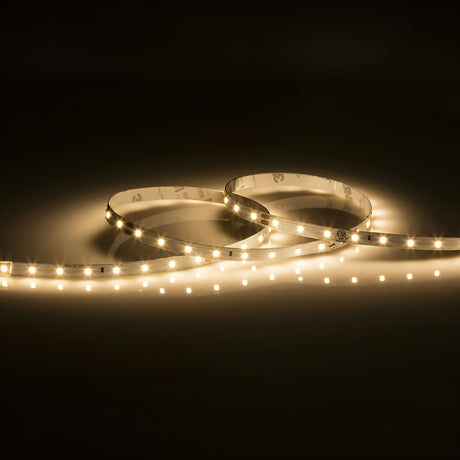
14.4W IP65 LED Strip Light 5m 4000K Driver Not Included - White
10 In Stock Save 21%£8099£10200Unit price Translation missing: en.products.product.price.unit_price_separatorUnavailable
19.2W LED Strip Light 5m Long 4000K Driver Not Included - White
10 In Stock Save 21%£8099£10200Unit price Translation missing: en.products.product.price.unit_price_separatorUnavailable
19.2W LED Strip Light 5m Long 3000K Driver Not Included - White
10 In Stock Save 18%£5299£6480Unit price Translation missing: en.products.product.price.unit_price_separatorUnavailable
14.4W LED Strip Light 5m Long 4000K Driver Not Included - White
10 In Stock Save 19%£6399£7920Unit price Translation missing: en.products.product.price.unit_price_separatorUnavailable
14.4W IP65 LED Strip Light 5m 3000K Driver Not Included - White
10 In Stock Save 21%£8099£10200Unit price Translation missing: en.products.product.price.unit_price_separatorUnavailable
19.2W LED Strip Light 5m Long 2700K Driver Not Included - White
10 In Stock Save 18%£5299£6480Unit price Translation missing: en.products.product.price.unit_price_separatorUnavailable
14.4W LED Strip Light 5m Long 3000K Driver Not Included - White
10 In Stock Save 18%£5299£6480Unit price Translation missing: en.products.product.price.unit_price_separatorUnavailable
14.4W LED Strip Light 5m Long 2700K Driver Not Included - White
10 In Stock Save 17%£4199£5040Unit price Translation missing: en.products.product.price.unit_price_separatorUnavailable
9.6W LED Strip Light 5m Long 4000K Driver Not Included - White
10 In Stock Save 17%£4199£5040Unit price Translation missing: en.products.product.price.unit_price_separatorUnavailable
9.6W LED Strip Light 5m Long 3000K Driver Not Included - White
10 In Stock Save 17%£4199£5040Unit price Translation missing: en.products.product.price.unit_price_separatorUnavailable
Tiras LED Strip 9.6W 2700K 5m Long Driver Not Included - White
10 In Stock Save 9%£11699£12900Unit price Translation missing: en.products.product.price.unit_price_separatorUnavailable50 In Stock
 Free Delivery
 Save 12%£66899£75900Unit price Translation missing: en.products.product.price.unit_price_separatorUnavailable20 In StockFree Delivery
 Save 3%£19299£19900Unit price Translation missing: en.products.product.price.unit_price_separatorUnavailable10 In StockFree Delivery
 Save 3%£19299£19900Unit price Translation missing: en.products.product.price.unit_price_separatorUnavailable10 In StockFree Delivery
 Save 3%£19299£19900Unit price Translation missing: en.products.product.price.unit_price_separatorUnavailable10 In StockFree Delivery
 £21999Unit price Translation missing: en.products.product.price.unit_price_separatorUnavailable10 In StockFree Delivery
 £21999Unit price Translation missing: en.products.product.price.unit_price_separatorUnavailable10 In StockFree Delivery
 £21999Unit price Translation missing: en.products.product.price.unit_price_separatorUnavailable10 In StockFree Delivery
 Save 2%£4899£4999Unit price Translation missing: en.products.product.price.unit_price_separatorUnavailable10 In Stock
 £32999Unit price Translation missing: en.products.product.price.unit_price_separatorUnavailable10 In StockFree Delivery
 Save 3%£28099£28900Unit price Translation missing: en.products.product.price.unit_price_separatorUnavailable10 In StockFree Delivery
 Save 3%£28099£28900Unit price Translation missing: en.products.product.price.unit_price_separatorUnavailable10 In StockFree Delivery
 Save 3%£3899£3999Unit price Translation missing: en.products.product.price.unit_price_separatorUnavailable100 In Stock
 Save 3%£3899£3999Unit price Translation missing: en.products.product.price.unit_price_separatorUnavailable100 In Stock
 Save 3%£3899£3999Unit price Translation missing: en.products.product.price.unit_price_separatorUnavailable10 In Stock
 £1199Unit price Translation missing: en.products.product.price.unit_price_separatorUnavailable60 In Stock
 £1299Unit price Translation missing: en.products.product.price.unit_price_separatorUnavailable30 In Stock
 £9899Unit price Translation missing: en.products.product.price.unit_price_separatorUnavailable131 In Stock
 £11099Unit price Translation missing: en.products.product.price.unit_price_separatorUnavailable133 In StockFree Delivery
 £9899Unit price Translation missing: en.products.product.price.unit_price_separatorUnavailable311 In Stock
 £9899Unit price Translation missing: en.products.product.price.unit_price_separatorUnavailable74 In Stock
 £6199Unit price Translation missing: en.products.product.price.unit_price_separatorUnavailable79 In Stock
 £7999Unit price Translation missing: en.products.product.price.unit_price_separatorUnavailable208 In Stock
 £6199Unit price Translation missing: en.products.product.price.unit_price_separatorUnavailable739 In Stock
 £6199Unit price Translation missing: en.products.product.price.unit_price_separatorUnavailable358 In Stock
 £14799Unit price Translation missing: en.products.product.price.unit_price_separatorUnavailable41 In StockFree Delivery
 £14799Unit price Translation missing: en.products.product.price.unit_price_separatorUnavailable119 In StockFree Delivery
 £1099Unit price Translation missing: en.products.product.price.unit_price_separatorUnavailable10 In Stock
 £1499Unit price Translation missing: en.products.product.price.unit_price_separatorUnavailable100 In Stock
 £7799Unit price Translation missing: en.products.product.price.unit_price_separatorUnavailable
LYYT 5m RGB LED Strip Kit 12V IP65 with IR Remote - Multicolour
50 In Stock £9199Unit price Translation missing: en.products.product.price.unit_price_separatorUnavailable100 In Stock
 £7699Unit price Translation missing: en.products.product.price.unit_price_separatorUnavailable100 In Stock
 £5299Unit price Translation missing: en.products.product.price.unit_price_separatorUnavailable100 In Stock
 £1199Unit price Translation missing: en.products.product.price.unit_price_separatorUnavailable100 In Stock


Start Here: Which LED Strip Range Do You Actually Need?
LED strip lighting is a small family of related products, and the right starting point depends on the effect you want and where the light has to sit. We front eight ranges beneath this hub, and each one answers a different question. If you want an even line of light with no visible dots, look at our COB LED strips. If you need a rugged outdoor run over a long distance, LED rope lights are built for that. If you want per-pixel colour and animation, addressable strips are the ones to open.
The other four ranges support and complete a build rather than replace the strip itself. LED profiles give you the aluminium channel that houses and protects the tape. LED drivers supply the correct power. LED strip accessories hold everything together with covers, end caps, holders and connectors. LED neon flex offers a flexible solid-look profile for a softer, tube-style finish, and LED modules cover mains-powered light engines where a low-voltage strip is not the right tool.
We hand-pick every member of these ranges, and the strips themselves are LED-integrated, so you are choosing a complete light source rather than fitting separate lamps. Read the sections below to match a strip form, a voltage, an IP rating and a colour temperature to your project, then work through the profile and driver you will need to run it.
Choosing Between the Strip Forms
The strip form decides how the light looks and how flexible the run can be. COB is the most stocked form we carry, and it puts the emitters on a continuous strip that reads as one unbroken line rather than a row of separate points. That makes COB the natural choice for shelf edges, coving and any place where a viewer might see the strip directly and you do not want visible dots. SMD strips use discrete surface-mounted emitters and remain a dependable, familiar option.
Rope lights are round and encapsulated, which suits long runs and outdoor use, and we most often stock them in longer reels. Neon flex gives you that solid, glowing profile look while staying bendable, so it works for signage-style shapes and curved detailing. Addressable strips add per-pixel control, letting you drive individual sections for chase effects and colour animation rather than lighting the whole reel at once.
If you are unsure, work backwards from what the eye will see. Direct view with no diffuser points you to COB or neon flex. A hidden wash of light gives you more freedom to use SMD. Dynamic, controllable colour points you to addressable. Long outdoor spans point you to rope.
Voltage and Drivers: Getting the Power Right
Voltage is one of the first things to check on any strip title. Across our strips you will see 24V as the most common option, with 12V also widely available and a smaller number of 230V mains options. Low-voltage strips at 12V and 24V need a driver to step mains power down to the strip's rating, while 230V strips run closer to the mains supply and change how you plan the install.
Our LED drivers range covers both constant-voltage and constant-current supplies, so you can pair the right type to your strip. Constant-voltage units are the usual partner for standard 12V and 24V tape. Constant-current drivers, for example a 350mA 19W unit, suit loads that call for a fixed current instead. The key is to match the driver's output voltage to the strip and to give it enough headroom for the length you plan to run.
We stock drivers alongside the strips deliberately, because a strip and its power supply are a pair rather than two unrelated purchases. When you plan a run, size the driver to the total load of every metre you intend to connect, and keep the voltage figure on the driver matched to the voltage figure in the strip title.
Cutting and Connecting Your Strip
Most strips are designed to be shortened to fit. Many of our titles describe the tape as cuttable or refer to cut points, so you can trim a reel down to the exact length a shelf, plinth or channel needs. Cutting must happen at the marked points on the strip, and once cut you rejoin sections with connectors or by soldering, depending on the strip.
Our LED strip accessories range is where the joining hardware lives. It holds connectors for linking cut sections and reels, plus end caps, strip holders and profile covers. Connectors let you turn corners and bridge gaps without running a single unbroken reel, which matters when a room has returns and breaks that no straight length can follow.
Plan your cuts before you power anything on. Measure each run, note where the cut points fall, and confirm you have the connectors to rejoin every section. Reels are a common format in our range, so buying by the reel and cutting to size is often the tidiest way to cover a whole space from one purchase.
Aluminium Profiles and Why They Matter
An aluminium profile is more than a cosmetic housing. Our LED profiles range covers surface-mount and corner-mount channels, commonly in 2m and 3m lengths, supplied with covers. The channel gives the strip a straight, protected line to sit in, hides the tape and its cut points, and presents a finished edge instead of bare adhesive stuck to a surface.
Profiles also help manage heat and light. The aluminium draws warmth away from the strip along its length, and the cover diffuses the output so the individual emitters soften into a more even glow. That diffusion pairs especially well with COB tape, where a continuous line behind a cover reads as one clean band of light.
Corner profiles are made for the join between two surfaces, so under-cabinet and coving runs sit at the correct angle without improvised brackets. When you choose a profile, match its length to your run, decide between surface and corner mounting for the location, and pick the cover finish that suits the space.
IP Ratings: Where a Strip Can Safely Go
The IP rating tells you how protected a strip is against dust and water, and it decides where a run can live. Our strips span several ratings. IP20 and IP00 options are for dry indoor use where nothing will splash them. IP44 and IP54 add more resistance for tougher indoor or sheltered spots. IP65 is the most stocked protected rating we carry and suits outdoor and damp locations, and there is IP68 at the sealed end of the scale.
Rope lights and neon flex are largely IP65, which is why they suit gardens, eaves and exposed runs. An unrated or low-rated strip belongs indoors in a dry channel, so do not push an IP20 or IP00 strip into a bathroom, kitchen splash zone or outdoor position.
Match the rating to the harshest condition the strip will meet, not the average one. If any part of a run passes a wet or exposed area, rate the whole run for that spot rather than mixing protection levels along a single line.
Colour Temperature, Colour-Changing and Planning End to End
Colour temperature sets the mood of the light. We stock warm white for a softer, cosier tone, cool white for a crisper feel, and daylight for the brightest, coolest option. For flexibility, CCT-adjustable strips let you shift between warmer and cooler white on one strip, while RGB strips give you full colour output for accent and effect lighting.
Finish matters too. Most of our strips carry a white base, with multicoloured options and a scatter of blue, red, green, silver, clear and yellow. Pick the colour temperature and finish together so the strip suits both the light you want and the surface it sits against.
To plan a run end to end, start with the strip form and IP rating for the location, choose the voltage and a driver sized to the full length, add the profile that houses and diffuses it, and finish with the connectors, end caps and holders from our accessories range. Work through the eight ranges in that order and every part of the run will have a matched piece before you power it on.
Frequently Asked Questions
Should I choose a 12V or 24V LED strip?
Should I choose a 12V or 24V LED strip?
What is the difference between CCT, RGB and RGBW strips?
What is the difference between CCT, RGB and RGBW strips?
Which IP rating do I need for a kitchen or outdoors?
Which IP rating do I need for a kitchen or outdoors?
Do LED strips need a separate driver?
Do LED strips need a separate driver?
Can LED strip lights be dimmed?
Can LED strip lights be dimmed?
What is the difference between COB strips, neon flex and rope lights for a continuous line of light?
What is the difference between COB strips, neon flex and rope lights for a continuous line of light?
Which supporting ranges do I need alongside the strip itself?
Which supporting ranges do I need alongside the strip itself?
Related Collections

BestSellers
-

 £63999Unit price Translation missing: en.products.product.price.unit_price_separatorUnavailable1 In StockFree Delivery
 -

 £49499Unit price Translation missing: en.products.product.price.unit_price_separatorUnavailable
Caelith 1 Light Medium Carved Alabaster Wall Light - Brushed Brass
Made to OrderFree Delivery In our showroom
 -

 £1,42999Unit price Translation missing: en.products.product.price.unit_price_separatorUnavailable
Seraphis LED Medium Alabaster Ring Chandelier - Brushed Brass
Made to OrderFree Delivery -

 £1,31999Unit price Translation missing: en.products.product.price.unit_price_separatorUnavailableMade to OrderFree Delivery
 -

 Save 8%£49999£54299Unit price Translation missing: en.products.product.price.unit_price_separatorUnavailable
Helia 100cm LED Circular Pendant Light 55W 3000K - Matte Black
13 In StockFree Delivery -

 £79999Unit price Translation missing: en.products.product.price.unit_price_separatorUnavailable4 In StockFree DeliveryIn our showroom
 -

 £80299Unit price Translation missing: en.products.product.price.unit_price_separatorUnavailableMade to OrderFree Delivery
 -

 £1,20999Unit price Translation missing: en.products.product.price.unit_price_separatorUnavailableMade to OrderFree Delivery
 -

 £2,96999Unit price Translation missing: en.products.product.price.unit_price_separatorUnavailable
Sorrelis 9 Light Alabaster Chandelier - Soft White & Brushed Brass
Made to OrderFree Delivery -

 £2,96999Unit price Translation missing: en.products.product.price.unit_price_separatorUnavailableMade to OrderFree Delivery
 -

 £1,53999Unit price Translation missing: en.products.product.price.unit_price_separatorUnavailableMade to OrderFree Delivery
 -

 £2,09999Unit price Translation missing: en.products.product.price.unit_price_separatorUnavailable
Auriel 19 Light Alabaster Cluster Chandelier - Brushed Brass
Made to OrderFree Delivery


Recommended For You
Our Reviews
-

Birmingham Based
British heritage. Worldwide delivery.
