

 £59999Unit price Translation missing: en.products.product.price.unit_price_separatorUnavailable1 In Stock
 Free Delivery
 In our showroom
 Save 25%£53499£71689Unit price Translation missing: en.products.product.price.unit_price_separatorUnavailable61 In StockFree Delivery
 Save 25%£1,01799£1,36411Unit price Translation missing: en.products.product.price.unit_price_separatorUnavailable116 In StockFree Delivery
 Save 25%£69099£92593Unit price Translation missing: en.products.product.price.unit_price_separatorUnavailable126 In StockFree Delivery
 Save 25%£24799£33231Unit price Translation missing: en.products.product.price.unit_price_separatorUnavailable31 In StockFree Delivery
 Save 24%£34299£45000Unit price Translation missing: en.products.product.price.unit_price_separatorUnavailable7 In StockFree Delivery
 Save 27%£72899£1,00000Unit price Translation missing: en.products.product.price.unit_price_separatorUnavailable2 In StockFree Delivery
 Save 13%£1,37299£1,56999Unit price Translation missing: en.products.product.price.unit_price_separatorUnavailable
Minerva 10 Light Flush Chandelier - Nickel with Remote Control
1 In StockFree Delivery
 Save 8%£1,37299£1,49299Unit price Translation missing: en.products.product.price.unit_price_separatorUnavailable1 In StockFree Delivery
 Save 8%£67999£73999Unit price Translation missing: en.products.product.price.unit_price_separatorUnavailable33 In StockFree Delivery
 Save 8%£57999£62999Unit price Translation missing: en.products.product.price.unit_price_separatorUnavailable66 In StockFree Delivery
 Save 8%£36099£39299Unit price Translation missing: en.products.product.price.unit_price_separatorUnavailable29 In StockFree Delivery
 Save 30%£41999£60000Unit price Translation missing: en.products.product.price.unit_price_separatorUnavailable57 In StockFree Delivery
 Save 30%£41999£60000Unit price Translation missing: en.products.product.price.unit_price_separatorUnavailable41 In StockFree Delivery
 Save 30%£1,38599£1,98000Unit price Translation missing: en.products.product.price.unit_price_separatorUnavailable46 In StockFree Delivery
 Save 30%£1,20199£1,71600Unit price Translation missing: en.products.product.price.unit_price_separatorUnavailable11 In StockFree Delivery
 Save 30%£1,38599£1,98000Unit price Translation missing: en.products.product.price.unit_price_separatorUnavailable
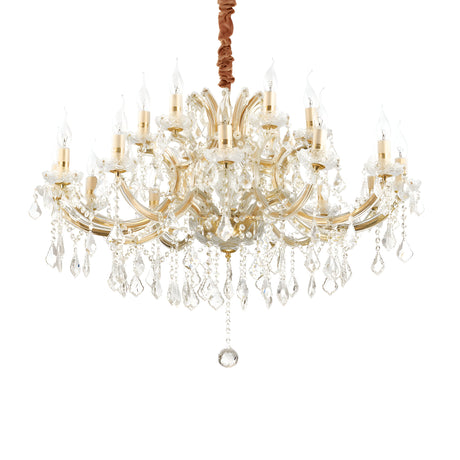
Emberlit 24 Light Empire Crystal Chandelier - Polished Brass
48 In StockFree Delivery Save 30%£1,20199£1,71600Unit price Translation missing: en.products.product.price.unit_price_separatorUnavailable21 In StockFree Delivery
 Save 30%£52099£74400Unit price Translation missing: en.products.product.price.unit_price_separatorUnavailable84 In StockFree Delivery
 Save 30%£73999£1,05600Unit price Translation missing: en.products.product.price.unit_price_separatorUnavailable25 In StockFree Delivery
 Save 30%£64699£92400Unit price Translation missing: en.products.product.price.unit_price_separatorUnavailable7 In StockFree Delivery
 Save 30%£64699£92400Unit price Translation missing: en.products.product.price.unit_price_separatorUnavailable23 In StockFree Delivery
 Save 30%£55499£79200Unit price Translation missing: en.products.product.price.unit_price_separatorUnavailable
Emberara Tiered Crystal Chandelier 12 Light E14 - Gold 500mm
10 In StockFree Delivery
 Save 30%£60899£87000Unit price Translation missing: en.products.product.price.unit_price_separatorUnavailable27 In StockFree Delivery
 Save 30%£88199£1,26000Unit price Translation missing: en.products.product.price.unit_price_separatorUnavailable9 In StockFree Delivery
 Save 30%£79799£1,14000Unit price Translation missing: en.products.product.price.unit_price_separatorUnavailable23 In StockFree Delivery
 Save 30%£39899£57000Unit price Translation missing: en.products.product.price.unit_price_separatorUnavailable2 In StockFree Delivery
 Save 30%£79799£1,14000Unit price Translation missing: en.products.product.price.unit_price_separatorUnavailable53 In StockFree Delivery
 Save 30%£39899£57000Unit price Translation missing: en.products.product.price.unit_price_separatorUnavailable25 In StockFree Delivery
 Save 30%£62999£90000Unit price Translation missing: en.products.product.price.unit_price_separatorUnavailable14 In StockFree Delivery
 Save 30%£62999£90000Unit price Translation missing: en.products.product.price.unit_price_separatorUnavailable1 In StockFree Delivery
 Save 30%£83999£1,20000Unit price Translation missing: en.products.product.price.unit_price_separatorUnavailable11 In StockFree Delivery
 Save 30%£41199£58800Unit price Translation missing: en.products.product.price.unit_price_separatorUnavailable57 In StockFree Delivery
 Save 30%£38699£55200Unit price Translation missing: en.products.product.price.unit_price_separatorUnavailable14 In StockFree Delivery
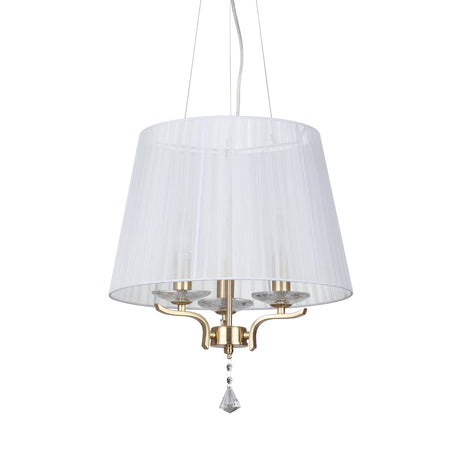 Save 30%£19399£27600Unit price Translation missing: en.products.product.price.unit_price_separatorUnavailable
Solum Crystal 3 Light Pendant - Satin Brass White Organza Shade
28 In StockFree Delivery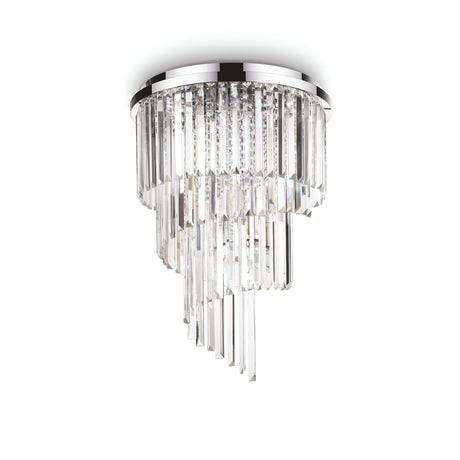 Save 30%£60899£87000Unit price Translation missing: en.products.product.price.unit_price_separatorUnavailable22 In StockFree Delivery
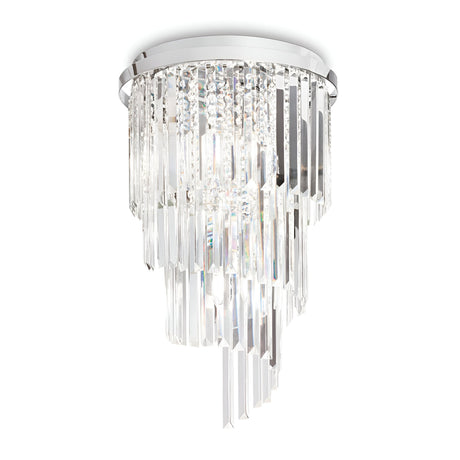 Save 30%£52499£75000Unit price Translation missing: en.products.product.price.unit_price_separatorUnavailable11 In StockFree Delivery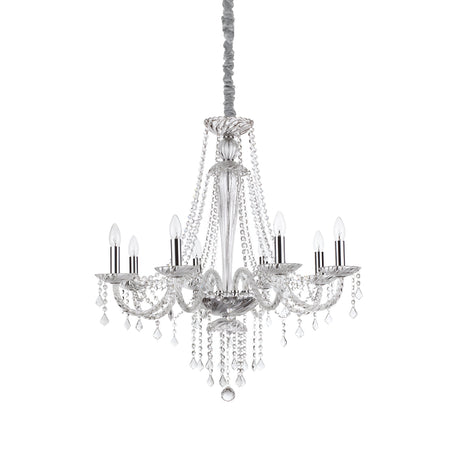
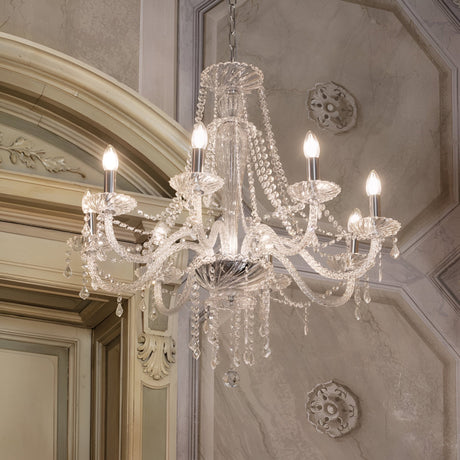 Save 30%£47799£68160Unit price Translation missing: en.products.product.price.unit_price_separatorUnavailable24 In StockFree Delivery
 Save 30%£40399£57600Unit price Translation missing: en.products.product.price.unit_price_separatorUnavailable14 In StockFree Delivery
 Save 30%£83999£1,20000Unit price Translation missing: en.products.product.price.unit_price_separatorUnavailable3 In StockFree Delivery
 Save 30%£53399£76200Unit price Translation missing: en.products.product.price.unit_price_separatorUnavailable50 In StockFree Delivery
 Save 30%£50399£72000Unit price Translation missing: en.products.product.price.unit_price_separatorUnavailable45 In StockFree Delivery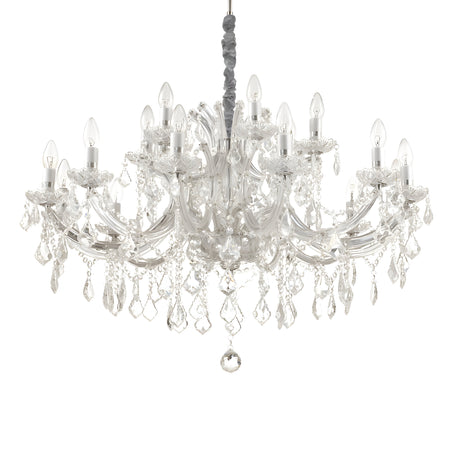
 Save 30%£83999£1,20000Unit price Translation missing: en.products.product.price.unit_price_separatorUnavailable62 In StockFree Delivery
 Save 30%£53399£76200Unit price Translation missing: en.products.product.price.unit_price_separatorUnavailable43 In StockFree Delivery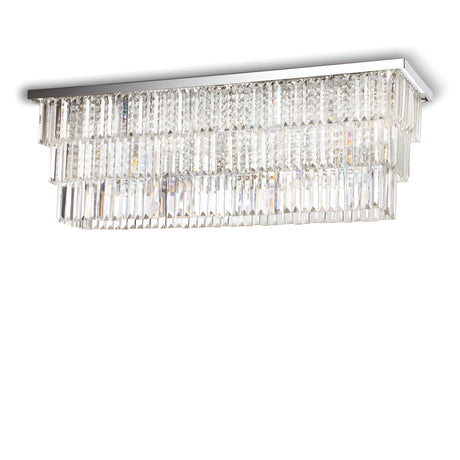
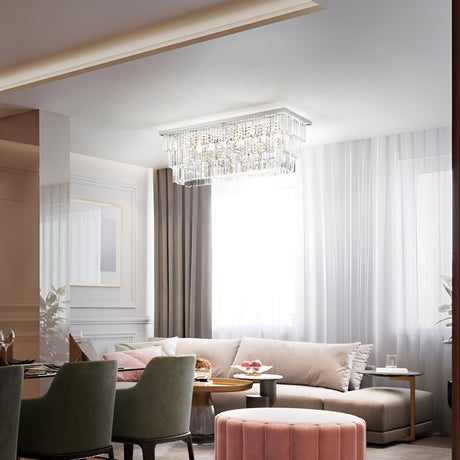 Save 30%£64699£92400Unit price Translation missing: en.products.product.price.unit_price_separatorUnavailable53 In StockFree Delivery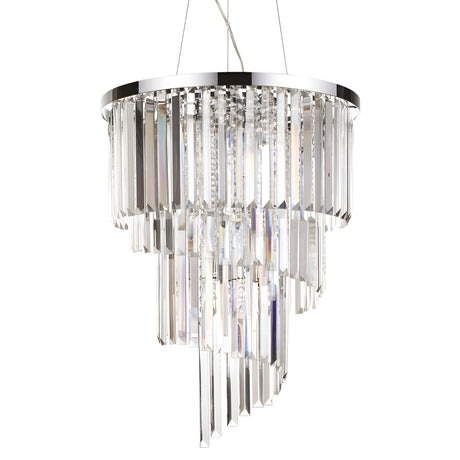
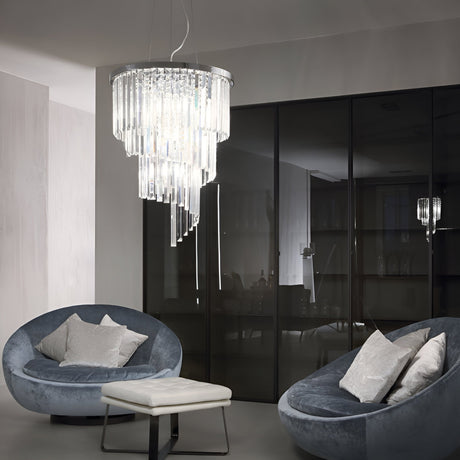 Save 30%£55499£79200Unit price Translation missing: en.products.product.price.unit_price_separatorUnavailable9 In StockFree Delivery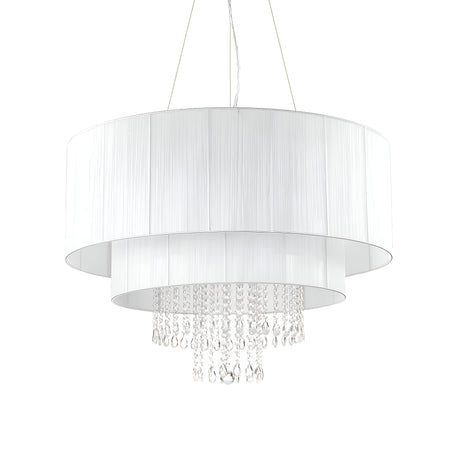
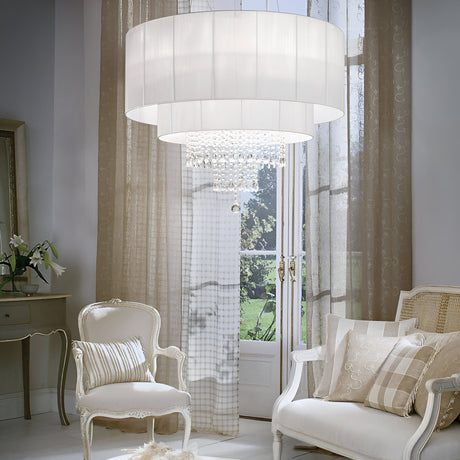 Save 30%£71399£1,02000Unit price Translation missing: en.products.product.price.unit_price_separatorUnavailable30 In StockFree Delivery
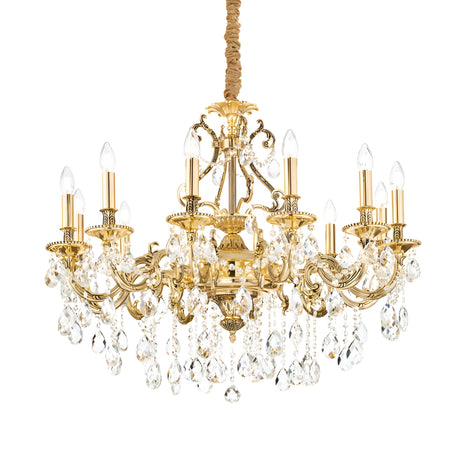 Save 30%£1,17599£1,68000Unit price Translation missing: en.products.product.price.unit_price_separatorUnavailable28 In StockFree Delivery


Crystal and K9 crystal in classic rooms
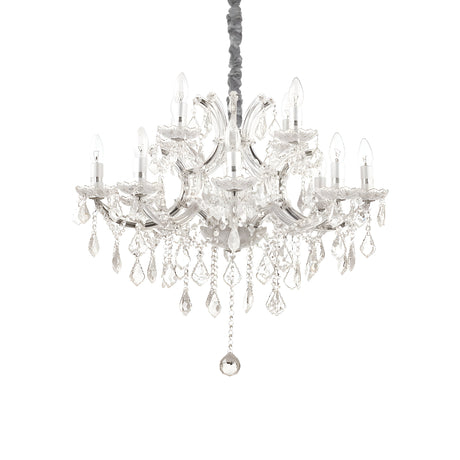
Traditional chandeliers earn their keep through cut glass that catches and spreads light across a room. Our range leans on cut crystal, much of it K9 crystal, used across everything from small three-light frames to large fittings carrying twenty or more lights. All of them throw warm reflections once lit, and they suit the rooms people most often hang them in: dining rooms, hallways and living rooms, where ambient light is the goal rather than tight task lighting.
You will find faceted drops, rods and tubes alongside more sculptural empire, oval and orb shapes, plus tiered builds that stack the crystal across two or three levels. Rod and tube designs draw the eye downward, which can help in a narrower hallway or above a tall table. There is even a wall chandelier in the range, a five-light crystal piece that carries the same look onto a landing or stair wall.
Finishes for a classic scheme
The metalwork sets the mood as much as the crystal does. Our range covers gold, French gold and heirloom gold for a warmer, more period feel, alongside polished chrome and silver where you want the frame to recede and let the glass do the work. Antique brass, aged bronze and old bronze read softer and suit older or more rustic rooms, while gunmetal and polished antique nickel lean a little more contemporary. A handful of pieces pair crystal with leather or fabric detailing, and a few step away from cut glass altogether with weathered oak and forged iron for a country look. Matching the finish to door handles, taps or other metal in the room keeps a scheme feeling considered rather than busy.
Getting the proportions right
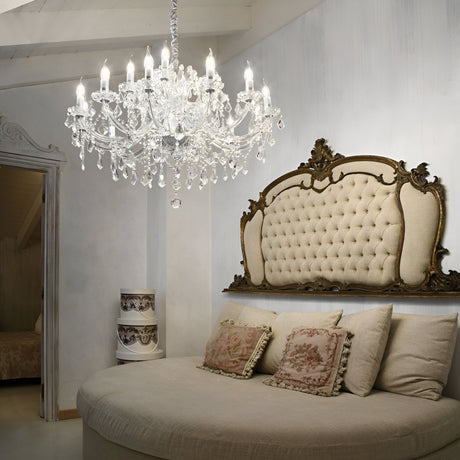
Size is where most chandelier choices go wrong, so it helps to measure before you browse. A common starting point for a dining room is to match the fitting's diameter, in centimetres, to roughly half to two thirds of the table width, leaving the glass clear of the edges. Over a table, hang the lowest drop about 75 to 85cm above the surface so the light sits in view without blocking sightlines. In a hallway or open room with no furniture beneath, raise it so the lowest point clears head height with room to spare.
Many of our traditional designs are large, with widths from 50cm upward and tiered builds carrying anywhere from a handful of lights to twenty or more. Higher light counts and multiple tiers want generous ceiling height and a wide footprint to read properly, so a tall stairwell or a double-height hall tends to flatter them. Smaller four and five-light versions work in bedrooms and more modest dining spaces where a single tier is enough.
Fittings, bulbs and dimming
Most of our traditional chandeliers take E14 small Edison screw bulbs, usually several per fitting, which keeps each lamp discreet behind the crystal. Warm white is the natural pairing here, since it warms the metalwork and gives the glass a soft glow rather than a clinical edge. A good number of the range is dimmable, which matters more on a chandelier than on most fixtures: being able to drop the level turns a bright dining light into a low evening backdrop. Check that any dimmable model is paired with a compatible dimmer switch and dimmable bulbs.
These are indoor fittings, rated IP20, so they belong in dry rooms rather than bathrooms or covered outdoor spaces. Plenty of pieces here sit comfortably in modern and contemporary schemes too, so the classic cut does not lock you into a period look.
Cleaning and care
Crystal and K9 crystal both dull over time as dust settles into the facets, which is exactly what robs a chandelier of its sparkle. For routine care, turn the power off, let any bulbs cool, then dust the drops with a soft, dry cloth or a clean make-up brush to reach between facets. For a deeper clean, a barely damp microfibre cloth with a little glass cleaner, followed by a dry buff, brings the cut back. On larger tiered pieces it pays to photograph the layout first so removable drops go back in the right place. Avoid soaking metalwork or letting moisture sit on the finish, particularly on antique brass and bronze, where it can mark over time.
Frequently Asked Questions
What materials do your traditional chandeliers use?
What materials do your traditional chandeliers use?
How do I choose the right size traditional chandelier for my room?
How do I choose the right size traditional chandelier for my room?
How high should I hang a chandelier over a dining table?
How high should I hang a chandelier over a dining table?
Are traditional chandeliers dimmable, and what bulbs do they use?
Are traditional chandeliers dimmable, and what bulbs do they use?
How do I clean a crystal chandelier?
How do I clean a crystal chandelier?
Can traditional chandeliers be used in a bathroom or outdoors?
Can traditional chandeliers be used in a bathroom or outdoors?
Related Collections


BestSellers
-

 £44999Unit price Translation missing: en.products.product.price.unit_price_separatorUnavailable
Caelith LED Medium Carved Alabaster Wall Light - Brushed Brass
Limited StockFree DeliveryIn our showroom -

 £45999Unit price Translation missing: en.products.product.price.unit_price_separatorUnavailableFree Delivery
 -

 £10,79999Unit price Translation missing: en.products.product.price.unit_price_separatorUnavailableFree Delivery
 -

 £1,29999Unit price Translation missing: en.products.product.price.unit_price_separatorUnavailable
Seraphis LED Medium Alabaster Ring Chandelier - Brushed Brass
Free Delivery -

 £2699Unit price Translation missing: en.products.product.price.unit_price_separatorUnavailable
Panasonic Eneloop AA HR6 Rechargeable Batteries 2000mAh - 8 Pack
-

 Save 8%£49999£54299Unit price Translation missing: en.products.product.price.unit_price_separatorUnavailable
Helia 100cm LED Circular Pendant Light 55W 3000K - Matte Black
14 In StockFree Delivery -

 £1,19999Unit price Translation missing: en.products.product.price.unit_price_separatorUnavailableFree Delivery
 -

 Save 25%£65199£87000Unit price Translation missing: en.products.product.price.unit_price_separatorUnavailableFree Delivery
 -

 £1,49999Unit price Translation missing: en.products.product.price.unit_price_separatorUnavailableFree Delivery
 -

 £2,69999Unit price Translation missing: en.products.product.price.unit_price_separatorUnavailableFree Delivery
 -

 £2,09999Unit price Translation missing: en.products.product.price.unit_price_separatorUnavailable
Stratalux LED Stacked Alabaster Column Floor Lamp - Matt Black
Free Delivery -

 £1,79999Unit price Translation missing: en.products.product.price.unit_price_separatorUnavailable
Caelith LED Large Panel Alabaster Chandelier - Brushed Brass
Free Delivery


Recommended For You
Our Reviews
-

Birmingham Based
British heritage. Worldwide delivery.
