
 £499Unit price Translation missing: en.products.product.price.unit_price_separatorUnavailable180 In Stock
 £399Unit price Translation missing: en.products.product.price.unit_price_separatorUnavailable150 In Stock
 £699Unit price Translation missing: en.products.product.price.unit_price_separatorUnavailable90 In Stock
 £799Unit price Translation missing: en.products.product.price.unit_price_separatorUnavailable240 In Stock
 £799Unit price Translation missing: en.products.product.price.unit_price_separatorUnavailable95 In Stock
 £1599Unit price Translation missing: en.products.product.price.unit_price_separatorUnavailable
47mm Galvanised Steel Back Box for Multimedia Plates - Single Cavity
150 In Stock £149Unit price Translation missing: en.products.product.price.unit_price_separatorUnavailable1530 In Stock
 £199Unit price Translation missing: en.products.product.price.unit_price_separatorUnavailable1350 In Stock
 £199Unit price Translation missing: en.products.product.price.unit_price_separatorUnavailable500 In Stock

 £1399Unit price Translation missing: en.products.product.price.unit_price_separatorUnavailable
Mercury 3 Gang Switched Fused Mains Outlet with Back Box - White
100 In Stock £2199Unit price Translation missing: en.products.product.price.unit_price_separatorUnavailable6363 In Stock
 £149Unit price Translation missing: en.products.product.price.unit_price_separatorUnavailable1140 In Stock
 £149Unit price Translation missing: en.products.product.price.unit_price_separatorUnavailable1230 In Stock
 £149Unit price Translation missing: en.products.product.price.unit_price_separatorUnavailable70 In Stock
 £149Unit price Translation missing: en.products.product.price.unit_price_separatorUnavailable2850 In Stock
 £149Unit price Translation missing: en.products.product.price.unit_price_separatorUnavailable2610 In Stock
 £199Unit price Translation missing: en.products.product.price.unit_price_separatorUnavailable510 In Stock
 £199Unit price Translation missing: en.products.product.price.unit_price_separatorUnavailable420 In Stock
 £299Unit price Translation missing: en.products.product.price.unit_price_separatorUnavailable485 In Stock
 £199Unit price Translation missing: en.products.product.price.unit_price_separatorUnavailable1110 In Stock
 £149Unit price Translation missing: en.products.product.price.unit_price_separatorUnavailable2010 In Stock
 £149Unit price Translation missing: en.products.product.price.unit_price_separatorUnavailable
Single 16mm Pattress Box With Earth Terminal - White Square Edge
480 In Stock £149Unit price Translation missing: en.products.product.price.unit_price_separatorUnavailable560 In Stock
 £599Unit price Translation missing: en.products.product.price.unit_price_separatorUnavailable180 In Stock
 £599Unit price Translation missing: en.products.product.price.unit_price_separatorUnavailable360 In Stock
 £149Unit price Translation missing: en.products.product.price.unit_price_separatorUnavailable4140 In Stock
 £149Unit price Translation missing: en.products.product.price.unit_price_separatorUnavailable6240 In Stock
 £199Unit price Translation missing: en.products.product.price.unit_price_separatorUnavailable1440 In Stock
 £199Unit price Translation missing: en.products.product.price.unit_price_separatorUnavailable1290 In Stock
 £149Unit price Translation missing: en.products.product.price.unit_price_separatorUnavailable2250 In Stock
 £149Unit price Translation missing: en.products.product.price.unit_price_separatorUnavailable9750 In Stock
 £149Unit price Translation missing: en.products.product.price.unit_price_separatorUnavailable
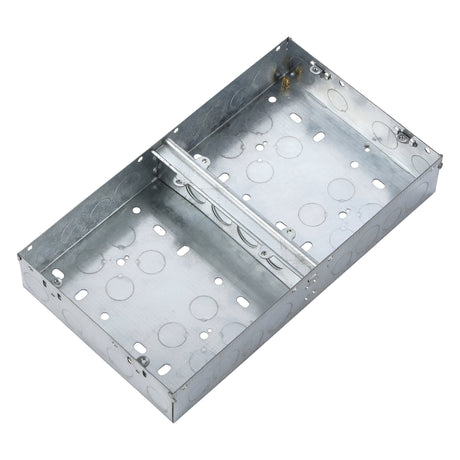
2 Gang 47mm Galvanised Steel Back Box - Fixed & Adjustable Lugs
3750 In Stock £149Unit price Translation missing: en.products.product.price.unit_price_separatorUnavailable1620 In Stock
 £149Unit price Translation missing: en.products.product.price.unit_price_separatorUnavailable5850 In Stock
 £149Unit price Translation missing: en.products.product.price.unit_price_separatorUnavailable9930 In Stock
 £149Unit price Translation missing: en.products.product.price.unit_price_separatorUnavailable1590 In Stock
 £149Unit price Translation missing: en.products.product.price.unit_price_separatorUnavailable760 In Stock
 £149Unit price Translation missing: en.products.product.price.unit_price_separatorUnavailable2160 In Stock
 £599Unit price Translation missing: en.products.product.price.unit_price_separatorUnavailable90 In Stock
 £699Unit price Translation missing: en.products.product.price.unit_price_separatorUnavailable90 In Stock
 £599Unit price Translation missing: en.products.product.price.unit_price_separatorUnavailable150 In Stock
 £199Unit price Translation missing: en.products.product.price.unit_price_separatorUnavailable
Double 35mm Pattress Box With Earth Terminal - Rounded Edge White
1050 In Stock £199Unit price Translation missing: en.products.product.price.unit_price_separatorUnavailable
35mm Single Pattress Box with Earth Terminal - White Rounded Edge
1350 In Stock £199Unit price Translation missing: en.products.product.price.unit_price_separatorUnavailable610 In Stock
 £399Unit price Translation missing: en.products.product.price.unit_price_separatorUnavailable660 In Stock
 £199Unit price Translation missing: en.products.product.price.unit_price_separatorUnavailable1350 In Stock
 £149Unit price Translation missing: en.products.product.price.unit_price_separatorUnavailable1200 In Stock
 £149Unit price Translation missing: en.products.product.price.unit_price_separatorUnavailable
Single 16mm Pattress Box With Earth Terminal - Rounded Edge White
200 In Stock


Which back box do you need for your wall?
The wall decides the type of box. In solid brick or block, a flush box sits in a chased recess so the plate finishes level with the plaster. Plasterboard and stud walls usually take a dry-lining box, which grips the board from behind with lugs. Where cable runs on the surface, or chasing in is not practical, a surface pattress box mounts on the wall and the plate fixes to its front.
Not sure which you have? A hollow knock usually means plasterboard on studs, while a dull, solid knock means brick or block. Many of the back boxes we stock suit commercial fit-outs, and we also stock a few related electrical accessories.
Single back box or double back box?
Match the box to the plate. A single back box takes a single gang switch or socket, while a double back box takes a double gang plate, such as a twin socket or a double light switch. A single plate will not cover a double box, and a double plate will not fix to a single box. Triple and larger multi-gang boxes take wider plates, often grid plates carrying several switch modules.
Many of our back boxes are single gang and many are double gang. We also stock some triple gang boxes and a few larger multi-gang sizes, and some are modular.
How deep should a back box be?
Depth matters as much as width. A plain switch needs little room behind the plate, but dimmer switches, USB sockets and fused spurs have bulkier bodies and need a deeper box. A box that is too shallow squashes the cables and stops the plate sitting flat against the wall, so check how much depth your switch or socket needs before you order.
In overall size, most of the boxes we stock are small, many are medium and a few are large. Measure the recess, or the wall space for a surface box, and compare it with the box dimensions before you choose.
Choosing a light switch back box
Almost all of the back boxes we stock are made for switches and sockets, so finding a light switch back box comes down to gang size, depth and the shape of the plate. Line up the box's fixing lugs with the screw holes in your plate. On a surface box the edges show, so match a rounded or square plate to the shape of the box.
If you want a light switch with a back box, read the listing to see what comes with the switch. If it arrives without a box, pick a back box that matches its gang size and the depth it needs.
Choosing a back box material and finish
Many of the boxes we stock are metal, some are steel and a few are stainless steel. Many are resin or polycarbonate, some are ABS, and we also stock a concrete back box. Some have an industrial look. A metal box should be earthed, which a qualified electrician will see to when fitting it.
Many of our back boxes are white and many are silver, with some in black, chrome or grey and a red back box too. A flush box sits hidden behind the plate, so its finish matters little, but a surface box is on show, so match its finish to your switch or socket.
Fitting back boxes: what to check first
Mains wiring is a job for a qualified electrician. In England and Wales, electrical work in the home falls under Part P of the Building Regulations, and some jobs must be notified to building control, so ask your electrician to certify the work. Before cutting a recess, check the wall for hidden pipes and cables.
Most of our boxes carry an IP20 rating, which suits dry indoor spaces only. Near a bath or shower, the box and accessory need a higher IP rating for the bathroom zone, so check with your electrician before fitting anything near water.
Frequently Asked Questions
What is a back box?
What is a back box?
Do I need a single back box or a double?
Do I need a single back box or a double?
What depth light switch back box do I need?
What depth light switch back box do I need?
Do light switches come with a back box?
Do light switches come with a back box?
Which back box should I use in plasterboard?
Which back box should I use in plasterboard?
Can I fit a back box myself?
Can I fit a back box myself?
Can I use a back box in a bathroom?
Can I use a back box in a bathroom?
Related Collections


BestSellers
-

 £63999Unit price Translation missing: en.products.product.price.unit_price_separatorUnavailable1 In Stock3 In Production · 26 Nov
 Free Delivery
-

 £49499Unit price Translation missing: en.products.product.price.unit_price_separatorUnavailable
Caelith 1 Light Medium Carved Alabaster Wall Light - Brushed Brass
4 In Production · 26 NovFree Delivery In our showroom
-

 £1,31999Unit price Translation missing: en.products.product.price.unit_price_separatorUnavailable1 In Production · 26 NovFree Delivery
-

 £1,07799Unit price Translation missing: en.products.product.price.unit_price_separatorUnavailable
Aleron LED Large Round Alabaster Flush Ceiling Light - Soft White & Brushed Brass
Made to OrderFree Delivery -

 £23999Unit price Translation missing: en.products.product.price.unit_price_separatorUnavailable2 In StockFree DeliveryIn our showroom
-

 £80299Unit price Translation missing: en.products.product.price.unit_price_separatorUnavailable1 In Production · 26 NovFree Delivery
-

 £1,69999Unit price Translation missing: en.products.product.price.unit_price_separatorUnavailableMade to OrderFree Delivery
-

 £2,96999Unit price Translation missing: en.products.product.price.unit_price_separatorUnavailable
Sorrelis 9 Light Alabaster Chandelier - Soft White & Brushed Brass
Made to OrderFree Delivery -

 £2,96999Unit price Translation missing: en.products.product.price.unit_price_separatorUnavailableMade to OrderFree Delivery
-

 £1,53999Unit price Translation missing: en.products.product.price.unit_price_separatorUnavailableMade to OrderFree Delivery
-

 £1,42999Unit price Translation missing: en.products.product.price.unit_price_separatorUnavailable
Seraphis LED Medium Alabaster Ring Chandelier - Brushed Brass
Made to OrderFree Delivery -

 £2,09999Unit price Translation missing: en.products.product.price.unit_price_separatorUnavailable
Auriel 19 Light Alabaster Cluster Chandelier - Brushed Brass
Made to OrderFree Delivery


Recommended For You
Our Reviews
-

Birmingham Based
British heritage. Worldwide delivery.
