

 £54999Unit price Translation missing: en.products.product.price.unit_price_separatorUnavailable
 Free Delivery
 £34999Unit price Translation missing: en.products.product.price.unit_price_separatorUnavailableFree Delivery
 £29999Unit price Translation missing: en.products.product.price.unit_price_separatorUnavailableFree Delivery
 £28999Unit price Translation missing: en.products.product.price.unit_price_separatorUnavailable1 In StockFree Delivery
 In our showroom
 Save 25%£24699£33000Unit price Translation missing: en.products.product.price.unit_price_separatorUnavailableFree Delivery
 Save 25%£24699£33000Unit price Translation missing: en.products.product.price.unit_price_separatorUnavailableFree Delivery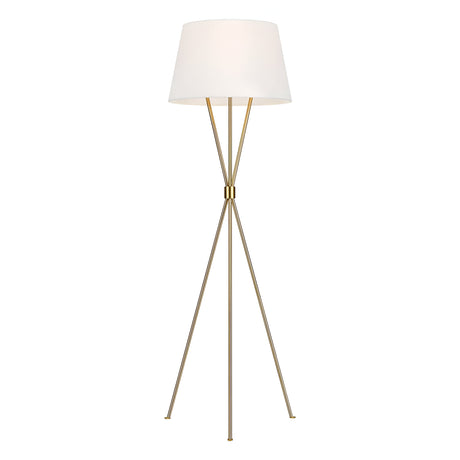
 Save 25%£26999£36000Unit price Translation missing: en.products.product.price.unit_price_separatorUnavailable
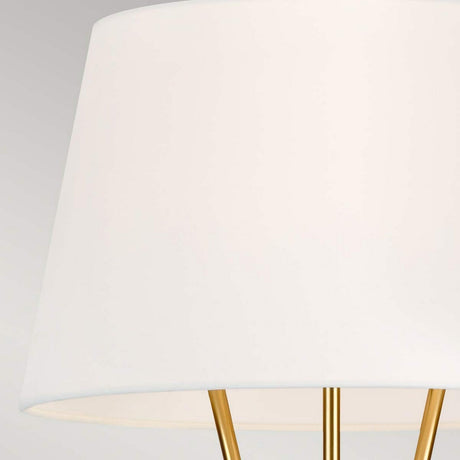
Penny Tripod Floor Lamp - Burnished Brass with White Linen Shade
Free Delivery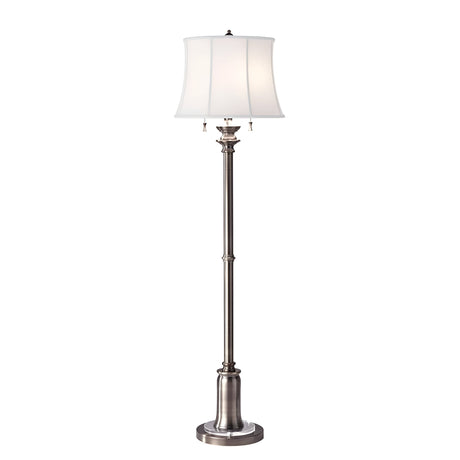
 Save 25%£24699£33000Unit price Translation missing: en.products.product.price.unit_price_separatorUnavailableFree Delivery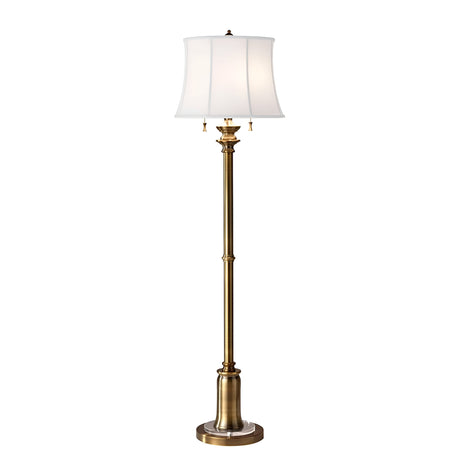
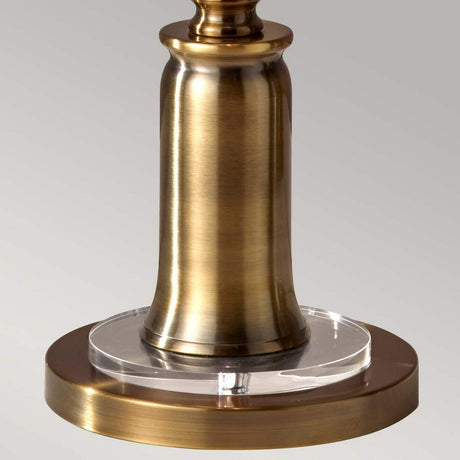 Save 25%£24699£33000Unit price Translation missing: en.products.product.price.unit_price_separatorUnavailableFree Delivery
 Save 25%£40499£54000Unit price Translation missing: en.products.product.price.unit_price_separatorUnavailableFree Delivery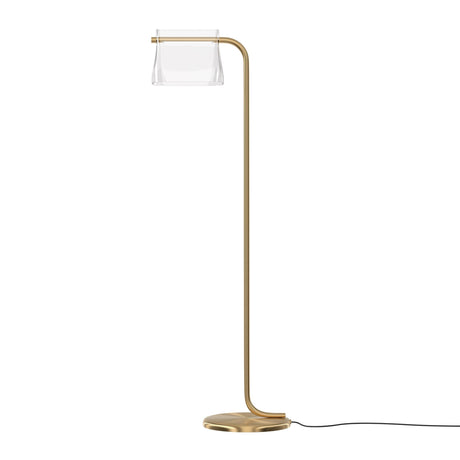
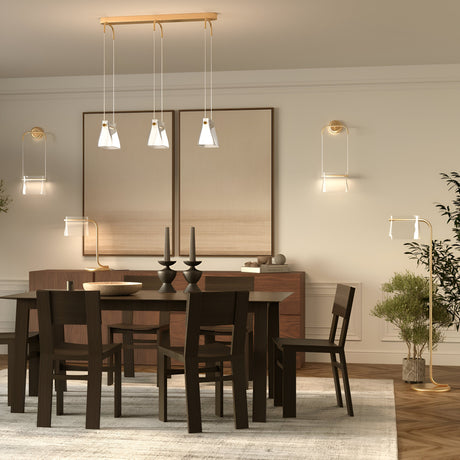 £49099Unit price Translation missing: en.products.product.price.unit_price_separatorUnavailable54 In StockFree Delivery
 £16899Unit price Translation missing: en.products.product.price.unit_price_separatorUnavailable46 In StockFree Delivery
 £35499Unit price Translation missing: en.products.product.price.unit_price_separatorUnavailable56 In StockFree Delivery
 £21899Unit price Translation missing: en.products.product.price.unit_price_separatorUnavailable245 In StockFree Delivery
 £19899Unit price Translation missing: en.products.product.price.unit_price_separatorUnavailable3 In StockFree Delivery
 Save 30%£12199£17400Unit price Translation missing: en.products.product.price.unit_price_separatorUnavailable
Aethera Floor Lamp - Brushed Brass Column with Black Fabric Shade
220 In StockFree Delivery Save 30%£23599£33600Unit price Translation missing: en.products.product.price.unit_price_separatorUnavailable15 In StockFree Delivery
 Save 30%£17299£24600Unit price Translation missing: en.products.product.price.unit_price_separatorUnavailable61 In StockFree Delivery
 Save 30%£41999£60000Unit price Translation missing: en.products.product.price.unit_price_separatorUnavailable57 In StockFree Delivery
 Save 29%£10999£15600Unit price Translation missing: en.products.product.price.unit_price_separatorUnavailable65 In StockFree Delivery
 Save 30%£20999£30000Unit price Translation missing: en.products.product.price.unit_price_separatorUnavailable155 In StockFree Delivery
 Save 30%£20199£28800Unit price Translation missing: en.products.product.price.unit_price_separatorUnavailable40 In StockFree Delivery
 £6199Unit price Translation missing: en.products.product.price.unit_price_separatorUnavailable18 In Stock
 Save 4%£26699£27799Unit price Translation missing: en.products.product.price.unit_price_separatorUnavailable16 In StockFree Delivery
 Save 25%£24699£33000Unit price Translation missing: en.products.product.price.unit_price_separatorUnavailableFree Delivery
 £34999Unit price Translation missing: en.products.product.price.unit_price_separatorUnavailable1 In StockFree DeliveryIn our showroom
 £30599Unit price Translation missing: en.products.product.price.unit_price_separatorUnavailable5 In StockFree Delivery
 Save 27%£50999£70000Unit price Translation missing: en.products.product.price.unit_price_separatorUnavailable10 In StockFree Delivery
 Save 39%£27299£45000Unit price Translation missing: en.products.product.price.unit_price_separatorUnavailable9 In StockFree Delivery
 Save 15%£26199£31000Unit price Translation missing: en.products.product.price.unit_price_separatorUnavailableFree Delivery
 Save 16%£26799£31800Unit price Translation missing: en.products.product.price.unit_price_separatorUnavailableFree Delivery
 Save 16%£23199£27500Unit price Translation missing: en.products.product.price.unit_price_separatorUnavailableFree Delivery
 Save 15%£25699£30400Unit price Translation missing: en.products.product.price.unit_price_separatorUnavailableFree Delivery
 Save 16%£26999£32000Unit price Translation missing: en.products.product.price.unit_price_separatorUnavailableFree Delivery
 Save 16%£40499£48000Unit price Translation missing: en.products.product.price.unit_price_separatorUnavailableFree Delivery
 Save 16%£24499£29000Unit price Translation missing: en.products.product.price.unit_price_separatorUnavailable
Loewe 3 Light Tripod Floor Lamp - Antique Brass with Cream Shade
Free Delivery
 Save 16%£24999£29600Unit price Translation missing: en.products.product.price.unit_price_separatorUnavailable
Loewe 3 Light Floor Lamp - Antique Brass With Soft Bronze Shade
Free Delivery
 Save 16%£24999£29600Unit price Translation missing: en.products.product.price.unit_price_separatorUnavailableFree Delivery
 Save 16%£25299£30000Unit price Translation missing: en.products.product.price.unit_price_separatorUnavailable
Mara 4 Light Floor Lamp - Antique Brass with Ivory White Shades
Free Delivery
 Save 16%£29699£35200Unit price Translation missing: en.products.product.price.unit_price_separatorUnavailableFree Delivery
 Save 16%£25699£30500Unit price Translation missing: en.products.product.price.unit_price_separatorUnavailableFree Delivery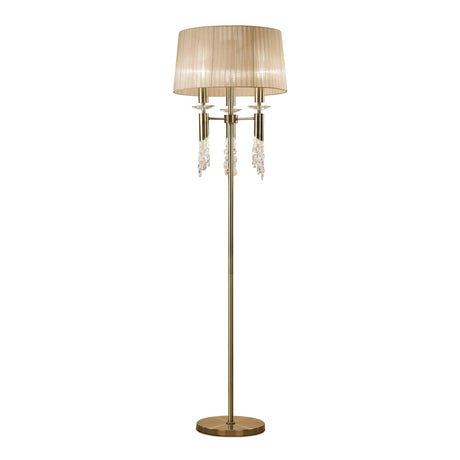
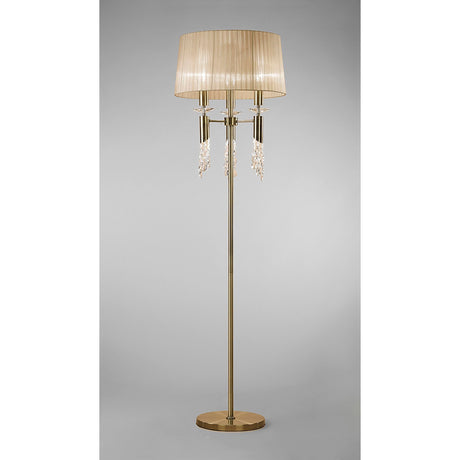 Save 16%£31099£36900Unit price Translation missing: en.products.product.price.unit_price_separatorUnavailable
Tiffany 3 Light Crystal Floor Lamp - Antique Brass with Bronze Shade
Free Delivery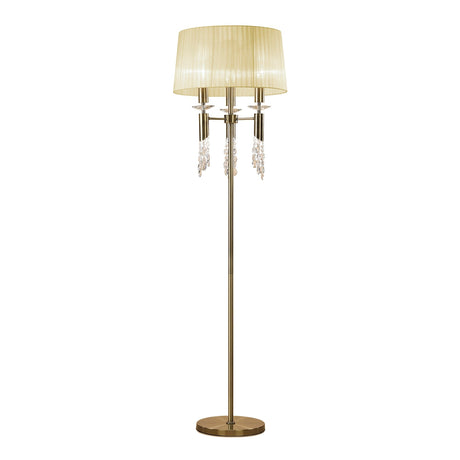
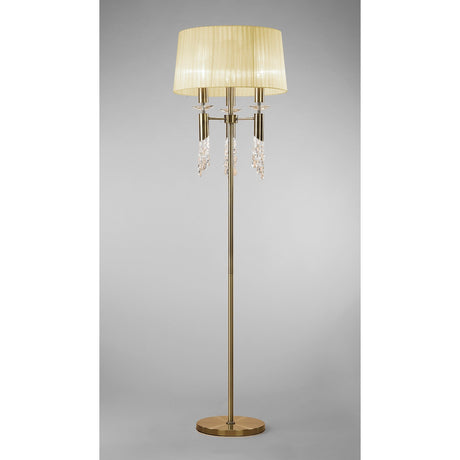 Save 16%£29599£35100Unit price Translation missing: en.products.product.price.unit_price_separatorUnavailable
Tiffany 3 Light Crystal Floor Lamp - Antique Brass with Cream Shade
Free Delivery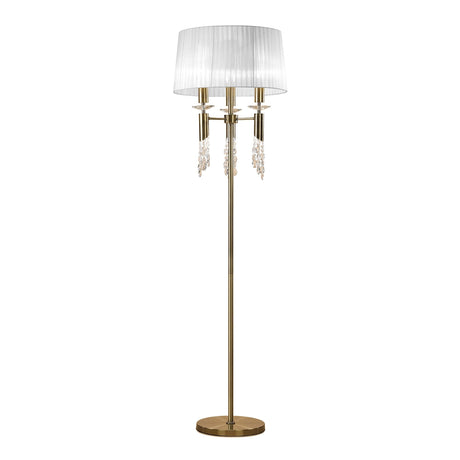
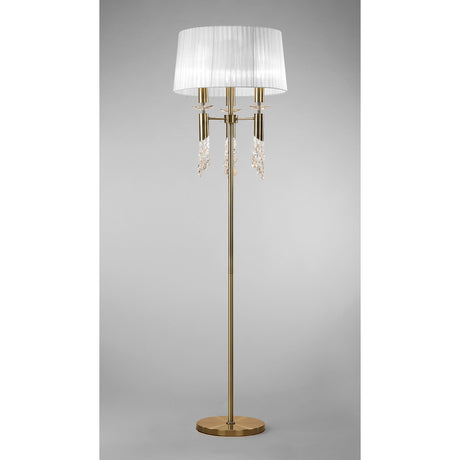 Save 16%£29599£35100Unit price Translation missing: en.products.product.price.unit_price_separatorUnavailable
Tiffany 3 Light Crystal Floor Lamp - Antique Brass with White Shade
Free Delivery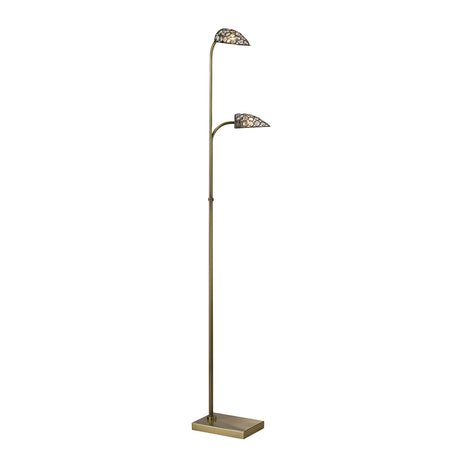
 Save 15%£11299£13300Unit price Translation missing: en.products.product.price.unit_price_separatorUnavailableFree Delivery
 Save 16%£41699£49500Unit price Translation missing: en.products.product.price.unit_price_separatorUnavailableFree Delivery
 Save 16%£15199£18000Unit price Translation missing: en.products.product.price.unit_price_separatorUnavailable
Florence Rectangle 1 Light Crystal Floor Lamp - Antique Brass With Bronze Shade
Free Delivery
 Save 16%£15199£18000Unit price Translation missing: en.products.product.price.unit_price_separatorUnavailable
Florence 1 Light Crystal Floor Lamp - Antique Brass with Cream Shade
Free Delivery


Why brass suits a floor lamp
Brass has a warmth that cool metals cannot quite match. Under a lit bulb it picks up the colour of the light and throws it back softly, which is why a brass standard lamp reads as inviting rather than clinical. The finish also ages gracefully. Satin and brushed surfaces stay bright and even, while antique, aged and vintage brass carry a deeper, slightly mottled tone that settles in beside walnut, oak, leather and deep painted walls. Because a floor lamp stands at eye level and sits away from the wall, the metal is visible from every angle, so the finish does more visual work here than it would on a ceiling fitting or a small table lamp.
How to choose a brass floor lamp
Start with the job the lamp has to do. If you want light to read by, look for an adjustable head, a swing arm or an arched design that reaches over the arm of a sofa or a chair. If you want ambient fill, a column lamp with a linen or bouclé drum shade will wash light up and down without glare. Then check the height. Floor lamps generally sit somewhere between 130cm and 180cm, and the base of the shade ideally falls near eye level when you are seated, roughly 100cm to 130cm from the floor. Finally, look at the footprint. Tripods and weighted discs need clear floor space, while a narrow tube base can tuck into a corner or slide behind a chair. Switch type matters too: inline foot switches, on-body rotary switches and rechargeable cordless bases all behave differently in daily use.
Placement, room by room
In a living room, a brass floor lamp works hardest in the corner diagonally opposite the main seating, where it lifts a dark edge and stops the room feeling flat. A second lamp beside a reading chair gives you a low-level option for evenings when the ceiling light is too much. In a bedroom, a slim column beside a chair or at the end of a chest of drawers adds a softer layer than a pendant. Home offices benefit from an arched or task-style lamp positioned behind and to one side of the screen, which cuts reflections. Hallways and landings suit a taller, narrow design that hugs the wall. Dining spaces are trickier, though a floor uplighter, known in the US as a torchiere, can bounce light off the ceiling without competing with a pendant above the table. Wherever it goes, plan the run to the nearest socket or outlet so the mains lead is not crossing a walkway.
Finishes and materials
Finishes across the range run from satin and brushed brass through to antique, aged and vintage tones, so it is worth deciding whether you want bright and reflective or muted and warm. Brushed and satin surfaces have a fine directional grain that hides fingerprints well. Antique and aged treatments are darkened and often varied across the piece, which pairs comfortably with older furniture. Shade materials range from linen and woven fabric to bouclé, rattan, printed ikat and pleated designs, alongside glass options such as dimpled, ribbed, opal and smoked. Bases may be solid metal, weighted steel, marble, or alabaster carved into a column, and each brings a different weight and character. Mixing metals is fine in practice, so a brass lamp will sit happily in a room with matt black or nickel fittings as long as one finish leads.
Bulbs, dimming and light quality
Bulb caps across the collection span E27 ES, E14 SES, G9 and GU10, with a number of designs using integrated LED modules instead. Check the fitting before you buy replacements, and look at the maximum wattage stated for the lamp. For living spaces, a warm white bulb around 2700K flatters brass and keeps the light restful. Task and reading lamps can take a slightly cooler 3000K without feeling harsh. If you want dimming, you need a dimmable bulb and a compatible switch or plug-in dimmer, or an integrated LED model that dims on the body. Rechargeable cordless designs run on a built-in battery and give you freedom to move the lamp around, which suits conservatories, balconies and rooms where sockets are scarce.
Caring for brass
Lacquered brass needs very little. Dust it with a dry microfibre cloth, then buff gently with a barely damp cloth if marks remain, and dry it straight away. Avoid abrasive creams, metal polishes and anything containing ammonia, since these strip the protective lacquer and leave patchy bright spots. Unlacquered and living brass will develop a patina over time, which is part of the appeal, though a specialist brass polish will bring back the shine if you prefer it even. Fabric shades respond well to a soft brush or the upholstery attachment on a vacuum, used lightly. Always switch off and unplug at the wall before cleaning, and let bulbs cool fully first.
Frequently Asked Questions
What height should a brass floor lamp be?
What height should a brass floor lamp be?
Will brass clash with black or chrome fittings in the same room?
Will brass clash with black or chrome fittings in the same room?
What is the difference between satin, brushed and antique brass?
What is the difference between satin, brushed and antique brass?
Do these floor lamps come with bulbs?
Do these floor lamps come with bulbs?
Can I dim a brass floor lamp?
Can I dim a brass floor lamp?
How do I keep the brass looking good?
How do I keep the brass looking good?
How much is delivery?
How much is delivery?
Related Collections


BestSellers
-

 £49499Unit price Translation missing: en.products.product.price.unit_price_separatorUnavailable
Caelith 1 Light Medium Carved Alabaster Wall Light - Brushed Brass
Free DeliveryIn our showroom -

 £63999Unit price Translation missing: en.products.product.price.unit_price_separatorUnavailableFree Delivery
 -

 £11,87999Unit price Translation missing: en.products.product.price.unit_price_separatorUnavailableFree Delivery
 -

 £1,42999Unit price Translation missing: en.products.product.price.unit_price_separatorUnavailable
Seraphis LED Medium Alabaster Ring Chandelier - Brushed Brass
Free Delivery -

 £1,31999Unit price Translation missing: en.products.product.price.unit_price_separatorUnavailableFree Delivery
 -

 £50599Unit price Translation missing: en.products.product.price.unit_price_separatorUnavailableFree Delivery
 -

 £80299Unit price Translation missing: en.products.product.price.unit_price_separatorUnavailableFree Delivery
 -

 Save 25%£65199£87000Unit price Translation missing: en.products.product.price.unit_price_separatorUnavailableFree Delivery
 -

 £1,64999Unit price Translation missing: en.products.product.price.unit_price_separatorUnavailableFree Delivery
 -

 £2,96999Unit price Translation missing: en.products.product.price.unit_price_separatorUnavailableFree Delivery
 -

 £1,53999Unit price Translation missing: en.products.product.price.unit_price_separatorUnavailableFree Delivery
 -

 £2,30999Unit price Translation missing: en.products.product.price.unit_price_separatorUnavailable
Stratalux LED Stacked Alabaster Column Floor Lamp - Matt Black
Free Delivery


Recommended For You
Our Reviews
-

Birmingham Based
British heritage. Worldwide delivery.
