
 Save 30%£27299£39000Unit price Translation missing: en.products.product.price.unit_price_separatorUnavailable
Alfaisis 1m LED Landscape Ground Light 18W 3000K IP65 - Grey
134 In Stock Free Delivery
 Save 30%£9799£13920Unit price Translation missing: en.products.product.price.unit_price_separatorUnavailable249 In Stock
 Save 30%£27299£39000Unit price Translation missing: en.products.product.price.unit_price_separatorUnavailable
Alfaisis 1m LED Landscape Ground Light 18W 4000K - Grey IP65
Free Delivery Save 30%£4899£6960Unit price Translation missing: en.products.product.price.unit_price_separatorUnavailable
Brass Small Square Outdoor Recessed Ground Light - Grey IP67
58 In Stock Save 30%£4899£6960Unit price Translation missing: en.products.product.price.unit_price_separatorUnavailable324 In Stock
 Save 29%£7199£10200Unit price Translation missing: en.products.product.price.unit_price_separatorUnavailable
Venus Outdoor Small Drive Over Recessed Ground Light - Black
224 In Stock Save 30%£17299£24600Unit price Translation missing: en.products.product.price.unit_price_separatorUnavailable
Zephyra LED Square Recessed Ground Light - 6W 3000K Silver IP67
Free Delivery Save 30%£16399£23400Unit price Translation missing: en.products.product.price.unit_price_separatorUnavailable
Zephyra LED Round Recessed Ground Light - 6W 3000K IP67 Silver
Free Delivery Save 30%£19799£28200Unit price Translation missing: en.products.product.price.unit_price_separatorUnavailable
Zephyra LED Recessed Ground Light - 6W 3000K Grey IP67 Tiltable
Free Delivery Save 30%£17699£25200Unit price Translation missing: en.products.product.price.unit_price_separatorUnavailable
Zephyra Outdoor LED Round Recessed Ground Light - 6W 3000K Grey IP67
78 In StockFree Delivery Save 30%£35299£50400Unit price Translation missing: en.products.product.price.unit_price_separatorUnavailableFree Delivery
 Save 30%£48299£69000Unit price Translation missing: en.products.product.price.unit_price_separatorUnavailable
Zephyra LED Square Recessed Ground Light 20W 3000K Grey - IP67 Tiltable
Free Delivery Save 30%£26899£38400Unit price Translation missing: en.products.product.price.unit_price_separatorUnavailable
Zephyra LED Round Recessed Ground Light - 16W 3000K Silver IP67
Free Delivery Save 30%£36599£52200Unit price Translation missing: en.products.product.price.unit_price_separatorUnavailable
Zephyra Outdoor LED Square Recessed Ground Light - 14W 3000K Grey
Free Delivery Save 30%£34099£48600Unit price Translation missing: en.products.product.price.unit_price_separatorUnavailable
Zephyra Outdoor LED Recessed Ground Light 14W 3000K - Grey Tiltable
63 In StockFree Delivery Save 30%£23999£34200Unit price Translation missing: en.products.product.price.unit_price_separatorUnavailable
Zephyra LED Square Recessed Ground Light - 11W 3000K IP67 Silver
Free Delivery Save 30%£23099£33000Unit price Translation missing: en.products.product.price.unit_price_separatorUnavailableFree Delivery
 Save 30%£29899£42600Unit price Translation missing: en.products.product.price.unit_price_separatorUnavailable
Zephyra LED Recessed Ground Light 11W 3000K IP67 - Grey Square
Free Delivery Save 30%£26899£38400Unit price Translation missing: en.products.product.price.unit_price_separatorUnavailable
Zephyra Outdoor LED Recessed Ground Light 11W 3000K Grey - Tiltable IP67
80 In StockFree Delivery
 Save 30%£37799£54000Unit price Translation missing: en.products.product.price.unit_price_separatorUnavailable
Zephyra 21W LED Square Recessed Ground Light - 3000K, IP67, Silver Steel
Free Delivery
 Save 30%£44599£63600Unit price Translation missing: en.products.product.price.unit_price_separatorUnavailable
Zephyra Outdoor LED Round Recessed Ground Light - 20W 3000K Grey
54 In StockFree Delivery
 Save 30%£28599£40800Unit price Translation missing: en.products.product.price.unit_price_separatorUnavailable
Zephyra 16W LED Square Recessed Ground Light - 3000K, Silver, IP67
Free Delivery Save 30%£20999£30000Unit price Translation missing: en.products.product.price.unit_price_separatorUnavailable19 In StockFree Delivery
 Save 30%£7099£10080Unit price Translation missing: en.products.product.price.unit_price_separatorUnavailable108 In Stock
 Save 30%£13099£18600Unit price Translation missing: en.products.product.price.unit_price_separatorUnavailableFree Delivery
 Save 30%£13099£18600Unit price Translation missing: en.products.product.price.unit_price_separatorUnavailable20 In StockFree Delivery
 Save 30%£12199£17400Unit price Translation missing: en.products.product.price.unit_price_separatorUnavailable127 In StockFree Delivery
 Save 30%£12199£17400Unit price Translation missing: en.products.product.price.unit_price_separatorUnavailableFree Delivery
 Save 30%£11799£16800Unit price Translation missing: en.products.product.price.unit_price_separatorUnavailable54 In StockFree Delivery
 Save 30%£11799£16800Unit price Translation missing: en.products.product.price.unit_price_separatorUnavailable186 In StockFree Delivery
 Save 30%£10099£14400Unit price Translation missing: en.products.product.price.unit_price_separatorUnavailable111 In StockFree Delivery
 Save 30%£10099£14400Unit price Translation missing: en.products.product.price.unit_price_separatorUnavailableFree Delivery
 Save 30%£12199£17400Unit price Translation missing: en.products.product.price.unit_price_separatorUnavailable163 In StockFree Delivery
 Save 30%£12199£17400Unit price Translation missing: en.products.product.price.unit_price_separatorUnavailable226 In StockFree Delivery
 Save 30%£12199£17400Unit price Translation missing: en.products.product.price.unit_price_separatorUnavailable34 In StockFree Delivery
 Save 30%£12199£17400Unit price Translation missing: en.products.product.price.unit_price_separatorUnavailableFree Delivery
 Save 30%£12199£17400Unit price Translation missing: en.products.product.price.unit_price_separatorUnavailable38 In StockFree Delivery
 Save 30%£12199£17400Unit price Translation missing: en.products.product.price.unit_price_separatorUnavailableFree Delivery
 Save 30%£12199£17400Unit price Translation missing: en.products.product.price.unit_price_separatorUnavailable122 In StockFree Delivery
 Save 30%£12199£17400Unit price Translation missing: en.products.product.price.unit_price_separatorUnavailable70 In StockFree Delivery
 Save 30%£12199£17400Unit price Translation missing: en.products.product.price.unit_price_separatorUnavailable131 In StockFree Delivery
 Save 30%£15999£22800Unit price Translation missing: en.products.product.price.unit_price_separatorUnavailable144 In StockFree Delivery
 Save 30%£15999£22800Unit price Translation missing: en.products.product.price.unit_price_separatorUnavailable156 In StockFree Delivery
 Save 30%£15999£22800Unit price Translation missing: en.products.product.price.unit_price_separatorUnavailable40 In StockFree Delivery
 Save 30%£9799£13920Unit price Translation missing: en.products.product.price.unit_price_separatorUnavailable
 Save 30%£15999£22800Unit price Translation missing: en.products.product.price.unit_price_separatorUnavailable114 In StockFree Delivery
 Save 30%£15999£22800Unit price Translation missing: en.products.product.price.unit_price_separatorUnavailable111 In StockFree Delivery
 Save 30%£10699£15240Unit price Translation missing: en.products.product.price.unit_price_separatorUnavailable283 In StockFree Delivery


Which driveway light suits your surface
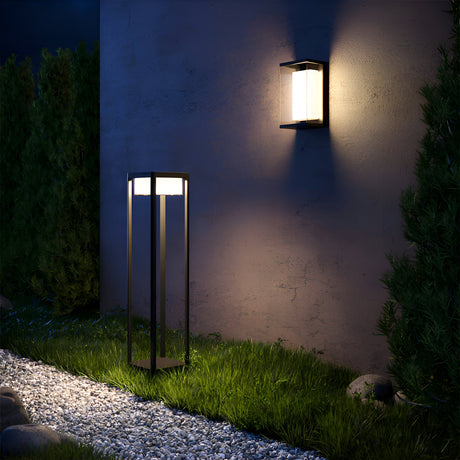
Block paving and resin take a recessed ground light well, because the fitting sits flush and nothing catches a tyre or a mower. Gravel does not: the stones shift, the lens fills, and the beam ends up pointing at a hedge. On gravel or grass a bollard is the better answer, since it sits above the surface and stays aimed where you put it. Tarmac will take either, though a recessed fitting needs a proper core-drilled housing rather than a hole cut on the day. Gradient matters as much as material. On a sloping drive, water runs to the bottom and sits there, so keep recessed fittings out of the low corner and put a bollard there instead.
Bollards, posts or in-ground: how to choose
Height is the real decision. A bollard between forty and eighty centimetres lights the ground and the kerb without glare at eye level, which suits a short drive beside a house. A lamp post at two to three metres lights the whole approach and the turning circle, and it reads as part of the building rather than as a marker. Recessed ground lights do neither job on their own. They are a wash and a guide, best used along an edge with something taller doing the real work.
How many lights, and how far apart
For bollards, space at roughly three to four times the fitting height. A sixty centimetre bollard sits happily at two metres from its neighbour; push past three and you get scallops of light with dark gaps between them. Lamp posts carry much further and rarely need more than one every eight to ten metres, or simply one at the gate and one at the house. Stagger them side to side rather than lining both edges, which halves the count and looks less like an airfield. Where a drive curves, put a fitting on the outside of the bend rather than the inside. That is the edge a reversing car finds first, and it is the one a visitor is looking for in the dark.
IP ratings and what British weather actually demands
Everything on this page is IP-rated. For a fitting standing on a driveway, IP44 is the working minimum and covers splashing from any direction. IP65 adds jetting, which matters if the drive gets pressure-washed. Anything set into the ground should be IP67 at least, because it will sit in standing water after heavy rain whatever the drainage promises. Read the rating on the specification tab rather than the marketing line, and note that a rating applies to the assembled fitting, so a missing gasket voids it.
Wiring, and what needs an electrician
Mains outdoor lighting on a driveway is notifiable work in England and Wales under Part P, so the circuit itself is a job for a registered electrician. Running the cable is the part worth planning early: armoured cable wants a trench below spade depth, and it is far cheaper to lay it before the surface goes down than to lift block paving afterwards. Low-voltage systems avoid the notification but not the trench. Leave a draw cord if you think you might add a fitting later.
Materials that survive a coastal driveway
Within a mile or two of salt air, marine-grade stainless steel and powder-coated die-cast aluminium both hold up. Ordinary stainless will pit and streak within a season. Copper and brass weather rather than fail, and many people buy them for exactly that, though they will not stay bright without work. Inland, powder-coated aluminium is the sensible default: it takes a knock from a wheelbarrow, and a scratch can be touched in rather than replaced. Whichever you pick, check how the fitting opens for a lamp change. A driveway light gets opened in the rain, often at head height on a post, and a captive screw is worth more on the day than any finish.
Frequently Asked Questions
How far apart should driveway lights be?
How far apart should driveway lights be?
Do driveway lights need an electrician?
Do driveway lights need an electrician?
What IP rating do I need for a driveway?
What IP rating do I need for a driveway?
Can driveway lights be driven over?
Can driveway lights be driven over?
Are solar driveway lights bright enough?
Are solar driveway lights bright enough?
What height should a driveway bollard be?
What height should a driveway bollard be?
Related Collections


BestSellers
-

 £63999Unit price Translation missing: en.products.product.price.unit_price_separatorUnavailableFree Delivery
 -

 £50599Unit price Translation missing: en.products.product.price.unit_price_separatorUnavailableFree Delivery
 -

 £11,87999Unit price Translation missing: en.products.product.price.unit_price_separatorUnavailableFree Delivery
 -

 £1,42999Unit price Translation missing: en.products.product.price.unit_price_separatorUnavailable
Seraphis LED Medium Alabaster Ring Chandelier - Brushed Brass
Free Delivery -

 Save 8%£49999£54299Unit price Translation missing: en.products.product.price.unit_price_separatorUnavailable
Helia 100cm LED Circular Pendant Light 55W 3000K - Matte Black
13 In StockFree Delivery -

 £1,31999Unit price Translation missing: en.products.product.price.unit_price_separatorUnavailableFree Delivery
 -

 £80299Unit price Translation missing: en.products.product.price.unit_price_separatorUnavailableFree Delivery
 -

 Save 25%£65199£87000Unit price Translation missing: en.products.product.price.unit_price_separatorUnavailableFree Delivery
 -

 £1,64999Unit price Translation missing: en.products.product.price.unit_price_separatorUnavailableFree Delivery
 -

 £2,96999Unit price Translation missing: en.products.product.price.unit_price_separatorUnavailableFree Delivery
 -

 £1,53999Unit price Translation missing: en.products.product.price.unit_price_separatorUnavailableFree Delivery
 -

 £2,30999Unit price Translation missing: en.products.product.price.unit_price_separatorUnavailable
Stratalux LED Stacked Alabaster Column Floor Lamp - Matt Black
Free Delivery


Recommended For You
Our Reviews
-

Birmingham Based
British heritage. Worldwide delivery.
