
Introduction
Alabaster ceiling lights are defining interior design in 2026, bringing softness, warmth and quiet luxury into modern homes. At Niori, we have seen a clear movement towards natural materials that feel authentic and architectural rather than decorative.
Unlike glass or acrylic fittings, alabaster is a natural stone with subtle veining and translucency. When illuminated, it produces a warm, diffused glow that feels calm and inviting. The effect is gentle rather than harsh, making it ideal for minimalist interiors, compact rooms and layered lighting schemes.
This guide explains how to choose the right style for 2026 trends, how these fittings complement contemporary spaces, and how to style them so they elevate your interior.

Why Are Alabaster Ceiling Lights So Popular in 2026?
Alabaster ceiling lights are popular because they combine natural texture with clean, modern forms.
Interior design in 2026 centres around warmth, restraint and material authenticity. People want lighting that feels integrated into the architecture rather than added as an afterthought. Alabaster delivers this balance.
Key reasons for their rise include:
A soft, flattering glow that enhances skin tones and furnishings
Organic veining that adds subtle visual interest
Compatibility with neutral, earthy palettes
Strong alignment with minimalist and Japandi interiors
A move away from cold, industrial lighting
Trending designs favour slim discs, shallow bowls and low-profile flush fittings. Instead of ornate statement pieces, the focus is on understated presence.

What Makes Alabaster Different From Other Ceiling Materials?
Alabaster differs from other materials because it allows light to pass through the stone itself.
Unlike marble, which is opaque, alabaster is translucent. This translucency softens illumination and removes glare. The result is ambient light that feels enveloping rather than directional.
The benefits include:
Reduced harsh shadows
Warm diffusion
Natural texture variation
Timeless aesthetic appeal
Each piece of alabaster is unique. No two lights are identical, which adds character without clutter.

How Do You Choose the Right Alabaster Ceiling Lights?
You choose the right alabaster ceiling lights by balancing size, light temperature and room proportions.
A careful approach ensures the fixture complements the space rather than dominating it. When proportions, finish and light quality are aligned, the result feels architectural and intentional rather than decorative.
Step 1: Measure the Room Properly
Room size determines scale.
Small rooms (under 10m²): choose 25-35cm flush fittings
Medium rooms (10-20m²): 35–50cm works well
Large rooms: consider wider bowls or multiple fittings
In compact spaces, flush-mounted designs work best when positioned close to the ceiling. This keeps the visual line clean and prevents the room from feeling heavy or crowded. Always allow enough breathing space around the fitting so it does not overwhelm the ceiling plane.
Step 2: Select the Correct Light Temperature
Alabaster performs best with warm white light.
2700K for a soft, cosy glow
3000K for a slightly brighter but still warm tone
Cool white lighting diminishes the stone’s natural beauty and makes it appear flat. Warm tones enhance the veining and depth, allowing the material to glow naturally rather than appear stark.
Step 3: Consider Ceiling Height
Ceiling height affects projection.
Standard UK ceilings (around 2.4m): flush or semi-flush fittings
Higher ceilings: shallow suspended designs
Hallways: keep fittings discreet and consistent
Well-proportioned fittings should feel integrated rather than intrusive. In lower ceilings, anything that hangs too far down can disrupt the visual balance of the room.
Step 4: Coordinate Finishes
The metal trim frames the stone and influences the overall tone of the room.
Brushed brass adds warmth
Bronze deepens contrast
Matte black sharpens the look
Polished nickel keeps things subtle
Minimal detailing keeps the focus on the natural material. The goal is to support the stone’s character, not compete with it.

Where Do Alabaster Ceiling Lights Work Best?
Alabaster ceiling lights work best in spaces that benefit from calm, ambient lighting.
Living Rooms
They create a soft foundation of light. Combine with floor and table lamps for layered depth.
Bedrooms
The diffused glow is ideal for relaxation. Dimmable fittings are particularly effective here.
Small Rooms
Alabaster ceiling lights for small rooms reduce glare and prevent the boxed-in feeling caused by sharp overhead lighting.
Dining Areas
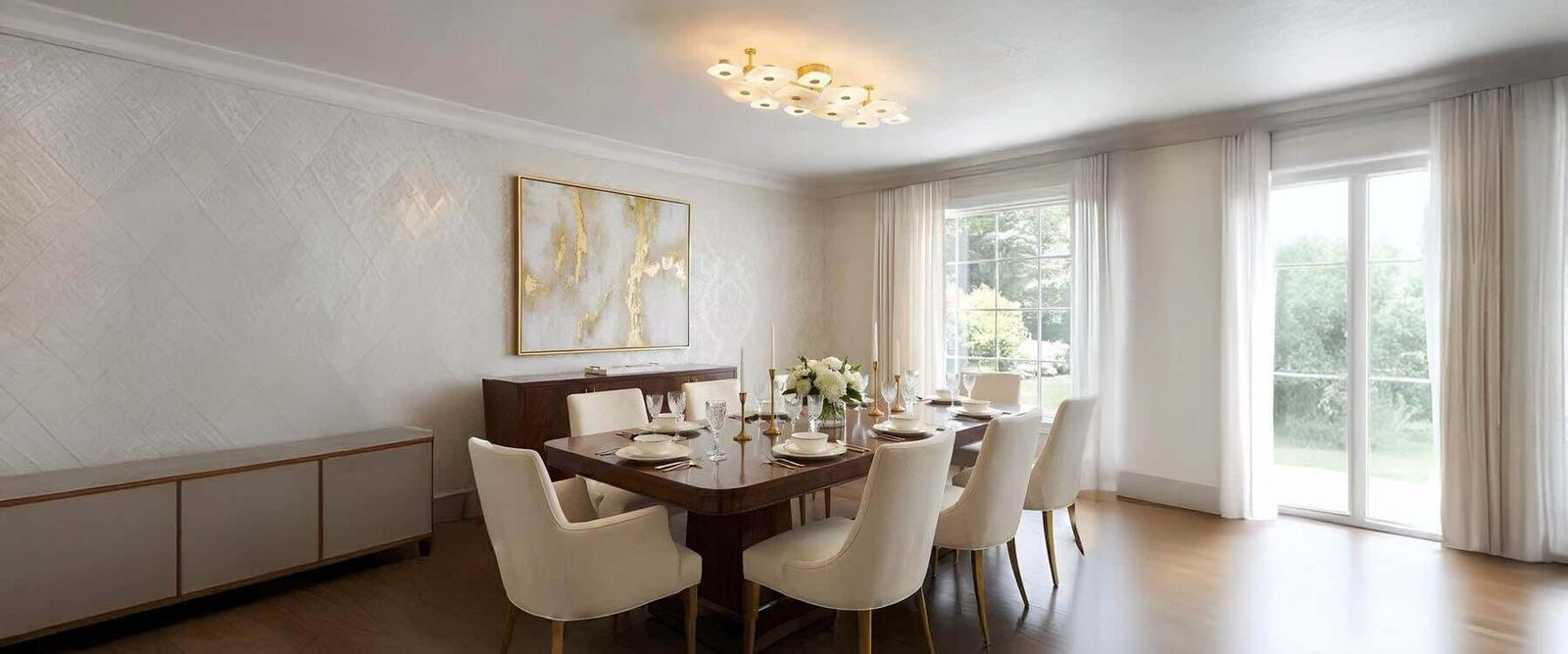
A shallow alabaster bowl above the table creates warmth without visual clutter.
Hallways
Installing a sequence of matching fittings establishes rhythm and elegance.

How Do Minimalist Interiors Benefit From Alabaster?
Minimalist interiors benefit from alabaster because it introduces texture without excess detail.
Clean-lined homes often risk feeling cold. The natural softness of stone counters this effect. Minimalist alabaster ceiling fixtures blend seamlessly into plaster ceilings, curved walls and neutral colour schemes.
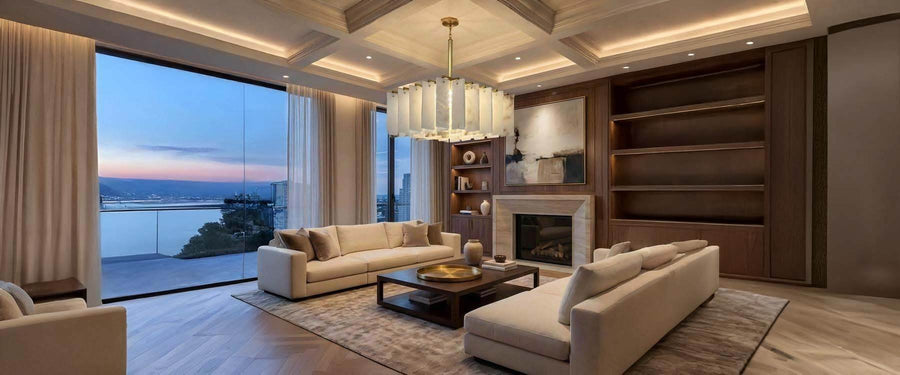
For larger, open-plan rooms, you may also consider complementary statement pieces such as alabaster chandeliers, which maintain material continuity while adding vertical interest. Used sparingly, they anchor larger spaces without overwhelming them.

How Should You Layer Alabaster Lighting?
Alabaster lighting works best as part of a layered scheme.
Ceiling lighting alone rarely creates the ideal atmosphere. Instead, combine:
Ceiling-mounted alabaster for ambient light
Wall lights for mid-level balance
Table or floor lamps for intimacy
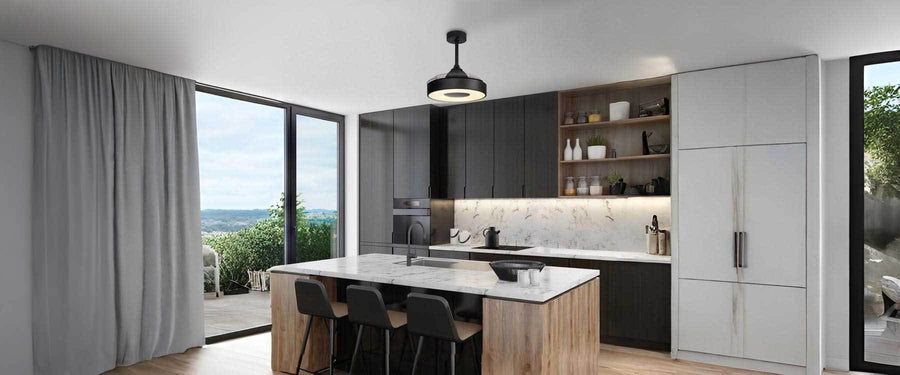
In kitchens and open-plan spaces, pairing ceiling fittings with alabaster pendant lighting above islands can create cohesion while maintaining functional brightness.
The aim is harmony, not uniform brightness.

What Mistakes Should You Avoid?
Avoid poor sizing, incorrect bulb temperatures and overloading the room with similar textures.
Common errors include:
Choosing a fixture that is too large for the ceiling
Installing cool white LEDs
Ignoring dimming compatibility
Failing to layer additional light sources
Placing highly patterned materials next to strong veining
Restraint is essential. Alabaster ceiling lights should enhance the room quietly.

How Do You Maintain Alabaster Ceiling Lights?
Alabaster ceiling lights are easy to maintain with gentle care.
Use a soft, dry cloth for dusting. Avoid moisture, chemical cleaners or abrasive materials. The stone is durable but should not be exposed to impact or harsh treatment.
Quality fittings from Niori are sealed appropriately to protect the material while preserving its natural beauty.

How Do Alabaster Ceiling Lights Fit Long-Term Design Plans?
Alabaster ceiling lights fit long-term design plans because they are timeless rather than trend-driven.
While currently popular, their appeal lies in simplicity and material authenticity. Unlike highly decorative fixtures that date quickly, alabaster remains relevant across evolving styles.
Homes designed with natural materials age gracefully. The subtle veining and warm glow adapt easily to changing furniture, paint colours and layouts.

Conclusion: Why Alabaster Ceiling Lights Remain a Smart Choice
Alabaster ceiling lights combine natural beauty, soft illumination and architectural simplicity in a way few materials can. Their popularity in 2026 reflects a broader shift towards warmth, authenticity and understated design.
When chosen with care considering room size, ceiling height and light temperature they provide lasting elegance. They work particularly well in small rooms, minimalist interiors and layered lighting schemes. Warm white illumination enhances their natural veining, while restrained metal detailing keeps the look refined.
From living rooms to bedrooms and hallways, these fixtures offer versatility and timeless appeal. Proper sizing, thoughtful placement and gentle maintenance ensure they remain both practical and beautiful for years to come.