
Introduction
Alabaster ceiling lights bring warmth, texture and quiet elegance into a home. Their soft glow and natural veining make them very different from standard glass or plastic fittings. If you are considering alabaster ceiling lights, the key is choosing the right style, size and brightness for each room.
At Niori, we often guide clients through this decision because ceiling lighting shapes how a space feels. The right fixture should complement the room’s proportions, support its function and enhance the overall design.
This guide explains exactly how to choose the right option for your living room, bedroom, hallway or open-plan space, while avoiding common mistakes.

What Makes Alabaster Ceiling Lights Different?
Alabaster ceiling lights are made from natural stone that diffuses light in a soft, even way.
Unlike clear glass, alabaster is slightly translucent. When illuminated, it produces a warm, creamy glow rather than sharp brightness. Each piece features natural veining and subtle tonal variation, so no two fittings are identical.
Key characteristics include:
Natural stone with unique patterns
Warm, glare-free light
Subtle, timeless appearance
A softening effect on LED bulbs
A luxurious yet understated finish
Because of these qualities, alabaster works beautifully in both traditional interiors and modern spaces with clean lines.

Why Choose Alabaster Ceiling Lights for Your Home?
Alabaster ceiling lights offer softer ambience and greater visual depth than many other ceiling materials.
They are especially suitable if you want:
A calm and welcoming atmosphere
Light that flatters skin tones and furnishings
A fixture that looks elegant even when switched off
A design that will not date quickly
The natural texture of alabaster adds character without overwhelming the room. In living areas, it creates comfort. In bedrooms, it promotes relaxation. In hallways, it introduces warmth where lighting is often overlooked.

Are Alabaster Ceiling Lights Bright Enough?
Yes, alabaster ceiling lights are bright enough when the correct lumen output is selected.
Because alabaster diffuses light, it softens the intensity. This sometimes leads people to assume it is dim. In reality, brightness depends on:
The number of bulbs
The lumen rating
The thickness of the stone
The size of the space
As a general guide:
Small bedroom: 800–1200 lumens
Medium living room: 2000-3000 lumens
Larger open-plan areas: 3000 lumens or more, supported by additional lighting
In many homes, we recommend layering the ceiling fitting with alabaster wall lights to eliminate shadows and add depth. This combination ensures the room feels balanced rather than flat.
Always choose dimmable LEDs where possible. Dimming allows you to adjust the mood from bright and practical to soft and atmospheric.

What Are the Best Alabaster Ceiling Lights for Living Rooms?
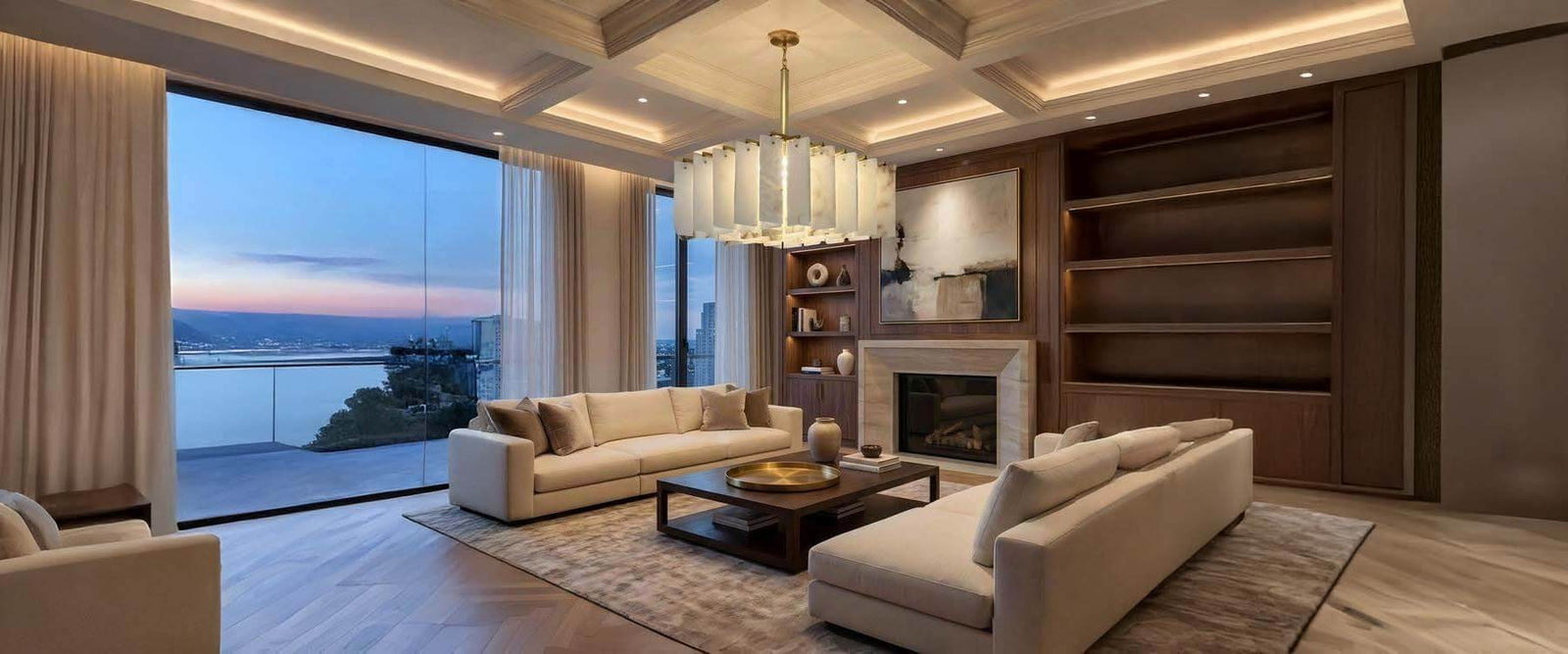
The best alabaster ceiling lights for living rooms are proportionate, layered and flexible in brightness.
Living rooms serve multiple purposes: relaxing, entertaining and sometimes working. For this reason, a single small fitting is rarely enough.
Consider:
A wide semi-flush design for standard ceiling heights
A larger statement bowl for spacious rooms
Dimmable LED bulbs
Complementary alabaster table lamps to add pools of light at seating level
Layered lighting improves comfort and reduces glare. If your walls are dark or heavily textured, increase lumen output slightly to compensate for light absorption.
In larger spaces, pairing ceiling lighting with side lamps and accent fixtures prevents the centre of the room from feeling overly dominant.

What About Alabaster Flush Ceiling Lights for Low Ceilings?
Alabaster flush ceiling lights for low ceilings should be wide and slim rather than deep and decorative.
In rooms with ceilings under 2.4 metres, hanging fittings can make the space feel compressed. A flush design sits close to the ceiling while still delivering warmth.
Look for:
Circular or oval shapes
Clean metal frames
Balanced proportions
Integrated LED panels behind alabaster diffusers
These designs are ideal for:
Hallways
Bedrooms
Small lounges
Flats or converted properties
The goal is to maintain headroom while keeping the space visually open.

How Do You Choose the Right Size?
Choosing the right size ensures the fixture feels intentional rather than awkward.
Follow this simple method:
Measure the room’s length and width in metres.
Add the two numbers together.
Convert the result into centimetres for approximate fixture diameter.
For example, a 4m by 3m room totals 7. A 60-70cm fitting would usually suit that space.
Also consider ceiling height. A large, shallow fixture works better in lower rooms, while slightly deeper designs suit taller ceilings.
Proportion is more important than decoration. A modest but correctly sized fitting always looks better than an oversized statement piece in a small room.

What Are Modern Alabaster Ceiling Light Ideas?
Modern alabaster ceiling light ideas focus on simplicity and contrast.
In contemporary homes, alabaster pairs well with:
Slim black metal frames
Brushed brass detailing
Minimal circular forms
Geometric outlines
Linear cluster arrangements
The contrast between natural stone and clean architectural lines creates a refined look. The stone becomes the feature, not the frame.
When working with modern interiors at niori, we often recommend keeping surrounding finishes simple. Let the texture of the alabaster provide interest without competing with bold patterns or heavy ornamentation.

Step-by-Step: How to Choose the Perfect Fixture
The best way to select alabaster ceiling lights is to approach the decision methodically.
Step 1: Identify the Room’s Function
Decide whether the space is primarily for relaxing, working or entertaining.
Step 2: Check Ceiling Height
Under 2.4m: flush design
2.4-2.7m: semi-flush
Above 2.7m: larger or layered options
Step 3: Calculate Brightness
Factor in room size, wall colour and natural daylight.
Step 4: Coordinate Finishes
Match the metal detail with handles, taps or furniture legs for cohesion.
Step 5: Plan for Layering
Combine the ceiling light with additional sources at different heights.
Step 6: Install a Dimmer
Dimming extends functionality and enhances atmosphere.
Taking these steps ensures your lighting feels considered rather than accidental.

Common Mistakes to Avoid
Avoiding these errors will help you get the best results.
Choosing a fitting that is too small
Ignoring ceiling height
Forgetting about dimming compatibility
Mixing too many competing finishes
Expecting pure white stone instead of natural cream tones
Natural variation is part of the appeal. Slight veining differences should be embraced rather than avoided.

Quick Summary
Alabaster ceiling lights provide soft, warm illumination that suits many interior styles.
Choose the size based on room dimensions and ceiling height.
Ensure brightness is appropriate by selecting the correct lumen output.
Flush designs work best for lower ceilings.
Layer lighting with additional fixtures to improve balance.
Use dimmable LEDs for flexibility and atmosphere.

Conclusion
Alabaster ceiling lights combine natural beauty with practical performance. As a brand, Niori focuses on designs that soften glare, add depth through natural texture and suit both classic and modern interiors. Choosing the right fitting depends on room size, ceiling height and brightness needs, along with careful consideration of proportion and layering.
When selected thoughtfully, they transform ordinary rooms into calm, inviting spaces. With the right size, correct lumen level and coordinated finishes, alabaster lighting becomes more than functional it becomes part of the architecture of the home.