
Introduction
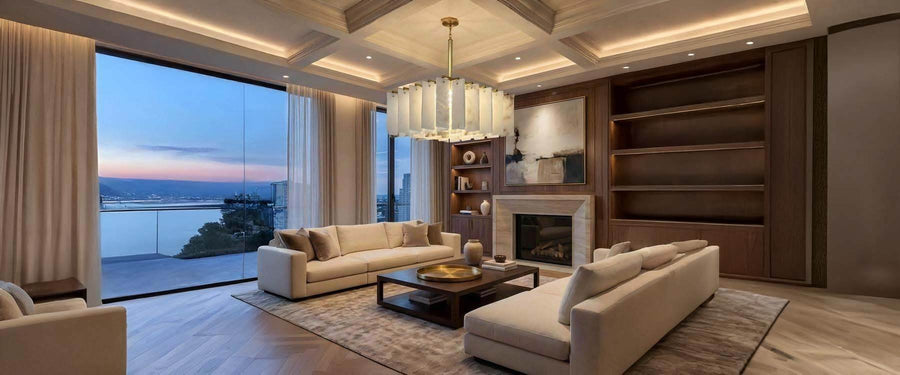
Modern chandeliers are no longer just decorative fixtures they shape how a room looks, feels, and functions. At Niori, lighting is treated as part of the overall design, not something added at the end. The right chandelier can influence mood, highlight key areas, and bring structure to an open space. It’s not only about appearance, but also about how light interacts with your layout and daily use.
Choosing the right chandelier means understanding proportion, placement, and purpose rather than simply picking a style that looks appealing. A well-chosen piece should complement the room’s size, furniture, and ceiling height without overpowering it. Different spaces, such as dining areas, kitchens, and high ceilings, require different approaches to lighting. This guide will help you select modern chandeliers that work naturally in real homes while improving both function and design.
Quick Summary
- Modern chandeliers act as both lighting and focal points
- Size and placement matter more than design trends
- Dining rooms need centred, proportional fixtures
- Kitchens benefit from linear designs
- High ceilings require larger or layered pieces
- Minimalist styles suit modern interiors
- Avoid common mistakes like poor sizing and placement

What are Modern Chandeliers and Why do They Matter?
Modern chandeliers are lighting fixtures designed with clean lines, simple forms, and practical functionality.
They matter because they influence both the lighting quality and the visual balance of a room. Unlike bulky traditional chandeliers, modern designs are more adaptable and fit easily into today’s interiors.
You’ll often see:
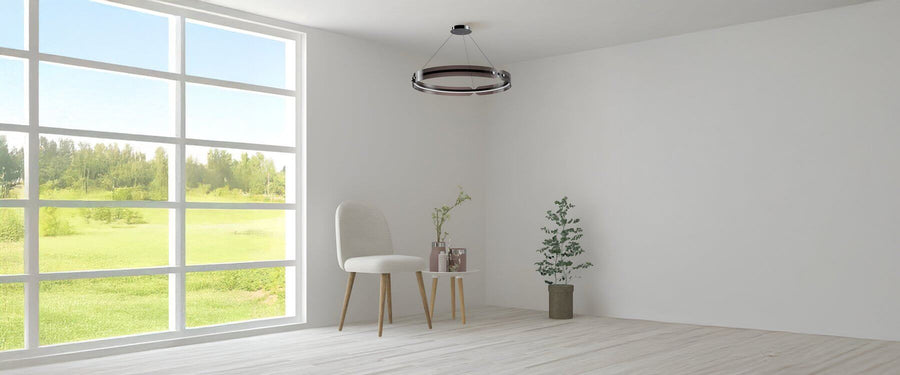
- Geometric shapes such as rings or bars
- Materials like metal, glass, and acrylic
- Built-in LED lighting
- Slim, uncluttered profiles
The result is lighting that feels intentional rather than excessive.

How do You Choose the Right Size Modern Chandelier?
The right size keeps the room balanced and prevents the fixture from feeling out of place.
A simple sizing method:
- Add the room’s length and width (in feet)
- Convert that number to inches for the chandelier diameter
For specific areas:
-
Dining table:
- Choose ½ to ⅔ of the table width
-
Living room:
- Base size on seating layout
-
Open spaces:
- Scale up to maintain presence
Getting this step right avoids the most common design mistake choosing a fixture that is too small.

Where Should Modern Chandeliers be Placed?
Placement determines both how the chandelier looks and how well it works.
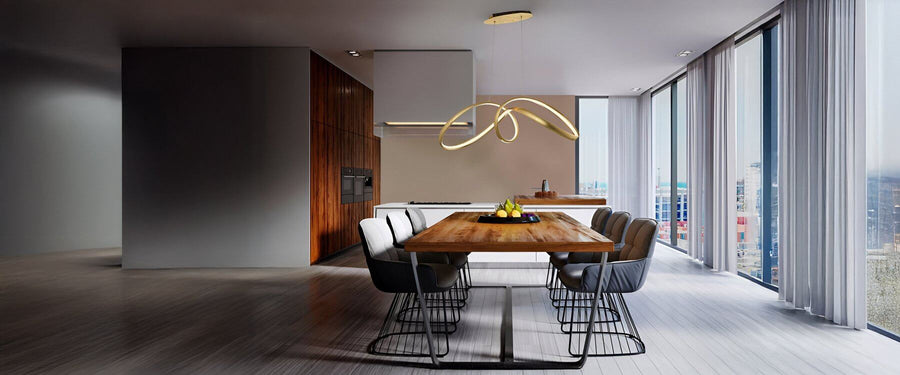
Dining rooms
The chandelier should sit directly above the table.
- Hang 75-90 cm above the tabletop
- Keep it centred for balance
- Works best for modern chandeliers for dining rooms
Living rooms
Place it above the main seating area.
- Acts as a visual anchor
- Doesn’t need to be the brightest light source
Kitchens
Position chandeliers above islands or counters.
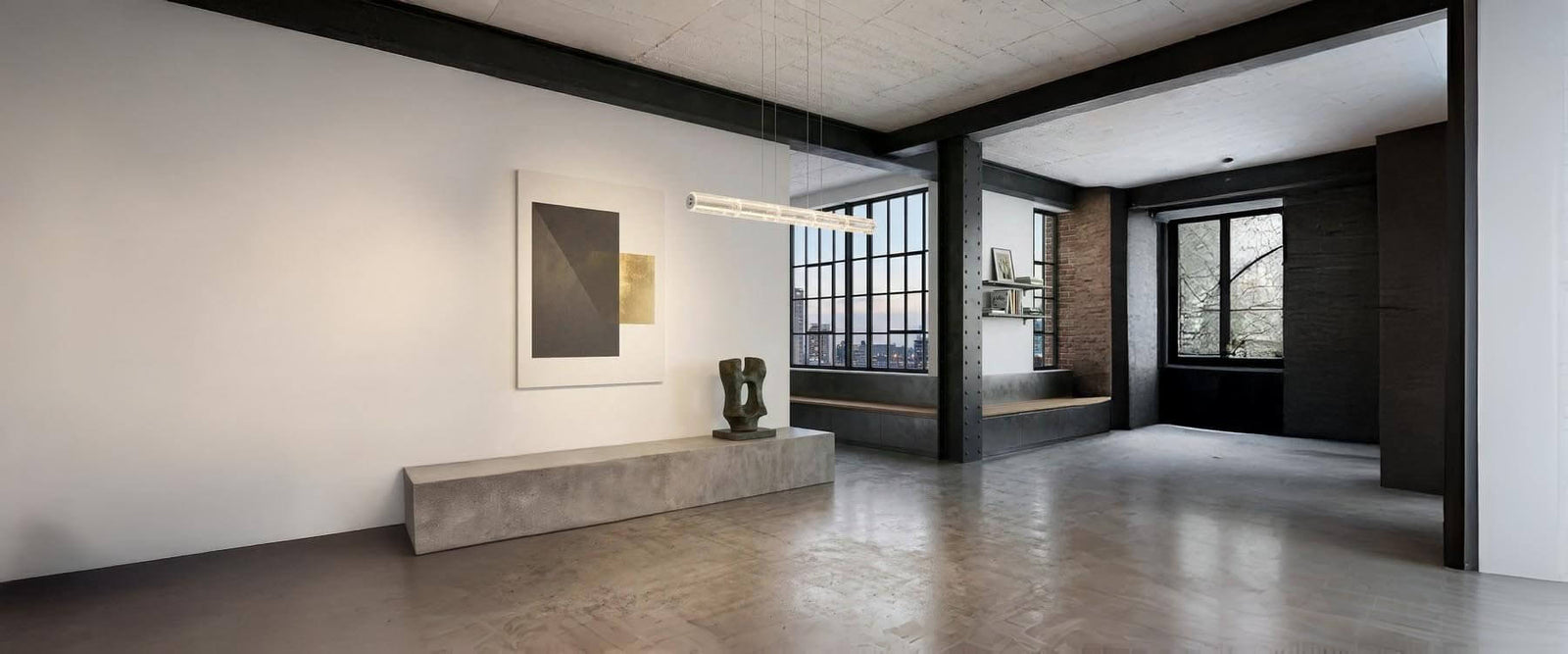
- Long fixtures provide even lighting
- Pair well with Linear Lighting for a cohesive look
- Ideal for linear modern chandeliers for kitchens
Entryways
Use a chandelier to create a strong first impression.
- Works especially well in tall spaces
- Choose a design that fills vertical space

Why are Minimalist Modern Chandeliers so Popular?
Minimalist designs are popular because they fit easily into different interiors without overpowering the space.
They work well in:
- Open-plan layouts
- Neutral colour schemes
- Contemporary homes
Key benefits:
- Clean and uncluttered appearance
- Easy to match with furniture and décor
- Timeless rather than trend-driven
Minimalism allows the room to breathe while still adding interest.

How do You Choose Modern Chandeliers forHigh Ceilings?
High ceilings need chandeliers that fill the vertical space properly.
Large modern chandeliers for high ceilings should:
- Extend downward to avoid empty space
- Use layered or cascading forms
- Include adjustable suspension
Practical tips:
- Maintain at least 2.1 metres clearance
- Choose warm lighting to soften the scale
- Consider dimmers for flexibility
A small fixture in a tall room often looks lost, so scale is essential.

How do Linear Lighting improve kitchen lighting?
Linear lighting improve kitchen lighting by spreading light evenly across surfaces.
They are especially useful over islands because they:
- Reduce shadows
- Provide consistent brightness
- Match the shape of the workspace
Best practices:
- Length should be ⅔-¾ of the island
- Hang 75-85 cm above the surface
- Align with the centre of the island
This setup improves both function and appearance.

Step-by-step: How to Choose the Right Modern Chandelier
Choosing a chandelier becomes easier when you follow a clear process.
Step 1: Define the purpose
Decide if the light is for ambience, task lighting, or a statement.
Step 2: Measure the space
Take note of room size, ceiling height, and furniture.
Step 3: Select a style
- Minimalist for subtle spaces
- Sculptural for bold rooms
- Linear for kitchens
Step 4: Pick the right size
Use proportional guidelines instead of guessing.
Step 5: Choose light output
- Warm light for living areas
- Neutral light for kitchens
Step 6: Set the correct height
Ensure it doesn’t block views or feel too distant.
Step 7: Add dimming options
This allows flexibility throughout the day.

What Mistakes Should you Avoid?
Avoiding these mistakes can save time and prevent costly changes later.
Common issues:
-
Wrong size
Too small looks insignificant -
Incorrect height
Can cause glare or poor lighting -
Ignoring room style
Leads to mismatched design -
Overly complex fixtures
Can overwhelm a modern space -
Poor lighting choice
Affects comfort and usability
Small adjustments can make a big difference in the final result.

How do Modern Chandeliers Change a Room?
Modern chandeliers change a room by becoming both a light source and a design feature.
They help to:
- Define the centre of the space
- Improve lighting distribution
- Add depth and structure
- Connect different design elements
In many homes, they act as the main focal point rather than just supporting décor.

Conclusion
Modern chandeliers do more than light a room they shape how the space feels and functions. From choosing the right size to placing it correctly, every detail matters. A well-selected chandelier can balance a dining room, improve kitchen lighting, and bring life to high ceilings.
At Niori, we believe the right lighting should feel natural in your space while still making an impact. When you take the time to choose carefully, the result is a home that feels complete, comfortable, and well-designed.
If you’re ready to upgrade your space, explore modern chandelier options that match your layout and style. The right piece doesn’t just brighten a room it defines it.