
Introduction
Modern lighting has moved far beyond the days of heavy crystal fixtures reserved only for formal ballrooms or grand staircases. Today’s modern chandeliers are versatile, stylish, and available in a wide range of designs, from sleek minimalist forms to bold industrial creations. They can be the centerpiece of a dining room, the defining accent in a living room, or even a subtle feature in a bedroom.
However, even the most beautiful chandelier can look awkward if its size and placement are not properly considered. Proportion is the key. A fixture that is too large can overpower a room, while one that is too small may appear insignificant. Choosing the right size ensures your chandelier not only fits the space but also enhances the overall atmosphere. This guide will walk you step by step through the principles of scale, sizing rules, ceiling height adjustments, and placement strategies, giving you confidence in selecting the perfect chandelier for your home.

Understanding the Role of Scale
Scale is one of the most important factors when choosing modern chandeliers. These fixtures are often statement pieces, which means they naturally draw the eye. If they are out of proportion, they can disrupt the balance of a room’s design.
Too large: The chandelier dominates the space and makes the room feel crowded.
Too small: The fixture looks lost, failing to make an impact even though it provides light.
Think of chandeliers not only as light sources but also as visual anchors. Their scale should harmonize with both the size of the room and the furnishings within it.

Sizing Rules by Room Dimensions
A simple formula can help determine the ideal chandelier diameter for most rooms:
Fixture diameter (in inches) = room length (ft) + room width (ft).
For example:
A 12x15 ft dining room would benefit from a chandelier approximately 27 inches wide.
A 10x10 ft bedroom would look best with a chandelier about 20 inches wide.
This formula ensures that the fixture feels substantial without overwhelming the space. For very large rooms, you may need more than one chandelier or additional accent lighting to maintain balance.

Ceiling Height Considerations
The height of the ceiling plays a critical role in chandelier placement. Hanging too low can obstruct views, while too high diminishes the chandelier’s presence.
Standard 8-foot ceilings: The bottom of the chandelier should hang 7 feet above the floor.
Ceilings 9 feet or higher: Add 3 inches of chandelier height for each extra foot of ceiling height.
Vaulted or double-height ceilings: Consider oversized modern chandeliers or tiered designs to fill vertical space without appearing lost.
Designers often recommend fixtures with elongated forms or multiple tiers for tall ceilings, while flush or semi-flush modern chandeliers work better for standard ceiling heights.

Dining Room and Table Placement
Dining rooms are one of the most common spaces for chandeliers, and placement here follows specific guidelines.
Width Rule: The chandelier should be about half to three-quarters the width of the table. For example, a 48-inch wide table calls for a chandelier between 24 and 36 inches wide.
Height Rule: Hang the chandelier so the bottom sits 30 to 36 inches above the table surface. This ensures ample light for dining while keeping sightlines clear across the table.
Shape Consideration: Round tables pair well with circular chandeliers, while rectangular tables often look best with linear or multiple smaller fixtures.
A dramatic dining room chandelier, whether a crystal-inspired design or a minimalist LED pendant, should act as both a light source and a visual centerpiece.
Living Rooms, Bedrooms, and Entryways
Different rooms require different chandelier sizing and placement strategies, since each space serves a unique function and has its own proportions. Selecting and positioning modern chandeliers with care ensures they enhance comfort while creating a visually balanced focal point.

Living Rooms
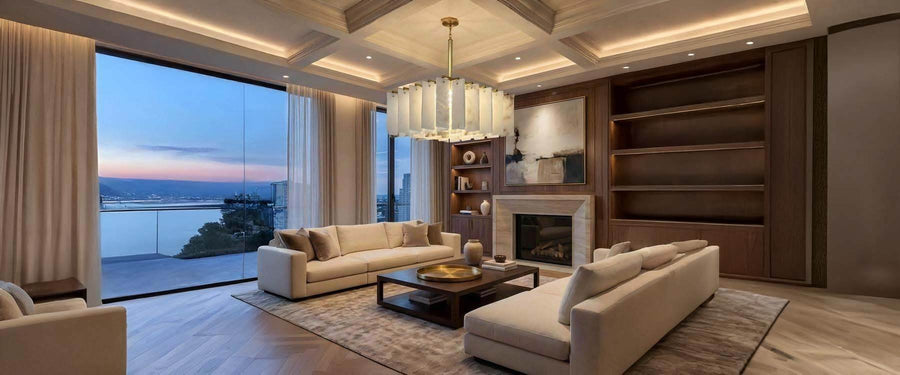
In living rooms, chandeliers often serve as the centerpiece of the seating arrangement. Centering the fixture above the main conversation zone or coffee table helps anchor the layout and unify the furniture arrangement. If the room is square or moderately sized, a single chandelier sized according to the width and length formula will usually suffice.
For expansive living rooms or open-plan layouts, a single oversized chandelier may look disproportionate. Instead, consider using two smaller chandeliers to divide the space into zones. For example, one chandelier can define the seating area while another highlights a reading corner or dining space within the same room. Linear chandeliers or clustered pendant-style chandeliers also work well when aligned with sectional sofas or elongated coffee tables, providing both scale and style.

Bedrooms
Bedrooms benefit from chandeliers that add a sense of intimacy without overwhelming the restful atmosphere. Hanging a chandelier above the bed is a classic placement choice that draws attention to the room’s focal point. In smaller bedrooms, flush or semi-flush modern chandeliers provide elegance without taking up vertical space.
When installing a chandelier in a bedroom, ensure there is at least 7 feet of clearance above walking paths. If the fixture is placed directly over the bed, clearance can be slightly lower since people do not stand in that spot, but it should still allow for comfort and proportion. Bedrooms with vaulted ceilings can accommodate taller, tiered modern chandeliers that emphasize verticality, while minimalist LED chandeliers suit smaller, low-ceilinged rooms.

Entryways
Entryways and foyers are perfect spaces to make a bold statement with modern chandeliers. These areas are the first impression guests receive, and a striking chandelier can set the tone for the entire home. In homes with high ceilings, choose a chandelier with vertical dimension, such as multi-tiered designs or sculptural LED-integrated forms, to fill the empty space and create drama.
The bottom of the chandelier should hang at least 7.5 feet above the floor to allow for clearance. In two-story foyers, the fixture should be visible from both levels without obstructing sightlines. Additionally, ensure the chandelier does not interfere with door swings. A common guideline is to hang the chandelier so that its bottom aligns with the second-floor railing or midway between the floor and ceiling in extra-tall entryways.
For smaller entryways, low-profile modern chandeliers or compact geometric designs provide elegance without overpowering the space. They can also be paired with wall sconces or recessed lights to create layered illumination that welcomes guests while maintaining functionality.
Multiple Chandeliers vs. Single Fixtures
Large or irregularly shaped spaces sometimes benefit from more than one chandelier.
Two chandeliers: Work well above long dining tables or in large living rooms to distribute light evenly.
Three chandeliers in a row: Create rhythm and symmetry in oversized kitchens or open-plan spaces.
Single oversized chandelier: Ideal for dramatic entryways or spaces designed around one central statement piece.
This flexibility is one of the advantages of modern chandeliers. Available in linear, clustered, or modular configurations, they can adapt to the unique proportions of contemporary homes.

Styles and Their Impact on Visual Weight
While size and placement are critical, the style of chandelier also influences how it appears within a room.
Minimalist chandeliers: Often sleek and lightweight, they can be slightly larger without overwhelming a space.
Industrial chandeliers: Made of metal and darker finishes, they carry more visual weight and may need to be smaller in scale.
Crystal-inspired chandeliers: Reflect light and appear airier, making them suitable for larger dimensions.
LED-integrated chandeliers: Offer slim, futuristic designs that maximize illumination without bulk.
The choice of style affects not only aesthetics but also how the chandelier interacts with surrounding furniture and architectural features.

Light Output and Functionality
Sizing chandeliers is not only about visual scale. The amount of light they produce must also suit the room.
Dining rooms: Require 300–400 lumens per square meter to create a warm yet functional atmosphere.
Living rooms: Benefit from layered lighting, combining chandeliers with floor or wall lamps.
Bedrooms: Often need dimmable fixtures to transition between task and ambient lighting.
By balancing chandelier size with appropriate light output, you ensure that the fixture serves both form and function.

Conclusion
Choosing the right size and placement for modern chandeliers is as important as selecting the style itself. Proportion ensures that your chandelier complements the room instead of overwhelming it. Using formulas for diameter, adjusting for ceiling height, and following placement rules in dining rooms, living spaces, and entryways guarantees both beauty and balance.
Modern chandeliers today are versatile, available in minimalist, industrial, crystal, and LED-integrated designs. When properly sized, they not only provide illumination but also anchor a room’s design, adding character and elegance.