
How to Choose a Chandelier
To choose a chandelier, size it to the room, set the right hanging height, then match the style and finish to your existing decor. The fastest sizing rule: add the room's length and width in feet, then use that total in inches as the chandelier's diameter. A 12 by 14 ft room calls for a fixture around 26 inches wide.
Work through these five steps in order:
Measure the room. Add length plus width in feet, then read that number as inches for the ideal diameter. Over a table or island, instead size the fixture to roughly half to two-thirds the width of the surface below it.
Set the hanging height. Over a dining table, island, or bed, keep the bottom of the fixture 30 to 36 inches above the surface. In walkways and open floor areas, keep at least 7 feet of clearance from the floor. The American Lighting Association recommends similar clearances for fixtures over dining tables.
Check the ceiling. Low or standard ceilings suit semi-flush or compact designs. Vaulted and high ceilings carry multi-tiered or larger fixtures that draw the eye up.
Match the style and finish. Coordinate the metal with cabinet pulls, faucets, and door hardware. Brushed brass, matte black, and polished nickel pair with most rooms.
Plan the light. Add a dimmer and layer the chandelier with lamps, sconces, or recessed lighting so the room works for both bright tasks and low-light evenings.
The rest of this guide applies those rules room by room, with sizing and placement notes for dining rooms, bedrooms, kitchens, and living spaces. If you want to compare hanging fixtures more broadly first, our pendant lights buying guide covers sizing and placement for single and clustered pendants too.

Dining Room Lights with Chandeliers
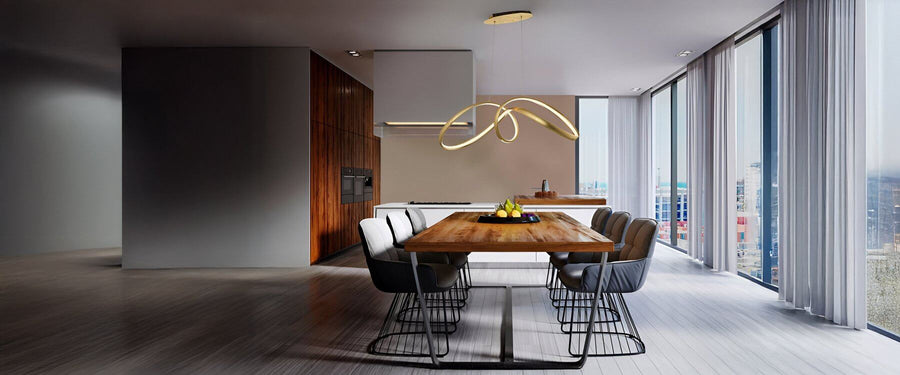
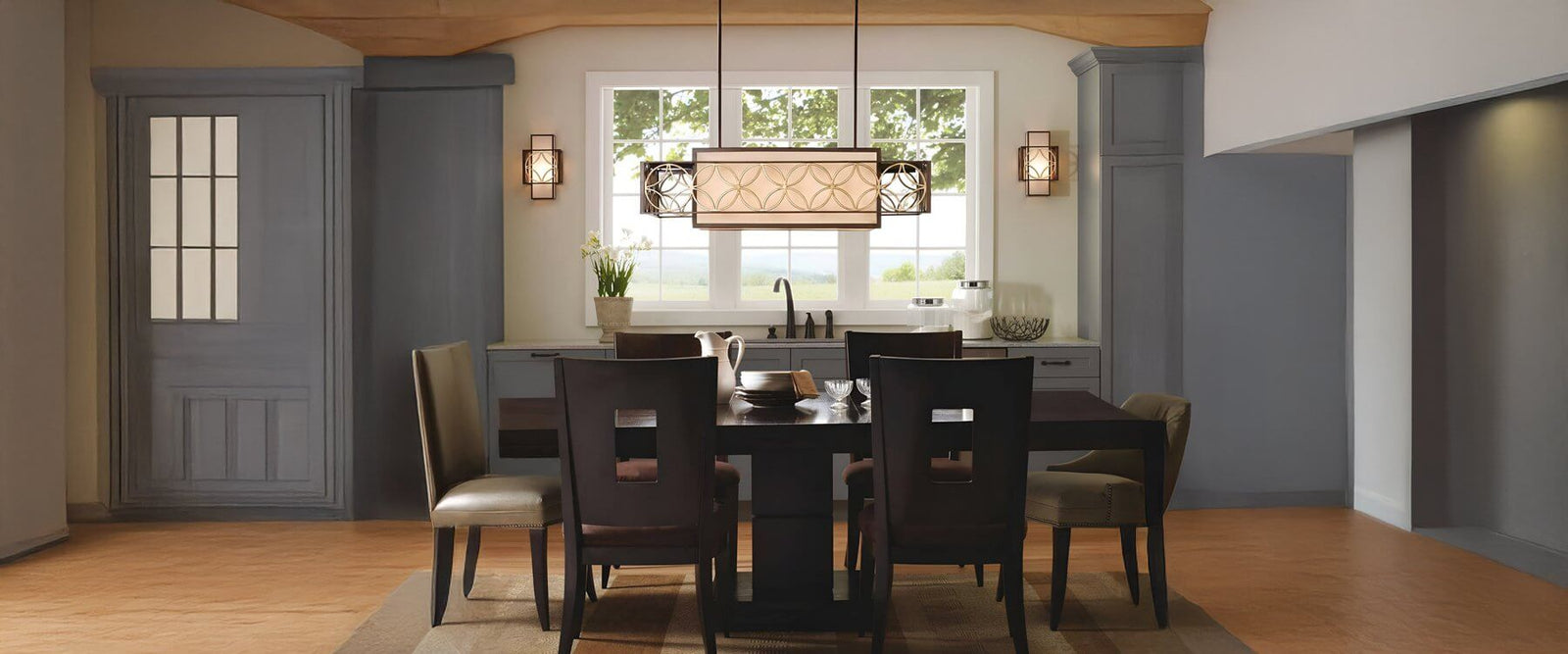
The dining room is the most common spot for a chandelier, and it sets the tone for every meal and gathering. Size it to the table rather than the room: aim for a diameter around half to two-thirds the table width.
Design Inspiration
Traditional crystal or glass-drop designs add formality and pair well with wood tables.
Modern linear pieces stretch across long tables and suit open-plan homes.
Transitional looks in brass, black metal, and warm wood feel timeless and fresh.
Sizing & Placement Tips
For room-based sizing, add length and width in feet and read it as inches. A 12 by 14 ft room suits a chandelier about 26 inches wide.
Hang the bottom of the fixture 30 to 36 inches above the table to keep sightlines clear and the light flattering.
Fit a dimmer so you can run it bright for family meals and soft for dinner parties.

Bedroom Lights Featuring Chandeliers
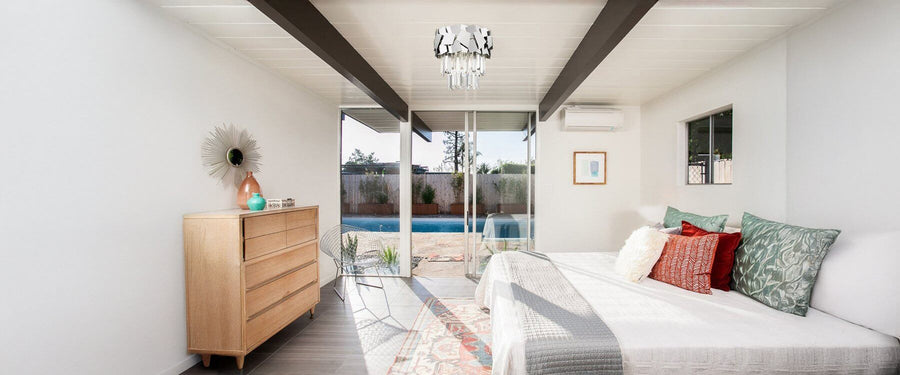
A bedroom chandelier makes the room feel intimate while working alongside bedside lamps and wall sconces. Keep the scale modest so it complements rather than dominates the space.
Design Inspiration
Smaller crystal designs add a subtle sparkle without overwhelming the room.
Drum-shaded fixtures with fabric or linen diffusers give a calm, even glow.
Wood or wrought iron finishes warm up rustic and farmhouse bedrooms.
Sizing & Placement Tips
Keep at least 7 feet of clearance anywhere people walk under the fixture.
Above the bed, set the bottom 30 to 36 inches above the mattress.
Size it to roughly half to two-thirds the bed width. A king bed pairs with a 30 to 36 inch chandelier.
Layer in bedside lamps for reading and use a dimmer to soften the room for evening routines.

Kitchen Lights with Chandeliers
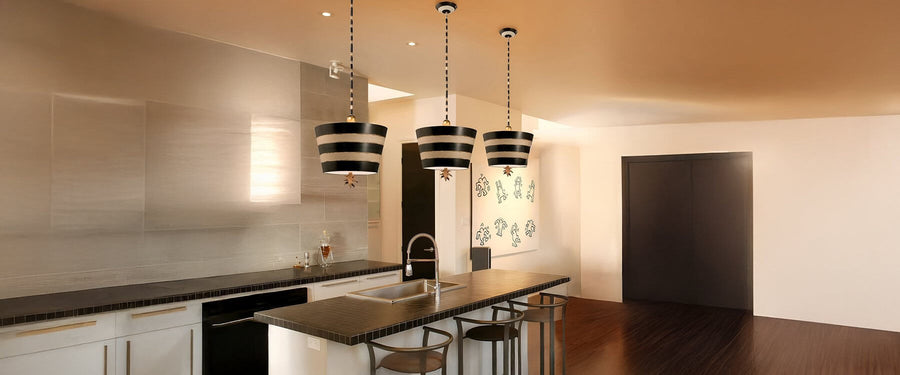
A kitchen chandelier brings warmth to a space usually lit by pendants and recessed fixtures. It works best over a breakfast nook or island where it can sit clear of work zones.
Design Inspiration
A small chandelier over a breakfast nook creates a defined dining spot.
Sleek glass or metal designs above an island add polish while keeping sightlines open.
Subtle crystal pieces bring understated glamour to classic or transitional kitchens.
Sizing & Placement Tips
Keep 30 to 36 inches between the countertop and the bottom of the fixture.
For long islands, two smaller chandeliers spaced evenly beat one oversized piece.
Back it up with under-cabinet LEDs or recessed lights for task brightness.
Living Room Lights with Chandeliers
A living room chandelier defines the seating zone and ties the decor together. Use the room-based sizing rule here, since the fixture usually hangs over open space rather than a single surface.
Design Inspiration
Vaulted ceilings suit large wrought iron or multi-tiered crystal designs.
Contemporary rooms work with sculptural or sputnik-style pieces.
Transitional spaces pair clean-lined chandeliers with floor lamps or sconces.
Sizing & Placement Tips
Add length and width in feet and read it as inches. A 15 by 18 ft room suits a chandelier around 33 inches wide.
Keep the bottom at least 7 feet above the floor.
For open-concept layouts, two smaller chandeliers spread light more evenly than one large fixture.

Universal Tips for Selecting and Styling Chandeliers
Match Finishes: Coordinate the fixture with cabinet pulls, faucets, and hardware. Brushed brass, matte black, and polished nickel are versatile.
Layer Lighting: Pair the chandelier with floor lamps, sconces, recessed lights, or natural light for flexibility.
Use Dimmers: Adjustable brightness carries the room from lively entertaining to quiet evenings.
Scale Carefully: Follow the sizing rules so a fixture never overwhelms a small space.
Mind Ceiling Height: Low ceilings suit semi-flush or flush-mount designs; vaulted ceilings carry dramatic, multi-tiered pieces.

Conclusion
Choosing a chandelier comes down to three decisions: get the diameter right for the room or surface, hang it at the correct height, and match the finish to your decor. Apply the sizing rules, set a dimmer, and layer the fixture with other lighting, and it will fit any room from a formal dining table to a relaxed bedroom.