
Introduction
Outdoor chandeliers can turn a plain patio into a space you actually want to use at night, but placement makes or breaks the result. We see the same issues again and again: a fixture that looks lovely in daylight but creates glare after sunset, or a chandelier that sits too far from where people gather, leaving the seating area oddly dim. The goal with outdoor chandeliers is simple soft, even light that feels comfortable, flatters the space, and supports how you live outdoors.
This guide focuses on where to place outdoor chandeliers so the light feels balanced, welcoming, and practical. You’ll learn which outdoor areas suit chandeliers best, and how to position them so they sit naturally over the spaces you actually use. We’ll also cover simple ways to reduce glare and choose a hanging height that feels comfortable for dining and lounging. By the end, you’ll be able to plan a placement that looks intentional and creates an inviting glow after dark.

What Are Outdoor Chandeliers, And What Makes Them Different?
Outdoor chandeliers are decorative, ceiling-mounted fittings designed specifically for exterior conditions. They’re typically made with weather-resistant finishes and sealed electrical components to handle damp air and changing temperatures. Rather than producing harsh, directional light, they’re intended to create a warm, ambient glow that softens the space. This makes them ideal for patios, pergolas, and covered seating areas where you want comfort as well as style.
Because they’re often installed in open or semi-open spaces, outdoor lighting behaves differently than it does indoors. Wider sightlines mean you’re more likely to see the light source directly, which can increase glare if the fixture is poorly positioned. Darker surroundings also make bright bulbs feel stronger, even when the wattage is modest. That’s why height, diffusion, and placement matter so much when planning outdoor chandeliers.

Where Do Outdoor Chandeliers Work Best?
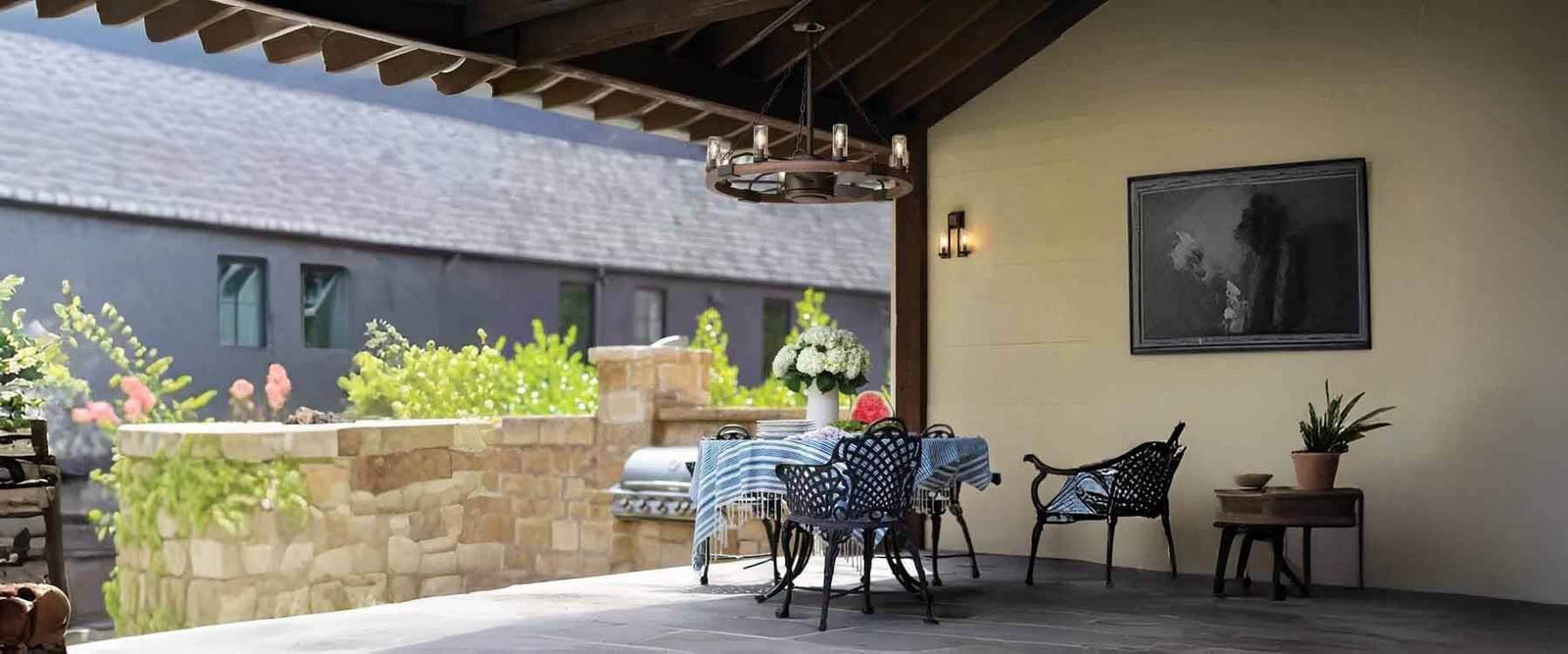
Outdoor chandeliers work best in covered or partially covered areas where there’s a clear “zone” below. In other words, they shine where your outdoor space already behaves like a room.
The most reliable locations include:
Covered patios and terraces
Pergolas and gazebos
Verandas, porches, and covered decks
Outdoor dining areas beneath an overhead structure
If the area has an overhead frame or ceiling, you can centre the chandelier and make it feel intentional. If the area is completely open, you’ll usually get better results with a different style of exterior fitting rather than forcing a chandelier where it can’t sit naturally.

Why Is Placement So Important For Outdoor Chandeliers?
Placement is important because it controls comfort, visibility, and how the whole space feels after dark. A chandelier that’s slightly too low can cause glare every time someone looks up; one that’s too high can disappear and fail to light the zone properly.
Well-placed outdoor chandeliers help you:
Create a clear focal point in the entertaining area
Light faces and tabletops evenly, without harsh shadows
Keep walkways clear and sightlines open
Make the space feel calm and cohesive, not overlit
Think of placement as your way of shaping the mood. The fixture doesn’t just “light the patio” it defines where people gather and how long they’ll want to stay there.

Where Should You Place Outdoor Chandeliers On A Patio?
You should place outdoor chandeliers over the main activity spot on a patio usually the dining table or the central seating arrangement. This keeps the light where you need it and prevents the space from feeling scattered.
To place it well:
Centre it over the table or seating cluster, not over the middle of the patio footprint
Avoid placing it directly over a walkway, especially near doors
Use furniture as your guide: if you move the seating, you may need to adjust the placement plan
Real-world example
If you have a sectional sofa forming an L-shape, hang the chandelier over the “conversation centre” (often the coffee table), not the edge of the sofa. The light should land where hands and faces are, not in the gap between furniture pieces.
For patios where the ceiling is wide, you may be deciding between one statement chandelier or multiple fittings. In most cases, a single well-sized chandelier over the key zone looks cleaner and feels more deliberate than several smaller fixtures competing for attention.

Are Outdoor Chandeliers A Good Fit For Pergolas And Gazebos?
Yes pergolas and gazebos are some of the best places for outdoor chandeliers because they provide structure overhead and naturally create a defined room-like zone. The beams also give you a strong visual centre point, which helps chandeliers look balanced.
For a pergola, aim to:
Hang the chandelier in the central bay above the primary seating or dining setup
Keep it away from the pergola edges where light spills outward and feels less useful
Choose a size that suits the span of the pergola, so it doesn’t look lost
For gazebos, centre placement is usually ideal, but pay attention to the roof pitch and the height at the apex. A chandelier that is too long can drop into your sightline, while one that is too small can look underwhelming in the middle of a high roof.
If you want a slightly softer, more tailored look under a pergola, an outdoor pendant lights style can be a good alternative in tighter bays where a chandelier would feel bulky.

How Do You Avoid Glare With Outdoor Chandeliers?
You avoid glare by controlling three things: height, bulb exposure, and brightness. Outdoors, the surrounding darkness makes any visible bulb feel brighter, so what looks “fine” in a showroom can feel sharp at home.
To reduce glare:
Hang the fixture high enough so the light source isn’t in direct view when seated
Use frosted or shaded elements rather than fully exposed bulbs
Choose warm-white lamps so the light feels gentle and flattering
Add dimming so you can dial the output down once guests arrive
A quick test: sit where you’ll actually sit (dining chair, sofa, lounge chair). If you can clearly see the bulb or it pulls your eyes upward, adjust the height, choose a more diffused design, or reduce brightness.

What Lighting Zones Are Suited For Outdoor Chandeliers?
Outdoor chandeliers are best suited to ambient zones places where you want atmosphere and comfortable visibility rather than crisp, functional light. They belong where people linger.
Great zones include:
Dining zones for relaxed meals and entertaining
Lounge zones where you chat, read, or unwind
Covered transition zones like a porch seating area
Zones to avoid:
Outdoor kitchens or BBQ stations (you need brighter task lighting there)
Steps and pathways (you need low-level guidance lighting)
Fully open lawn areas (a chandelier will look unsupported and spill light inefficiently)
A chandelier should never be the only light outside. It sets the tone, then you layer in supporting fixtures for balance. If you’re building a layered plan, a few discreet outdoor lights around the perimeter can help prevent harsh contrast and keep the space evenly lit.

How High Should An Outdoor Chandelier Be Hung?
Outdoor chandeliers should be hung high enough for comfort and clearance, but low enough to visually anchor the zone. Outdoors, a slightly higher hang often feels better because you’re working with open sightlines and taller overhead structures.
Use these practical guidelines:
Over a dining table: hang the lowest point about 75-90cm above the tabletop
Over a lounge area without a table: keep the lowest point at least 2.1m from the floor
In a pass-through area: aim for 2.4m clearance so no one feels they need to duck
If your ceiling is very high (common with pitched porch roofs or tall pergolas), you can use a chain or downrod to bring the chandelier into the visual “zone” without dropping it into anyone’s eyeline. The fixture should feel connected to the furniture below, not floating near the ceiling.

Step-by-Step: How To Pick The Best Placement For Outdoor Chandeliers
The best placements are chosen by function first, then refined by comfort and proportion.
Identify the main use of the area
Decide whether the zone is for dining, lounging, or mixed entertaining.Mark the centre of the activity zone
Use the centre of the table, or the midpoint of your seating arrangement.Check clearance and movement paths
Make sure the chandelier won’t hang over a door swing or a walkway.Choose a comfortable hanging height
Use the height rules above, then adjust for sightlines from seating.Plan your supporting lighting
Add secondary fixtures so the chandelier isn’t carrying the entire space alone.Test the mood at night
If it feels too bright, reduce lamp output or add dimming rather than changing the fixture.
This process prevents the most common issues glare, uneven light, and chandeliers that look centred but don’t actually serve the space.

What Common Placement Mistakes Should You Avoid?
You avoid problems by treating chandeliers as part of a full lighting plan, not just a decorative feature.
The most common mistakes:
Hanging the chandelier too low, creating glare and visual clutter
Installing it over the wrong spot (centre of the patio instead of centre of the seating)
Choosing a fixture that’s too small for the space, so it looks lost
Relying on the chandelier as the only light source
Ignoring weather exposure and placing it where wind-driven rain will reach it
A chandelier can be beautiful and still be wrong for the location. If the space is exposed or the ceiling is too high to feel connected, consider other fittings for the broader area and reserve the chandelier for a sheltered zone.

How Does Placement Affect The Overall Style Of Your Outdoor Space?
Placement affects style because it determines what the chandelier “belongs to.” When it’s centred over furniture, it feels like part of a designed room. When it’s floating in a random spot, it reads as decoration rather than design.
To make placement feel polished:
Align the chandelier with the table or the centreline of the seating layout
Echo materials already outside, like timber beams, black metal, or warm brass tones
Keep light warm and restrained so it complements natural textures at night
If your outdoor space leans modern, a cleaner silhouette and soft diffusion will look intentional. If it’s more traditional, a chandelier with classic curves can work beautifully just keep brightness controlled so it feels cosy rather than glaring.
If you’re choosing a fixture from a heritage exterior range such as Kichler Lighting, placement becomes even more important because the design is often a focal point. Put it where it can be appreciated comfortably above the moment people gather.

Conclusion
Outdoor chandeliers deliver their best results when they’re placed over a defined, covered zone where people actually spend time. Centre the fixture over your dining table or main seating area, hang it high enough to avoid glare, and choose a position that supports clear movement through the space. Use warm, gentle light and layer in supporting fittings so the chandelier creates atmosphere rather than doing all the work alone. With thoughtful placement, outdoor chandeliers don’t just brighten a patio they make your outdoor living feel balanced, welcoming, and easy to enjoy after dark.