
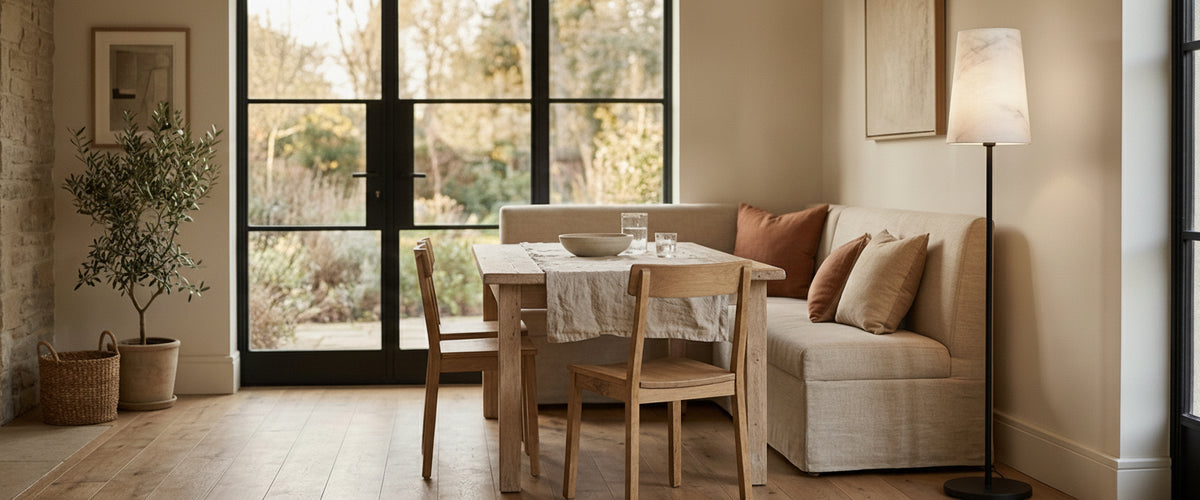

Switch on an alabaster floor lamp shade in a bright room at noon and you may wonder what the fuss is about. Switch it on at dusk, overheads off, and the stone seems to light itself from inside, veins and all. That gap between the two moments explains almost everything about choosing, placing and caring for one. Stone does not behave like fabric or glass, so the usual lampshade rules only half apply.

Quick Answer
How it works: an alabaster floor lamp shade lets light pass through the stone and scatters it, so it glows rather than casting a hard pool.
Best height: a shade at roughly 1.3 metres (about 4 ft 3 in) sits near seated eye level, which is where the glow reads best.
Bulb: a warm 2700K LED at or below 300 lumens keeps the veining visible instead of washing it out.
Best rooms: sitting rooms, bedrooms, dining corners and hotel lounges used in the evening.
Weak spots: sunlit garden rooms and task-heavy spaces such as kitchens and studies.
Care: dry dusting only. Water and household sprays are the most common cause of damage we see.

Why Alabaster Transmits Light Rather Than Reflecting It
Most lampshades work by blocking. A linen drum stops light going sideways and pushes it up and down; a metal dome reflects it into a cone. Alabaster takes a different route. Gypsum alabaster is a fine-grained, translucent stone, and when a bulb sits inside a thin shade, light enters the material, bounces around between tiny crystals and leaves from the whole outer surface at once. The result is a broad, low-contrast glow with almost no glare.
At floor level this matters more than it does overhead. A pendant is above your sightline, so you mostly see the light it throws. A floor lamp shade sits in your field of view for the whole evening, which means you are looking at the stone itself. With an alabaster floor lamp shade, the object and the light become the same thing. That is why a poorly lit, chalky-looking shade disappoints so badly, and why a well-lit one can carry a corner of a room with no help from anything else.
Veining, Thickness and Colour: Why No Two Shades Glow Alike
Every alabaster floor lamp shade is cut from a block with its own history. Veins of iron oxide and other mineral traces show as amber, honey or grey streaks once lit, and they can look almost invisible when the lamp is off. Buyers are sometimes surprised by this. A shade that looks pale cream in daylight can turn distinctly warm at night.
Thickness is the other variable. Thinner walls pass more light and show more internal structure; thicker sections glow more gently and look more solid. Hand-turned shades are rarely perfectly even, so a single shade can glow slightly brighter on one side. In the studio we once lit two shades turned from the same block side by side, and one read noticeably pinker than the other. Same stone, same bulb, different seam. We now tell clients ordering pairs for either side of a sofa to expect siblings, not twins.
Calcite stones sold under the alabaster name, along with onyx and marble, behave differently again. Onyx tends to be more banded and more translucent in thin slices; marble is far denser and usually lets through much less light. If transmission is the priority, true gypsum alabaster is the material to ask for.
Shade Height at 1.3 Metres: Walls, Furniture and Daylight
Many floor lamps put the shade at around 1.3 metres (about 4 ft 3 in). That height is no accident. It places the glowing stone close to the eye line of someone seated on a sofa or armchair, so the shade reads as a soft focal point instead of a bright blob above your head or a dim one at knee height.
Walls change the picture. Stand an alabaster floor lamp shade 30 to 45 cm (roughly 12 to 18 in) from a pale plastered wall and the wall picks up a warm halo, which doubles the apparent size of the light. Push it hard into a corner and you lose the back of the glow; pull it into open floor and it can look stranded. Dark walls in deep greens or inky blues absorb that halo, so the stone itself has to do the work, and it often looks richer for it.
Watch the furniture around it. A tall wingback or bookcase beside the lamp will cut the glow on one side, and the stone will look lopsided. Daylight is the final factor. A south-facing window behind the lamp will make the shade look flat and slightly grey through much of the day. That is normal. Alabaster earns its keep as the light outside drops.
Bulb Choice Inside Stone: Stay Below 300 Lumens at 2700K
The most common mistake is fitting a bright bulb to make the lamp useful for reading. Push too much light into an alabaster floor lamp shade and the veining bleaches out; the stone becomes a uniform white with a hot spot at its centre. Staying at or below roughly 300 lumens keeps enough contrast for the mineral pattern to show.
Colour temperature matters just as much. At 2700K, the warm amber and honey tones in the stone are reinforced. Cooler bulbs at 4000K make alabaster look grey and slightly clinical, which defeats the point of choosing stone at all.
Use LED: it runs far cooler than halogen, which is kinder to a shade that sits close to the lamp holder.
Check the fitting: match the cap type (E27 or E14 is common in UK floor lamps) and the maximum wattage stated on the lamp.
Choose a frosted or opal bulb: clear filament bulbs can throw a visible bright point through thin stone.
Plan for dimming: use a dimmable LED paired with a compatible dimmer. Any change to wiring or wall dimmers should be done by a qualified electrician working to the UK wiring regulations, BS 7671.
Where an Alabaster Floor Lamp Shade Earns Its Warmth
Sitting Rooms and Snugs
This is home territory. Place the lamp beside a sofa arm or between two chairs, and let it be the main evening light with a table lamp or two in support. One client with a north-facing drawing room in a Bath townhouse had given up on the room after 4pm in winter. A single alabaster floor lamp near the fireplace wall, dimmed low, made it the room the family used most.
Bedrooms
An alabaster floor lamp shade works well in a reading corner or beside a dressing chair, where its low glare is restful. It is less useful as the only bedside light if you read in bed; pair it with a directional lamp. An adjustable arm in brass, such as the Funk Adjustable Floor Lamp, Brass with Black Base, can put light on the page while the alabaster carries the mood, and its brass picks up the same warm tones as the stone.
Dining Corners and Hospitality
In restaurants, hotel lounges and private members' bars, alabaster gives a flattering warmth to skin and food. A pair either side of a banquette or a fireplace sets the tone without competing with pendants over the tables.
Where It Cannot Compete
Glass-roofed garden rooms and conservatories are hard work for stone during the day, and the glow barely registers on summer evenings when it stays light until late. In a room used as much by day as by night, a tinted shade such as the Briller LED Floor Lamp Amber Acrylic, Gold holds its amber colour in daylight, where stone would simply look flat. Kitchens, home offices and craft rooms need focused task light that alabaster is not designed to give. Put the stone where people slow down, not where they chop onions.
How to Choose an Alabaster Floor Lamp Shade: A Buyer Checklist
Room use: is this an evening room? If not, consider a different material.
Ceiling and furniture height: check that a shade near 1.3 metres sits clear of shelves, curtains and chair backs.
Wall colour: pale walls amplify the halo; dark walls make the stone the hero.
Stone character: ask whether you prefer strong veining or a calmer, more even glow, and request photos of the actual shade lit if possible.
Wall thickness: thinner for more light and visible pattern; thicker for a softer, more sculptural look.
Base and metalwork: brass picks up the amber in the stone; darker bronze or black finishes give a stronger contrast.
Stability: stone shades are heavy, so a weighted base matters in homes with children, pets or busy hospitality floors.
Budget: this depends on stone grade, size, hand-finishing and the base engineering. For bespoke sizes or project quantities, ask for a tailored quote.
If you want to compare how different shade forms read when lit, browsing the alabaster lighting collection side by side is a useful way to train your eye on thickness and veining before committing.
Cleaning Natural Stone Without Dulling the Glow
Gypsum alabaster is soft, roughly 2 on the Mohs scale, and slightly soluble in water. That combination makes it easy to scratch and easy to stain. The worst return we have handled came from a well-meaning cleaner with a damp cloth and a multi-surface spray: the shade came back with pale tide marks that showed every time the lamp was switched on.
Switch off and let the bulb cool fully before touching the shade.
Dust weekly with a dry microfibre cloth or a soft, clean make-up brush for carved detail.
Never use water, glass cleaner, bleach, vinegar or polish. Even mild acids etch the surface.
Handle with clean, dry hands; skin oils can leave marks that show once lit.
Keep the lamp away from steamy bathrooms and humidifiers.
For stains, chips or cracks, consult an accredited stone conservator through the Conservation Register rather than trying an abrasive fix.
Dust is the quiet enemy here. A fine layer on the inner surface of an alabaster floor lamp shade reduces light transmission long before you notice it from the outside, so lift the shade off occasionally (if the design allows) and brush the inside too.
Treated this way, stone ages slowly and well. If you are planning a whole room around warm, low light, the wider Niori range of alabaster and natural-stone pendants, wall lights and lamps is built to work together at that same gentle register.