
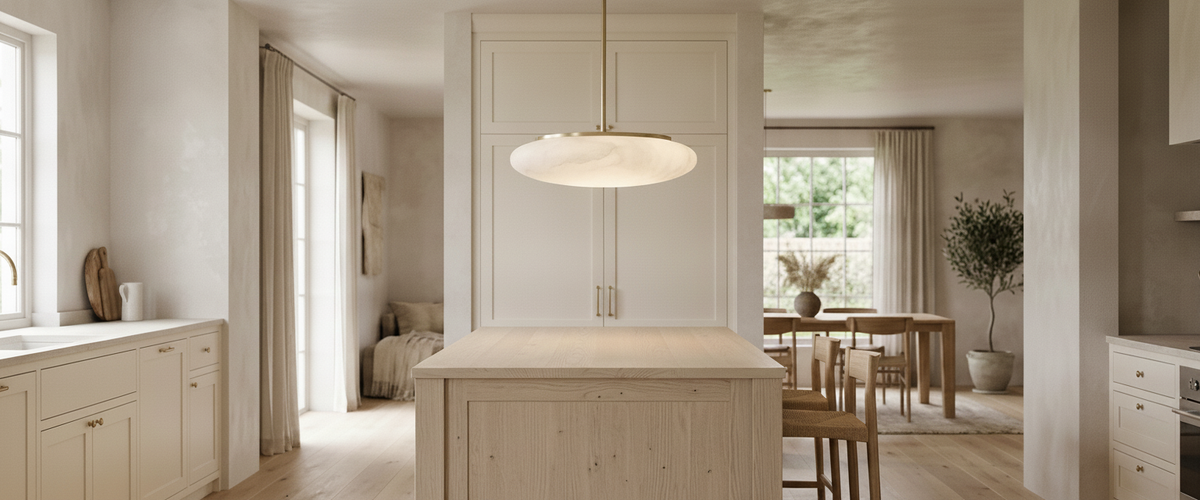

Alabaster earns its keep by reading light. That translucence is also its weakness, because every layer of dust and every film of cooking grease sits between the bulb and your eye, and the stone tells on it immediately. A shade that glowed evenly last winter can look gray and patchy by spring without anyone quite noticing when it changed. Learning how to clean alabaster lamps is less about scrubbing and more about a light, regular habit that respects a soft, porous stone.
We ship a lot of alabaster into kitchens and open-plan living spaces, and the note we hear most often after a year is some version of "it doesn't feel as bright as it used to." Nine times out of ten the bulb is fine. The stone just needs a proper clean, and people who clean alabaster lamps on a schedule almost never hit this problem.
A dry microfiber pass lifts the veil of dust that dims a translucent shade.

Key Takeaways
Dust dry first, always. Wet cleaning traps grime deeper into the surface.
Work top to base so nothing you loosen falls onto cleaned areas.
Keep water out of open veining and away from any metal fittings.
Skip all-purpose sprays, vinegar, and anything acidic. Alabaster is soft and reactive.
Watch the finish for dull patches; that is your cue that the seal is wearing.

Why Dust and Grease Quietly Cloud the Shade
Alabaster is a fine gypsum stone, and its whole appeal is that light passes through it rather than bouncing off. When airborne dust settles on that surface it forms a thin, even veil. You rarely see the moment it happens; you see the cumulative result, which is a warmer light turning flat and slightly muddy. This is why people learn to clean alabaster lamps by feel rather than waiting for an obvious mess.
Kitchens make it worse. Cooking throws a fine aerosol of oil into the air, and that oil drifts and lands on nearby surfaces, shades included. Once grease sits on porous stone it grabs dust and holds it, so you get a sticky film that ordinary dusting no longer shifts. A pendant hung over an island or a table lamp on a kitchen counter needs cleaning more often than the same piece in a quiet bedroom. If your alabaster lives near cooking, treat it like the busy fixture it is.
The other quiet culprit is fingerprints. The oils from hands mark alabaster easily, especially on a table lamp base people reach past all day. Those marks darken over time and, on a translucent piece, they show against the light from inside. A rectangular shade like the one on the Bianco Alabaster Table Lamp makes this easy to see, since the flat faces catch handling more readily than a rounded form does.
The Gentle Top-to-Base Routine That Keeps Light Even
Start dry, and start at the top. Use a clean, dry microfiber cloth or a soft, natural-bristle brush to lift dust off the shade before you introduce any moisture. A soft artist's brush or a clean makeup brush gets into carved detail and veining without scratching. This is the core move when you clean alabaster lamps; the majority of "dim" pieces are simply dusty.
Only after dry dusting should you consider anything damp. Take a second microfiber cloth, dampen it very lightly with lukewarm water, and wring it until it is barely moist. Wipe in one direction across the shade, then dry immediately with a third dry cloth. Never let water pool or sit. Gypsum-based stones like alabaster are water-sensitive and should not be soaked or treated with generic stone cleaners, so err toward drier than you think you need. The US National Park Service conservation guidance notes that gypsum-based stone is readily soluble in water, which is why sparing use matters so much.
Around a stone-and-brass base, keep the seam a strict no-water zone.
Work methodically from the top of the shade down to the fitting, then to the base. Because loosened dust falls, cleaning downward means you never re-dirty a section you have finished. For a multi-shade fixture such as the Luxoria 10 Light Alabaster Chandelier, switch it off, let it cool completely, and do one shade at a time so you can keep track of what is done.
Do the dry dust weekly or fortnightly in a busy room, and the light damp pass every month or two. That rhythm keeps the glow even and means you never face a heavy, baked-on clean. Households that clean alabaster lamps on this cadence rarely need anything more aggressive, and their alabaster lamps stay clean between passes.
Cleaning the Base Without Letting Water Into Open Veining
The base is where people cause the most damage, usually with good intentions. Alabaster often has natural fissures and open veining, and those channels wick moisture straight into the stone. Water sitting in a vein can leave a permanent dark mark or, over time, weaken the material.
Dust the base dry first, same as the shade. If it needs more, use a barely-damp cloth and stay away from any visible cracks, seams, or the point where the stone meets a brass or chrome fitting. Dry the area at once. Do not spray anything directly onto the base; if you use any product at all, apply the tiny amount to the cloth, well away from the lamp, then wipe.
Around metal detailing, keep water off the join entirely. Moisture trapped where stone meets metal invites tarnish on brass and can loosen adhesives over time. On pieces where alabaster sits against brushed brass, such as the Atria LED Alabaster Table Lamp, treat the seam as a no-water zone and buff the metal separately with a dry cloth. If you are choosing a piece and want to see how those stone-and-brass combinations are built, the alabaster lighting collection shows the range of bases and fittings.
The Cloths, Sprays and Solvents That Ruin Soft Porous Stone
This is the part most damage traces back to. When people try to clean alabaster lamps with the wrong product, the harm shows fast. Alabaster is soft, roughly a 2 on the Mohs hardness scale, softer than a fingernail, and it reacts to acids. The cleaning products most homes keep under the sink are exactly wrong for it.
Avoid all-purpose and glass sprays. They often contain ammonia, alcohol, or acids that etch and dull the surface.
Avoid vinegar and lemon. Anything acidic reacts with gypsum and leaves permanent dull marks.
Avoid abrasive pads, scouring cloths, and paper towels. They scratch a soft stone, and paper towel is more abrasive than people expect.
Avoid solvents and "stone polish" branded for granite or marble. Alabaster is not marble, and those formulas can be far too aggressive.
Skip furniture wax and oils unless advised. They can soak in unevenly and blotch a translucent surface.
Stick to soft microfiber, soft brushes, and lukewarm water used sparingly. For a stubborn greasy film in a kitchen, a cloth dampened with lukewarm water and the smallest touch of pH-neutral soap, wrung nearly dry, then followed straight away by a clean damp cloth and a dry buff, is as far as you should go. Test on a hidden spot first, and never leave any product to dwell on the surface.
Reading Sealing Wear Before the Glow Starts Going Patchy
Quality alabaster lighting is usually sealed to slow moisture uptake and staining. That seal wears, and learning to read it saves you from a patchy-looking piece later. It also tells you when a routine to clean alabaster lamps needs a small change.
The clues are visual and tactile. A well-sealed surface sheds a light misting of water into beads; a worn one lets it darken the stone and soak in. If part of the base suddenly drinks a droplet and goes visibly darker, then dries back, the seal there has thinned. You may also notice the stone feels drier or chalkier, or that one area marks more easily than the rest. On a lit shade, uneven sealing can show as a patch that reads slightly different against the glow.
Resealing is a job worth getting right rather than improvising with a hardware-store product. Talk to the maker or a stone-care specialist about the correct penetrating sealer for gypsum alabaster, because the wrong one can film the surface or change how light passes through. For fixtures across a hospitality project, build a light annual check into the maintenance schedule so no single piece drifts out of step with the rest.
A Quick Care Checklist
Switch off and let the lamp cool fully before touching it.
Dry dust the shade top to base with soft microfiber or a soft brush.
If needed, wipe with a barely-damp cloth in one direction, then dry at once.
Keep all moisture out of veining, seams, and metal joins.
Never use vinegar, sprays, solvents, abrasives, or paper towel.
Watch for dull patches and water soaking in; reseal when the finish wears.
Handled this way, alabaster stays generous with its warm, diffused light for a very long time. Clean alabaster lamps with this gentle habit and the stone rewards you season after season; keep your alabaster lamps clean and the glow stays even. If you are still deciding on a piece, browsing the wider lighting range at Niori is a good way to weigh table lamps, floor lamps, pendants, and chandeliers against the room they will live in and how much cleaning each spot realistically invites.