
Introduction
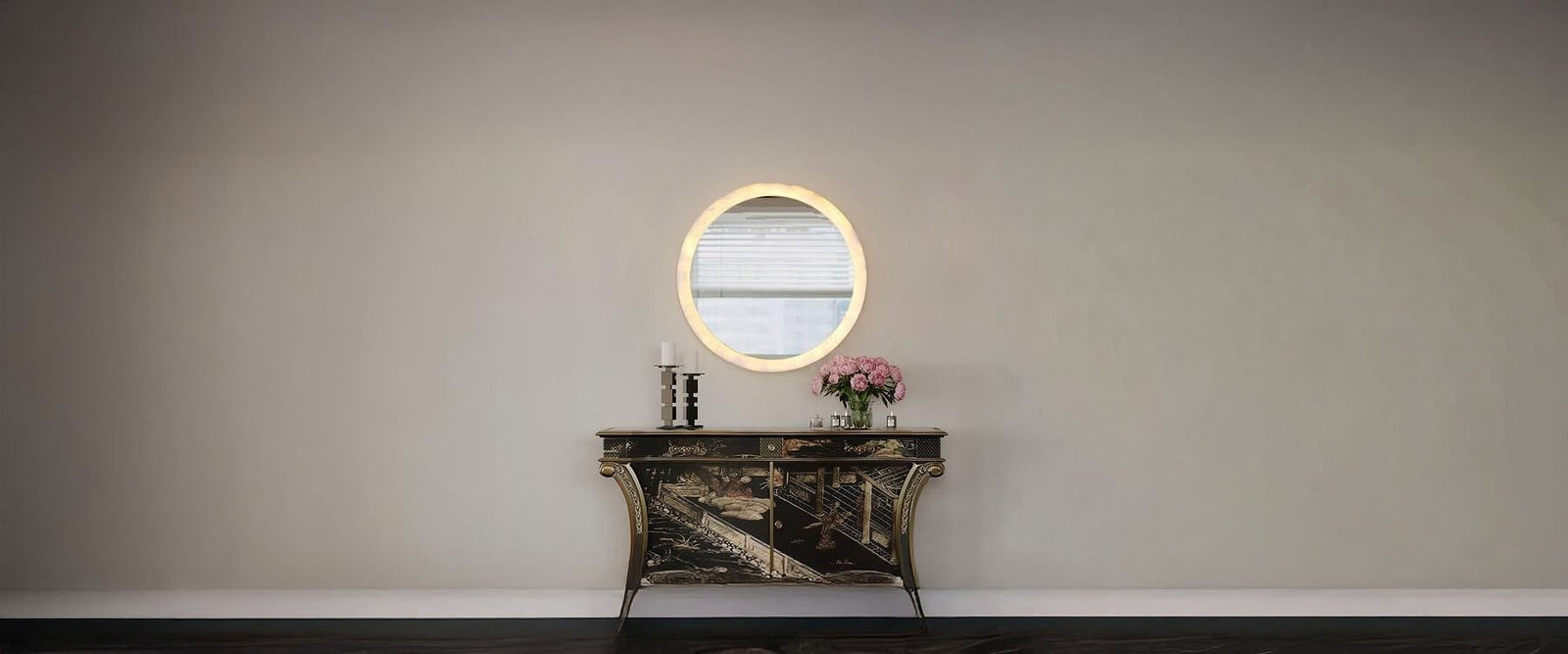
Alabaster mirrors bring a refined glow to interiors, especially when paired with carefully placed wall lighting. The natural translucency of alabaster allows light to pass through the stone, creating a warm and gentle illumination that enhances the surrounding space.
Unlike ordinary mirrors, these stone-framed designs combine function with natural material character. The alabaster frame diffuses light softly while adding texture and depth to a wall. When wall lighting is positioned correctly, the mirror becomes more than a reflective surface it becomes part of the lighting design itself.
At Niori, we often help designers and homeowners create balanced interiors using stone lighting and mirrors together. Combining mirrors with natural lighting materials such as alabaster creates layered light that feels calm, elegant, and timeless.
This guide explains how to decorate with alabaster mirrors, where they work best, and how lighting can highlight their natural beauty.

Quick Summary
Alabaster mirrors combine natural stone with reflective surfaces for a soft glow.
Wall lighting enhances the translucent qualities of alabaster.
They work particularly well in bathrooms, hallways, and dressing areas.
Balanced placement and warm lighting produce the best results.
Natural materials and minimal fixtures help the mirror remain the focal point.

What Makes Alabaster Mirrors Unique in Interior Design?
Alabaster mirrors are unique because their natural stone frames diffuse light softly while adding warmth and texture to interior spaces.
Alabaster is a translucent mineral known for its delicate veining and soft, creamy tones. When light touches the surface of the stone, it spreads gently across it rather than reflecting harsh brightness. This quality creates a calm glow that makes the mirror both decorative and atmospheric within a room.
Another reason designers value alabaster is its natural variation. No two pieces of stone share the same patterns or colour tones, which means every mirror has its own character. This natural individuality allows mirrors made from alabaster to feel bespoke and refined rather than mass-produced.
Common characteristics of alabaster include:
Soft natural veining
Warm neutral colours
Gentle light diffusion through the stone
A sculptural, organic appearance
Because of these qualities, alabaster mirrors are often chosen for interiors that highlight natural materials and understated luxury. They add depth and warmth while maintaining a calm and balanced aesthetic.

Why Do Alabaster Mirrors Work So Well with Wall Lights?
Alabaster mirrors pair naturally with wall lighting because the stone spreads light evenly rather than reflecting it sharply.
Traditional mirrors can bounce light directly into the room, sometimes creating glare. Alabaster, however, softens the light and spreads it across the wall surface. When wall lights are placed beside the mirror, they highlight the stone frame and create a subtle halo effect.
This lighting approach improves both aesthetics and practicality.
Benefits include:
More flattering lighting for daily grooming
Reduced shadows around the face
A calm atmosphere rather than bright glare
Highlighted stone texture
For many interiors, wall lighting is enough to illuminate the mirror area while still keeping the room comfortable and relaxed.

How to Decorate with Alabaster Mirrors and Wall Lighting
Decorating with alabaster mirrors requires thoughtful placement and balanced lighting so the mirror remains the focal point.
Follow these steps to achieve a well-proportioned design.
Step 1: Choose the Right Mirror Shape
Start by selecting a mirror shape that suits the room layout.
Popular options include:
Round mirrors for softer modern interiors
Oval mirrors for elegant bathrooms
Rectangular mirrors for minimal spaces
Organic shapes for artistic installations
Round shapes are especially effective because they contrast nicely with the vertical lines of wall lights.
Step 2: Select Complementary Wall Lights
Lighting fixtures should enhance the mirror rather than compete with it.
Slim sconces, brass finishes, and minimal designs work well beside stone surfaces. Many designers pair alabaster mirrors with fixtures made from the same material to create visual continuity, such as alabaster wall lights, which echo the stone texture while producing a warm glow.
Warm white lighting between 2700K and 3000K helps emphasise the natural colour of alabaster.
Step 3: Position the Lighting Correctly
Correct lighting placement ensures both comfort and functionality.
For most installations:
Place wall lights around eye level
Leave approximately 15-20 cm between the mirror edge and the light
Use two lights for symmetrical balance
This arrangement spreads light evenly across the mirror and reduces shadows.
Step 4: Choose a Calm Wall Background
Alabaster is a natural material that benefits from simple surroundings.
Neutral surfaces help the mirror stand out while maintaining a calm interior atmosphere.
Suitable wall finishes include:
Lime plaster
Microcement
Natural stone tiles
Soft matte paint
Avoid busy patterns or dark colours that distract from the stone.
Step 5: Add Additional Lighting Layers
The best lighting schemes combine several sources rather than relying on a single fixture.
Alongside alabaster mirrors, consider adding:
Soft ceiling lights
Recessed spotlights
Ambient wall lighting
Decorative fixtures such as alabaster pendant lighting above a vanity or console table
Layered lighting creates depth and ensures the mirror area remains comfortable at different times of the day.

Bathroom Alabaster Mirror Ideas
Bathrooms are one of the most effective spaces for alabaster mirrors because the lighting improves both atmosphere and practicality.
Double Vanity Layout
Two mirrors placed above a double vanity create symmetry and balance.
Benefits include:
Clear lighting for grooming
A structured design layout
A calm hotel-style aesthetic
When wall lights are placed between or beside the mirrors, the entire wall becomes softly illuminated.
Backlit Mirror Designs
Some alabaster mirrors incorporate hidden LED lighting within the stone frame.
This creates a subtle glow around the mirror edge and adds gentle ambient lighting to the room. Backlit mirrors are particularly popular in modern bathrooms because they provide both task lighting and decorative illumination.
Statement Mirror Above a Stone Basin
A single large mirror above a stone basin can act as the main focal point in the bathroom.
Combining natural stone materials keeps the palette cohesive. Pairing warm lighting with the mirror highlights both the basin and the stone frame while keeping the space calm and balanced.

Where Else Can Alabaster Mirrors Be Used?
Although bathrooms are common locations, alabaster mirrors work beautifully in several other areas of the home.
Entryways
An entryway mirror helps reflect natural light and visually expand the space.
When wall lights frame the mirror, the entrance immediately feels warmer and more welcoming.
Bedrooms and Dressing Areas
Soft lighting around mirrors is particularly helpful in dressing areas.
A mirror above a dressing table combined with warm wall lighting provides gentle illumination without harsh glare. This setup creates a relaxing environment suitable for evening routines.
Living Rooms
Larger alabaster mirrors can function almost like wall art in living spaces.
Placed above a console table or fireplace, the mirror reflects light across the room while adding texture to the wall. With subtle lighting, the stone frame becomes a decorative feature rather than just a functional mirror.

Common Mistakes When Styling Alabaster Mirrors
Most design problems occur when lighting or placement overwhelms the natural beauty of the stone.
Avoid these common mistakes.
Using Lighting That Is Too Bright
Cool white lighting can flatten the appearance of alabaster and reduce its warmth. Warm lighting always produces a better visual result.
Relying Only on Ceiling Lights
Overhead lighting creates shadows on the face and does not highlight the mirror frame. Wall lights provide more balanced illumination.
Choosing Oversized Fixtures
Large decorative fixtures can distract from the mirror itself. Simple lighting allows the stone to remain the focal point.
Ignoring Proportion
The mirror should suit the furniture beneath it.
A useful guideline is:
The mirror width should be around 70-80% of the vanity or console below it
Balanced proportions keep the installation visually comfortable.

Why Designers Continue Choosing Alabaster Mirrors
Designers choose alabaster mirrors because they combine natural materials with functional lighting.
Modern interiors often rely on clean lines and minimal decoration. Natural stone introduces warmth and texture without overwhelming the design. Alabaster also ages gracefully, making it suitable for long-term interiors.
The soft glow produced by the stone creates a calming environment that works well in residential spaces, hospitality interiors, and luxury bathrooms. When paired with well-placed lighting, the mirror becomes both a decorative centrepiece and a practical element of everyday living.

Conclusion
Alabaster mirrors offer a unique way to combine natural stone with thoughtful lighting design. Their translucent surface diffuses light gently, creating a warm glow that enhances the surrounding space.
When paired with carefully positioned wall lights, these mirrors improve both functionality and atmosphere. They work especially well in bathrooms, entryways, and dressing areas, where balanced lighting is essential. Choosing the right mirror shape, using warm lighting, and maintaining proper proportions ensures the design feels calm and refined.
By combining natural materials with layered lighting, these mirrors transform ordinary walls into elegant focal points that bring warmth, texture, and timeless style to interior spaces.