
Introduction
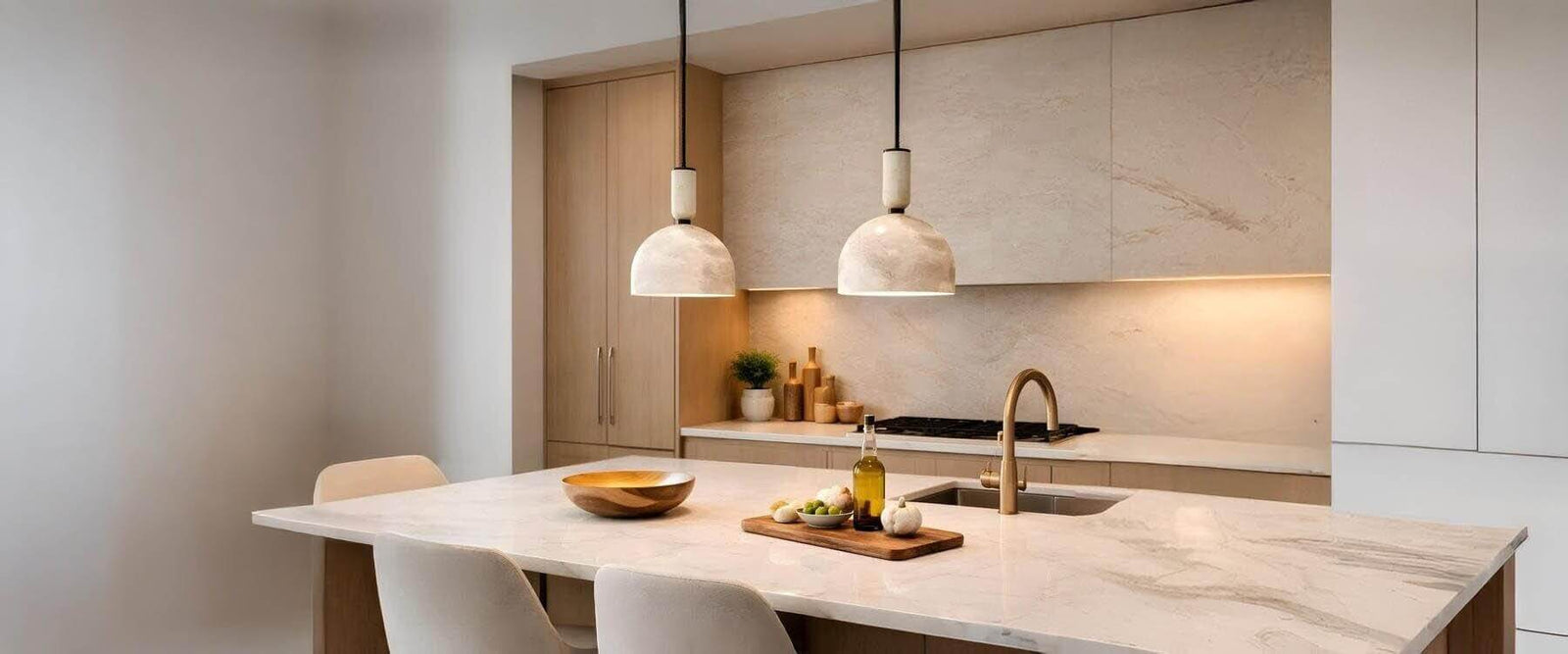
Alabaster pendant lighting is one of the most effective ways to elevate a kitchen island while maintaining a soft, welcoming atmosphere. In many of the kitchens we design at Niori, clients want lighting that feels luxurious but not overpowering and alabaster achieves exactly that balance.
Unlike clear glass or exposed bulbs, alabaster diffuses light through natural stone veining. The result is a warm, even glow that enhances worktops and cabinetry without harsh glare. When positioned correctly, it becomes both a functional light source and a refined focal point.
This guide explains how to style alabaster pendant lighting over islands with the right scale, spacing and finish, along with practical design guidance drawn from real projects.

Why Is Alabaster Pendant Lighting Ideal for Kitchen Islands?
Alabaster pendant lighting works beautifully over kitchen islands because it combines task lighting with soft ambience.
Kitchen islands serve multiple purposes. They are used for preparing meals, hosting guests, casual dining and everyday family life. Lighting above them must therefore strike a careful balance. It needs to provide clarity for practical tasks while still creating an inviting setting in the evening.
Alabaster pendant lighting is particularly effective because:
It softens LED light naturally
It reduces glare on polished stone worktops
It introduces texture to modern interiors
It feels timeless rather than trend-led
The natural veining ensures that every piece is slightly different. In contemporary kitchens with clean lines, this subtle variation prevents the space from feeling flat.
For clients wanting layered lighting, alabaster pendant lighting pairs effortlessly with other fixtures, including alabaster ceiling lights in surrounding areas to create cohesion without repetition.

How do You Style Alabaster Pendant Lighting Over a Kitchen Island?
You style alabaster pendant lighting successfully by focusing on proportion, spacing and visual balance.
Poorly sized pendants can make even a beautiful kitchen feel unfinished. The goal is to create harmony between the island, ceiling height and surrounding cabinetry.
Here is the process we follow in most Niori projects.
Step 1: Select the correct pendant size
The size of the fitting should relate directly to the length and width of the island.
As a general guide:
Islands under 1.5 metres: two medium pendants
Islands 1.8-2.4 metres: two or three larger pendants
Oversized islands: three to four pendants or a clustered feature
Individual pendants typically measure between 20cm and 35cm in diameter for standard kitchen proportions. In open-plan spaces with high ceilings, larger statement pieces create better visual weight.
A common mistake is choosing pendants that are too small. They may look elegant in isolation but feel insignificant once installed.
Step 2: Plan the spacing carefully
Even spacing creates rhythm and prevents visual clutter.
To achieve this:
Leave 15-30cm between pendants
Position them at least 15cm from each end of the island
Align centrally over the work surface rather than cabinetry
Spacing should feel deliberate. When pendants are too close together, they compete for attention. When they are too far apart, the design feels disconnected.
In longer islands, three evenly spaced fittings often create the most balanced appearance.

How Low Should Alabaster Pendants Hang?
Alabaster pendants should hang approximately 75-90cm above the island surface.
This height provides comfortable illumination while maintaining clear sightlines across the kitchen. In rooms with ceilings above 2.7 metres, you can lower them slightly, but always ensure they do not obstruct views.
If you are uncertain, mock up the drop before installation. Temporary cord positioning or cardboard cut-outs can help you visualise the final result.
Hanging pendants too high is one of the most common errors. It reduces their visual impact and weakens their functional purpose.

Should You Choose Two, Three Or Clustered Pendants?
The number of pendants depends on the island’s scale and the desired design effect.
Two pendants
Two fittings create a clean, symmetrical look. This works well for compact islands or when using larger statement pieces.
Three pendants
Three pendants offer consistent light distribution across longer surfaces. This is often the most practical solution for islands over 1.8 metres.
Clustered alabaster pendant ideas
Clustered alabaster pendant ideas work particularly well in larger open-plan kitchens.
Rather than spacing fittings evenly, clusters introduce movement and sculptural interest. Options include:
A trio suspended at slightly varied heights
Mixed globe sizes grouped centrally
A cascading arrangement over a square island
Clusters soften linear kitchen designs and create a striking focal point without overwhelming the space.

How Does Alabaster Work In Modern Dining Areas?
Modern alabaster pendant lighting for dining areas adds warmth to streamlined interiors.
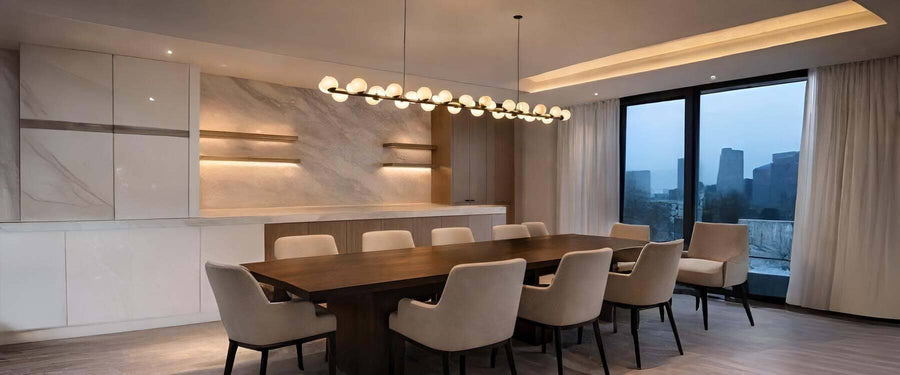
Dining tables allow slightly lower suspension than islands, creating intimacy. Elongated alabaster forms complement rectangular tables, while spherical pendants work well over round settings.
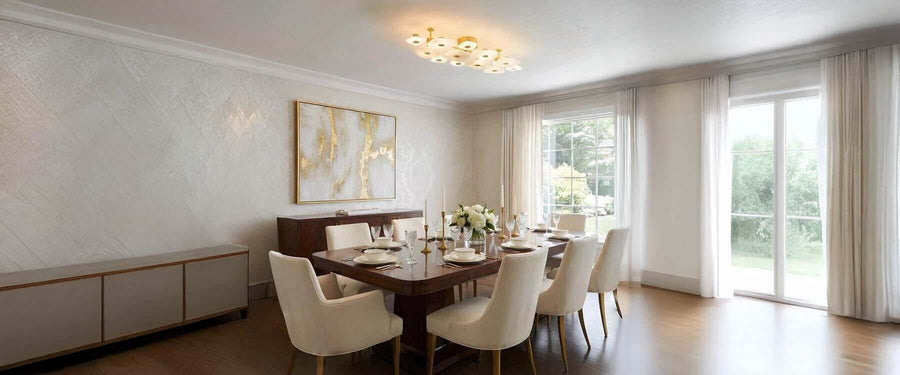
For cohesive open-plan designs, many homeowners coordinate their island pendants with alabaster chandeliers above the dining table. This maintains material continuity while allowing variation in scale and form.
The key is balance. Matching materials should feel intentional, not repetitive.

What Finishes Complement Alabaster Best?
Warm metal finishes enhance alabaster’s natural tone.
The most successful pairings include:
Brushed brass
Aged bronze
Soft satin nickel
Matt black for contrast
These finishes highlight the creamy veining within the stone. Cooler polished chrome can work in minimalist interiors but often lacks the warmth that alabaster naturally provides.
Hardware, taps and cabinet handles should feel connected to the pendant finish for a cohesive scheme.

What Lighting Temperature Works Best?
A warm white LED between 2700K and 3000K complements alabaster pendant lighting beautifully by enhancing the stone’s natural warmth and subtle veining. This temperature range allows alabaster pendant lighting to emit a soft, even glow that feels refined rather than harsh. The result is illumination that supports food preparation while maintaining a calm, welcoming atmosphere.
Cool white lighting can flatten the depth of the stone and make alabaster pendant lighting appear dull or overly stark. Choosing warmer tones preserves the richness of the material and ensures the veining remains visible and expressive. Dimming is also strongly recommended, as it allows the space to shift effortlessly from practical daytime brightness to relaxed evening ambience.

What Common Mistakes Should You Avoid?
In alabaster pendant lighting the most issues arise from poor proportion and inconsistent styling.
Avoid:
Choosing pendants that are too small
Hanging them too high
Mixing too many competing materials
Using overly cool light temperatures
Installing without considering overall kitchen scale
Alabaster pendant lighting works best when supported by thoughtful planning. Every element size, drop, spacing and finish should feel intentional.

Quick Summary
Alabaster pendant lighting enhances kitchen islands by combining practical illumination with natural elegance.
For the best result:
Select pendants proportional to the island
Hang them 75-90cm above the surface
Space them evenly for visual balance
Use warm white LED bulbs
Coordinate finishes with kitchen hardware
Consider clustered designs for larger spaces
When styled correctly, alabaster pendant lighting becomes a defining feature rather than simply a light source.

Conclusion
Alabaster pendant lighting offers a refined way to illuminate kitchen islands while adding depth, warmth and subtle texture. Its ability to diffuse light gently makes it ideal for multifunctional spaces where both clarity and comfort matter.
Successful styling depends on proportion, correct hanging height, balanced spacing and cohesive finishes. Whether you choose two symmetrical pendants, three evenly spaced fittings or a sculptural cluster, the key is maintaining harmony with the island’s scale and the surrounding interior.
With thoughtful planning and the right materials, alabaster pendant lighting transforms an island into a natural focal point that feels elegant, practical and timeless.