
Introduction
Dining room lights work best when they are positioned with intention, centred around the table, and supported by layered lighting that enhances comfort and atmosphere. Drawing on our experience designing lighting collections at niori, we’ve seen how thoughtful placement can completely transform a dining space not just visually, but practically.
Lighting in a dining area is about more than brightness. It defines zones, supports conversation, highlights food naturally, and brings balance to open-plan layouts. When placed correctly, dining room lights create warmth and structure without overpowering the room.
In this guide, I’ll explain exactly where they work best, how to create effective lighting zones, how to avoid glare, and the most common placement mistakes to watch for.

Where Do Dining Room Lights Work Best?
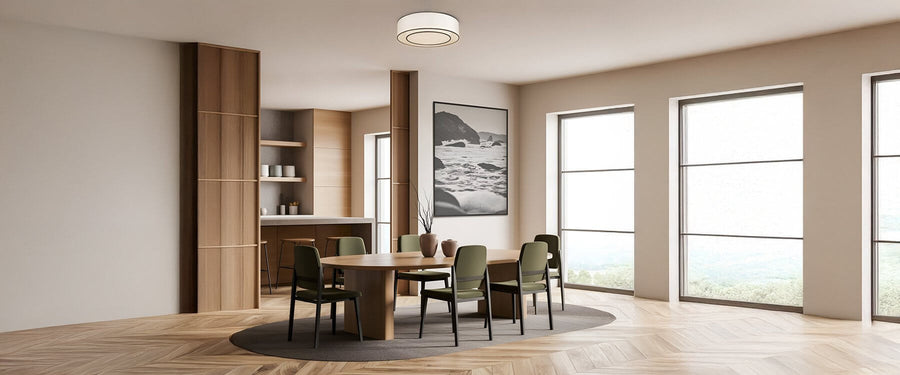
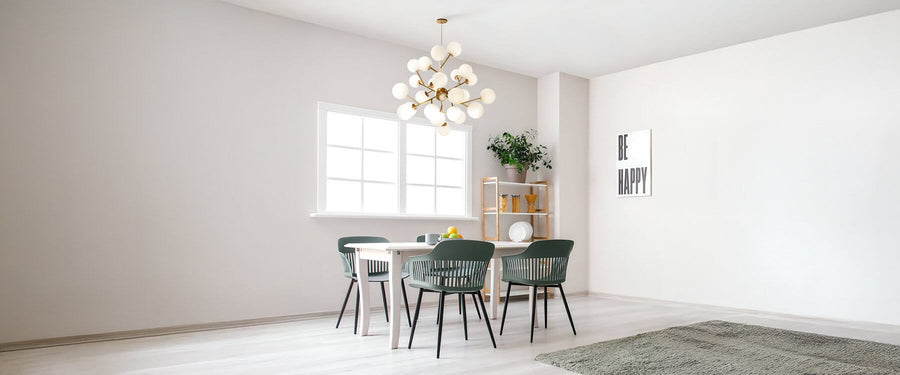
Dining room lights work best directly above the dining table, positioned to visually anchor the space and provide even illumination across the surface.
The dining table is the heart of the room. Lighting should follow the furniture, not the architectural centre of the ceiling. In open-plan homes especially, the table is often offset. Aligning the fixture with the table ensures the space feels intentional and balanced.
They also perform beautifully in:
Open-plan kitchen-diners
Formal dining rooms
Entertaining spaces
Combined living and dining layouts
Breakfast areas with defined seating
In each case, the goal remains the same: define the dining zone clearly through lighting.

How Should Dining Room Lights Be Positioned Over a Table?
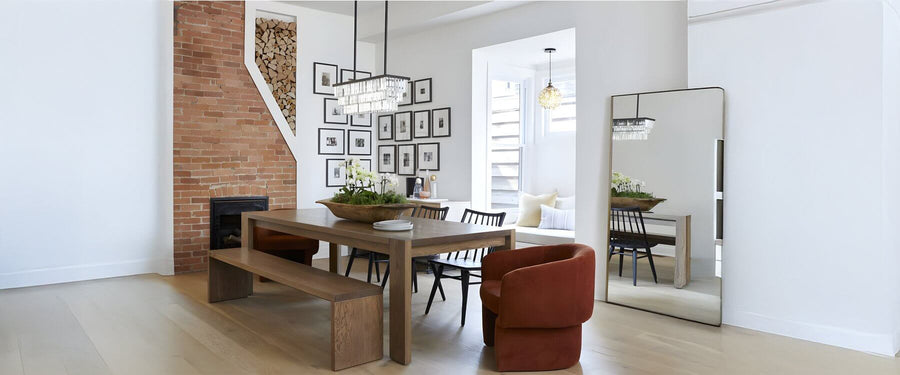
Dining Room Lights should be centred over the table and hung at a height that creates intimacy without obstructing views.
Correct height is crucial:
Standard ceilings (around 2.4m): hang fittings 75-90 cm above the tabletop
Higher ceilings: increase the drop proportionally
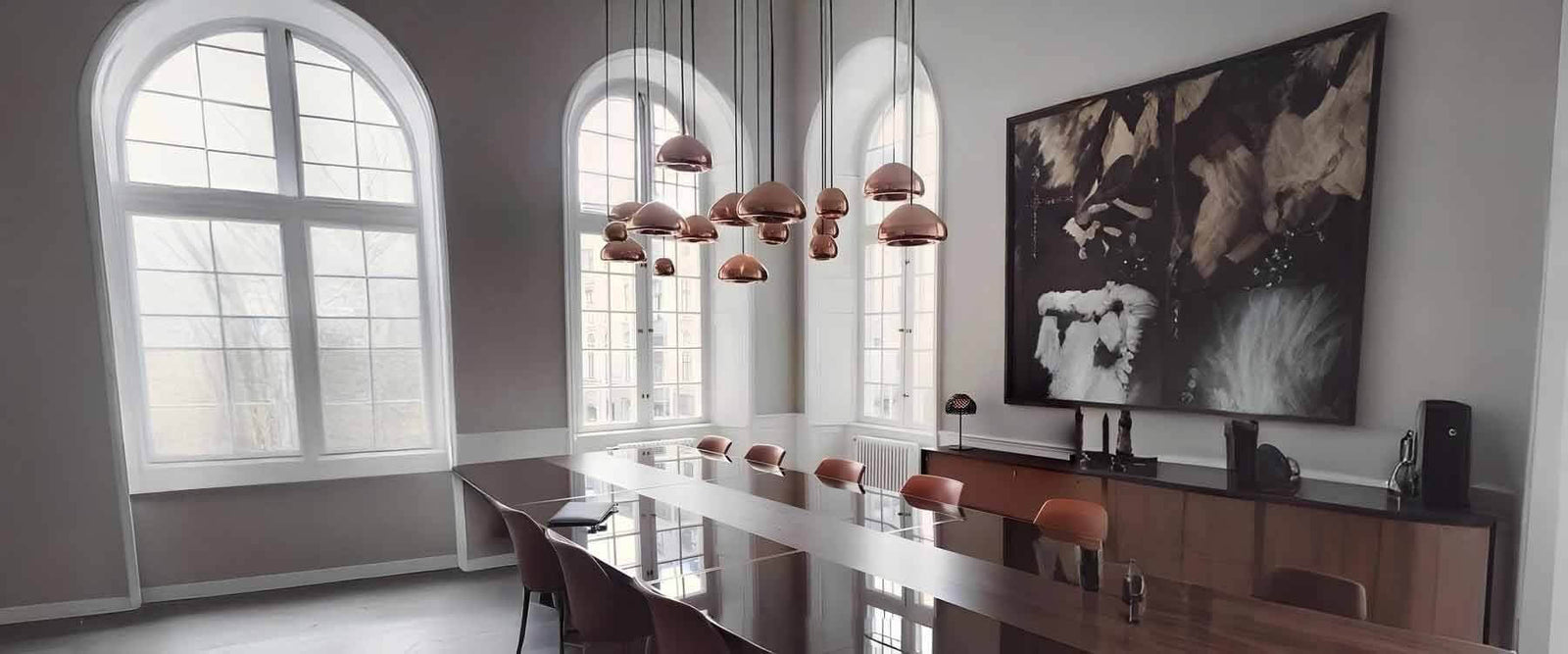
Long tables: use linear fittings or multiple pendants
When seated, you should not see the bulb directly. If the fitting blocks eye contact across the table, it is too low. If it feels disconnected from the table, it is too high.
Many homeowners default to generic ceiling lights, but dining lighting requires more focused positioning. The fixture should visually belong to the table beneath it.

What Lighting Zones Are Ideal for Dining Areas?
The ideal lighting setup includes a task zone, ambient support, and optional accent lighting for depth.
Relying on a single overhead fitting often creates harsh contrast and dark corners. Instead, layer the space thoughtfully.
1. Task Lighting (The Table)
This is the primary dining light.
Options may include:
Sculptural pendants
Linear fittings
Elegant chandeliers for formal spaces
The light should spread evenly across the table without hotspots.
2. Ambient Lighting (The Room)
Ambient lighting softens contrast and prevents the table from feeling isolated.
Consider:
Recessed downlights
Wall lights
Indirect cove lighting
This supporting layer keeps the room balanced once evening falls.
3. Accent Lighting (Optional but Effective)
Accent lighting adds visual interest and depth.
Artwork lighting
Cabinet lighting
Feature wall uplighting
In open-plan spaces, accent lighting helps separate dining from living areas without physical partitions.

How Do You Avoid Glare With Dining Room Lights?
To avoid glare, choose diffused shades, control brightness carefully, and position fittings below seated eye level.
Glare is uncomfortable and can ruin the atmosphere. It usually occurs when exposed bulbs sit directly within sightlines.
Common causes include:
Clear glass shades without diffusion
Oversized filament bulbs
Fittings hung too high
Excessively bright bulbs
Solutions are simple:
Choose opal or fabric shades
Use warm white bulbs (2700K–3000K)
Install dimmers for flexibility
Ensure bulbs are shielded from direct view
At niori, we always recommend testing sightlines while seated before final installation.

What Placement Mistakes Should You Avoid?
The most common mistakes involve poor alignment, incorrect sizing, and lack of layering.
Avoid these frequent issues:
Centring the Light in the Room Instead of Over the Table
The fixture must align with the table, not the ceiling’s midpoint.
Choosing the Wrong Size
Too small and it disappears. Too large and it dominates.
A practical guide:
Add room length and width (in metres)
Convert to centimetres
Use this as a rough diameter reference
Ignoring Dimmers
Dining needs change throughout the day. Bright family breakfasts require more light than evening entertaining.
Using Cool White Lighting
Cool light makes food appear uninviting and creates a clinical feel.

Step-by-Step: How to Place Dining Room Lights Correctly
Correct placement follows a clear process that balances proportion, comfort, and function.
Step 1: Measure the Table
Record:
Length
Width
Position in the room
This ensures accurate centring.
Step 2: Choose the Right Fixture Style
Round table → single pendant
Long table → linear design or multiple fittings
Extendable table → adjustable solution
Formal rooms often suit chandeliers, while modern spaces benefit from clean-lined pendants.
Step 3: Determine Hanging Height
Mark 75-90 cm above the tabletop. Adjust slightly depending on ceiling height and fitting size.
Step 4: Check Sightlines
Sit at the table and confirm:
You cannot see the bulb directly
The fitting does not block conversation
Light spreads evenly across the surface
Step 5: Layer Supporting Lighting
Add subtle ambient lighting to soften shadows and create balance.

Can Dining Room Lights Be Used Beyond the Dining Room?
Yes, dining room lights work well in other areas where you want to define a focal point. They are especially effective in spaces that benefit from visually anchored furniture and structured lighting.
They are effective over:
Kitchen islands
Console tables
Reading corners
Home office desks
Living room coffee tables
The principle remains consistent: use lighting to anchor furniture and define purpose.

How Do You Choose the Right Style?
The right style for dining room lights depends on ceiling height, room scale, and overall interior design direction.
For Contemporary Homes
Minimalist pendants
Matte finishes
Slim linear profiles
For Traditional Interiors
Decorative chandeliers
Fabric shades
Warm metallic finishes
For Open-Plan Spaces
Statement pieces that define zones
Multi-drop pendants
Adjustable fittings
Your dining light should complement surrounding ceiling lights rather than compete with them.

Quick Summary
Dining room lights work best when centred above the table, layered with ambient lighting, and positioned to eliminate glare.
For optimal results:
Align lighting with furniture
Hang 75-90 cm above the tabletop
Use warm white light
Install dimmers
Layer task and ambient lighting
Avoid exposed bulbs at eye level
Correct placement improves comfort, appearance, and overall balance.

Conclusion
Dining room lights perform best when they are positioned directly over the table, scaled correctly for the space, and supported by layered lighting. At Niori, we focus on ensuring every fitting is proportioned accurately, layered thoughtfully, and installed at the right height to prevent glare. Proper height prevents glare, warm white tones enhance atmosphere, and dimmers allow flexibility for different occasions. Avoid centring lights in the room instead of over furniture, choose the right size fitting, and ensure bulbs are not visible at eye level. When these principles are followed, dining lighting becomes both functional and visually grounding, defining the space clearly and comfortably.