
Introduction
A well-chosen picture lights does more than brighten a frame; it choreographs how art meets space. These slender, purposeful fixtures add warmth, depth, and focus, making favorite pieces feel museum-worthy. Homeowners are embracing minimalist lines, cordless power, and sustainable materials that honor both innovation and heritage.
This guide distills the essentials of picture lights from materials and bulb tech to design principles, placement, and upkeep so you can illuminate your gallery walls with confidence and style.

What Makes a Picture Light Different
Picture lights balance form and finesse. Traditionally, they use elongated bars or heads to wash artwork evenly. Ornate backplates, brushed-brass finishes, and adjustable arms nod to classic craftsmanship, while newer profiles streamline the silhouette for a timeless, architectural feel.
Common materials include warm-patina brass, artisan-formed ceramic, and crisp polished nickel. Premium models introduce hand-cut glass diffusers that scatter light softly without glare ideal for protecting delicate works on paper and photography. In homes that already feature wall lights for ambient glow, a dedicated picture light provides the focused layer that brings art to life.

The Modern Look: Minimal Lines, Smarter Tech
Today’s picture lights lean into minimalist geometry and integrated technology. Matte black, satin bronze, and champagne gold finishes pair beautifully with natural wall textures and layered interiors. In ultra-clean spaces, architectural plaster lights can work alongside picture lights to create a seamless, built-in effect where the wall itself becomes part of the composition.
Expect dimmable LED arrays with high CRI for vivid, accurate color. Many designs use marble, brushed metal, or acrylic accents, and discreet rechargeable batteries that eliminate visible cords. The net effect: a sculptural, gallery-grade presence that suits both traditional rooms and crisp contemporary spaces.

Old-World Charm Meets Modern Precision
The most versatile picture lights blend timeless detailing with modern engineering. Imagine a classic brass arm supporting a slim LED bar, or a sculpted base paired with a matte finish. This hybrid language thrives in transitional interiors where past and present co-exist.
In eclectic rooms, layer thoughtfully: warm metallic fixtures above heritage oil paintings; matte black bars over abstract prints. To keep the vignette human and livable, anchor the seating nearby with task pieces like reading lights they complement the art focus without competing for attention.

Dialed-In Display: Brightness, Color & Smart Ecosystems
Great display starts with control. Dimmable picture lights let you tune output to the time of day and the medium keep it softer for watercolors and ramp up for textured canvases that benefit from modeling and depth.
Smart ecosystems integrate with voice assistants and apps so you can schedule on/off times, create scenes, and recall ambient presets instantly. Rechargeable picture lights add cord-free flexibility and often include adjustable color temperature for context-specific warmth.
For lamps and modules, choose LED with CRI 90+ to render pigments accurately, and target 2700-3000K for a warm, gallery-friendly glow. LEDs run cool and efficiently, minimizing heat and UV crucial for preserving artwork over the long term.

Designer Tactics for Mixing Finishes & Styles
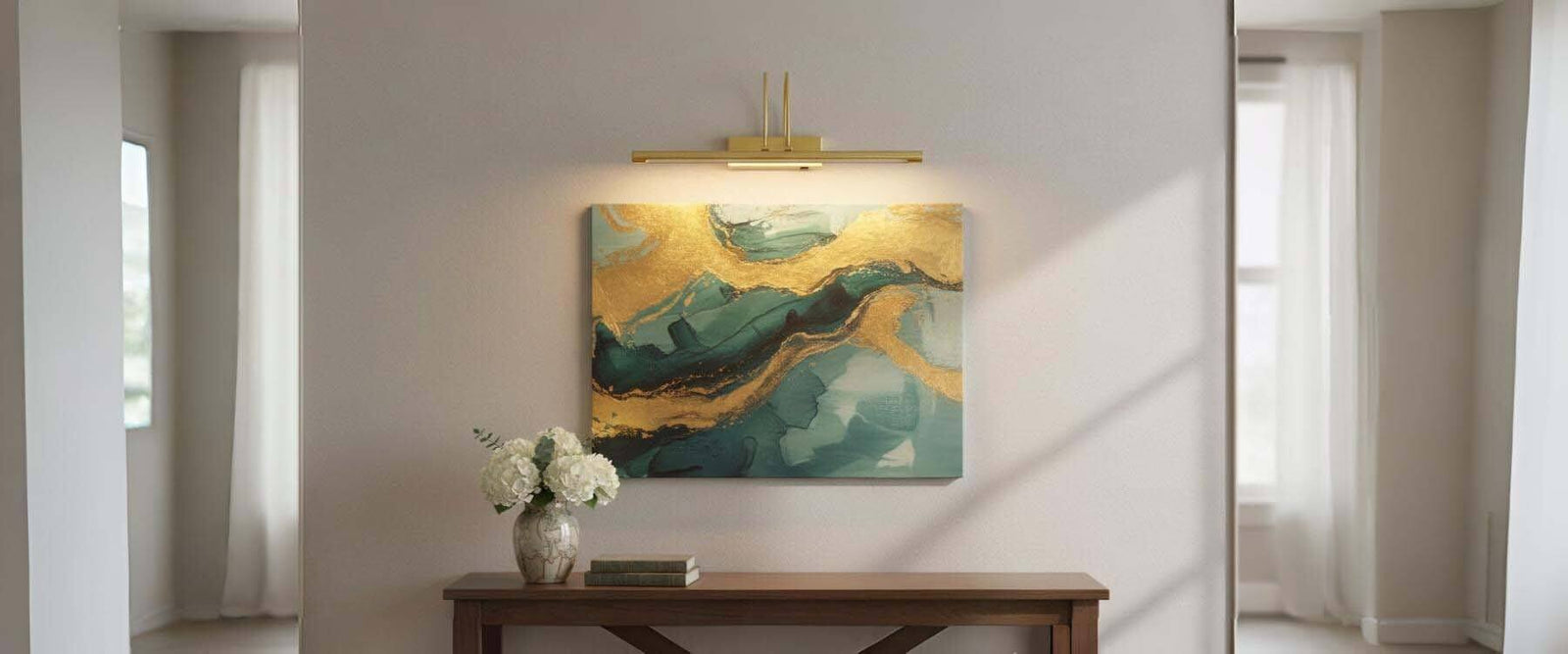
Mixing styles adds rhythm across a home. A brushed-brass fixture in a hallway can echo a gilded landscape frame, while a slim matte bar above monochrome photography introduces graphic contrast. When you already have sculptural wall lights or sconces, keep the picture light’s profile simple so it reads as a purposeful accent rather than a second focal point.
For open layouts, repeat one element metal tone, bar profile, or arm shape to tie rooms together. Layer nearby wall sconces or discreet downlights to create dimension. The aim is cohesion without repetition, a hallmark of elevated interiors.

The Placement Playbook: Heights, Angles & Rooms
Placement determines whether the light flatters or fights the art.
Height & Tilt: Mount the fixture roughly 7-9 inches above the frame’s top edge and tilt 30–35° toward the art for an even spread and minimal glare.
Living Rooms: Adjustable bars over the fireplace, art or gallery walls anchor conversation zones and coordinate easily with ambient wall lights.
Hallways & Entries: Choose low-profile bodies that animate narrow walls without visual clutter.
Bedrooms & Libraries: Warm-white LEDs create calm, intimate viewing; add bedside reading lights so task illumination doesn’t steal the picture light’s job.
Home Offices: Neutral-cool whites (3500-4000K) boost focus and keep prints crisp on video.
Large Walls: Span one long light across multiple frames, or cluster smaller fixtures for balanced symmetry. In minimalist spaces, consider pairing with recessed plaster lights to keep surfaces visually quiet.

Finish Harmony, Proportion & Visual Balance
Make picture lights feel intentional by echoing nearby hardware door levers, curtain rods, and mirror trims. In modern architecture, slender horizontals reinforce clean lines; in period homes, scroll arms or antique brass restore historic charm.
Mind proportion: aim for a light that spans 50-75% of the artwork’s width to ensure uniform coverage. Align finish and scale with surrounding décor so the fixture becomes part of the composition rather than an afterthought.

Care Routines That Protect Art and Fixtures
Consistent maintenance preserves both beauty and performance.
Dusting & Cleaning: Weekly microfiber dusting; quarterly deep clean with mild soap on glass or acrylic diffusers.
Heat & Safety: Favor LED (typically 25,000-50,000 hours); avoid halogen, which runs hot and can harm pigments and paper.
Finish Care: Use gentle, non-ammonia methods on lacquered or antiqued metals; a light annual polish keeps brass glowing.
Smart/Rechargeable Checks: Inspect battery contacts and charging ports periodically for reliable performance.

7 Crowd-Pleasers: Picture Light Ideas That Work Anywhere
Slimline Wireless Bar
Rental-friendly and ultra-discreet low visual noise and easy to reposition as your art evolves.
Warm Brass Picture Light
Adds sophistication and a heritage glow perfect for traditional oil paintings and gilded frames.
Matte Black Frame Light
Graphic and clean; a natural match for contemporary photography, abstracts, and monochrome prints.
Dual-Arm Adjustable Model
Precision aiming for oversized canvases and multi-piece arrangements; fine-tune spread while minimizing glare.
Plug-In LED Classic
Ideal for frequent rotations, pop-ups, or seasonal swaps, reliable output without hardwiring.
Rechargeable Magnetic Fixture
Cordless install with snap-on convenience; seamless on pristine walls and flexible layouts.
Wi-Fi–Enabled Smart Light
Automates day/night scenes, syncs with routines, and keeps artwork consistently illuminated.
These picks show how picture lights function as statement-making tools that balance sustainability, flexibility, and refined design while coexisting gracefully with broader layers like wall lights or subtle architectural plaster lights.

Conclusion
Thoughtful picture lights turn walls into galleries, revealing color, texture, and detail that ambient lighting overlooks. Whether your taste is classic, contemporary, or a curated mix, today’s fixtures pair efficient LEDs with elegant materials and intuitive controls, protecting your art while elevating the room.
Explore our curated collection of picture lights at Niori and dive into our placement guide for room-by-room strategies. The right fixture doesn’t just illuminate it celebrates.