
Introduction
Lighting is one of the most important design elements in the kitchen. It affects mood, enhances safety, and highlights finishes more than any other fixture or feature. The right solution creates a space that feels both welcoming and functional, while the wrong one can make even the most carefully designed room look outdated. Over the years, kitchen lights have gone through countless transformations, moving from utilitarian basics to layered, stylish fixtures that double as décor. Homeowners today are searching for kitchen ceiling lighting ideas that feel modern, practical, and visually clean.
Kitchen lighting has evolved from single utilitarian fixtures to layered, flexible, design-led schemes. Interior designers are prioritizing low-glare LEDs, smart controls, and carefully zoned kitchen lights that supports cooking, cleaning, and entertaining.
Unfortunately, many older approaches to lighting are still found in homes today, and they often leave kitchens looking dark, unbalanced, or dated. From harsh fluorescents to single-bulb ceiling fixtures, these outdated solutions no longer meet the needs of modern living. This article explores common kitchen lighting mistakes that designers now avoid, along with practical, stylish alternatives that suit today’s homes.

Outdated: Harsh Overhead Fluorescent Lighting
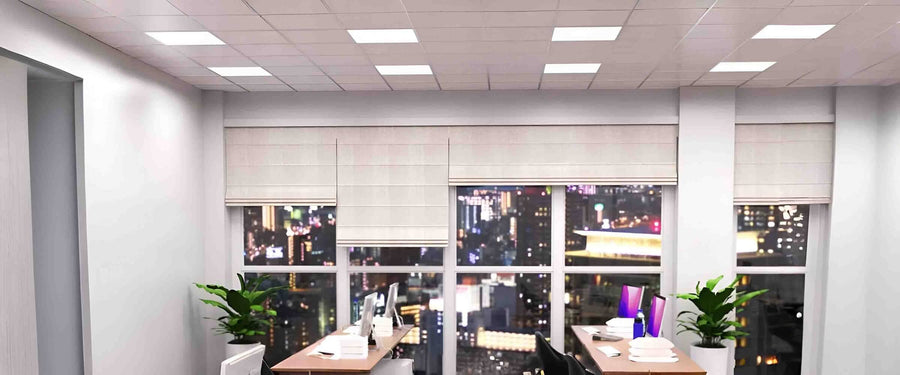
For decades, fluorescent panels were a common form of kitchen lights. They delivered plenty of brightness but often created a cold, clinical atmosphere more suited to offices than homes. Their bulky rectangular housings also detract from ceilings, making kitchens look heavy and uninspired.
Why It’s Outdated:
Fluorescent tubes flicker over time, causing discomfort.
The light feels sterile and flat, washing out cabinetry and counters.
Large panels clash with today’s focus on design-led, layered lighting.
Modern Alternative: Layered Lighting with Warm LEDs
Designers now replace fluorescents with layered LED kitchen lights:
recessed LEDs for soft, even ambient light
pendants for visual focus over islands
under-cabinet strips for task lighting
Warm or neutral-warm LEDs immediately make the kitchen feel more welcoming, and dimmers let you shift from cooking mode to entertaining mode easily.

Outdated: Track Lighting Dominating the Ceiling
In the late 20th century, track lighting was considered modern because of its flexibility. However, long tracks that sprawl across ceilings often appear cluttered and dated. They also fail to provide consistent light, leaving certain zones too dim and others too bright a clear sign your kitchen lights need updating.
Why It’s Outdated:
Bulky fixtures interrupt clean ceiling lines.
Light is often uneven and harsh.
The style is tied closely to past decades, which can age a space.
Modern Alternative: Sleek Recessed Lights or Pendants
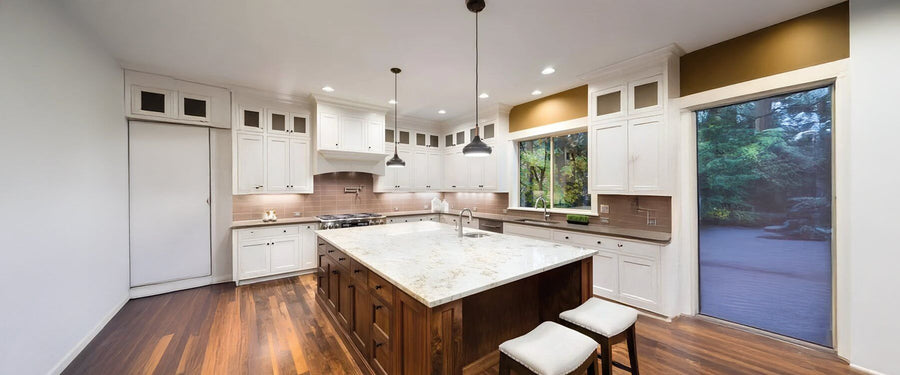
Recessed kitchen lights solve these problems by delivering smooth, unobtrusive illumination. They work well in open-plan kitchens, offering general lighting without overwhelming sightlines. For character and style, pendant fixtures can be hung above islands or dining areas. The combination provides balance, subtle recessed lights for general brightness and pendants for visual impact. These are some of the most reliable kitchen ceiling lighting ideas for homes in.

Outdated: One Single Fixture for the Whole Room
Many older kitchens relied on a single central fixture, typically a ceiling-mounted globe. While practical decades ago, this leaves prep areas in shadow and fails to create atmosphere because one light can’t replace properly layered kitchen lights.
Why It’s Outdated:
One fixture cannot cover all work zones.
Creates flat, lifeless lighting.
Limits opportunities for layering and design expression.
Modern Alternative: Zonal Lighting with Layered Fixtures
Ambient (recessed spots, ceiling LEDs, soft ambient kitchen lighting)
Task (task lighting for kitchen counters, under-cabinet strips, directional pendants)
Accent (toe-kicks, shelf lighting, wall sconces)
This creates depth, improves safety, and makes the space feel designed rather than “lit once.”

Outdated: Oversized Fixtures That Overpower the Space
Grand chandeliers or oversized domes may seem dramatic, but in smaller kitchens they overwhelm the layout. Even in large kitchens, one massive fixture often feels unbalanced compared to multiple smaller, well-placed kitchen lights.
Why It’s Outdated:
Overly large fixtures dominate sightlines.
They can clash with cabinetry and disrupt proportions.
Cleaning and maintaining bulky fixtures can be impractical.
Modern Alternative: Scaled Pendant Lights or Slim Linear Designs
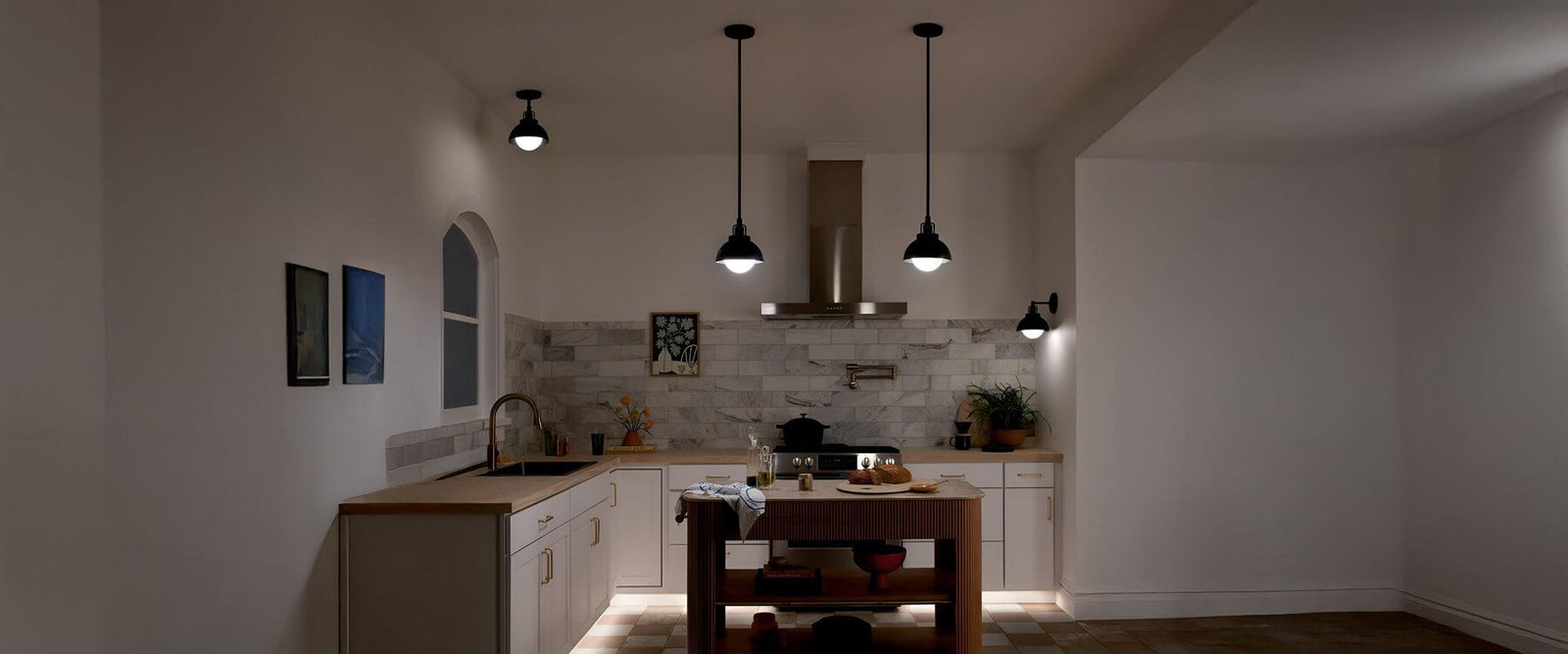
Designers now prefer kitchen lights scaled to islands or dining tables. For example, a row of three medium-sized pendants often looks more elegant than one massive fixture. Slim linear LED bars are another option, offering bright, evenly distributed light without bulk. This approach works especially well for kitchen island lighting, where repetition gives both symmetry and function.

Outdated: Ignoring Under-Cabinet Lighting
Under-cabinet lighting was long considered optional. Many older kitchens lack it entirely, leading to frustratingly dark countertops where food is prepared.
Why It’s Outdated:
Leaves shadows under cabinets.
Inconvenient for cooking and food prep.
Missed opportunity for layered, practical design.
Modern Alternative: Integrated LED Strips for Functional Brightness
Today, under-cabinet kitchen lights are a must. Slim LED strip lighting can be hidden beneath upper cabinets, offering targeted illumination for chopping, mixing, and cooking. At night, the same fixtures double as soft ambient glow. This type of cabinet lighting is one of the most practical upgrades for daily kitchen use.

Outdated: Bulky Fixtures in Minimalist Kitchens
Minimalist kitchens depend on streamlined design, yet many homes still feature bulky, ornate lights that clash with this aesthetic.
Why It’s Outdated:
Heavy fixtures feel out of place in minimalist spaces.
They distract from cabinetry, counters, and materials.
Can make sleek designs appear cluttered.
Modern Alternative: Minimalist, Flush-Mount, or Sculptural Fixtures
Flush-mount kitchen lights and sculptural LEDs complement minimalist design without drawing too much attention. Fixtures with geometric forms or slimline finishes add interest without overwhelming. These modern kitchen light fixtures keep ceilings clear and help minimalist kitchens feel calm, not crowded.

Placement and Energy Efficiency
Lighting design is not only about style, it is about smart placement and energy-conscious choices. Even the best kitchen lights can fail if they are installed poorly. For example, pendants should hang 30 to 36 inches above a kitchen island following the recommended pendant height over island rule while wall sconces should be mounted around 60 inches from the floor. Proper spacing ensures even illumination without glare.
Energy efficiency is equally important. Modern LED kitchen lights consume far less energy than traditional bulbs and can last for decades. Many fixtures now include smart integrations, allowing homeowners to adjust brightness, set schedules, and even change color temperatures via phone or voice control. These smart kitchen lighting systems deliver long-term savings while improving flexibility for different tasks and moods.

Why Updating Kitchen Lighting Matters
Designers emphasize that lighting should never be an afterthought. Outdated kitchen lights make rooms feel gloomy or old even after new cabinets or counters.
Updating lighting is one of the most cost-effective upgrades you can make, because modern kitchen lighting:
improves visibility and safety
defines zones in open-plan layouts
enhances materials and colour
adds ambiance for entertaining
Replacing fluorescents, heavy track systems, and single central fixtures with layered LEDs recessed downlights, and scaled pendants transforms the kitchen’s function and feel.

Quick Checklist - A Modern Kitchen Lighting Plan
✅ Do
build a layered plan (ambient + task + accent)
use warm/neutral LEDs (2700-4000K by zone)
add under-cabinet lighting for prep safety
scale pendants to island size (often 2-3 medium)
choose flicker-free, high-CRI LEDs
install dimmers or smart scenes for smart kitchen lighting systems
❌ Don’t
rely on a single ceiling light
keep fluorescent panels or sprawling track systems
over-size fixtures in compact kitchens
skip task lighting on counters
use harsh cool LEDs everywhere

Conclusion
Lighting is central to kitchen design, but outdated fixtures can limit both beauty and function. Harsh fluorescent panels, bulky track lights, single overhead bulbs, overscaled pendants, and missing task lighting no longer meet modern needs.
Designers favour layered warm-to-neutral LEDs, clean recessed lighting, scaled pendants, integrated LED strip lighting, and minimalist flush-mounts. These choices improve visibility, enhance finishes, and create a kitchen that feels bright, balanced, and welcoming exactly what kitchen lights should deliver.