
Introduction
Modern chandeliers have become essential design elements for creating structure and impact in contemporary interiors. Have you ever walked into a beautifully furnished room that still somehow felt... incomplete? You’ve chosen the right furniture, added tasteful decor, and curated your palette, but something’s off. Often, the issue isn’t what’s in the room, but what’s missing: a strong visual anchor. This is especially common in open-plan spaces or rooms where the lighting feels purely functional.
That’s where modern chandeliers come in. More than just a source of illumination, they create structure, inject personality, and instantly elevate a room's identity. If your space feels flat or lacks cohesion, a modern chandelier could be the simple but powerful solution you’ve been overlooking.

Why Some Rooms Feel Unfinished (Even with Great Furniture)
It’s a common frustration: your furniture is stylish, your layout is balanced, and your colors work, yet the room still doesn’t feel "done." This usually comes down to one key issue: there’s no vertical anchor or visual hierarchy.
Lighting, especially overhead lighting, plays a crucial role in creating that focal point. When your ceiling is bare or the fixture is too subtle, the eye lacks a place to settle, and the room lacks depth.
That’s why modern chandeliers matter. They break up empty ceiling space, add a sculptural element, and draw the eye upward, instantly making the room feel more cohesive and complete.

What Makes Modern Chandeliers a Design Game-Changer
Unlike traditional, ornate fixtures of the past, modern chandeliers are designed with clean lines, innovative materials, and contemporary aesthetics. They’re not just for ballrooms or entryways, they’re versatile enough to suit minimalist apartments, mid-century homes, and even small rooms.
Their defining traits include:
Geometric or sculptural silhouettes
Mixed materials (e.g. glass + brass, matte black + acrylic)
LED integration for sleekness and energy efficiency
Dimmable options for flexible ambiance
More than any other lighting fixture, modern chandeliers add drama, purpose, and symmetry. Whether your space is industrial, Scandinavian, eclectic, or transitional, there’s a chandelier that fits.

Choosing the Right Shape, Size, and Style for Impact
To make modern chandeliers work effectively as focal points, you need the right proportions and placement.
For rectangular tables or rooms: Consider linear chandeliers with elongated profiles.
For round tables or compact spaces: Opt for tiered or spherical designs that mirror the room’s geometry.
For high ceilings: Use cascading or multi-tier chandeliers to fill vertical space.
For low ceilings: Choose flush or semi-flush chandeliers with bold shapes but minimal drop.
The fixture should be around ½ to ⅔ the width of your table or island, and hang approximately 30–36 inches above the surface in dining or kitchen settings. These guidelines help anchor the space without overwhelming it.
Rooms That Benefit Most from Modern Chandeliers
Dining Room Lights
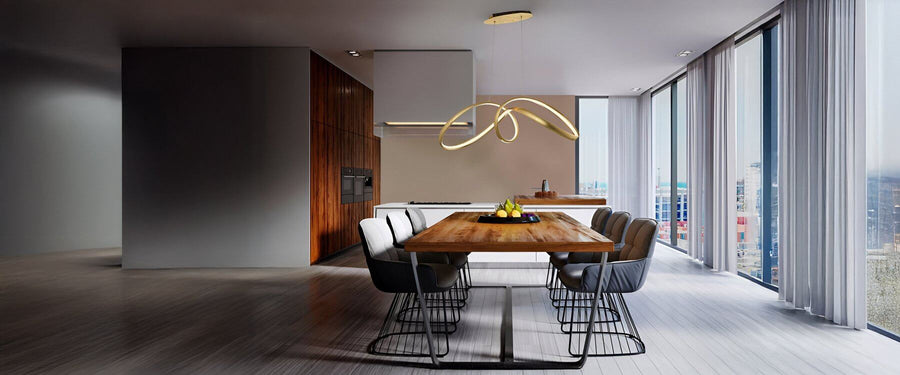
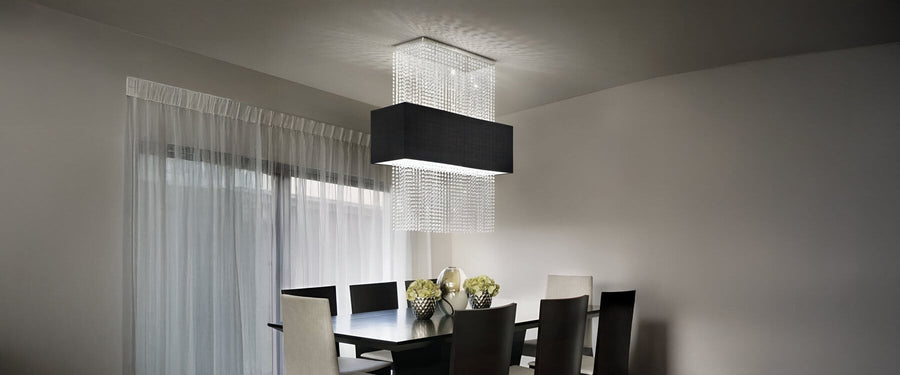
The dining area is the most traditional, but still most effective, place for modern chandeliers. A well-proportioned fixture above the table brings drama and definition, especially in open-plan layouts.
Linear chandeliers span long tables and create balance
Tiered or circular models soften sharp edges in square rooms
Look for dimmable options to adjust mood from bright dinners to ambient evening settings
When it comes to dining room lights, a modern chandelier transforms a basic table into a centerpiece.

Living Room Lights
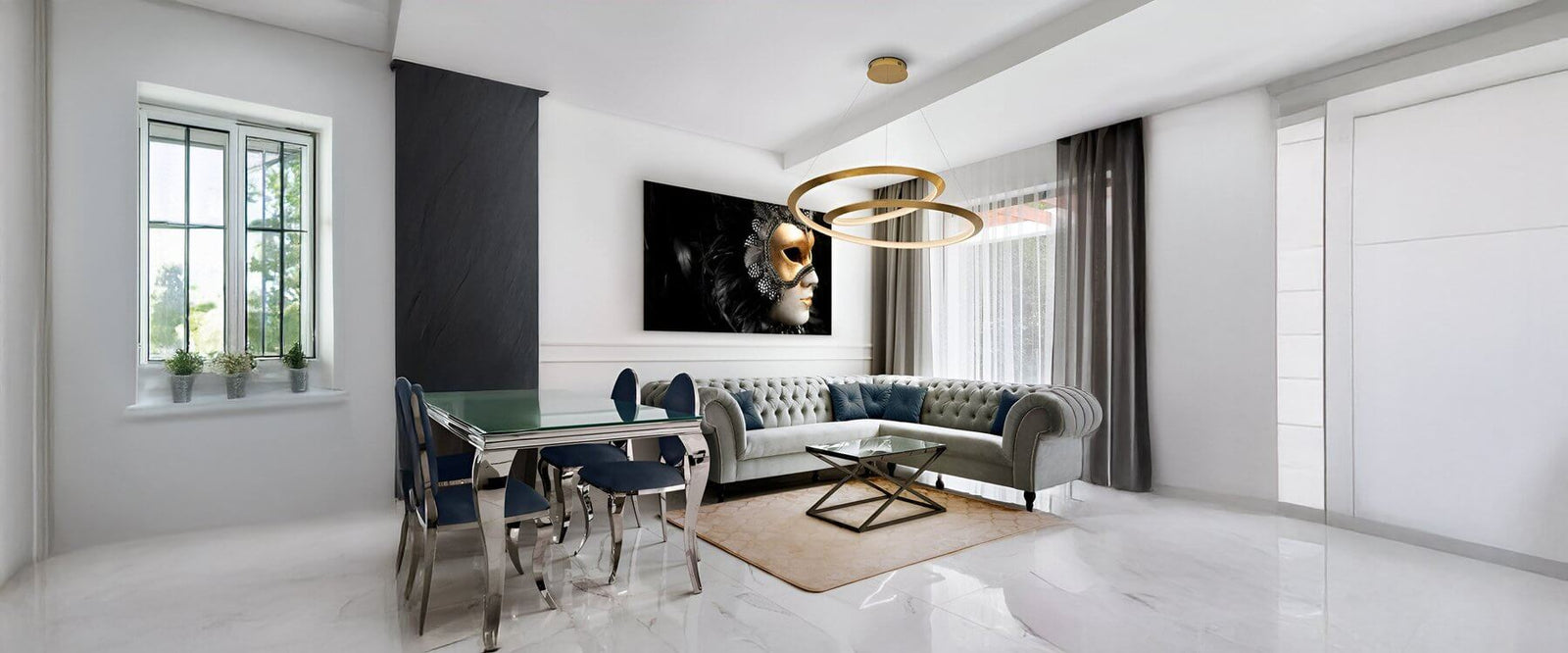
Living areas can lack vertical emphasis, especially if they rely solely on lamps or wall sconces. A chandelier placed above the central seating area draws the eye upward, adds elegance, and unifies the layout.
Choose fixtures that reflect your design language, organic curves for a relaxed vibe, sharp lines for a structured feel
If you already have living room lights like recessed cans, use the chandelier as a visual and decorative layer
Bonus: chandeliers with remote or smart dimming features allow lighting to adapt for movie nights, entertaining, or quiet evenings.

Bedroom Lights
Bedrooms are often lit with uninspired flush mounts or downlights. But modern chandeliers can elevate them into hotel-like retreats with just one bold move.
Pair chandeliers with layered bedroom lights like bedside pendants or sconces
Use warm tones or frosted glass to soften the glow
For lower ceilings, try sculptural semi-flush designs that offer both personality and practicality
Whether above the bed or centered in the room, a chandelier adds polish and sophistication.
Kitchen Lights
People often overlook the kitchen when it comes to statement lighting, but it’s an ideal space for modern chandeliers, especially above islands or breakfast nooks.
Use linear or double-globe designs for long kitchen islands
Make sure your fixture coordinates with existing kitchen lights like under-cabinet LEDs or track lighting
Select finishes that tie in with hardware (e.g., brushed gold, matte black, stainless steel)
A bold kitchen chandelier can help break up functional zones while adding warmth to a typically utilitarian space.

Design Tips: Placement, Height, and Coordination
When installing modern chandeliers, success comes down to thoughtful integration.
Center your chandelier over a key surface, dining table, coffee table, or bed, to reinforce spatial order
Use symmetry: Align your chandelier with architectural features like ceiling beams, windows, or the room’s axis
Match finishes subtly**: Tie your chandelier’s material to smaller accents like cabinet pulls, mirror frames, or curtain rods
Watch the height: In open spaces, err on the side of a lower drop to help the chandelier anchor the room without feeling disconnected
Finally, be intentional. Your chandelier should feel like part of the room’s story, not an afterthought or standalone piece.

Conclusion
When a room feels off, unsettled, unfinished, or underwhelming, it often comes down to one missing element: a strong visual anchor. Modern chandeliers offer more than just light. They bring cohesion, depth, and personality to a space that needs grounding.
Whether you're refreshing your dining room lights, upgrading living room lights, or rethinking bedroom lights, a thoughtfully chosen chandelier can transform the room’s energy and style. Even in functional areas like kitchens, these sculptural fixtures add elegance where you least expect it.
Explore our collection of modern chandeliers and find the perfect focal point for your space. From bold and sculptural to sleek and understated, there's a style for every room, and every ceiling.