

A ceiling studded with too many downlights and the wrong LED bulbs is the fastest way to make an expensive room feel like an office. We see it constantly: a beautifully renovated kitchen in a period home, lit by fourteen cold recessed spots on a single switch, and not one warm layer anywhere. Downlights led bulbs are the workhorses of modern lighting, and they earn their place. The trick is getting these downlights led bulbs quiet and correct so the pieces you actually want people to notice, the alabaster pendants and stone wall lights, can do the emotional work.
This guide is for the planning stage, before the plasterboard goes up and before you commit to a grid you will live with for a decade. Treat your downlights led bulbs as the base layer, then build everything else on top of it.
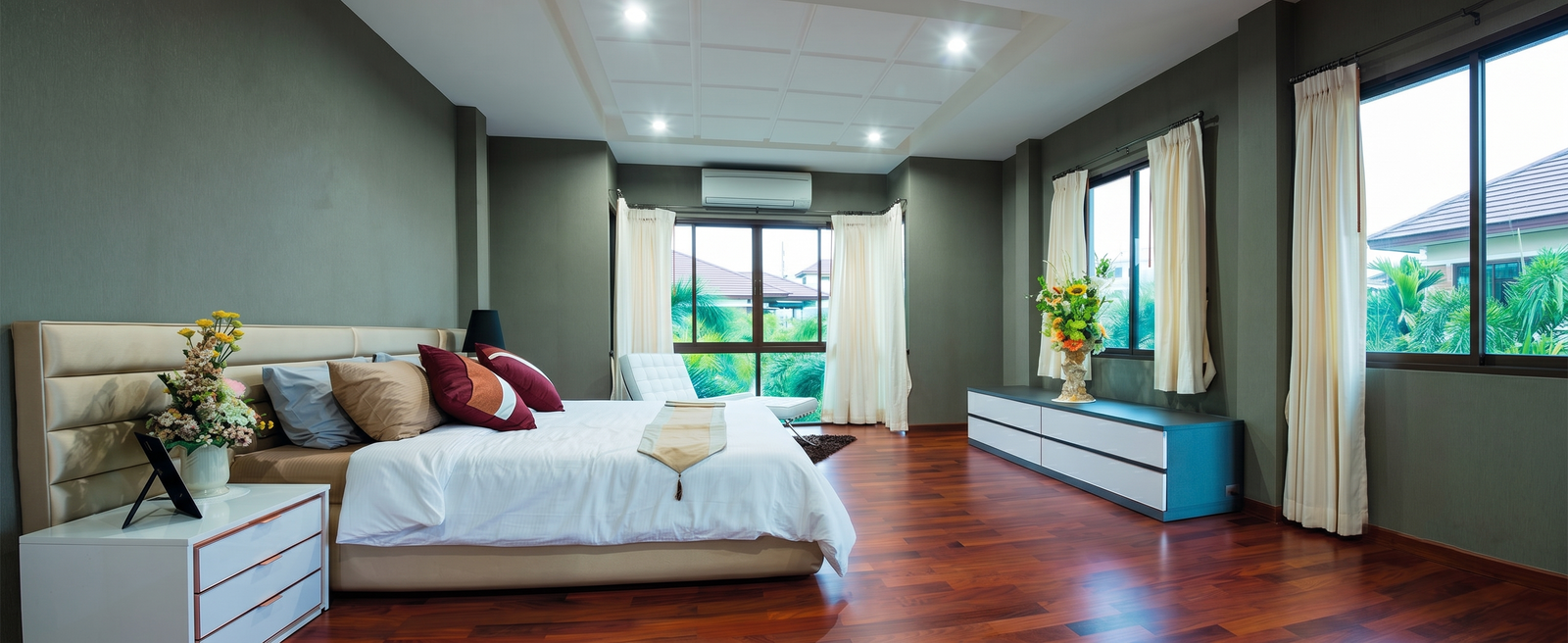
A calm recessed grid lets feature lighting take centre stage.

Key Takeaways
Integrated LED downlights last longer and sit flatter, but you replace the whole unit when they fail. Bulb-based fittings (GU10) let you swap LEDs cheaply.
Beam angle and spacing decide whether you wash a wall evenly or create scalloped hot spots.
Flicker almost always comes from a driver and dimmer mismatch, not the bulb itself.
Colour temperature should shift room to room: warmer in living spaces, slightly cooler where you prep food.
Use recessed spots for function, then let stone and alabaster fixtures carry the mood.

Recessed LED Bulbs Versus Sealed Integrated Units
The first decision with downlights led bulbs is whether you want a fitting that takes a replaceable bulb or a sealed integrated unit with the LED built in. Both are valid; they suit different buyers.
A GU10 recessed downlight holds a standard LED bulb you can change in seconds. When the lamp fails, or when you decide 3000K was a touch warm for the bathroom, you swap it. That flexibility matters in rented properties, holiday lets, and any project where the brief might change. The trade-off is a slightly deeper fitting and a visible bulb face. This is the route to take if you want your downlights led bulbs easy to update.
An led recessed downlights with an integrated chip sits flatter, often with a cleaner bezel and a better seal against draughts and loft insulation. The catch: when the LED reaches the end of its life, you replace the entire unit, which usually means an electrician. Manufacturers quote long lifespans for a reason, but plan for it. Where you want one fitting to handle several zones without recommitting to a colour temperature, an integrated CCT-select unit such as the Tiberi 21W LED Downlight CCT Select lets you tune the tone on the fitting while keeping the flat, sealed profile. If you like the freedom to tune the look later, bulb-based downlights led bulbs win.
For the bulb route, our lighting collection includes GU10 and other LED lamps in warm tones that pair sensibly with diffused stone fixtures, so the recessed light and the feature light read as one scheme rather than two arguments. Good downlights led bulbs disappear into the ceiling and let the stone take over.
Beam Angle and Spacing That Wash a Room
Beam angle is the single most ignored spec on downlights led bulbs, and it decides everything. A narrow 24 to 36 degree beam throws a tight pool of light, good for highlighting a worktop or a piece of art. A wider 60 degree beam spreads light across a broad area, which is what you usually want for general ceiling lighting.
Spacing follows from beam angle and ceiling height. A rough working rule for a standard 2.4 m ceiling is to space the led recessed downlight roughly the same distance apart as the ceiling height, then pull them in from the walls by about half that. Space your downlights led bulbs too far apart with narrow beams and you get scalloping, those ugly bright-then-dark patches. Cram them too close and the room flattens into a runway.
Beam angle and spacing decide whether a wall washes evenly or scallops.
For washing a wall evenly, place the spots closer to the wall and angle them, or use dedicated wall-wash fittings. The aim is even illumination at eye level, not a constellation of spotlights on the floor. Get this right and you can use fewer fittings, which keeps the ceiling calm and lets a stone pendant above the table take centre stage.
Why LED Downlights Flicker, and How to Specify It Out
Flicker is the complaint we hear most, and the cause is rarely the LED itself. When LED downlights flicker, the usual culprit is a mismatch between the dimmer, the LED driver, and the total load on the circuit.
Older trailing-edge and leading-edge dimmers were designed for incandescent loads measured in hundreds of watts. Hang a handful of low-wattage recessed spots on that dimmer and it can sit below its minimum load, producing visible flicker or a buzz. The fix is a dimmer rated for low-wattage LED loads, matched to the driver type the manufacturer specifies.
A few practical steps to design flicker out of your downlights led bulbs:
Choose downlights and dimmers from a tested compatibility list rather than mixing brands blind.
Check the minimum and maximum load of the dimmer against your total LED wattage.
Prefer drivers with good flicker performance; the IEEE has published guidance on flicker and its visible and non-visible effects (see IEEE 1789).
Where a circuit mixes integrated fittings with bulb-based ones, keep driver types consistent.
If flicker persists after a sensible dimmer swap, stop guessing and bring in a qualified electrician. Persistent flicker can point to a loose connection or an overloaded circuit, which is not a job for trial and error.
Choosing Colour Temperature Room by Room
Colour temperature, measured in kelvin, sets the warmth of your downlights led bulbs. Lower numbers look warmer and more golden; higher numbers look crisper and bluer. Get this consistent and a home feels coherent. Get it scattered and every room argues with the next.
For most UK homes we suggest:
Living rooms and bedrooms: 2700K. Warm, restful, kind to skin and to natural stone.
Kitchens and worktops: 3000K, occasionally a touch cooler over a prep zone where you want clarity.
Halls and landings: 2700K to 3000K, warm enough to welcome but bright enough to feel safe on stairs.
Bathrooms: 3000K reads clean without going clinical; reserve cooler tones for a dedicated mirror task light.
CCT-select downlights let you choose the temperature on the fitting, which is useful when you are unsure or want the option to adjust later. Whatever you pick for your downlights led bulbs, keep alabaster and onyx fixtures fed with warm light around 2700K to 3000K. Where a fitting takes a replaceable lamp, an opal-diffused option such as the 8W LED Globe Bulb E27 Opal 3000K keeps the glow soft through translucent stone rather than punching a hard point of light through it. Stone glows beautifully in that range; the veining warms and softens. Push a cool 4000K bulb through alabaster and you lose the honeyed quality that made you want it. You can browse warm-toned pieces across the alabaster lighting range to see how the material behaves at that temperature.
Dimming Compatibility and When to Call an Electrician
Dimming is where good intentions meet bad pairings. Not every recessed fitting is dimmable, and not every dimmable one works with every dimmer. Read the spec sheet on your downlights led bulbs before you buy, not after the buzz starts.
Decide early what you actually want to dim. A kitchen island might need bright task light at full output and a low, warm glow for late evenings; a hallway often only needs two settings. Once you know that, match dimmable fittings to a compatible dimmer and keep the total load comfortably inside the dimmer's range.
The point you call in a professional: anything involving the consumer unit, new circuits, fittings near a bath or shower, or fittings cut into a fire-rated ceiling. Recessed fittings can compromise the fire integrity of a ceiling unless they are fire-rated and installed correctly, which is covered under UK building regulations and worth raising with your electrician. Niori supplies lighting and LED bulbs, but the wiring should always be signed off by someone qualified.
Let Downlights Work So Stone Fixtures Set the Mood
Here is the mindset shift that separates a flat scheme from a considered one. Downlights led bulbs are infrastructure. They give you safe, even, functional light. They are not the show.
The atmosphere comes from layers: a low alabaster pendant over a dining table, a pair of stone wall lights flanking a fireplace, a marble table lamp throwing a warm pool onto a console. These pieces glow rather than glare. Alabaster is naturally translucent, so light passes through the stone and softens, picking out the veining in a way no recessed spot can match. Put the two systems on separate circuits or scenes, and you can drop the spots right down while the stone pieces hold the room.
One client in a Cotswold barn conversion had specified recessed spots across the whole open-plan ground floor and nothing else. We added two alabaster pendants over the kitchen island and a stone floor lamp by the reading chair, then split the controls. The downlights led bulbs now run at full for cooking and cleaning and sit near-off in the evening, while the alabaster does the entertaining. Same room, completely different night-time feel, and the recessed grid finally faded into the background where it belongs.
A Quick Specification Checklist
Decide bulb-based (GU10) or integrated downlights led bulbs based on how much future flexibility you want.
Match beam angle to purpose: wider for general wash, narrower for accent.
Space fittings to your ceiling height and pull them off the walls.
Pick one colour temperature strategy per zone and stick to it; 2700K for living, around 3000K for kitchens.
Confirm dimmable status and a tested dimmer pairing before buying.
Keep alabaster and stone fixtures on warm bulbs and separate controls.
Use a qualified electrician for wiring, fire-rated ceilings, and anything near water.