
Introduction
Alabaster pendant lighting brings a natural warmth and understated luxury to interior spaces. The stone’s subtle veining and translucent quality allow light to pass through gently, creating a soft glow that works well in kitchens, dining rooms, and open-plan living areas. When installed correctly, alabaster pendant lighting becomes both a functional light source and a decorative element that enhances the overall atmosphere of the room.
One of the most common questions homeowners ask is whether to use a single pendant or multiple fixtures when planning alabaster pendant lighting. The decision often depends on the size of the table or island, the ceiling height, and the overall look you want to achieve. A single pendant can act as a sculptural focal point, while multiple pendants can distribute light more evenly across a longer surface.
At Niori, we often guide clients through this choice when designing lighting layouts. The right arrangement ensures that the lighting feels balanced while still highlighting the beauty of the stone.

Quick Summary
A single pendant suits small tables, breakfast nooks, and compact dining areas.
Multiple pendants work best over kitchen islands or long dining tables.
Correct spacing prevents the lighting from looking crowded or uneven.
Alabaster pendant lighting provides a warm, diffused glow ideal for dining and ambient lighting.
Scale, placement, and hanging height determine whether the installation feels balanced.

When Should You Use a Single Alabaster Pendant?
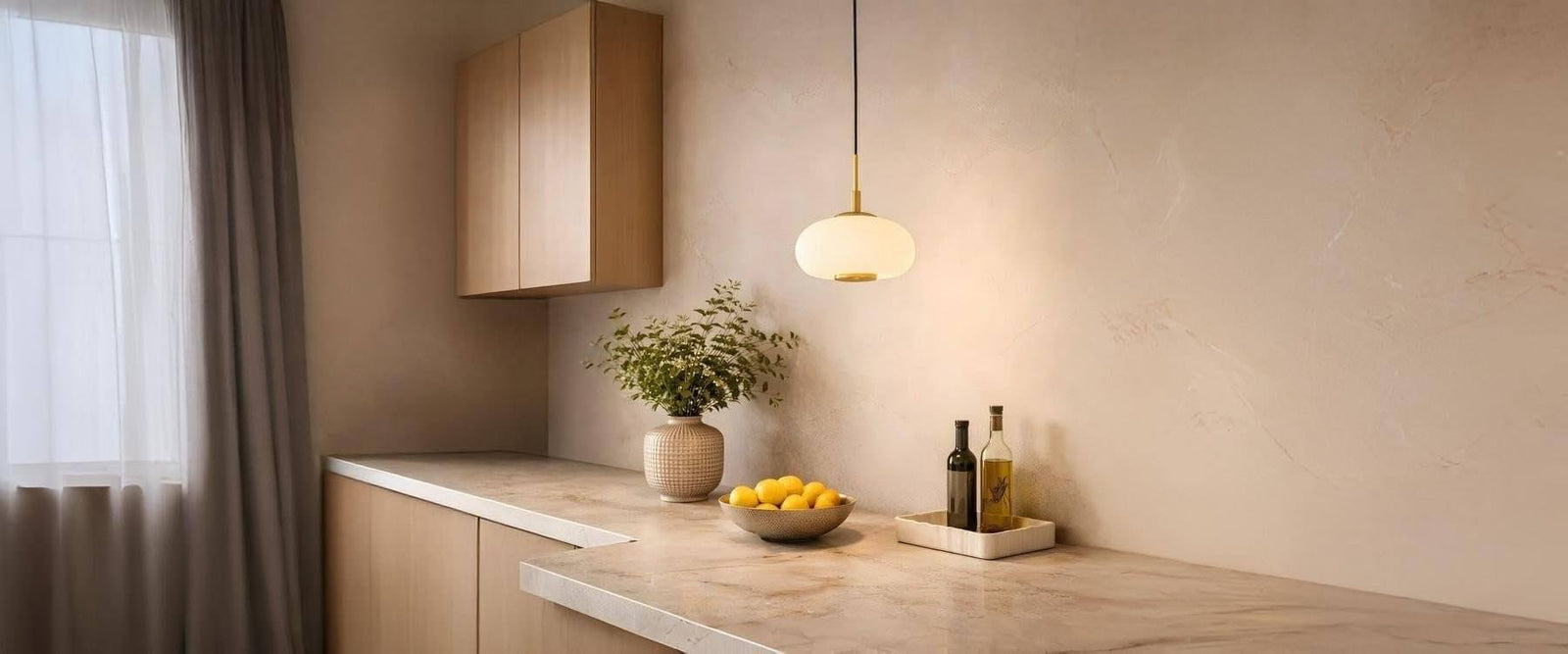
A single alabaster pendant lighting is best used when the goal is to create a central focal point over a compact surface. In many interiors, alabaster pendant lighting works beautifully as a single statement piece because the stone naturally diffuses light and produces a soft, even glow. One well-sized pendant can illuminate a small dining table or breakfast nook without the need for additional fixtures.
This approach works especially well in interiors that favour clean lines and minimal visual clutter. A single pendant draws attention to the natural veining of the stone and creates a calm, balanced atmosphere.
Ideal Spaces for One Pendant
Round dining tables
Small rectangular dining tables
Breakfast corners or café-style seating areas
Entryways that require a soft overhead glow
Bedside pendant lighting in place of table lamps
In smaller rooms, using one pendant also prevents the ceiling from feeling crowded. The fixture acts as a design statement without overwhelming the space.
Choosing the Right Size
When installing alabaster pendant lighting above a dining table, proportion matters. A common rule is to select a fixture that measures roughly one-third of the table’s width. For most dining areas, a pendant between 30 and 50 centimetres in diameter works well.
The pendant should typically hang 70 to 90 centimetres above the tabletop. This height allows the light to illuminate the surface while keeping the fixture comfortably within view.
Single pendants can also complement other stone lighting features in a room. For example, some interiors pair a pendant above the table with alabaster ceiling lights in surrounding areas to create a layered lighting scheme.

When Are Multiple Alabaster Pendants a Better Choice?
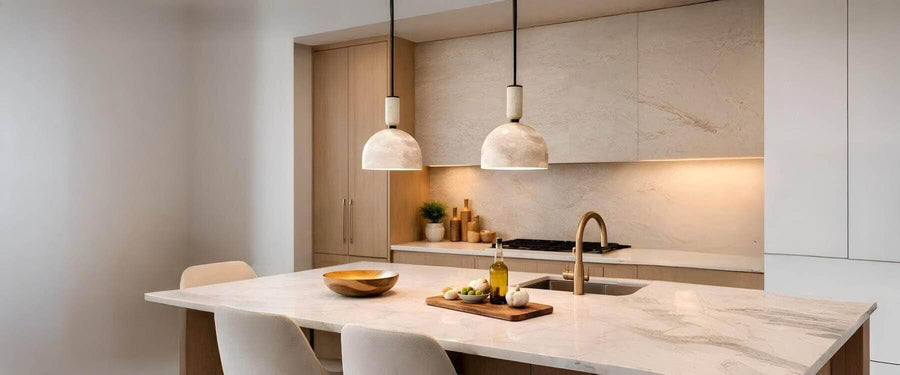
Multiple pendants are more effective when lighting long surfaces that require even illumination. In many kitchens and dining areas, alabaster pendant lighting is arranged in groups to ensure the glow spreads evenly across the entire surface. Kitchen islands, long dining tables, and bar counters often benefit from two or three fixtures placed in a straight line when using alabaster pendant lighting.
Using several pendants spreads light across the surface so there are no dark spots. At the same time, repeating the shape of the pendant creates visual rhythm that suits contemporary kitchens and open-plan layouts.
Common Layouts for Kitchen Islands
Alabaster pendant lighting most island installations follow simple patterns:
Two pendants for islands around 1.5 to 2 metres long
Three pendants for islands between 2 and 3 metres
Four pendants for very long counters or commercial bars
The goal is to keep the arrangement symmetrical so the lighting feels intentional rather than random.
Multiple pendants also allow designers to work with smaller fixtures while still achieving a strong visual presence. This approach works particularly well in modern kitchens where lighting plays an important decorative role and helps define the centre of the space.

How Do You Space Alabaster Pendant Lighting Correctly?
Proper spacing is essential for balanced lighting. When pendants are placed too close together, the arrangement looks cluttered, and when they are too far apart, the lighting can appear disconnected from the surface below. When planning alabaster pendant lighting, spacing becomes even more important because the soft glow of the stone is meant to spread evenly across the surface.
A practical guideline is to leave some space at both ends of the island or table and distribute the fixtures evenly between those margins.
Standard Spacing Guidelines
For kitchen islands:
Leave 15 to 30 centimetres between the island edge and the first pendant
Keep 60 to 75 centimetres between each pendant centre
For dining tables:
Space pendants 50 to 70 centimetres apart
Ensure the arrangement is centred along the table length
Hanging Height
Pendant height also affects how the lighting feels in a room.
Typical installation heights are:
75 to 90 centimetres above dining tables
70 to 85 centimetres above kitchen islands
Lower placement creates a more intimate dining atmosphere, while slightly higher placement can make the room feel more open.

How to Decide Between Single and Multiple Pendants
Choosing between one pendant and several fixtures for alabaster pendant lighting depends on three main factors: surface length, pendant size, and the lighting purpose. When planning alabaster pendant lighting, considering these elements helps ensure the fixtures provide balanced illumination while maintaining a cohesive look in the space.
1. Surface Length
Short surfaces usually require one pendant, while longer surfaces need multiple fixtures.
Examples:
90 cm table → single pendant
180 cm table → two pendants
240 cm island → three pendants
2. Pendant Size
Larger pendants often work best as a single centrepiece, while smaller designs look better in groups.
For instance, a large globe pendant can act as a sculptural focal point over a dining table. Smaller cylindrical pendants, on the other hand, can be arranged in a neat row above a kitchen island.
3. Lighting Function
Consider whether the lighting is meant for decoration, ambience, or practical tasks.
Kitchen islands often require stronger illumination for food preparation. In these cases, several pendants provide more even coverage. Dining areas, however, usually benefit from softer lighting focused in the centre of the table.
In larger rooms, pendant lighting can also complement other statement fixtures such as alabaster chandeliers, which add drama to living or dining spaces while maintaining the same natural stone aesthetic.

Step-by-Step Guide to Planning Pendant Lighting
Designing alabaster pendant lighting becomes much easier when you follow a clear process.
Step 1: Measure the Surface
Start by measuring the length and width of the island or table. Accurate measurements help determine how many pendants will fit comfortably.
Step 2: Choose a Suitable Pendant Size
Select a pendant that suits the scale of the room. Oversized pendants may overwhelm a small kitchen, while very small fixtures can disappear in larger spaces.
Step 3: Determine the Number of Fixtures
Use the surface length to estimate how many pendants are needed.
Under 120 cm → one pendant
120–200 cm → two pendants
200–300 cm → three pendants
Step 4: Plan the Spacing
Divide the available space evenly while leaving margins at both ends. This ensures the layout appears balanced when viewed from across the room.
Step 5: Adjust the Hanging Height
Once installed, fine-tune the suspension length so the pendants illuminate the surface properly without blocking views across the room.
Stone Pendant Lighting Ideas for Different Interiors
Alabaster works well with many interior styles because the material feels both classic and contemporary. The stone’s natural patterns make every fixture unique.
Modern Minimalist Kitchens
Two or three globe pendants above a sleek island create a calm, balanced arrangement. The soft glow contrasts nicely with smooth cabinetry and stone countertops.
Contemporary Dining Rooms
A single pendant above a round dining table can act as a sculptural centrepiece. The gentle light highlights the table surface and creates a welcoming atmosphere.
Warm Neutral Interiors
In spaces with natural wood and warm tones, grouped pendants with brass or bronze fittings can enhance the sense of warmth.
Open-Plan Living Areas
In open layouts, pendants over the kitchen island can visually separate the cooking area from the living or dining zone without the need for walls.

Common Mistakes to Avoid
Even well-designed lighting can lose its impact if installation details are overlooked.
Choosing Fixtures That Are Too Small
Small pendants over a large island may look out of proportion. Always consider scale before selecting the fixture.
Incorrect Spacing
Uneven spacing disrupts the symmetry of the lighting arrangement. Measure carefully before installation.
Hanging Lights Too High
If alabaster pendant lights hang too high, they lose their visual presence and provide less effective lighting.
Overcrowding the Ceiling
Using too many fixtures in one area can make a room feel cluttered. In some cases, fewer pendants create a more refined result.

Conclusion
Alabaster pendant lighting offers a simple yet elegant way to enhance kitchens, dining rooms, and open living areas. Choosing between a single pendant and multiple fixtures depends mainly on the size of the surface being illuminated and the atmosphere you want to create when designing alabaster pendant lighting for your space.
A single pendant works best for compact dining tables or areas that benefit from a strong focal point. Multiple pendants provide balanced illumination for longer surfaces such as kitchen islands or bar counters. Careful attention to spacing, scale, and hanging height ensures alabaster pendant lighting feels harmonious rather than crowded.
When thoughtfully planned, these fixtures highlight the natural beauty of alabaster while providing warm, comfortable light. Whether used as a standalone statement or combined with other stone lighting features, they can bring depth, character, and timeless style to any interior.