
Introduction
A grand room deserves a grand gesture, and few design elements deliver that sense of drama and timelessness like traditional chandeliers. More than just lighting, these fixtures are statements of scale, heritage, and architectural refinement. Whether suspended in a soaring foyer or anchoring an opulent dining room, a well-placed chandelier can transform the entire experience of a space.
For centuries, traditional chandeliers have symbolized luxury, status, and artistry. Today, they remain a central feature in formal interiors where visual impact and craftsmanship matter. But selecting the right chandelier, and knowing how to place and style it, requires more than good taste. It calls for a thoughtful understanding of scale, layout, and historical context.
In this guide, we explore how to select, scale, and style traditional chandeliers for dramatic results. Whether you're lighting a sweeping staircase or outfitting a formal dining room, you'll find expert tips on placement, proportion, and when to go bold with multi-tier chandeliers or crystal chandeliers that command attention.

Why Traditional Chandeliers Define Dramatic Interiors
Architectural Weight & Visual Power
Traditional chandeliers are not accessories, they're architectural elements in their own right. Their sheer volume, intricate detailing, and historical references bring gravitas to spaces that are built to impress. In grand foyers or double-height living rooms, chandeliers visually anchor the vertical volume, drawing the eye upward and creating a central point of focus.
Legacy & Craftsmanship
From ornate brass arms to cascading crystal drops, these fixtures carry centuries of design heritage. Styles may range from Rococo and Georgian to French Empire and Neoclassical, but the principle is the same: create a sense of timeless drama through materiality and form. A grand foyer chandelier in a two-storey entrance hall evokes this history while making a powerful first impression.

Use Cases
Formal dining rooms: A low-hung chandelier above a long table defines the space with elegance and proportion.
Gallery-style living rooms: In expansive rooms with traditional moulding and classical furniture, a large central fixture introduces symmetry and light drama.
Double-height foyers: Nothing completes a grand entry like a multi-tier chandelier cascading above the staircase.
Choosing the Right Traditional Chandeliers for Your Rooms
Proportion is Everything
When selecting traditional chandeliers, size is non-negotiable. A fixture that's too small can look underwhelming in a tall or spacious room. As a general rule:
For standard ceilings (8–10 ft), choose a chandelier 20–24 inches in height.
For higher ceilings, add 2–3 inches in height per foot of ceiling.
Over dining tables, the chandelier should be about 12 inches narrower than the table width.

Single-Tier vs Multi-Tier
Single-tier chandeliers work well in modestly scaled dining rooms or bedrooms with classical detailing.
Multi-tier chandeliers are ideal for foyers, vaulted ceilings, or any room with vertical grandeur. They add visual layering and increase light output, making them as functional as they are beautiful.
Materials That Matter
Brass and bronze finishes feel warm, historical, and rich in tone, ideal for heritage-inspired interiors.
Crystal chandeliers introduce light play and formal elegance, especially when paired with mirrored or polished surfaces.
Antique finishes like weathered gold or patinated silver add authenticity in vintage-inspired schemes.
Styling Grand Rooms Around Traditional Chandeliers
A thoughtfully chosen traditional chandelier doesn’t just illuminate a space, it completes it. To fully integrate such a statement fixture into formal rooms, the surrounding layout, furnishings, and finishes must support its visual authority. Here’s how to style chandeliers in the dining room, living room, and bedroom with architectural precision and timeless elegance.

Dining Room Tips
The dining room is perhaps the most classic setting for traditional chandeliers, and for good reason. Hung above a table, a chandelier draws the eye inward, enhancing both the symmetry and intimacy of the space.
Center and scale the fixture properly: The chandelier should be centered over the table, with a diameter about half to two-thirds the width of the table and hung 30–36 inches above its surface.
Enhance formality with a ceiling medallion, cornice detailing, or wainscoting to echo the chandelier’s classical design language.
Keep the tabletop styling minimal: Ornate chandeliers, especially crystal chandeliers, are best paired with restrained tablescapes. Let the fixture command the attention by limiting competing elements.
Use warm-toned bulbs and dimmers to create ambiance and reflect richly off wood or lacquer finishes, especially in rooms with antique furniture or ornate place settings.

Living Room Tips
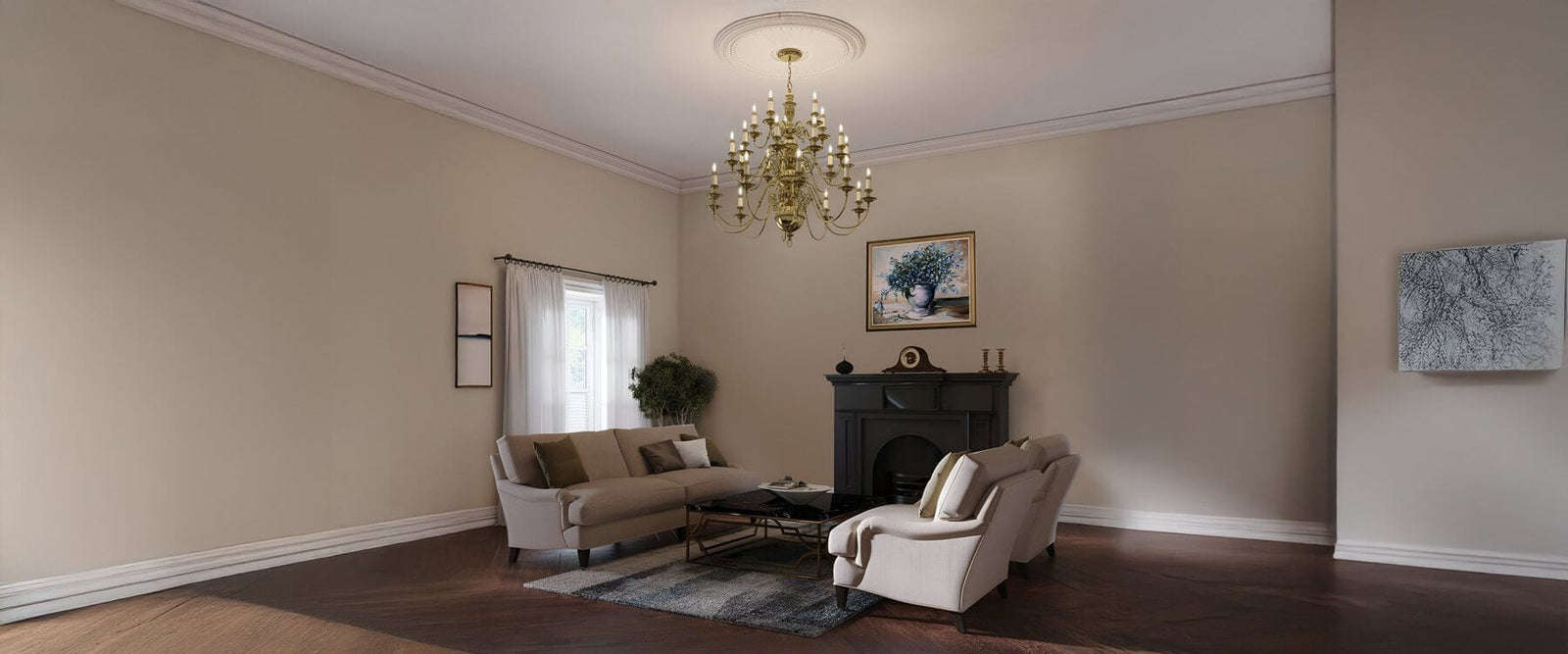
In a formal or gallery-style living room, traditional chandeliers introduce balance, sophistication, and spatial hierarchy. They also provide a central anchor for furniture groupings in large or open layouts.
Choose a chandelier that suits ceiling height: For standard 8–10 ft ceilings, opt for a single-tier chandelier. In double-height or vaulted rooms, a multi-tier chandelier offers the scale and volume needed to fill vertical space.
Position the fixture above the central seating arrangement, not simply in the middle of the ceiling. This makes it both a visual and social focal point.
Use symmetry in furniture layout, a centered rug, matched sofas or armchairs, and a low coffee table all help the chandelier feel integrated rather than floating.
Pair with reflective or high-contrast surfaces: Mirrored consoles, polished floors, or framed artwork increase light bounce and emphasize the chandelier’s form.
For extra elegance, complement the overhead fixture with wall sconces or classical floor lamps that echo the chandelier’s finish or design motif.

Bedroom Tips
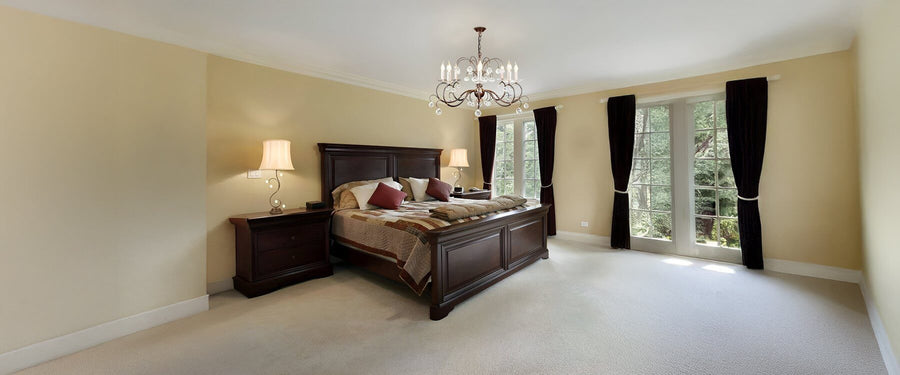
Bedrooms may not be the first place that comes to mind for traditional chandeliers, but when styled correctly, they can be among the most impactful. A chandelier here evokes old-world charm while enhancing softness and intimacy.
Scale the chandelier to the bed, not just the room. Typically, a fixture with a diameter one-third the width of the bed works well.
Hang it lower for visual intimacy, but maintain at least 7 feet of clearance at the lowest point if it’s centered in the room.
Consider placing it over the foot of the bed, especially in rooms with high ceilings. This avoids visual obstruction above the headboard while still defining the sleeping zone.
Opt for soft lighting: Choose warm-glow bulbs and, ideally, crystal or glass elements that scatter light gently across the ceiling.
Echo the chandelier’s finish or detail in nearby furnishings, like drawer handles, vanity frames, or accent textiles, for cohesion.

When to Go Multi-Tier for Maximum Impact
Room Height Justifies the Drama
Multi-tier chandeliers are best used in rooms with:
Ceilings over 12 feet
Grand staircases or open landings
Ballroom-scale dining rooms or great rooms
The vertical stacking of lights not only fills the space but creates a sense of theatricality that suits formal entertaining or ceremonial architecture.
Light Output & Suspension
More tiers mean more bulbs and greater ambient illumination. However, multi-tier fixtures also require:
Strong ceiling support - especially for crystal models.
Professional installation with secure anchoring: Large chandeliers with dual-tier construction and wide diameters, demand expert handling to ensure both safety and symmetry.
Adjustable suspension chains or rods to perfect hanging height: With a multi-tiered profile, visual balance depends heavily on ceiling height and placement.
Visual Statement
A tiered crystal chandelier reflects light in all directions, especially when installed near stairwell windows or under skylights. For a more grounded aesthetic, choose multi-tiered wrought iron chandeliers with candle-style arms and hand-forged detailing.

Define Your Room with Traditional Chandeliers
There is no substitute for the impact of a well-chosen traditional chandelier. It brings grandeur to a foyer, elegance to a dining room, and heritage to a hallway. Whether you lean toward multi-tier crystal showpieces or hand-crafted bronze classics, these fixtures do more than illuminate, they define.
In an era of minimalism and rapid design trends, traditional chandeliers offer something rare: permanence, presence, and personality. They make a room unforgettable.
Explore our curated collection of grand foyer chandeliers, multi-tier fixtures, and timeless statement lighting designed to transform your most important spaces.