
Introduction
Choosing modern chandeliers should feel exciting, not nerve-racking but the wrong size (or the wrong drop) can make a well-designed room feel strangely “off”. As a lighting specialist, I often meet homeowners who fell in love with a style online, only to discover it’s too wide for the table, too glaring for everyday use, or too heavy for the ceiling they’ve got.
This guide is about avoiding the costly, common pitfalls and getting the proportions right first time. When you understand sizing, height, weight, and light quality, modern chandeliers become an easy win: they look intentional, they hang safely, and they give your space the mood you had in mind.

Quick Summary
Size is the foundation: diameter and visual “presence” decide whether the room feels balanced.
Drop matters as much as width: the correct hanging height keeps sightlines clear and light useful.
Soft light needs the right design: diffusers, warm colour temperature, and dimming reduce glare.
Weight and fixings must be checked early: don’t assume every ceiling can take every fitting.
Placement should follow how you use the room: centre over the table or seating zone, not always the room.

What Are Modern Chandeliers, in Plain Terms?
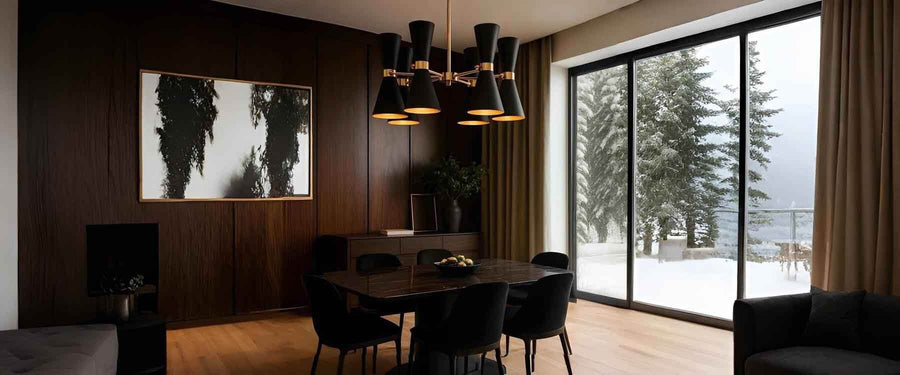
Modern chandeliers are multi-light ceiling fixtures with contemporary shapes, finishes, and light distribution designed to be both practical and decorative. They can be linear bars, sculptural arms, clusters of globes, or minimalist rings often with a cleaner silhouette than older styles.
In the showroom, people sometimes compare them to traditional chandeliers because both are statement pieces. The difference is usually in the lines (cleaner), materials (mixed metals, opal glass, slim profiles), and the way light is controlled (often LED and dimmable).

Why Do So Many People Get Chandelier Sizing Wrong?
Most sizing mistakes happen because people shop with their eyes, not their measurements. Online photos rarely show true scale, and staged rooms tend to have generous ceiling heights and carefully chosen furniture sizes. In real homes, proportions are less forgiving.
The most common missteps I see with modern chandeliers include:
Choosing a fitting that’s too small, so it looks like an afterthought
Choosing one that’s too large, so the room feels lower and more crowded
Forgetting the drop (hanging height), especially in dining rooms
Buying for sparkle instead of comfort, then struggling with glare
Not checking ceiling type and fixings until the electrician arrives

How Do You Choose The Right Size Modern Chandeliers Without Guessing?
You can choose the right size by matching modern chandeliers to the furniture zone and using a few quick measurements. That means you size to the table or seating area first, then check the room.
Step-by-step sizing you can do at home
Measure the dining table (or coffee table) width and length.
Choose a chandelier diameter that suits the table: aim for about ½ to ⅔ of the table width.
Keep clearance from the table edge: leave 15-20 cm from the chandelier’s outer edge to the table edge, so it doesn’t feel cramped.
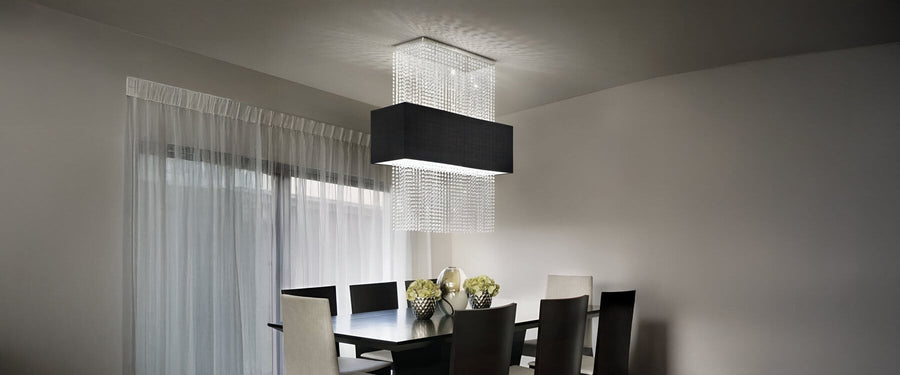
Check the hanging height (drop): the bottom of the fitting should sit about 75-90 cm above the tabletop in most homes.
For living rooms, size to the seating zone: the chandelier should feel centred to the sofa/chairs layout, not the empty floor.
Confirm brightness and control: if you want softer ambience, plan for dimming from day one.
Confirm weight and fixing requirements before you buy.
This method is especially useful when choosing modern chandeliers for a small dining room, where even a slightly oversized design can dominate the space.

What Should You Avoid With Modern Chandeliers for Small Dining Room?
In a small dining room, avoid wide, visually busy chandeliers that extend past the table and steal breathing space. Compact rooms benefit from a clear outline and controlled brightness.
Mistakes (and better alternatives):
Mistake: A spiky, wide-arm design that reaches beyond the table
Better: A compact globe cluster or small ring that stays within the table footprintMistake: Clear exposed bulbs at eye level that cause glare during dinner
Better: Opal glass or fabric shades that diffuse lightMistake: A long drop that makes the ceiling feel lower
Better: A shallower profile with an adjustable stem or chain
Real-world example: In an open-plan kitchen-diner, a smaller chandelier over the table helps define the dining zone without competing with other ceiling fittings.

How Do You Choose a Modern Chandelier for High Ceilings Without it Looking Lost?
For high ceilings, the goal is to connect the ceiling to the living zone below with enough drop and presence. The most common mistake here is choosing something too small and too close to the ceiling, where it becomes background rather than a feature.
If you’re working out how to choose a modern chandelier for high ceilings, prioritise:
Vertical proportion: multi-tier forms, clusters, or longer drops
Adjustability: a fitting with a generous drop range gives you options
Layered lighting: wall lights and lamps stop a tall room feeling stark
Comfort: dimming prevents a big space from feeling harsh at night
A cluster of pendants at staggered heights often looks modern and intentional in double-height spaces, and it fills the vertical volume without feeling bulky.

What Makes a Chandelier “Too Heavy” To Hang?
A chandelier becomes “too heavy” when its weight or leverage exceeds what the ceiling structure and fixings can safely support. That’s why it’s smart to think about installation while you’re still choosing styles.
If you’re specifically after chandeliers that aren’t too heavy to hang, look for:
Slim metal frames rather than dense bodies
Smaller glass elements (or acrylic diffusers that look like glass)
Designs that distribute weight through a sturdy canopy
Clear product weight information from the manufacturer
Also consider the ceiling type:
Joisted ceilings can often support more weight when fixed correctly into structure
Plasterboard ceilings typically need proper anchors or a joist location
Concrete ceilings may require specialist fixings and tools
As a practical guide, always ask your installer whether extra bracing is needed before finalising a heavier fitting. It’s far easier to choose a suitable design than to retrofit structural support later.

How Do Modern Chandeliers Create Soft Ambient Light Rather Than Glare?
Soft ambient light from modern chandeliers comes from diffusion, warm tone, and control especially dimming. Many people love the look of exposed bulbs, but in everyday life they can feel sharp, particularly when seated underneath.
If you want modern chandeliers that give soft ambient light, choose:
Opal or frosted glass (globes are excellent for even diffusion)
Diffused integrated LED (a continuous light band with a proper cover)
Warm white lamps for a cosy feel in the evenings
Dimmable drivers and compatible dimmer switches
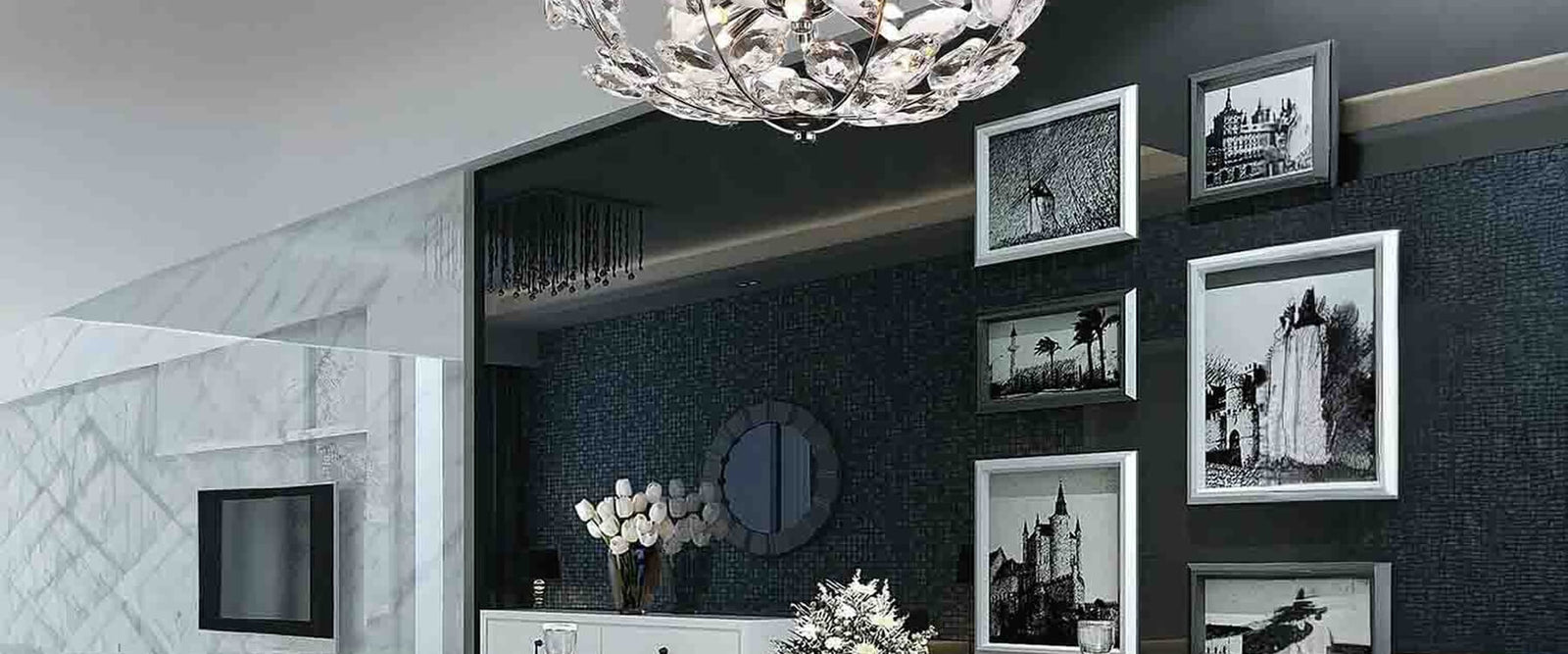
A helpful comparison: if you love the sparkle of crystal chandeliers but want a softer modern mood, you can look for a contemporary chandelier with faceted glass details plus a diffuser beauty without the harshness.

Where Should Modern Chandeliers Go In a Living Room?
In living rooms, position the chandelier to anchor the seating arrangement, not simply the centre of the ceiling. This is the secret behind strong modern chandelier ideas for living rooms: the fixture should support how you use the space.
Placement options that work well:
Over the coffee table (with comfortable headroom)
Centred over the main seating zone to create a “conversation area”
Offset in open-plan rooms to define zones without over-lighting everything
Near a reading nook (choose a smaller, softer design and add a lamp)
Mistake to avoid: centring a chandelier in an awkwardly shaped room can make the furniture layout look accidental. Instead, let the chandelier relate to the rug, sofa, and coffee table positions.

How Do You Avoid Installation Surprises With Modern Chandeliers?
You avoid installation surprises with modern chandeliers by confirming drop range, ceiling structure, wiring position, and access before you buy. This is the section people rush, and it’s the one that saves you the most hassle.
Here’s what to check in advance:
Ceiling structure and fixing point: know whether you’re fixing into joists, plasterboard, or concrete
Wiring position: is the current point centred where you need it, or will it be moved?
Drop range: minimum and maximum hanging length (especially important for high ceilings)
Canopy size: it should neatly cover the wiring point and any marks from old fittings
Maintenance access: can you change lamps or clean the fitting safely?
Control plan: dimmer switch, smart control, or standard switch choose before installation
If you’re selecting a designer piece such as a Diyas fitting, this planning matters even more because statement designs often have specific mounting requirements and best-practice recommendations for height.
A final note: if you’re tempted by outdoor chandeliers for a covered terrace, treat weather-rating and installation as non-negotiable use fittings designed for outdoor or damp locations, and follow the manufacturer’s guidance.

Conclusion
Getting modern chandeliers right is mostly about avoiding predictable mistakes: choosing the wrong diameter, hanging the fitting at an awkward height, ignoring glare, or leaving weight and fixing considerations too late. Measure the furniture zone first, set a sensible drop (especially above dining tables), and plan for warm, dimmable light if you want a comfortable glow. For high ceilings, build in vertical presence and layered lighting so the space feels connected rather than cavernous. When you combine proportion, placement, and practical installation checks, modern chandeliers stop being risky purchases and become the feature that makes the whole room feel finished.