
Introduction
Choosing dining room lights that feel warm and welcoming without hanging too low comes down to three things: the right fixture style, the right height, and the right light quality. As a Niori lighting specialist, I often meet homeowners who’ve bought a stunning pendant, only to discover it blocks the view across the table, causes glare, or makes the room feel cramped. The right setup should make dinners feel relaxed, show the food at its best, and keep the space practical for everyday family life.
Warmth isn’t just a “nice glow”. It’s what happens when dining room lights soften shadows, flatter faces, and make meals look appetising. It should feel comfortable the moment you sit down, with no harsh glare in your eyes. Good warm light also helps everyone see each other clearly across the table. When the lighting is right, the room naturally invites you to linger a little longer.

Quick Summary
Warm dining room lights is about comfort and balance: choose warm-white bulbs, soften glare with shades or diffusers, and keep fittings high enough to maintain clear sightlines. For lower ceilings, semi-flush or flush options create warmth without getting in the way. For long tables, use a linear fitting or a pair of coordinated pendants to spread light evenly. Add side lighting and a dimmer so your dining area can shift easily from practical to cosy.

What Does “warm” Dining Room Lights actually mean?
Warm dining room lights means soft, welcoming light that makes people look natural and food look inviting, without sharp shadows or eye-level glare. In most homes, that comes from warm-white lamping (rather than cool-white), a fitting that diffuses the light, and a control method usually dimming so you can adjust the mood through the day.
Warm lighting also affects how the room feels emotionally. When the light is too cool or too harsh, the space can feel sterile, even if the decor is beautiful. When it’s warm and well-placed, the dining room feels like a place you want to linger.
A helpful way to picture it is this: your overhead light sets the “base mood”, but the softness of the shade and the presence of supporting lights around the room decide whether dinner feels cosy or clinical.

How Warm Should the Colour Temperature Be for Family Dinners?
For family dinners, warm-white light is usually the most flattering and relaxing. Many households find that a warm tone helps the room feel calm in the evening, especially in open-plan spaces where the dining area sits near the kitchen or living zone. If your dining room lights is used for homework, crafts, or board games, you can still keep it warm just choose a brighter setting on a dimmer rather than switching to a cold colour.
If you want an easy, reliable setup, aim for warm-white lighting that’s dimmable and well-diffused, so your dining room lights can shift from practical tasks to a cosy evening mood without changing the fittings. A shade or diffuser helps prevent glare when you’re seated, which matters just as much as the bulb colour. In open-plan rooms, adding a softer side light (like a lamp on a sideboard) can stop the dining area feeling flat once the sun goes down. That layered approach keeps the space calm and comfortable while still giving you enough brightness for everyday family use.

How Do You Choose Dining Room Lights That Don’t Hang Too Low?
To choose dining room lights that don’t hang too low, you need a fitting that suits your ceiling height and a layout that keeps sightlines clear across the table. If people are leaning sideways to see each other, or if the light is shining directly into anyone’s eyes when seated, it’s either too low or the wrong design for the space.
In many homes, the best answer isn’t “no pendant” but “the right pendant”. A well-shaped shade, a shorter drop, and a thoughtful position can keep the room open while still giving that warm pool of light over the table.
If you’re redesigning multiple spaces, it can also help to keep your lighting language consistent. For example, if you’ve already chosen kitchen lights with clean lines and soft diffusion, a similar approach in the dining area keeps your home feeling cohesive.

What Height Should Dining Lights Sit Above The Table?
A practical rule is to position the fitting high enough to avoid blocking faces across the table while still lighting the tabletop, which is essential when choosing dining room lights. You should be able to sit down, look ahead, and talk comfortably without a light fitting slicing the view in half. The best way to judge is simple: sit in your usual dining chair and check what you can see.
Signs your light is too low:
You see the bulb directly when seated, and it feels dazzling
It blocks the face of the person opposite
Tall family members stand up and risk bumping it
It feels like the fitting is “in the way” rather than part of the room
Signs it’s about right:
The table is evenly lit, without a harsh hotspot
You can see everyone comfortably
The fitting feels present but not intrusive

Which Fixture Styles Give Warmth Without a Low Drop?
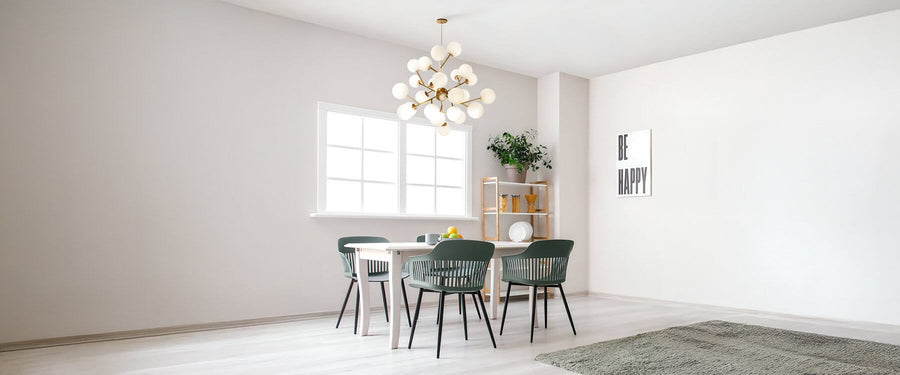
The best “warm but not low” styles are those that soften light and spread it evenly rather than relying on a bare bulb, which is key when selecting dining room lights. If you want warmth without a low hang, start with designs that include a diffuser, an opal glass shade, or a fabric shade.
Semi-flush mounts: Great for lower ceilings, tidy sightlines, and a clean look
Flush mounts with a diffuser: Ideal if you want zero obstruction and plenty of comfort
Compact chandeliers: Decorative without needing a deep drop
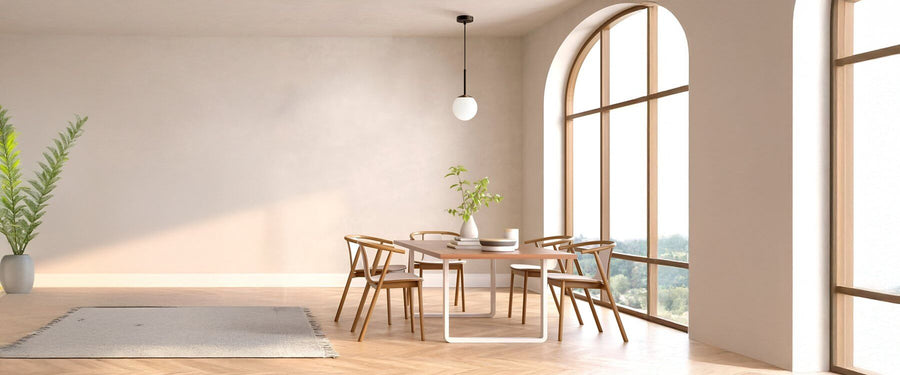
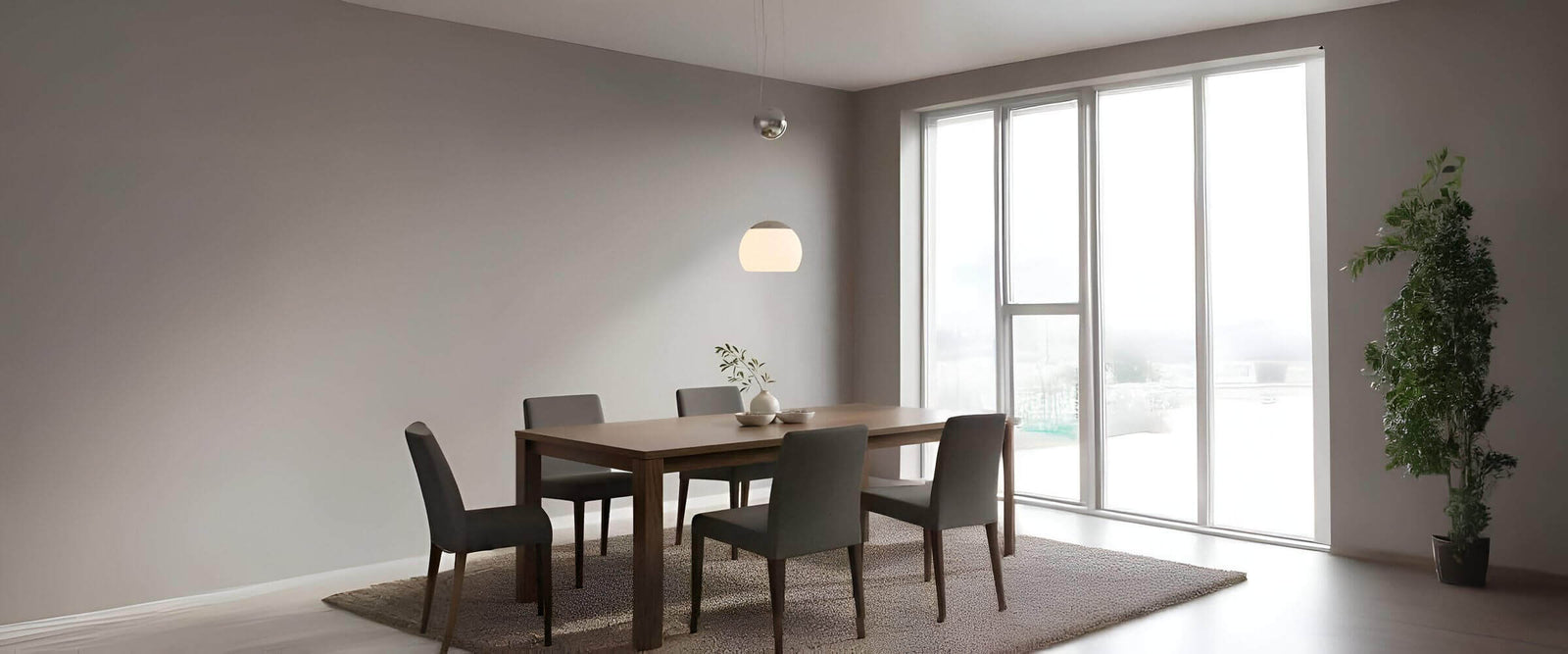
Short-stem pendants with shades: A pendant look without the low-hanging nuisance
Linear ceiling fittings: Excellent for long tables and modern spaces

How Do Dining Room Lights Make The Table Look Nice?
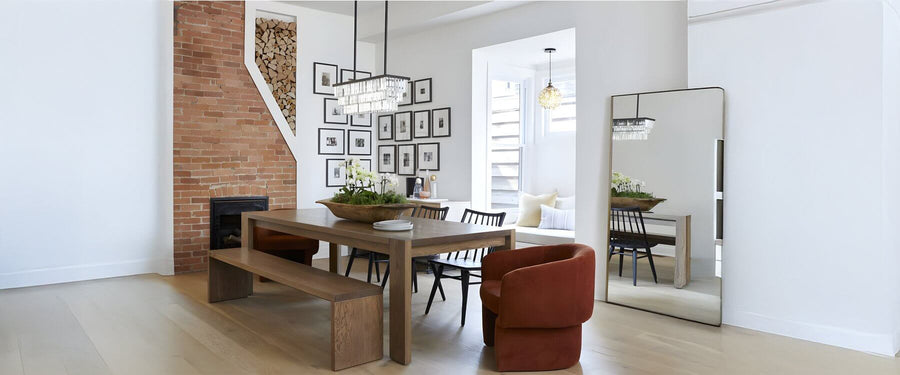
Dining room lights make the table look nice when they provide even, flattering illumination across the tabletop and minimise glare at eye level. You want the centre of the table to feel special, but you don’t want a single harsh spotlight that leaves everyone at the ends in shadow.
Think about what you actually do at the table:
You eat (so you want food to look appetising)
You talk (so you want faces to be visible and flattering)
You share (so you want the whole table to feel included, not just the middle)
A common scenario is a single pendant that creates a bright circle in the centre perfect for the serving dish, but less kind to the people sitting at either end. In those cases, a wider shade, a different fitting style, or a second light point makes a bigger difference than simply choosing a brighter bulb.
If your dining room opens into the lounge, it’s worth considering how the dining light looks from the sofa too. A warm dining setup that complements living room lights can make open-plan spaces feel calmer and more intentional, rather than like separate corners fighting for attention.

What Kind of Bulb Makes Food and Faces Look Best?
A warm-white bulb with good light quality helps skin tones look natural and makes meals look rich and appealing. Even the best fitting can feel disappointing with the wrong bulb, so it’s worth choosing a lamp that gives a comfortable glow rather than a stark, overly bright effect. For dining room lights, this is one of the quickest ways to improve the overall feel without changing the fixture. When the bulb is right, the whole room looks more inviting with less effort.
Light quality also affects how the table looks from different seats. A bulb that’s too intense can create a bright hotspot in the centre while leaving the edges dull, especially on longer tables. Choosing a softer output and pairing it with a shade or diffuser helps spread light more evenly across plates and serving dishes. If your fitting allows it, a dimmer gives you extra control so the same setup works for weekday meals and slower weekend dinners.
Also, avoid anything that flickers or feels “sharp” in the eyes, especially if your dining room is where you spend long evenings with friends. Flicker and harsh glare can make people feel tired or uncomfortable without realising why. A well-diffused bulb and a fitting that hides the light source from direct view will feel calmer at seated height. If you notice eye strain, try swapping the bulb first before replacing the whole fitting.

How Do You Pick Dining Room Lights for Long Tables?
For long tables, pick a lighting layout that spreads light from end to end rather than concentrating it in the middle, which is especially important when choosing dining room lights. This is where people most often feel disappointed: the fitting looks lovely, but the table isn’t properly lit for the whole family.
One linear fitting centred with the table
Two pendants spaced evenly along the length
You’ll get the best result when the fitting’s shape echoes the table shape. Long table, long fitting. Round table, more central focus.
Real-world example: For an 8-seater table, a single small pendant often looks undersized and leaves the far ends dim. A linear ceiling light, or two medium pendants with shaded diffusers, gives better coverage and looks more balanced.

How Can You Create Warmth With a Step-by-Step Lighting Plan?
To create warmth, build your dining lighting in layers: a main overhead light for the table, supported by softer secondary light around the room. Layering prevents harsh shadows and gives you more control, so the dining area works for weekday routines as well as relaxed dinners.
Step-by-step: a practical Niori method for warm, comfortable dining light
Measure the table and note its position
Check the table length and width, and whether it sits centrally or nearer a wall. This affects how wide your light spread needs to be.Check ceiling height and movement through the room
If people walk through the dining space, or kids play nearby, avoid low drops and choose a shorter profile fitting.-
Choose the main fitting type that suits your ceiling
Lower ceiling: flush or semi-flush with a diffuser
Long table: linear fitting or two coordinated shaded pendants
Higher ceiling: chandelier or pendant can work, but use a shade and keep sightlines clear
Prioritise glare control
Choose shades, diffusers, or opal glass that hide the bulb and soften the beam. This is one of the biggest differences between “nice to look at” and “nice to live with”.Add dimming for flexibility
Dimming lets you have bright light when needed, then soften it for dinner. If you can only do one upgrade, make it this.Add supporting light to lift shadows
Wall lights, a floor lamp, or a sideboard lamp will make faces look better and the room feel more welcoming. This is especially helpful in winter evenings.Test from seated height
Sit down and look across the table. If the fitting blocks your view or the bulb feels harsh, adjust the height or switch to a more diffused style.

What Are The Most Common Mistakes With Dining Room Lights?
The most common mistakes are hanging the light too low, choosing a fitting that’s too small for the table, and relying on one overhead light to do everything when selecting dining room lights. These issues can make even a beautiful dining room feel awkward.
Common missteps to avoid:
Exposed bulbs at eye level that cause glare during meals
A fitting that’s too small for a large table, so it looks lost and under-lights the space
No dimmer, leaving the room stuck in “full brightness” when you want a softer mood
Only one light source, which creates harsh shadows and flat lighting
Ignoring the room around the table, so the tabletop is bright but the rest of the room feels gloomy

How Can You Do Dining Room Lights on a Budget and Still Keep it Stylish?
You can do dining room lights on a budget by focusing on light quality and comfort first, then choosing a simple fitting that’s well-proportioned. A modest shade with a warm, dimmable bulb often looks and feels better than an ornate fixture that creates glare.
Budget-friendly ideas that stay tasteful:
Swap to warm-white bulbs that suit the space (instant improvement)
Install a dimmer switch if possible
Use two smaller pendants instead of one oversized statement fitting on long tables
Add a plug-in lamp on a sideboard to create a second layer of warm light
Choose a clean, simple fitting and let the room’s textures do the talking
If you’re updating more than one room, sticking to a consistent brand finish can also help your home feel cohesive. Many homeowners choose Impex Lighting pieces when they want a coordinated look that carries from room to room without everything matching too perfectly.

How Do You Keep Dining Room Lights Practical for Family Life?
Dining room lights stay practical when they’re bright enough for daily tasks, comfortable for longer meals, and placed so nobody bumps them. In family homes, shorter drops, diffused shades, and flexible control matter more than dramatic hanging height.
If your dining space does double duty:
Homework and crafts: use a brighter setting and add a supporting lamp nearby
Entertaining: dim the overhead and rely on layered side lighting for warmth
Busy walk-through area: avoid low pendants and consider semi-flush or linear ceiling fittings
If the dining table sits near bedrooms or a hallway, consider how light spills into other areas at night. A warmer, dimmable dining setup helps the whole house feel calmer, and it won’t compete with bedroom lights when you’re winding down.