
Introduction
Outdoor living spaces have shifted from being purely functional to becoming fully integrated extensions of the home. They’re no longer just patios or decks, they’re outdoor lounges, dining rooms, and entertainment hubs designed for year-round enjoyment. Lighting plays a central role in shaping these environments, influencing both the mood and usability of the space. Among the many lighting options available, outdoor chandeliers stand out for their ability to combine elegance with practical performance, making them a focal point that draws the eye and enhances the overall atmosphere.
These fixtures offer a unique blend of visual impact, adding height, style, and architectural presence, and functional illumination, ensuring that seating and dining areas remain inviting long after sunset. The right choice of outdoor chandeliers can unify design elements, create a sense of occasion, and set the tone for both casual gatherings and formal events.
However, not all outdoor spaces are the same, and selecting a chandelier requires more than simply picking a design you like. Factors such as placement, scale, exposure to the elements, and material durability all influence how well the fixture will perform over time. In this guide, we’ll explore placement-specific recommendations for covered patios, semi-covered areas, alfresco dining zones, and freestanding structures, along with tips on weather ratings, finishes, and cohesive styling.

Outdoor Chandeliers for Covered Patios
Why Covered Spaces Work Best
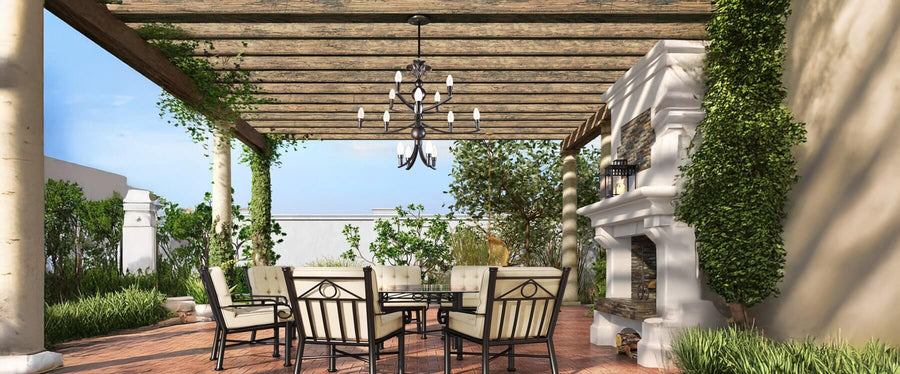
Covered patios are among the easiest places to install outdoor chandeliers. With a roof or overhang to shield them from direct rain and sunlight, these fixtures can last longer and require less upkeep. This added protection allows you to choose more intricate designs that might not fare as well in exposed areas, including:
Fixtures with delicate crystal accents.
Metal frames with decorative scrollwork.
Fabric or linen shades for softened lighting.
Because they’re spared from the harshest conditions, covered patios also give you more flexibility in finishes, think brushed gold, polished nickel, or hand-painted metal.
Placement & Height Tips
A chandelier should enhance the space without obstructing movement or sightlines. Follow these guidelines:
Dining areas – Center over the table with 30–36 inches between the tabletop and the bottom of the fixture.
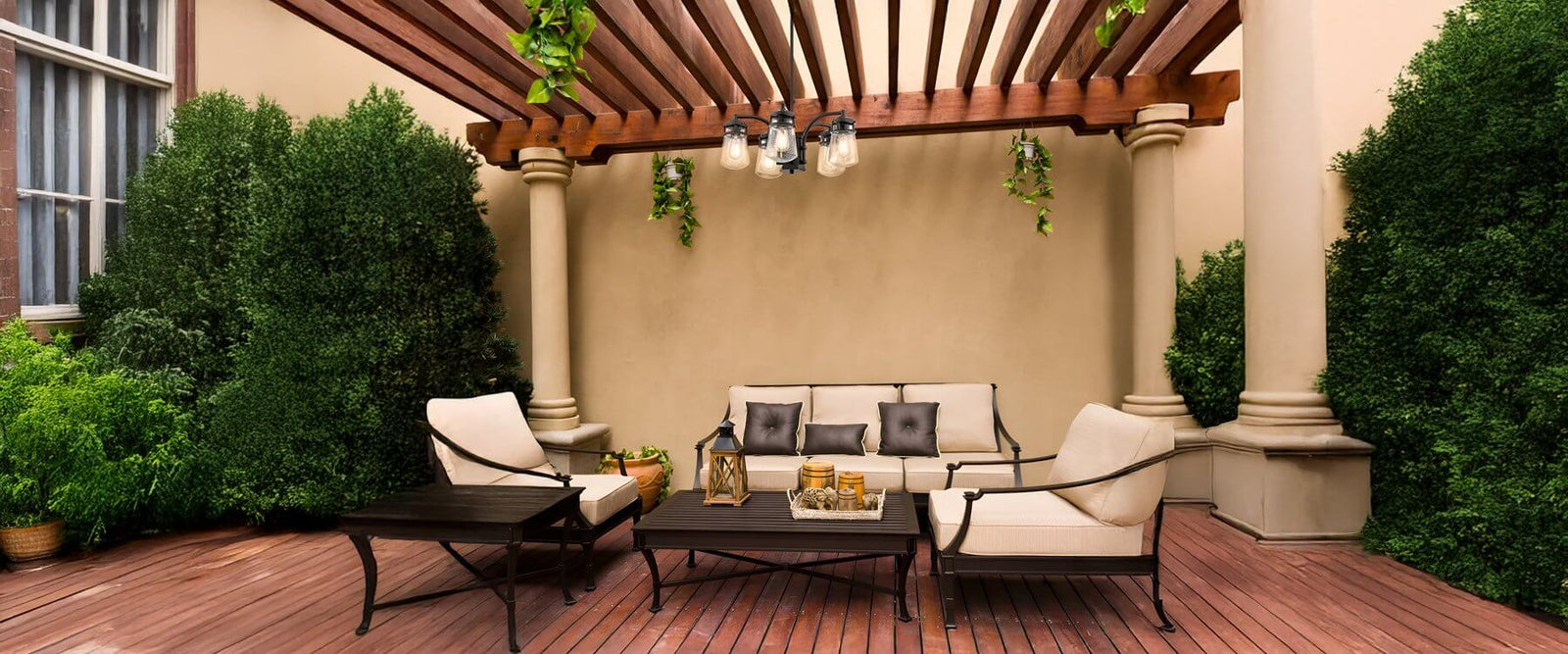
Lounge seating – Position above the middle of the main conversation area to define the zone.
Large spaces – Consider two smaller chandeliers instead of one oversized piece to maintain even lighting.
Always choose damp-rated fixtures for safety in sheltered yet moisture-prone environments.

Outdoor Chandeliers for Semi-Covered Spaces
Managing Exposure
Semi-covered spaces, such as open-beam porches or terraces with partial roofing, require fixtures that can handle more environmental stress. Select outdoor chandeliers made from:
Powder-coated aluminum to resist corrosion.
Marine-grade stainless steel for coastal climates.
UV-stabilized resin to prevent fading.
Sealed electrical housings and moisture-resistant finishes are a must for these transitional spaces.
Style Considerations
The design should complement both the sheltering structure and the view beyond it. For example:
Overlooking gardens – organic shapes or nature-inspired detailing work best.
Facing architectural features – clean-lined glass or metal designs that echo structural elements.
Blending interior and exterior – transitional styles that match indoor fixtures.

Outdoor Chandeliers for Alfresco Dining Areas
Creating Atmosphere
When dining under the open sky, the chandelier sets the tone. Warm-toned lighting encourages guests to linger, while diffused light prevents harsh shadows on the table. To elevate the setting:
Choose dimmable fixtures for versatility.
Opt for shades, frosted glass, or crystal elements to soften the light.
Select bulbs with a warm colour temperature for evening ambience.
Ideal Sizes
Proportion is key to achieving balance:
Measure the width of your table.
Select a chandelier that is ½ to ⅔ of that measurement.
For fully exposed dining, use wet-rated fixtures to withstand direct rain.
Placement should ensure that the light spreads evenly without creating glare in diners’ eyes.

Outdoor Chandeliers for Pergolas & Gazebos
Central Focal Points
In freestanding structures, outdoor chandeliers can transform the space from casual to captivating. They serve as:
A visual anchor in the structure’s center.
A way to add vertical interest.
A functional feature that extends evening usability.
Style Match
Tailor the fixture to the architecture:
Rustic pergolas – wrought iron frames, distressed wood finishes.
Coastal gazebos – rope accents, weathered driftwood tones.
Modern structures – minimalist metalwork with clear or frosted glass.

Weather Resistance & IP Rating Essentials
Choosing the correct weather resistance is crucial for performance and safety. Damp-rated outdoor chandeliers are intended for covered or sheltered areas with minimal moisture exposure, while wet-rated models are designed to handle direct rain, wind, and snow.
Materials matter, powder-coated finishes resist chipping and rust, marine-grade stainless steel stands up to salt air in coastal locations, and UV-stabilized resin won’t fade under intense sun. Glass shades should be tempered for durability, and any electrical components should be sealed against moisture ingress. Quality mounting hardware is essential to prevent loosening in windy conditions.
Styling Tips for Cohesion
To create a harmonious look, align your chandelier’s finish with other visible metal elements, such as outdoor furniture frames, railing posts, or door hardware. This consistency makes the fixture feel like part of an intentional design scheme.
Layer your lighting for both practicality and depth. Pair the chandelier with wall sconces, landscape lighting, or discreet string lights to create multiple light sources that can be adjusted depending on the time of day or occasion. Finally, consider the view from inside your home, when sightlines are planned, the chandelier can serve as a focal point that visually connects indoor and outdoor spaces.

Conclusion
The right outdoor chandeliers can transform covered patios, semi-sheltered terraces, open dining zones, and freestanding structures into beautifully lit, inviting spaces. Covered patios offer the freedom to choose more decorative styles, while semi-covered and fully exposed areas demand durable, weather-resistant designs. Alfresco dining spaces benefit from warm, proportional lighting, and pergolas or gazebos are enhanced by fixtures that anchor their structure’s character.
By carefully matching placement, scale, and material durability to your environment, you’ll ensure your chandelier not only survives the elements but also enhances your outdoor living experience. A well-chosen fixture will bring both style and functionality for years, making your outdoor space as thoughtfully designed as any room inside your home.