
Introduction
There’s a reason loft cafés, boutique hotels, and design-led homes keep leaning into industrial lighting: it’s one of the few décor choices that feels both hardworking and carefully curated. With clean lines, exposed structure, and a “built to last” attitude, industrial table lamps don’t just brighten a corner; they add architecture at eye level. What makes them especially appealing in contemporary interiors is their ability to balance raw utility with refined finishes that pair naturally with wood, fabric, stone, and even more relaxed, lived-in textures.
This practical, long-lasting guide breaks down what defines the look, how newer versions are evolving, and how to style and maintain these lamps room by room.
What Makes an Industrial Table Lamp? Key Features to Know
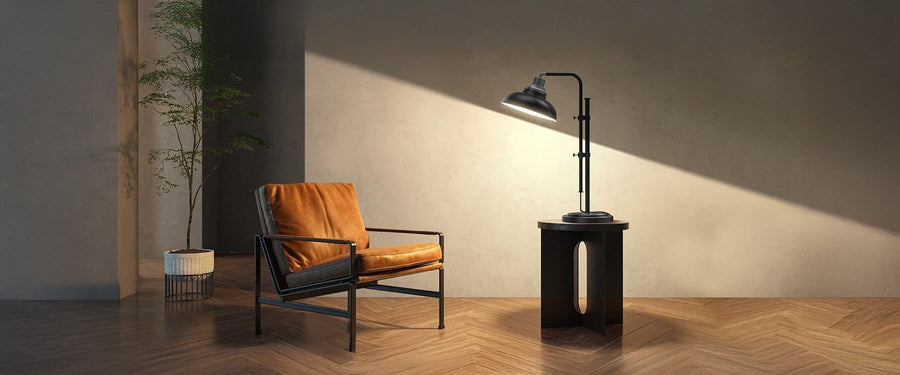
At their core, industrial table lamps draw from factories and workshops: lighting made for real tasks, designed with honest materials and visible mechanics. Traditional versions lean into heft and detail, think cage shades, riveted bases, knurled knobs, and swing arms that show how the lamp works. Finishes often look aged or hand-touched: patinated bronze, antiqued iron, brushed brass, and oil-rubbed steel.
While the industrial category is usually tied to metal, classic influences show up through heritage materials, too. You’ll see vintage brass table lamps softened with ceramic accents, or hardwearing iron paired with stained glass table lamps for a quiet handcrafted touch. These combinations echo older craftsmanship traditions where lighting was built as furniture, not décor, while still keeping that utilitarian spirit. When placed alongside traditional table lamps, industrial pieces add contrast without clashing, because both share a respect for weight, proportion, and timeless form.
Design checklist for classic-leaning industrial pieces
Ornate bases with weight: a lower center of gravity makes them stable and visually grounded.
Rich, layered finishes: look for burnished edges or intentional “wear.”
Detailed shades: mesh, ribbed glass, and dome metal shades diffuse light without hiding structure.
Timeless silhouettes: bell, cone, and cage shapes translate across decades.

Modern Industrial Table Lamps: Sleeker Forms and Mixed Materials
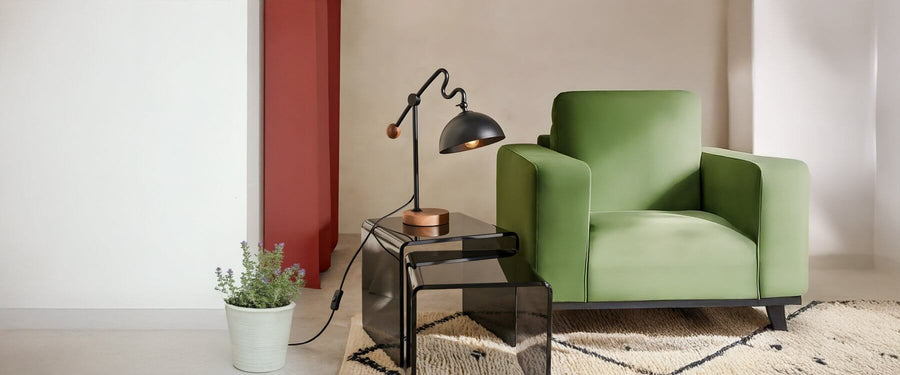
Today’s industrial table lamps are cleaner, lighter, and more integrated with everyday living. The structure is still visible, but the forms are minimal: cylinders, arcs, and geometric joints rather than bulky riveted bodies. Neutral palettes dominate matte black, warm brass, soft nickel, and muted gray often paired with stone or glass for contrast.
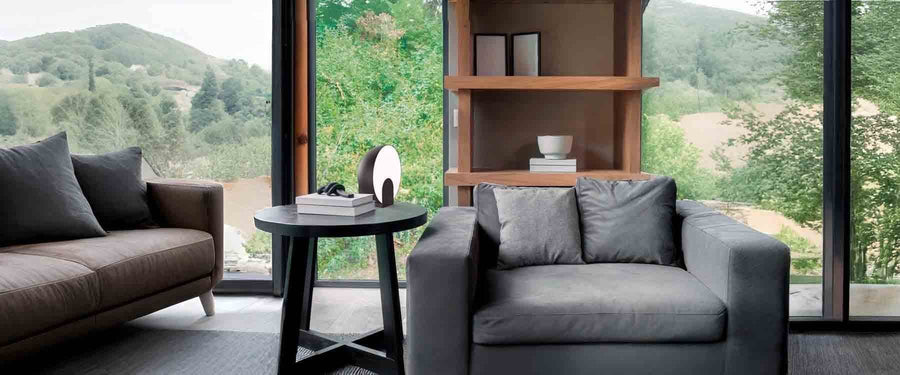
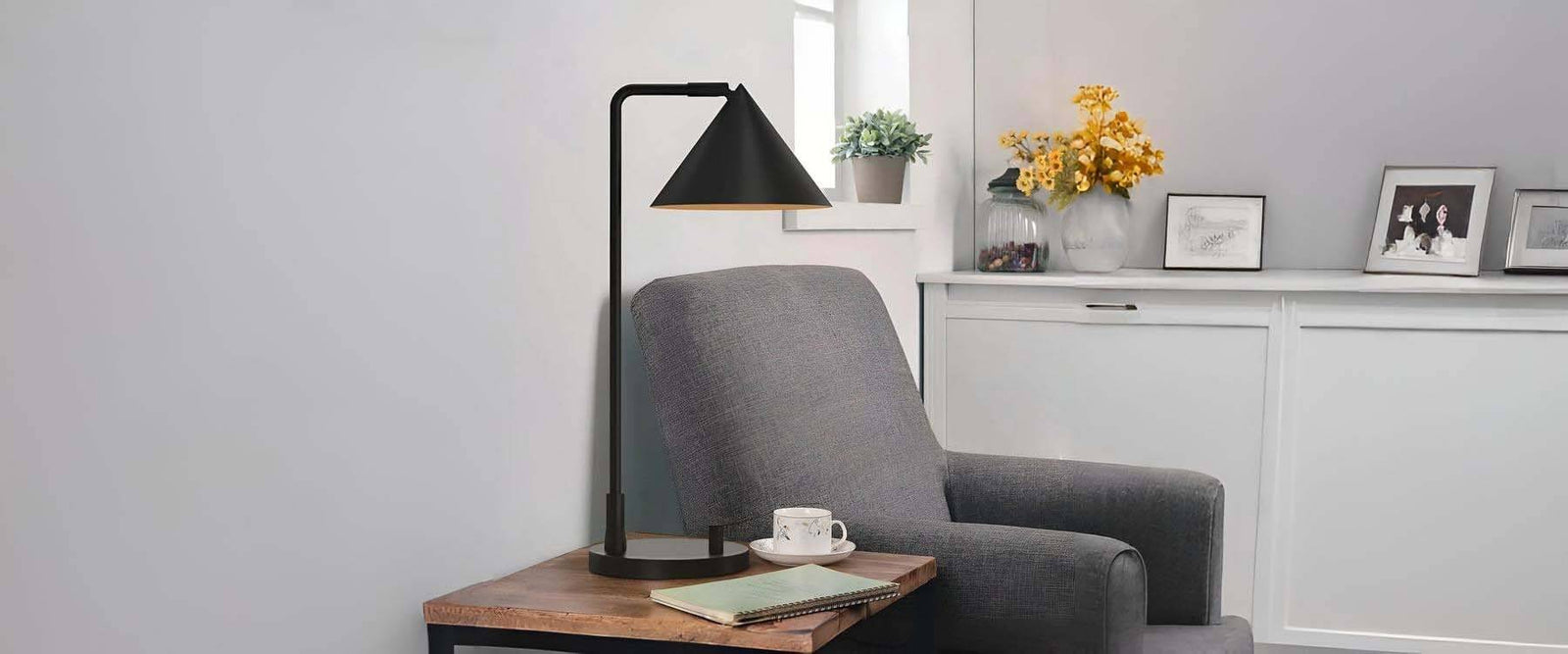
Designers also love hybrid construction. Metal plus marble or metal plus wood keeps the industrial look tactile, not cold. Slim task profiles inspired by adjustable metal desk lamps make industrial table lamps practical for desks, shelves, and side tables where space is limited. LED integration is now common, reducing glare and extending lifespan without changing the character of the fixture. If you enjoy an industrial mood but want something more understated, prioritize black metal lamp finishes with subtle texture (powder coat, micro-sand, brushed matte) and a shade that’s simpler rather than heavily caged.

Industrial Table Lamps in Eclectic Spaces: Styling Rules
Think of industrial table lamps as a midpoint between old-world character and modern restraint. The materials and mechanics bring heritage, while the geometry keeps things current. That’s why industrial table lamps work so well in eclectic homes or in spaces that evolve gradually as your taste changes.
How to style the blend
Pair rugged with soft. Place a metal-and-marble lamp next to linen upholstery or boucle to balance hardness.
Repeat one element. If your lamp has brass hardware, echo that brass in a frame, handle, or faucet.
Let the lamp be the anchor. In a colorful or patterned room, an industrial fixture’s neutral structure keeps the scene grounded.
Use shade swaps strategically. A contemporary drum shade on an industrial base updates the look instantly.
This is where industrial lighting really earns its keep: industrial table lamps can look vintage in one setting and sharply minimal in another, simply through what they sit beside.

Industrial Table Lamps: Lighting Performance and Control Essentials
Industrial-style lamps aren’t just about looks. Their workshop roots make function a priority, the little details in how they light a space matter. Many industrial table lamps are built for task lighting, so pay attention to adjustability, beam direction, and switch placement.
Dimming & smart controls
Rotary dimmers: classic and reliable; great for reading nooks.
Touch dimmers: sleek and convenient, especially on bedside tables.
Smart-enabled lamps: ideal if you want schedules, voice control, or lighting scenes.
Bulb guidance for warmth + efficiency
Best everyday choice: warm-white LED (2700K-3000K) for cozy ambient light.
Vintage vibe: Edison bulb table lamps look right at home here. Choose LED filament versions for lower heat and longer life.
Task lighting: if the lamp is for work, go slightly cooler (3000K-3500K) to reduce eye strain.
A good rule: aim for 450-800 lumens for bedside or ambient use, and 800-1200 lumens for a desk or craft zone.

Blending Styles with Industrial Table Lamps: Simple Pairing Ideas
You don’t need to pick one end of the style spectrum. Mixing industrial table lamps with other décor creates layered rooms that feel collected, not catalogued.
Easy mix-and-match ideas
Base + shade remix: use an industrial metal base with a soft linen shade for a gentle contrast.
Finish echoing across rooms: black steel in the office, warm brass in the living room different but connected.
Classic companions: pair a rugged industrial lamp with classic table lamp designs elsewhere so the contrast feels deliberate.
Texture balancing: if everything else is smooth (glass, lacquer, marble), pick a lamp with visible seams, bolts, or mesh.
Industrial pieces also bridge beautifully with modern table lamps, especially those in minimalist forms, because both styles value clean geometry and purposeful design. The difference is in attitude: modern pieces feel quiet, while industrial table lamps bring a bit more grit and visual weight.

Finding the Right Industrial Lamp by Room and Use
Placement is where industrial lighting becomes personal. Different spaces ask for different proportions and beam styles, and industrial table lamps adapt easily when chosen with purpose.
Living rooms & libraries
Choose wider shades that throw light outward for ambient glow.
Great companions to leather, dark wood, and layered textiles.
Look for ceramic table lamps for living room palettes featuring industrial hardware for extra warmth.
Bedrooms
For rustic bedside lighting ideas, pick compact lamps with dimmers so you can dial down the mood.
Keep the shade low enough to avoid glare when lying down.
Use the “seated-eye rule” for how to choose the right table lamp height: bottom of shade near chin level when you’re seated on the bed.
In bedrooms, industrial table lamps feel especially good when the rest of the room leans classic or softly vintage, adding structure without making the space feel harsh.
Home offices & studios
Prioritize adjustability: swing arms, goosenecks, or pivot heads.
Matte shades reduce screen reflections.
Slim profiles suit small table lamps for apartments or shelf desks.
Entry tables & consoles
Symmetry works here try two matching lamps for a boutique-hotel welcome.
If the space is narrow, choose tall, slender bases that don’t crowd the surface.

Industrial Table Lamps: Finish Matching, Shade Pairing, and Scale
To make your lighting feel intentional, match the lamp to your home’s broader language. With industrial table lamps, consistency doesn’t mean everything must match it means everything must relate.
Finish pairing tips
Black metals: best with concrete, walnut, oak, and monochrome décor.
Brushed brass or bronze: perfect with warm neutrals, vintage woods, and soft whites.
Nickel or chrome: reads more contemporary and pairs well with glass and cool stones.
Shade coordination
Traditional lamp shades and bases often use linen, pleats, or tapered forms. Industrial shades trend toward meta cones, domes, or glass cylinders. You can bridge the two by choosing a classic shade shape in a clean fabric on an industrial body. If you love stained-glass warmth, a subtle nod to tiffany lighting through amber tones or mosaic-style glass can soften an industrial base without overpowering it.
Proportion rules
Shade width ≈ is 2× the base width at its widest point.
Lamp height should be about 1.5× the height of the surface it sits on.
If the lamp looks top-heavy, go narrower on the shade; if it looks too spindly, go wider.

Keeping Industrial Table Lamps Looking New: Maintenance Basics
Even the toughest-looking lamp needs care to stay beautiful. Quality industrial table lamps can last decades, especially with straightforward, regular care.
Cleaning
Dust weekly with a microfiber cloth.
For metal bases, use a lightly damp cloth and dry immediately to prevent spotting.
Glass shades can be removed and washed with mild soap; avoid abrasives on smoked or seeded finishes.
Safety
Use bulbs within the listed wattage or LED equivalent.
Keep cords away from heat sources and high-traffic paths.
If a lamp feels wobbly, add felt pads or a rubber base ring instead of overtightening parts.
Lifespan
LED bulbs typically last 15,000-50,000 hours, and sturdy industrial bases often outlive multiple décor cycles.

Conclusion
Great lighting is what makes a room feel intentional, and industrial table lamps deliver that final layer of polish with ease. Their sturdy materials, clean silhouettes, and warm glow add structure and texture without fighting your décor whether your space leans classic, modern, or somewhere in between. Focus on the right finish, a well-scaled shade, and a warm, efficient bulb, and you’ll have lighting that works beautifully every day.
Ready to bring that grounded, confident warm glow into your home? Explore our curated collection of industrial table lamps at Niori and find the piece that fits your space perfectly. One great lamp can change how a room feels make yours the one that defines it.