
Track Lighting
We stock a deep track lighting range, from single and three-circuit systems to low-profile magnetic track. Choose adjustable spots and heads, rails, connectors and complete kits to light retail, kitchens and open-plan rooms with flexible, repositionable beams. Most fittings are LED, and we ship worldwide with free UK delivery over £99.
- Featured
- Alphabetically, A-Z
- Alphabetically, Z-A
- Price, low to high
- Price, high to low
- Date, new to old
- Date, old to new
- Featured
- Price, low to high
- Price, high to low
- Alphabetically, A-Z
- Alphabetically, Z-A
- Date, new to old
- Date, old to new
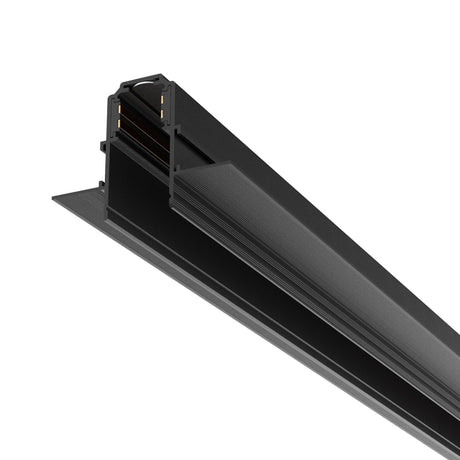
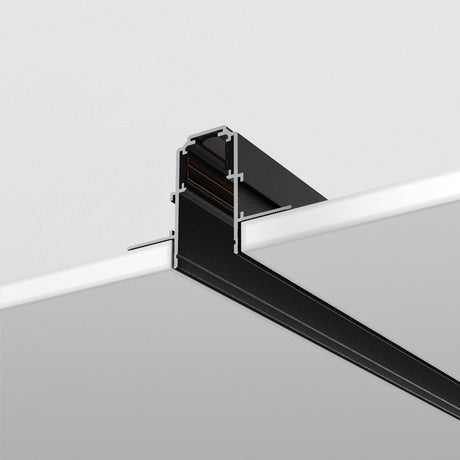 £8899Unit price Translation missing: en.products.product.price.unit_price_separatorUnavailable
Exility 2m Recessed Magnetic Track for Plasterboard 12.5mm - Black

 £1199Unit price Translation missing: en.products.product.price.unit_price_separatorUnavailable
 £499Unit price Translation missing: en.products.product.price.unit_price_separatorUnavailable
 £5299Unit price Translation missing: en.products.product.price.unit_price_separatorUnavailable
Exility 1m Recessed Magnetic Track for Plasterboard 12.5mm - Black

 £1099Unit price Translation missing: en.products.product.price.unit_price_separatorUnavailable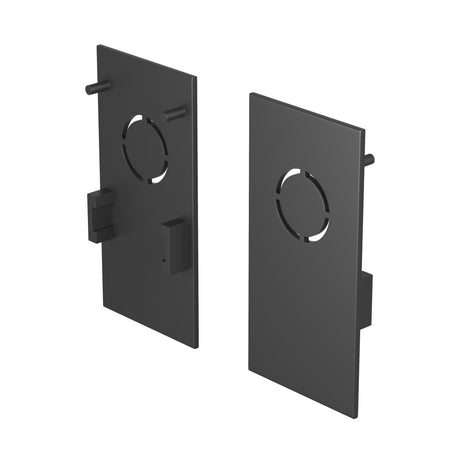
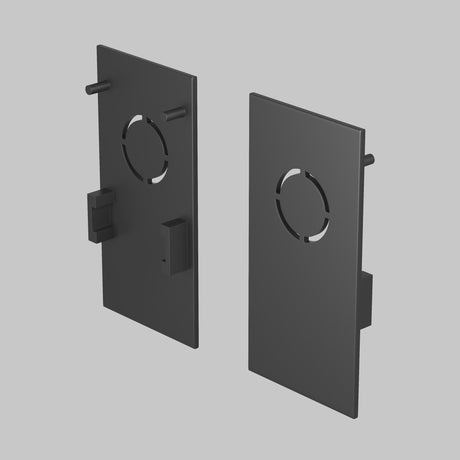 £299Unit price Translation missing: en.products.product.price.unit_price_separatorUnavailable
 £7299Unit price Translation missing: en.products.product.price.unit_price_separatorUnavailable
Basis LED Corner Track Light for Magnetic Exility 24W 3000K - Black

 £2399Unit price Translation missing: en.products.product.price.unit_price_separatorUnavailable
Exility Recessed Track L-Shape Corner Connector 12.5mm Plasterboard - Black

 £1999Unit price Translation missing: en.products.product.price.unit_price_separatorUnavailable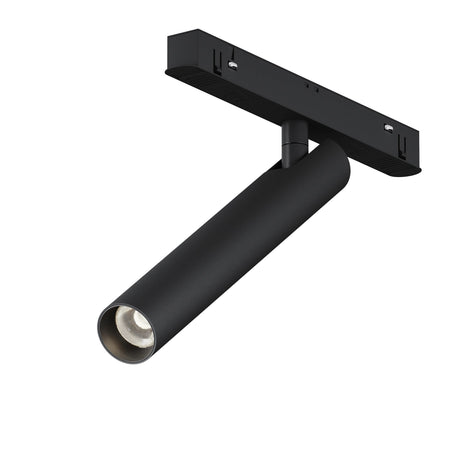
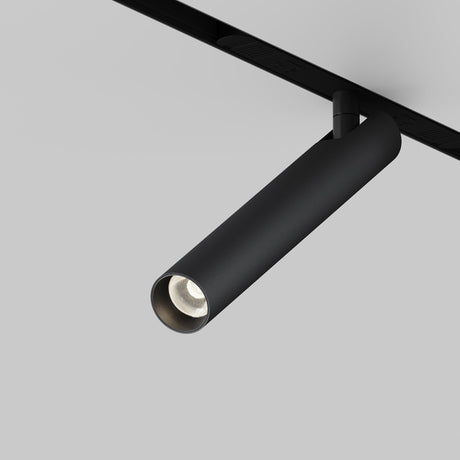 £4599Unit price Translation missing: en.products.product.price.unit_price_separatorUnavailable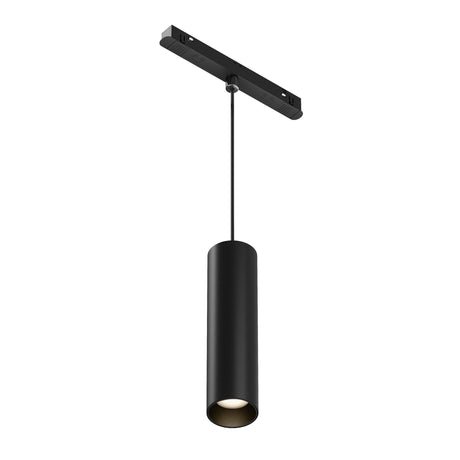
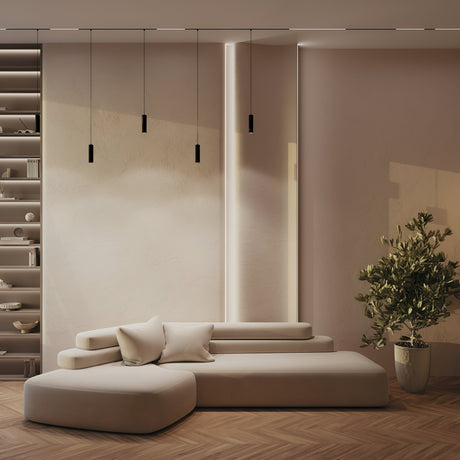 £5599Unit price Translation missing: en.products.product.price.unit_price_separatorUnavailable
Focus LED Exility Magnetic Track Pendant Light 12W 3000K - Black
 £7399Unit price Translation missing: en.products.product.price.unit_price_separatorUnavailable
 Save 30%£4799£6840Unit price Translation missing: en.products.product.price.unit_price_separatorUnavailable
 Save 17%£399£480Unit price Translation missing: en.products.product.price.unit_price_separatorUnavailable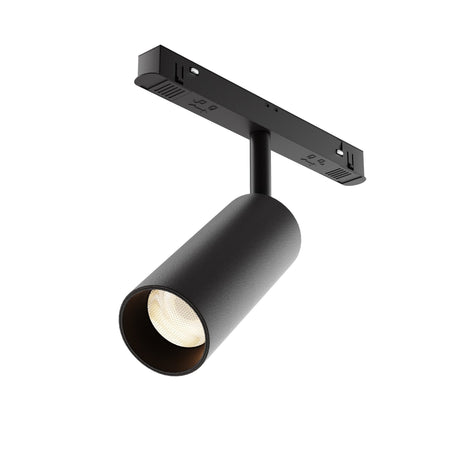
 £6399Unit price Translation missing: en.products.product.price.unit_price_separatorUnavailable
 Save 30%£12199£17400Unit price Translation missing: en.products.product.price.unit_price_separatorUnavailable
Luxeon Wide Dimmable LED Adjustable Linear Track Light 7W 4000K - Black
 Free Delivery
 Save 30%£11399£16200Unit price Translation missing: en.products.product.price.unit_price_separatorUnavailableFree Delivery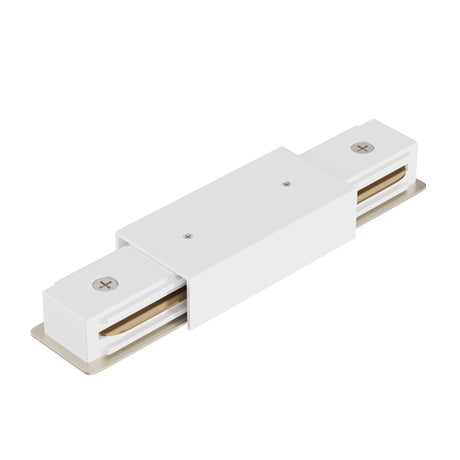
 £799Unit price Translation missing: en.products.product.price.unit_price_separatorUnavailable
 £6299Unit price Translation missing: en.products.product.price.unit_price_separatorUnavailable
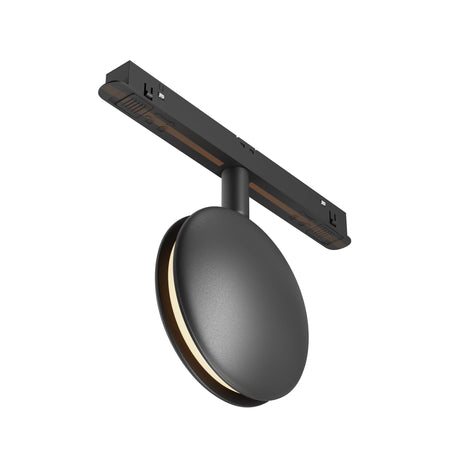
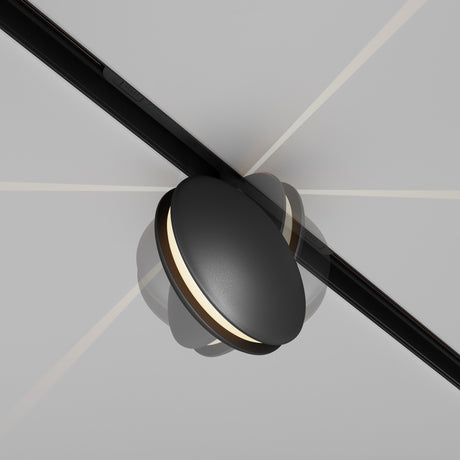
Plato LED Magnetic Track Spotlight 15W 3000K - Black Circular

 £1999Unit price Translation missing: en.products.product.price.unit_price_separatorUnavailable
 £1999Unit price Translation missing: en.products.product.price.unit_price_separatorUnavailable
Focus S Single Phase Unity Track Spotlight - Black & Graphite

 £1999Unit price Translation missing: en.products.product.price.unit_price_separatorUnavailable
 £1999Unit price Translation missing: en.products.product.price.unit_price_separatorUnavailable
 £4399Unit price Translation missing: en.products.product.price.unit_price_separatorUnavailable
Focus LED Single Phase Track Spotlight Wide 12W 4000K - Black

 £4399Unit price Translation missing: en.products.product.price.unit_price_separatorUnavailable
Focus LED Single Phase Track Spotlight 12W 3000K Wide Beam - White

 £6299Unit price Translation missing: en.products.product.price.unit_price_separatorUnavailable
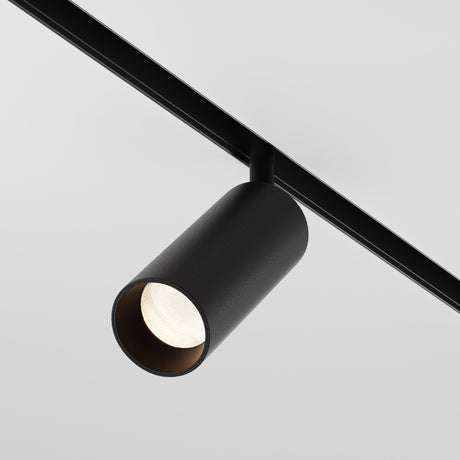
Focus LED Dimmable Single Phase Track Spotlight 12W 3000K - Black

 £4399Unit price Translation missing: en.products.product.price.unit_price_separatorUnavailable
Focus LED Single Phase Track Spotlight 12W 3000K Wide Beam - Black

 £4299Unit price Translation missing: en.products.product.price.unit_price_separatorUnavailable
 £6599Unit price Translation missing: en.products.product.price.unit_price_separatorUnavailable
 £4599Unit price Translation missing: en.products.product.price.unit_price_separatorUnavailable
 £9399Unit price Translation missing: en.products.product.price.unit_price_separatorUnavailable
Elti Duo 2 Light LED Magnetic Track Spotlight 24W 3000K - White & Black

 £9399Unit price Translation missing: en.products.product.price.unit_price_separatorUnavailable
Elti Duo 2 Light LED Magnetic Track Spotlight 24W 3000K - Black & Brass

 £8899Unit price Translation missing: en.products.product.price.unit_price_separatorUnavailable
Basis CCT LED Dimmable Corner Linear Track Light for Magnetic Exility 24W 3000-6000K - Black

 £7299Unit price Translation missing: en.products.product.price.unit_price_separatorUnavailable
Basis LED Corner Track Light for Magnetic Exility 24W 4000K - Black

 Save 28%£1299£1800Unit price Translation missing: en.products.product.price.unit_price_separatorUnavailable
 Save 29%£10999£15600Unit price Translation missing: en.products.product.price.unit_price_separatorUnavailableFree Delivery
 Save 30%£14299£20400Unit price Translation missing: en.products.product.price.unit_price_separatorUnavailableFree Delivery
 Save 29%£7199£10200Unit price Translation missing: en.products.product.price.unit_price_separatorUnavailable
Luxeon Wide LED Adjustable Linear Track Light 7W 4000K On-Off - Black
 Save 30%£14299£20400Unit price Translation missing: en.products.product.price.unit_price_separatorUnavailableFree Delivery
 Save 30%£14299£20400Unit price Translation missing: en.products.product.price.unit_price_separatorUnavailableFree Delivery
 Save 30%£14299£20400Unit price Translation missing: en.products.product.price.unit_price_separatorUnavailableFree Delivery
 Save 30%£10499£15000Unit price Translation missing: en.products.product.price.unit_price_separatorUnavailable
Luxeon Trim Magnetic Recessed L-Connector Track Left On-Off - White
Free Delivery Save 30%£10499£15000Unit price Translation missing: en.products.product.price.unit_price_separatorUnavailable
Luxeon Trim Magnetic Recessed L-Connector Track Left - On-Off, Black
Free Delivery Save 30%£9699£13800Unit price Translation missing: en.products.product.price.unit_price_separatorUnavailable
Luxeon Magnetic Recessed L-Connector Track Left with On-Off Switch - Black
 Save 30%£9699£13800Unit price Translation missing: en.products.product.price.unit_price_separatorUnavailable
Luxeon Magnetic Recessed L-Connector Track Left On-Off - White
 Save 28%£2499£3480Unit price Translation missing: en.products.product.price.unit_price_separatorUnavailable
 Save 26%£1599£2160Unit price Translation missing: en.products.product.price.unit_price_separatorUnavailable
 Save 29%£5099£7200Unit price Translation missing: en.products.product.price.unit_price_separatorUnavailable
Ignis LED Three Phase Track Spotlight 25W 4000K CRI80 - White


The three track systems, and which one to plan around
Track lighting splits into three system types, and the one you pick decides everything else about your run. Single-circuit track carries one live feed, so every head on the rail switches together. Three-circuit track separates the conductors into three independent channels, letting you put accent heads, task heads and general heads on different switches along the same physical rail. Magnetic track works differently: a low-voltage 48V DC rail that heads, pendants and linear bars clip onto anywhere along its length, with no fixed sockets to work around.
For a straightforward living room or study where you want the lights to come on as one, single-circuit is the simpler choice. Where you are lighting a kitchen, a commercial space or an open-plan room and want zones you can switch separately, three-circuit is the better fit. Magnetic gives the most freedom to reposition, because heads slide and lift off without tools once the rail is fed with power.
Surface-mounted or recessed: how the rail sits
Track rail sits on the ceiling in one of two ways. Surface-mounted track fixes straight onto the ceiling and is the quicker install, useful when you cannot or do not want to open up the plasterboard. Recessed track sits flush, dropped into a channel cut in the ceiling so only the heads show. We stock recessed magnetic rail sized for 12.5mm plasterboard, along with trimless options that finish without a visible frame for a cleaner ceiling line. Track covers are available to close off unused sections of surface rail.
Plan your mounting form before you buy heads, because recessed and surface rails are not interchangeable. Measure the run you want to light, then add a little length so heads can be spaced evenly rather than crowded at one end.
Building a run with connectors and feeds
A run is rarely a single straight line, and the connector parts are what let you shape it. A power feed or power connector brings the supply into the rail, and a middle feed lets you inject power partway along a longer length. To turn a corner, use an L-shape corner connector; to branch into a T or run lights down two directions from one point, use a T-connector. End caps close the open ends of the rail. On three-circuit systems, connectors come in left and right versions and in on-off or 1-10V dimmable configurations, so the channel and switching carry through the joint correctly.
Sketch the layout first, mark where the feed comes in, and count the corners and junctions. That list of connectors is as important to order as the rail itself, because a run will not power up without the right feed and a clean joint at every turn.
Choosing the heads and light output
Heads are where the light actually happens, and our range covers adjustable spotlights, wide-beam spots, square spots, linear bars and small track pendants. Most are LED integrated, so the light source is built in rather than taking a separate bulb. Output runs from compact heads under 10W up to linear and corner units around 24-25W. Colour temperature is mostly warm white at 3000K, with cool white 4000K options and some tunable CCT heads that shift across 3000K to 6000K. Many heads are dimmable, using on-off or 1-10V control depending on the fitting.
For accent lighting over artwork, shelving or a worktop, adjustable spots let you aim the beam exactly where it is wanted. For broader coverage along a kitchen or study, wide-beam and linear heads spread light more evenly. Mix head types on the same rail to layer accent and general light, which is the main reason people reach for track in the first place.
Finishes and where track suits a room
Track in our range is built mostly from metal and aluminium, with some ABS components, and finishes are led by black and matt black, with white, grey, brass and gold also available. The look sits naturally in modern, minimalist and industrial schemes, which is why so much track ends up in living rooms, studies, kitchens, dining rooms and commercial spaces. Fittings here are rated IP20, so they are designed for dry indoor use rather than bathrooms or outdoor runs. Pick a finish that matches the rest of your ceiling hardware, since the rail is visible and reads as part of the room's metalwork.
Frequently Asked Questions
What is the difference between single-circuit and three-circuit track?
What is the difference between single-circuit and three-circuit track?
How does magnetic track lighting work?
How does magnetic track lighting work?
What connectors do I need to plan a track run?
What connectors do I need to plan a track run?
Are the track heads dimmable, and what colour temperature are they?
Are the track heads dimmable, and what colour temperature are they?
Can I use this track lighting in a bathroom or outdoors?
Can I use this track lighting in a bathroom or outdoors?
Should I choose surface-mounted or recessed track?
Should I choose surface-mounted or recessed track?
Related Collections


BestSellers
-

 £45999Unit price Translation missing: en.products.product.price.unit_price_separatorUnavailableFree Delivery
 -

 £1,29999Unit price Translation missing: en.products.product.price.unit_price_separatorUnavailable
Seraphis LED Medium Alabaster Ring Chandelier - Brushed Brass
Free Delivery -

 £10,79999Unit price Translation missing: en.products.product.price.unit_price_separatorUnavailable
Aureon LED Triple Ring Alabaster Suspension Light - Brushed Brass
Free Delivery -

 £1,49999Unit price Translation missing: en.products.product.price.unit_price_separatorUnavailableFree Delivery
 -

 £2699Unit price Translation missing: en.products.product.price.unit_price_separatorUnavailable
Panasonic Eneloop AA HR6 Rechargeable Batteries 2000mAh - 8 Pack
-

 £97999Unit price Translation missing: en.products.product.price.unit_price_separatorUnavailableIn StockFree Delivery
 In our showroom
 -

 Save 45%£59399£1,08000Unit price Translation missing: en.products.product.price.unit_price_separatorUnavailableFree Delivery
 -

 £79999Unit price Translation missing: en.products.product.price.unit_price_separatorUnavailableFree DeliveryIn our showroom
 -

 Save 10%£2,25099£2,50000Unit price Translation missing: en.products.product.price.unit_price_separatorUnavailableFree Delivery
 -

 £2,09999Unit price Translation missing: en.products.product.price.unit_price_separatorUnavailable
Stratalux LED Stacked Alabaster Column Floor Lamp - Matt Black
Free Delivery -
 Save 16%£83899£99500Unit price Translation missing: en.products.product.price.unit_price_separatorUnavailableFree Delivery
 -

 Save 16%£1,51299£1,79500Unit price Translation missing: en.products.product.price.unit_price_separatorUnavailable
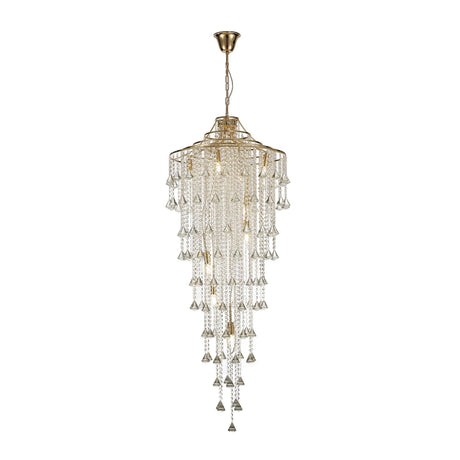
Wisteria 16 Light Crystal Linear Suspension Light - French Gold
Free Delivery


Recommended For You
Our Reviews
-
Free UK Delivery
Over £99. Ships worldwide.
-
Price Match Promise
We'll match any like-for-like price.
-

Birmingham Based
British heritage. Worldwide delivery.
-
Hand-Picked Range
Beautiful Pieces Selected
