

Most vintage floor lamps for sale are simply old, and old is not the same as good. A genuine mid-century piece with a solid marble base and honest brass can hold a corner for decades. A tired reproduction with a chipped foot and a suspect flex is a fire risk dressed up as heritage. The difference matters, especially once you commit to living with the thing every evening. This guide is about reading vintage floor lamps properly, with a specialist's eye on the marble base, the joins, and the wiring you cannot see.
We sell alabaster and natural-stone lighting at Niori, so stone is where our attention goes first. The same instincts that tell us whether an alabaster shade will glow evenly also tell us whether a marble floor lamps base is worth the money. That is the lens we bring to vintage floor lamps of every era.
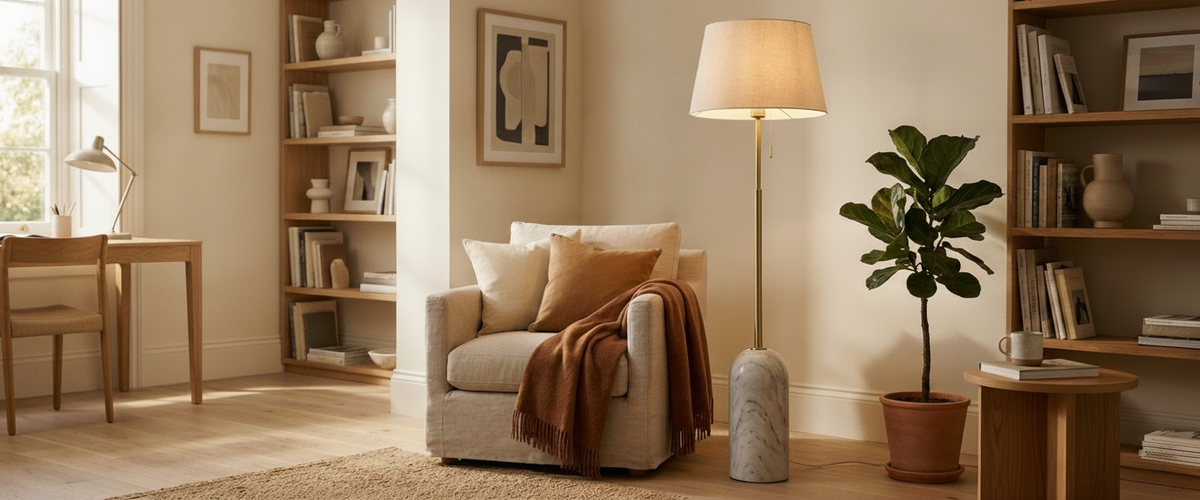
A genuine marble-base lamp reads as a deliberate anchor beside a reading chair.

Key Takeaways Before You Buy
A true vintage floor lamp shows consistent wear, period-correct fittings, and a base that matches the era. Uniform "distressing" is usually fake age.
Marble and stone bases are heavy for a reason: they stop a tall lamp toppling. Check the weight and the join between stone and metal.
Assume any old standing lamp needs rewiring until a qualified electrician confirms otherwise.
Warm, dimmable bulbs flatter aged brass and stone far more than cool white LEDs.
Placement is where good finds go wrong. Scale and sightlines decide whether the lamp anchors the room or just fills it.

The Line Between a Genuine Vintage Piece and Something Merely Aged
Age alone is cheap to fake. Sellers sand edges, wax brass to a false patina, and call the result antique. Real age is inconsistent in a way that is hard to copy. Look at where hands actually touch a lamp: the switch, the upright near seated height, the base rim scuffed by shoes and vacuum cleaners. Genuine wear clusters at those points and leaves the rest alone. If a lamp looks evenly weathered all over, someone weathered it on purpose. This is the first test most vintage floor lamps either pass or fail.
Marble tells its own story. A vintage marble floor lamp base collects fine surface scratches, tiny chips at the edges, and a slight dulling of the polish that no factory applies deliberately. Turn it over. Older bases were often turned on a lathe and show faint concentric marks underneath, sometimes a felt pad worn thin and grey. An antique marble floor lamp that has spent decades in a room will feel used in ways a new casting cannot mimic.

Reading Materials and Joins: Stone, Brass, and the Tells of a Rewire
Start with the stone itself. Marble is a metamorphic stone, and its veining runs through the whole piece rather than sitting on the surface, so a genuine marble base shows the pattern continuing across chips and around edges. A painted or resin base breaks that logic: the "veining" stops at the surface. The Metropolitan Museum of Art catalogues countless stone objects where this depth of pattern is part of how conservators date and identify material, and the same principle helps you at a market stall assessing vintage floor lamps.
Next, the joins. A marble base floor lamp usually has the upright rod threaded or cemented into the stone. Rock the lamp gently. A small amount of settling is normal on an old piece; a wobble at the base-to-rod join is a warning. Brass fittings should have weight and a screw thread that meets cleanly. Thin, stamped collars and glued seams point to a later reproduction. If you want a modern benchmark for how a solid brass upright should feel and move, an adjustable piece such as the Funk Adjustable Floor Lamp gives you a sense of the weight and clean engineering a genuine vintage join should approach.
Check the base-to-rod join for wobble and inspect brass threads for weight and clean cuts.
The tells of a rewire are worth learning. Original cloth-covered flex, brittle rubber insulation, and old round-pin or unearthed plugs all signal that the lamp has not been touched since the mid-twentieth century. That is not automatically bad, but it means the lamp is not ready to use. Conversely, a modern flex fitted neatly through original brass, with a new switch that matches the period style, suggests a careful previous owner. Many vintage floor lamps come to market half-restored, so read the wiring before you trust the finish. A sloppy rewire, exposed copper at the entry point, or a flex that has clearly been forced through a channel meant for something thinner, is a reason to walk away or negotiate hard.
How a Vintage Floor Lamp Anchors a Modern Room Without Looking Staged
A marble floor lamp earns its place by contrast. Set a heavy stone base and warm brass against clean plaster walls, pale oak, or a low modern sofa, and the lamp reads as a deliberate anchor rather than a period prop. The mistake is surrounding an old lamp with other old things until the corner looks like a shop window. The best vintage floor lamps do their work alone.
We shipped a Vellum LED Alabaster Column Floor Lamp to a client in a converted warehouse flat who had one genuine 1960s marble-base lamp already in the room. She worried the two would clash. They did not. The vintage piece sat by the reading chair with its warm brass and honest wear, and the alabaster column stood near the window as a cleaner, quieter counterpoint. Same warm light, different textures, one clearly old and one clearly new. That honesty is what stops a room looking staged.
If you are building around a stone-based lamp and want to see how contemporary alabaster and natural-stone pieces sit alongside older vintage floor lamps, our alabaster lighting collection is a useful reference for the kind of soft, diffused glow that pairs well with aged brass.
Warm Bulbs and Dimming That Forgive Aged Finishes
Old brass and marble were never meant to be lit by cool white light. Bright, blue-toned bulbs flatten patina and make marble look grey and clinical. Warm light does the opposite. It brings out the amber in aged brass, warms the natural minerals in the stone, and softens the small imperfections that give vintage floor lamps their character.
Aim for a colour temperature around 2400K to 2700K. That range sits firmly in warm white and reads as candlelight rather than daylight. Fit a dimmable bulb and a compatible dimmer, because the ability to drop the level in the evening is what makes a standing lamp genuinely liveable. The Chartered Institution of Building Services Engineers publishes guidance on lighting levels that is worth a glance if you are lighting a whole room rather than a single corner.
A quick note on LED retrofit: choose a bulb with a high colour rendering index, ideally 90 or above, so the stone and metal show their true tones. Cheap LEDs with poor rendering make even a fine marble base on the best vintage floor lamps look lifeless.
Safety and Rewiring: Why a Qualified Electrician Isn't Optional
This is the part people skip, and it is the part that matters most. Any old standing lamp should be treated as needing inspection before it goes into daily use. Vintage floor lamps hide their faults well: old insulation degrades, earth connections corrode or were never fitted, and switches wear out. None of this shows from across a room.
Have a qualified electrician inspect and, where needed, rewire the lamp. That means new flex, a modern switch, a correctly fitted plug, and a proper earth where the metalwork requires it. A metal-bodied lamp in particular should be earthed. The UK's Electrical Safety First offers clear guidance on why second-hand and inherited electrical items deserve a check before use. This is not a DIY job unless you are genuinely competent and confident; the cost of a professional rewire is small against the risk.
Keep any original fittings the electrician removes. A period-correct switch or brass collar can be refitted for looks once the internal wiring is safe and hidden, giving you the character of the original with the safety of the new. That is how good vintage floor lamps stay in service.
Placement Slips That Turn a Good Find Into Visual Clutter
A marble floor lamp is tall and heavy, and both facts drive where it should go. The most common slip is placing it where it blocks a sightline: mid-wall between two windows, or floating awkwardly beside a doorway. It wants a corner, the end of a sofa, or the side of a reading chair, somewhere it completes a grouping rather than interrupting the flow.
Scale is the second trap. A slim upright lost against a large sectional looks apologetic; a heavy marble-base lamp crammed beside a delicate side table looks like it is about to crush it. Match the visual weight of the lamp to what stands near it. Where a corner calls for a grounded, sculptural silhouette rather than a spindly stem, a piece with a substantial column like the Essence Round Floor Lamp shows the kind of presence a marble-base original brings to the same spot.
Watch the flex, too. Vintage floor lamps often ship with cables longer than you expect, and a cable stretched across a walkway is both a trip hazard and an eyesore. Position the lamp within easy reach of a socket, or plan a discreet route for the cable along the skirting.
Quick Buyer Checklist
Wear clusters at touch points, not evenly across the whole lamp.
Marble veining continues through chips and edges rather than stopping at the surface.
The base-to-rod join is firm, with no wobble.
Brass fittings have weight and clean threads.
The flex, switch, and plug are modern, or you budget for a full rewire.
The bulb is warm, dimmable, and high in colour rendering.
The lamp has a corner or grouping to belong to, not a wall to block.
Where Vintage Meets New
You do not have to choose between an old marble-base lamp and a contemporary stone piece. Many of the best rooms mix the two, using an antique find for character and a modern alabaster fixture for clean, even light. Read vintage floor lamps carefully, budget for the rewire, and they will hold a corner for years. If you want to compare forms and finishes across the range, our full lighting collection shows how stone bases and diffused glow work across pendants, table lamps, and floor lamps alike.