
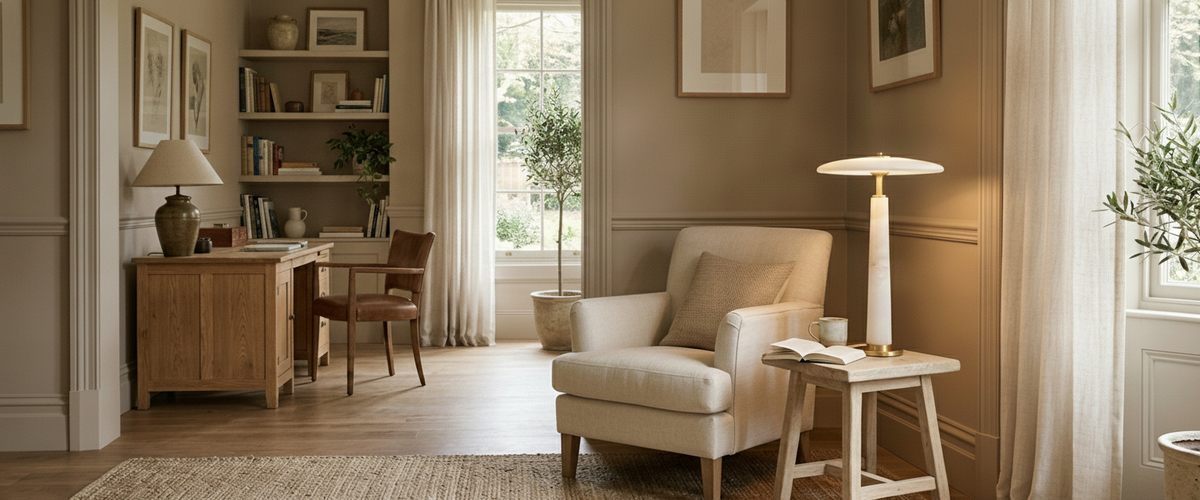

To clean an alabaster light shade the safe way, dust it dry first, then wipe gently with a barely damp cloth of plain water and no chemicals at all. Switch on a lamp that has sat untouched for two or three months and you notice it before anything else: the light reads slightly gray, slightly tired, as if someone turned the warmth down a notch. That gray cast is not the bulb failing. It is dust settling into the veining, and it is the single most common reason a once clean alabaster light shade stops looking its best.
Always lift loose dust dry before any moisture touches the stone, because that first dry pass is half the work when you clean an alabaster light shade.
Alabaster is a soft, porous stone, rated only about 2 on the Mohs hardness scale, well below glass at around 5.5. It marks more easily than glass and it holds onto grime in ways glass never does. The good news is that the right routine to clean an alabaster light shade is quick, gentle, and almost entirely about restraint. Most damage we see comes from people trying too hard, not too little, so a clean alabaster light shade rewards a light touch.

Quick Answer: Cleaning Alabaster at a Glance
Dry first, always. Lift loose dust with a soft, dry brush or microfiber cloth before any moisture touches the stone. This is step one whenever you clean an alabaster light shade.
Damp, never wet. A barely moist cloth with plain water handles most marks when you clean an alabaster light shade. Wring it until it feels almost dry.
No chemicals. Acids, glass sprays, bleach, and abrasive pads all attack alabaster. Skip them entirely when you clean an alabaster light shade.
Mind the oils. Fingermarks are the usual culprit on table lamps and wall lights; handle the shade by the fitting where you can, and you will need to clean an alabaster light shade far less often.
Go slow with removal. If the shade lifts off, support it from underneath and never twist against the seam.

Why Stone Goes Grey Faster Than Glass
Glass sheds dust. Its surface is smooth and non-porous, so a quick wipe restores it. Alabaster does the opposite. The fine channels and translucent veining that make the stone glow so beautifully also catch airborne dust. Particles drift in, settle into the grain, and build a film barely a fraction of a millimeter thick that you cannot see until the light passes through it. This is exactly the build-up you are fighting when you clean an alabaster light shade.
Backlighting is unforgiving here. A speck of dust on a solid object is invisible; the same speck on a lit translucent panel casts a shadow. Multiply that across a whole shade and the warm, even glow you bought turns cooler and patchier. This is why a clean alabaster light shade needs a light dusting more often than glass needs a full clean, and why the dusting matters far more than any deep clean ever will.
If you are still choosing pieces and want to understand how different stones carry light, it is worth browsing the alabaster lighting range with this in mind: the more dramatic the veining, the more the surface rewards regular, gentle care. A raw-cut piece like the Kavryn Raw Cut Alabaster Table Lamp shows its grain openly, where a smoother, more uniform body such as the Seravyn Alabaster Table Lamp reads cleaner under the same light and is more forgiving of the odd missed dusting. Either way, a clean alabaster light shade always looks calmer than a neglected one, so the habit of keeping one clean pays off no matter which piece you pick.
Fingermarks and Oils: What Actually Marks Porous Alabaster
Dust is the slow problem. Oils are the fast one. Skin carries natural oils, and alabaster is porous enough to absorb them, which is why you sometimes see a faint darkened patch where a shade has been gripped to adjust it. On table lamps and floor lamps that get handled, this is the mark people most often ask us about, usually right after they tried to clean an alabaster light shade and the patch stayed put.
The fix is mostly habit. Switch the lamp at the wall or the inline switch rather than touching the shade. When you do need to lift or reposition a piece, hold it by the brass fitting or the base, not the stone. A lamp with a defined brass collar gives you a natural place to grip; on a piece such as the Chandor Alabaster Table Lamp, the brass detailing doubles as the spot to handle, keeping fingers off the porous surface entirely. One client in a Cotswolds farmhouse keeps a single pair of cotton gloves in a drawer beside a hallway lamp purely for this; it sounds fussy, but the shade still looks new years on, and she rarely has to clean an alabaster light shade beyond a quick dust.
If an oil mark has already set in, resist the urge to scrub. Light, patient dabbing with a barely damp cloth lifts most of it over two or three short sessions, and it stays the gentlest way to clean an alabaster light shade with a stubborn patch. Aggressive cleaning drives oil deeper into the pores and can leave a permanent ring.
The Dry-First Rule
This is the one rule that protects alabaster more than any other, and the foundation of any attempt to clean an alabaster light shade. Before moisture comes anywhere near the stone, lift the loose dust off dry.
Use a soft, natural-bristle brush, a clean dry microfiber cloth, or a photographer's air blower for carved or fluted shades where bristles cannot reach. Work in light passes rather than pressing in. The point is to carry dust away from the surface, not to grind it across the stone. If you wet a dusty shade first, you turn that dust into a fine paste that smears straight into the veining and dries gray, which is the fastest way to ruin a clean alabaster light shade. The Natural Stone Institute makes the same point about all soft stone surfaces: dry dust removal should always come before any wet cleaning.
Once dust-free, a barely damp cloth and plain water lift most marks when you clean an alabaster light shade.
A Gentle Damp-Cloth Routine
Once the shade is dust-free, most marks come away with plain water and patience. Here is the routine we recommend to buyers who want to clean an alabaster light shade without risk.
Switch off and let the shade cool. Alabaster holds heat, and warm stone reacts more readily to moisture. Give it at least 10 minutes.
Dust dry first, as above. Never skip this step.
Dampen a soft cloth with clean water and wring it hard. It should feel cool and barely moist, not wet. No drips.
Wipe in the direction of the veining, using gentle, overlapping passes. Let the cloth do the work rather than your fingertips. This single pass is most of what it takes to clean an alabaster light shade properly.
Dry immediately with a second clean, dry cloth. Standing water is what causes blotching, so never let it sit.
For most homes, a dry dust every two weeks and a damp pass every one to two months keeps a shade looking exactly as it should. That light rhythm is all it takes to clean an alabaster light shade in a quiet room. Hospitality settings and kitchens, where airborne grease is heavier, need the damp routine roughly twice as often, so you will clean an alabaster light shade there on a tighter schedule.
The Cleaners That Quietly Ruin Alabaster
Almost every reputable conservation source agrees on this, and so do we from hard-won experience: keep household cleaning products well away when you clean an alabaster light shade. The stone is mostly gypsum, and gypsum is sensitive to acids and moisture in ways granite and marble are not.
Avoid all of the following:
Glass and surface sprays. Many contain ammonia or alcohol that dulls and etches the surface.
Acidic cleaners, including vinegar, lemon, and limescale removers. These eat into gypsum and leave permanent dull patches.
Bleach and disinfectants, which can discolor the stone unevenly.
Abrasive pads, scouring sponges, and powders, which scratch the polished surface and leave a permanent cloudy haze.
Soaking or running water. Alabaster absorbs water, and a soaked shade can develop staining from the inside out.
If plain water has not shifted a mark, the right way to clean an alabaster light shade is a specialist stone-safe cleaner used sparingly, or a conversation with us, rather than reaching for something harsher.
Taking the Shade off the Fitting
Some alabaster shades lift away for a more thorough clean; many are fixed and should be cleaned in place. Check before you start. Forcing a fixed shade is how seams crack, and it undoes any care you took to clean an alabaster light shade well.
If a shade is designed to be removed, switch off the lamp, let it cool, and support the full weight from underneath with both hands. Lift straight up or unscrew the retaining ring slowly, without twisting the stone against its seam or its brass collar. Alabaster has natural fault lines, and lateral stress is what finds them. Set the shade on a folded towel while you work, never on a hard counter. When you reseat it, line everything up by hand before tightening anything; cross-threading a fitting puts pressure exactly where you do not want it. If you are at all unsure whether a piece is meant to come apart, leave it assembled and clean an alabaster light shade on the outer surface only.
Keeping the Glow Even as the Shade Ages
Alabaster changes very slightly over the years, and that is part of its character. The aim of care is to keep that ageing even rather than patchy, and choosing to clean an alabaster light shade thoroughly each time helps. Three things help.
First, clean the whole shade each time, not just the visible front. Uneven dusting leads to one side reading warmer than the other under the light. Second, keep the bulb consistent. Swapping a warm LED for a cooler one mid-life changes how every existing mark and shadow reads, and it muddies the result every time you clean an alabaster light shade. We suggest a warm white around 2700K for alabaster, dimmable, with a color-rendering index of 90 or higher so the stone's natural tones stay true. Third, watch the environment. Steam, smoke, and cooking grease all settle faster than ordinary household dust, so you will clean an alabaster light shade in a busy kitchen or a steamy bathroom sooner than one in a quiet bedroom.
If you are weighing up where a new piece will live and how much upkeep it will need, the wider lighting collection gives a sense of which fixture types sit closest to splashes and steam and which stay safely out of the way. Wall lights and pendants gather dust more slowly than handled table lamps, simply because nobody touches them, so you clean an alabaster light shade overhead far less often than one within reach.
Treated gently, a clean alabaster light shade does not just survive the years. It softens into something better, the surface gaining a depth that brand-new stone cannot fake. The whole secret is restraint: dust often, damp rarely, and never let a chemical near a clean alabaster light shade.