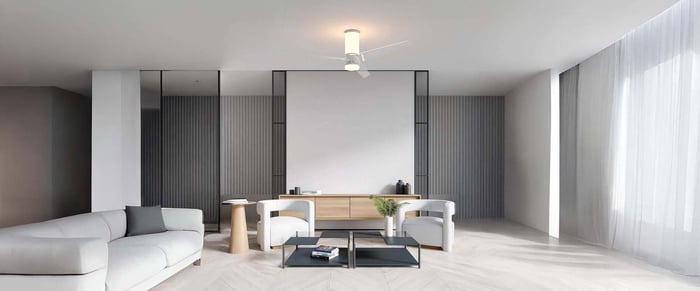
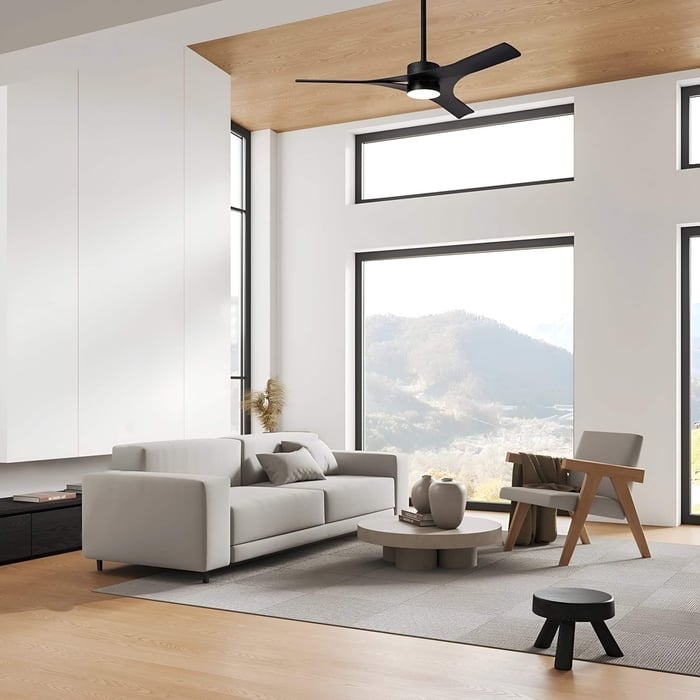
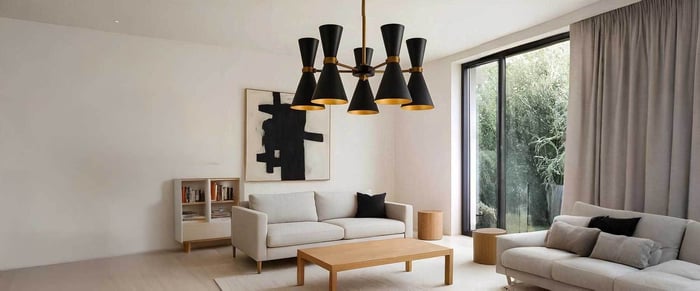
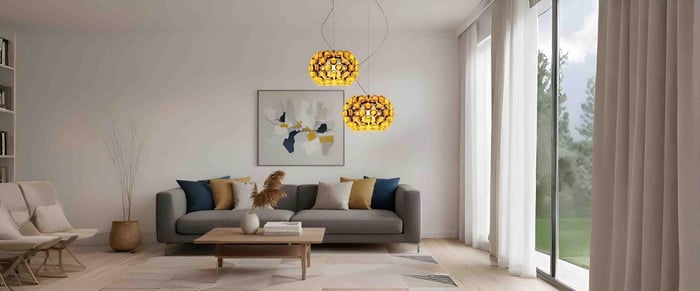
Classic fan-and-light designs lean into heritage and craftsmanship. Look for ornate bases, richer finishes, and detailed shades that feel timeless rather than trendy. You’ll often see layered silhouettes, curved arms, finials, and decorative collars that create depth against the ceiling. Materials are a giveaway: warm brass, aged bronze, ceramic accents, and stained or etched glass add texture and a sense of history. Even when the form is simple, the details, beaded rims, floral etching, or ribbed diffusers signal a traditional approach.
Where this style shines is in homes with architectural character: crown molding, paneled walls, arched doorways, or vintage furniture. Against those backdrops, ceiling fan lights in classic finishes feel like they belong, anchoring the room without stealing the show. They sit comfortably alongside statement ceiling lights, wall sconces, and table lamps, creating a layered glow that feels intentional rather than overdone.
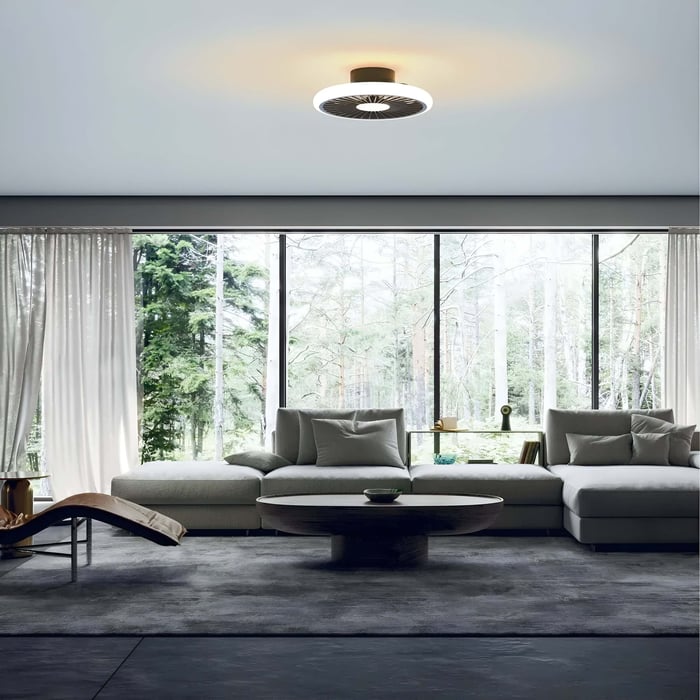
Sleek Ceiling Fan Lights for Modern Interiors
Modern ceiling fan lights take the opposite route less ornament, more intention. The hallmarks are sleek materials, minimal forms, and neutral palettes that complement contemporary interiors. Think matte black, brushed nickel, and soft champagne metals, often paired with opal glass or flat, edge-lit acrylic. Integrated LEDs are now standard, enabling thinner profiles and more even diffusion than older multi-bulb clusters.
Function is just as important as form. Expect tunable white LEDs (warm to cool), quiet DC motors, and smart scenes that remember your preferred brightness. Many designs hide venting, fasteners, and pull chains for a “floating” look. Some models from brands like mantra pair these slim bodies with warm metallic finishes and intuitive dimming, so they feel tailored to modern living spaces. If your goal is calm, uncluttered ceilings, modern ceiling fan lights deliver it while layering neatly with recessed spots and discreet accent lighting in open-plan rooms.
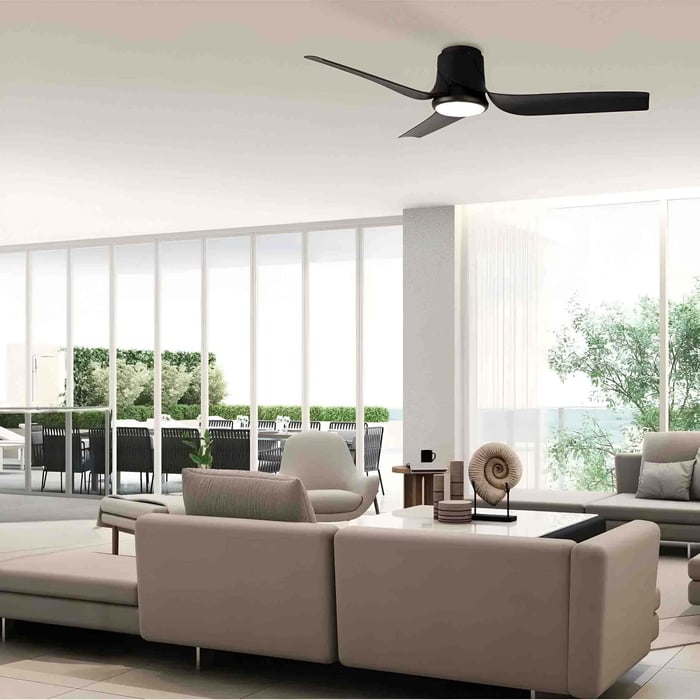
Transitional Ceiling Fan Lights for Evolving Décor
If you like a bit of both worlds, transitional ceiling fan lights strike a satisfying balance. Many homeowners favor this category when they want a single fixture that can move gracefully through décor updates. The idea is simple: take a classic gesture and edit it with modern geometry. You might see a traditional bell shade simplified into a smooth cone, or a lantern outline rendered in slim, contemporary metal. These designs read as elegant but not formal, warm but not heavy.
Styling tips:
Pair transitional fixtures with mixed furniture, mid-century chairs beside an antique sideboard, or a modern sofa under vintage art.
Let the fan be the “bridge” finish: a warm brass body in a room with black accents, or matte black in a space with pale wood tones.
Keep the rest of the ceiling clean: fewer competing fixtures make the blend feel deliberate.
When finishes and shapes are chosen with care, a refined piece from schuller can sit comfortably between a traditional chandelier and playful lava lights on a console, tying together old and new elements without visual noise.
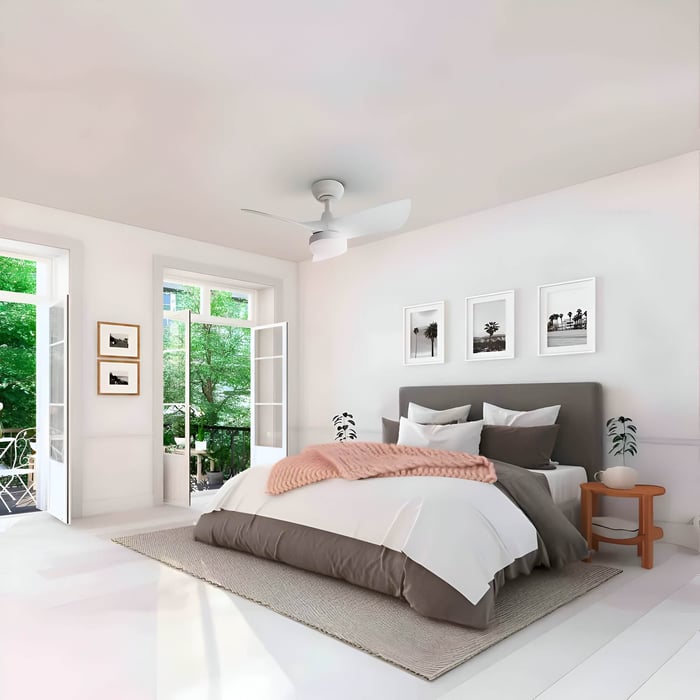
Setting the Mood: Ceiling Fan Light Controls and Bulbs
Performance is what you notice every single day, so it deserves attention. Dimming is now common, but not universal. If a model uses integrated LEDs, confirm it’s compatible with your dimmer or smart hub. If it uses sockets, choose dimmable LED bulbs and avoid old halogens that waste energy and heat the shade.
For comfort and color:
Living areas and bedrooms: warm white LEDs around 2700K-3000K for relaxed ambiance.
Kitchens and home offices: neutral white around 3500K-4000K for clarity without harshness.
Look for high CRI (90+) so textiles, wood, and paint colors stay true.
Smart controls add real value: app sliders, voice assistants, timers, and preset scenes. The best ceiling fan lights let you control fan speed and light independently, which is essential for year-round use, think gentle air movement with barely-there light for movie nights. Some designs tuck extra functions into the housing, such as night-light modes or gradual wake-up scenes, so your main ceiling fan lights can move effortlessly from bright task lighting to a soft evening glow without adding more fixtures.
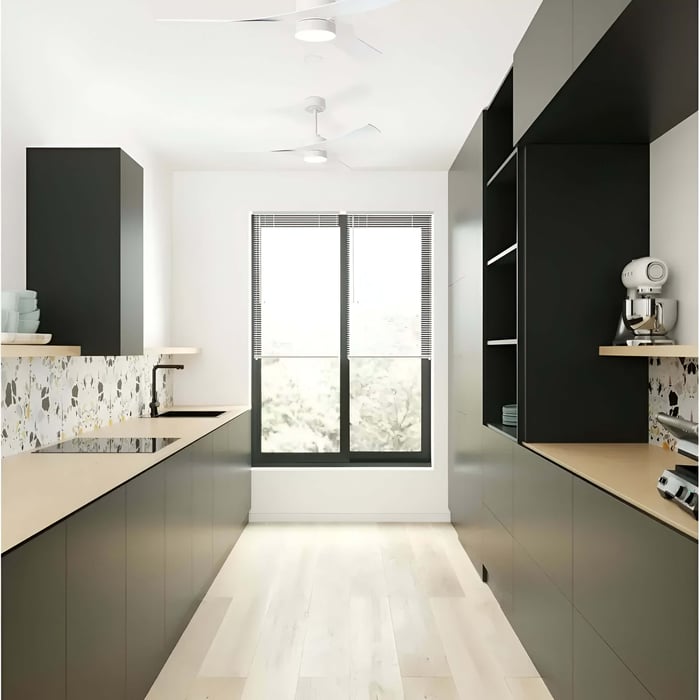
Designing with Ceiling Fan Lights Minus the Visual Clutter
Blending old and new makes a home feel collected rather than decorated in one sweep. The simplest method is “one classic, one contemporary.” Try a traditional base with a clean drum shade, or a minimal body with lightly fluted glass that nods to heritage. Another approach is finish-bridging across rooms: keep one metal consistent in open-plan areas, then introduce a second accent finish in a smaller zone for contrast.
Three quick rules keep everything coherent:
Match undertones, not exact colors warm brass loves warm woods; cooler silvers flatter stone and gray palettes.
Repeat a finish at least twice in each sightline (for example, fan body and cabinet pulls).
Use texture as the link: ribbed glass, linen shades, or hammered metal can unite mixed eras.
Handled, this way, ceiling fan lights become a design tool adding depth and character without looking mismatched. Think of them as part of a larger story that might also include sculptural Ceiling Lights in the entryway and a slim run of linear lighting along shelving, all sharing at least one finish or material.
Room-by-Room Ceiling Fan Light Selection Guide
Different rooms need different moods and levels of output. Use this as a practical starting map.
Living rooms
Go classic or transitional if your space has molding, layered textiles, or statement furniture. Pick a scale that visually “fills” the seating area without crowding it. A warm metal body and opal glass can link sofas, artwork, and side tables into one relaxed zone.
Libraries and traditional bedrooms
Soft, shaded light and warmer finishes feel right here. Multi-light or textured glass helps spread glow evenly for reading. In these spaces, ceiling fan lights work best when blade tones echo nearby furniture or flooring, keeping the look calm and tailored.
Home offices and studios
Choose modern ceiling fan lights with bright, even LEDs and reliable dimming. Clean lines reduce visual clutter and help compact rooms feel larger. Pair them with Linear Lights over the desk or shelving for balanced, shadow-free task illumination.
Kitchens and dining areas
Prioritize brightness plus a smooth dim range. Transitional designs are ideal if your kitchen flows into the dining. Avoid very ornate shades near cooktops; they catch grease and need more cleaning. Aim for a fan that visually coordinates with your pendants and recessed Ceiling Lights so the entire zone feels intentional and cohesive.
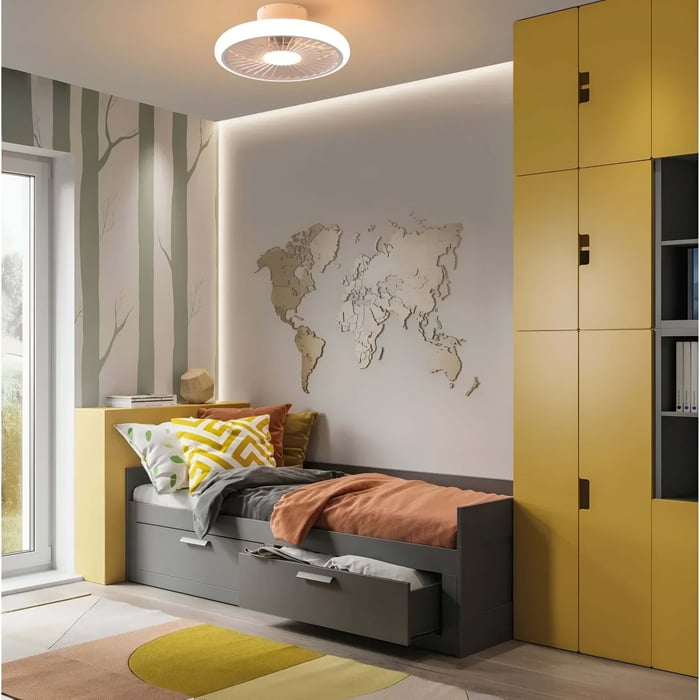
Kids’ rooms and guest rooms
Look for enclosed diffusers, gentle dimming, and energy efficiency. Simple silhouettes adapt as décor changes over time. A compact, quiet model keeps air moving without dominating the ceiling and can share finishes with bedside lamps or fun accents such as small Lava Lights on shelves.
Hallways, nooks, and low ceilings
Low-profile options maintain head clearance and keep sightlines open. In tighter spaces, ceiling fan lights with shallow shades prevent visual clutter while still offering useful airflow and ambient light.
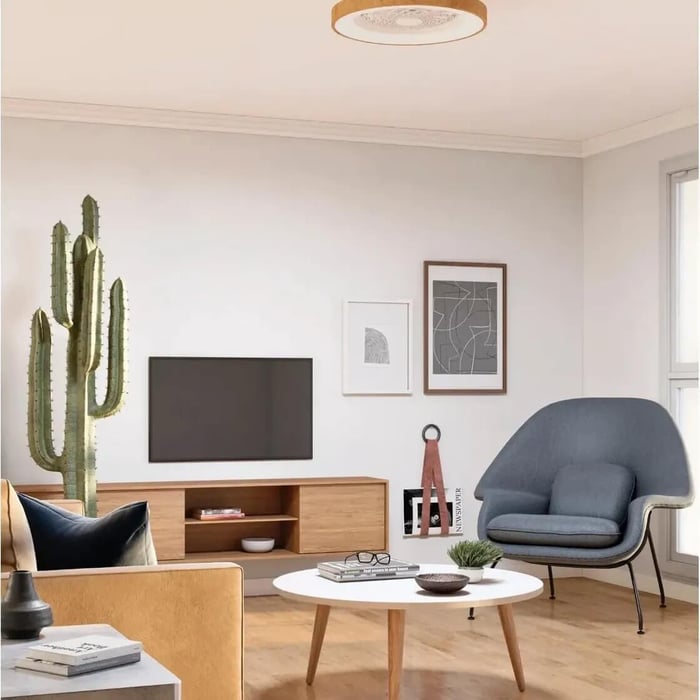
Used thoughtfully, ceiling fan lighting can unify your whole home with consistent comfort, soft movement, and a coherent visual rhythm from room to room. Compact ceiling fan light in a cozy mid-century style living room with cactus décor.
Getting Fan Light Scale, Finish, and Proportion Right
Cohesive lighting comes from repeating decisions. Start by choosing a “finish family”:
Warm homes with oak, beige, and antique accents tend to suit brass, bronze, and earthy black.
Cooler schemes with white walls, gray stone, and chrome hardware often work better with brushed nickel, pewter, and clearer silvers.
Then match shade shapes to room geometry. Drums and globes echo modern curves; tulip or bell shades reinforce traditional lines. Proportion matters more than most people realize: larger rooms can handle broader shades or multi-light clusters, while smaller spaces benefit from tighter, streamlined profiles. For standard ceilings, stick to semi- or flush-mount bodies; for tall ceilings, a slightly longer downrod makes the fixture feel intentional rather than “floating” too high.
When you’re choosing ceiling fan lights, check that the blade span and body diameter suit the footprint of your furniture grouping instead of crowding it. The result is a ceiling that feels designed, not improvised.
Easy Maintenance for Long-Lasting Ceiling Fan Lights
Keeping your fixtures sharp is mostly about routine, and ceiling fan lights are easiest to maintain when you follow a simple schedule:
Weekly dusting: wipe blades with a microfiber cloth to prevent wobble and reduce allergens.
Monthly shade care: remove surface dust; for ribbed or etched glass, a soft brush lifts debris from grooves.
Twice-yearly deep clean: cut power at the breaker, remove shades, wash with mild soap, and dry thoroughly before reinstalling.
Bulb discipline: replace bulbs in pairs or full sets to keep color consistent. If you see flicker, check dimmer compatibility or upgrade to higher-quality LEDs.
Annual safety check: tighten canopy and blade screws; ensure bulbs are seated snugly and wattage limits aren’t exceeded.
Heat management: keep vents around integrated LED modules clear cooler LEDs last longer and perform more consistently.
Conclusion
The right fan-and-light fixture does more than move air; it quietly shapes how every room feels, looks, and functions. Classic designs bring warmth and character, modern profiles keep ceilings clean and minimal, and transitional pieces bridge the gap when your style evolves. Thoughtful controls and bulb choices make each setting more comfortable, while a consistent approach to finishes, proportions, and placement keeps your home feeling cohesive. With regular care, ceiling fan lights will stay smooth-running, efficient, and beautiful for years.
Ready to upgrade your ceilings with comfort and style? Visit Niori to explore curated ceiling fan designs, coordinating Ceiling Lights, and other architectural lighting ideas and let your next set of ceiling fan lights become the quiet centerpiece of your décor