
Table of Contents
- Introduction
- Why Do Outdoor Table Lamps Make An Outdoor Space Feel More Inviting?
- What Are Outdoor Table Lamps, And How Are They Different From Indoor Lamps?
- How Do You Choose Outdoor Table Lamps That Match The Way You Use The Space?
- What Brightness And Colour Temperature Should You Look For?
- How Important Is The IP Rating When Choosing Outdoor Table Lamps?
- How Do You Choose Between Rechargeable, Solar, And Plug-In Options?
- How Can Outdoor Table Lamps Solve Hard-To-Light Spaces?
- How Do You Layer Lighting With Outdoor Table Lamps For A Balanced Look?
- Step-by-Step: How To Choose The Right Outdoor Table Lamp
- What Styles Create The Most Welcoming Look Outdoors?
- Where Should Outdoor Table Lamps Be Placed For The Best Effect?
- What Common Mistakes Should You Avoid With Outdoor Table Lamps?
- Conclusion
- FAQs
Introduction
Outdoor table lamps are one of the easiest ways to make a patio, balcony, or garden room feel welcoming after dark. Instead of relying on a single bright wall fitting, you can bring light right to the table where people sit, eat, and chat. The result is softer, more flattering illumination that makes outdoor spaces feel lived-in rather than left behind once the sun goes down.
In this guide, I’ll walk you through how to choose outdoor table lamps that suit your space, give you the right level of light, and hold up well outdoors. You’ll also find practical placement ideas, a step-by-step choosing process, and simple ways to create a layered lighting scheme that looks intentional rather than accidental.
Why Do Outdoor Table Lamps Make An Outdoor Space Feel More Inviting?
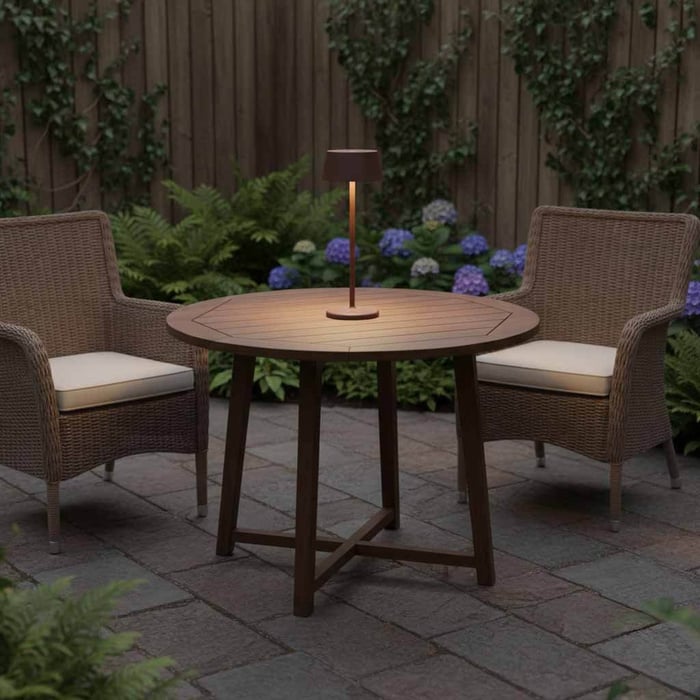
Outdoor table lamps make a space feel more inviting because they create warm, low-level light at eye height. That gentle glow reduces harsh shadows and gives faces a softer look, which naturally makes seating areas feel more comfortable.
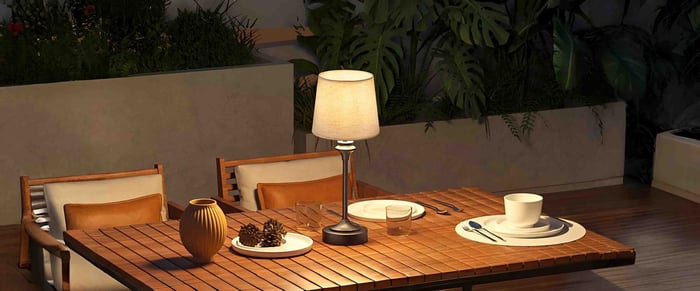
They’re especially useful when overhead lighting is too strong or positioned in the wrong place. A small pool of light on a side table or dining table can make the whole setting feel calmer and more considered. If you host outdoors, they also help guests find their drink, read a menu, or spot serving dishes without turning the patio into a floodlit scene.
What Are Outdoor Table Lamps, And How Are They Different From Indoor Lamps?
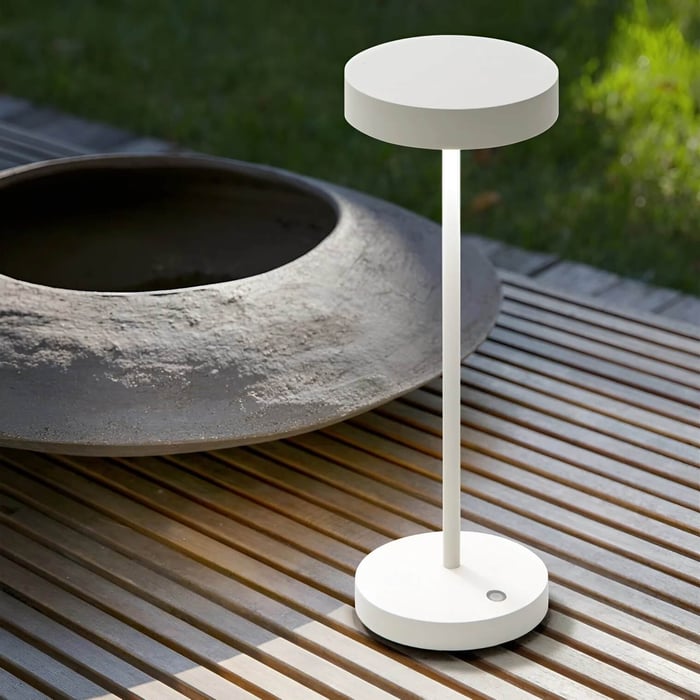
Outdoor table lamps are table-top lights designed with materials and sealing that can cope with damp air, condensation, and temperature changes. They’re made to handle outdoor conditions better than indoor lamps, which often corrode, discolour, or fail when exposed to moisture.
Key differences usually include:
Weather protection through an IP rating (so water splashes and dust are less of a problem)
Outdoor-ready finishes such as powder-coated metal or UV-stable materials
Safer light sources typically LED, which stay cooler and last longer
If you’re styling a larger seating area, pairing outdoor table lamps with floor lamps can help bring light to different heights without losing that cosy feel.
How Do You Choose Outdoor Table Lamps That Match The Way You Use The Space?
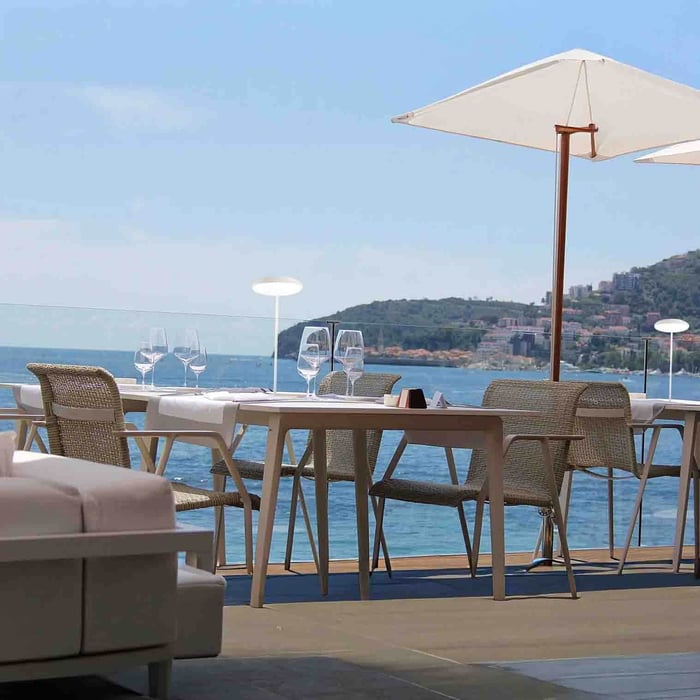
The best outdoor table lamps are chosen around how you actually spend time outdoors. Think about what you do there most evenings, because the lamp’s job changes depending on the setting.
A few common scenarios:
Outdoor dining: you’ll want enough light to see plates and serve food comfortably
Lounging and conversation: softer light with a warm tone feels best
Balcony corners or garden seating: portable lamps make it easy to place light exactly where needed
For dining, you may prefer a slightly brighter lamp with a shade that directs light downwards. For lounging, a diffused glow is often more flattering and relaxing.
What Brightness And Colour Temperature Should You Look For?
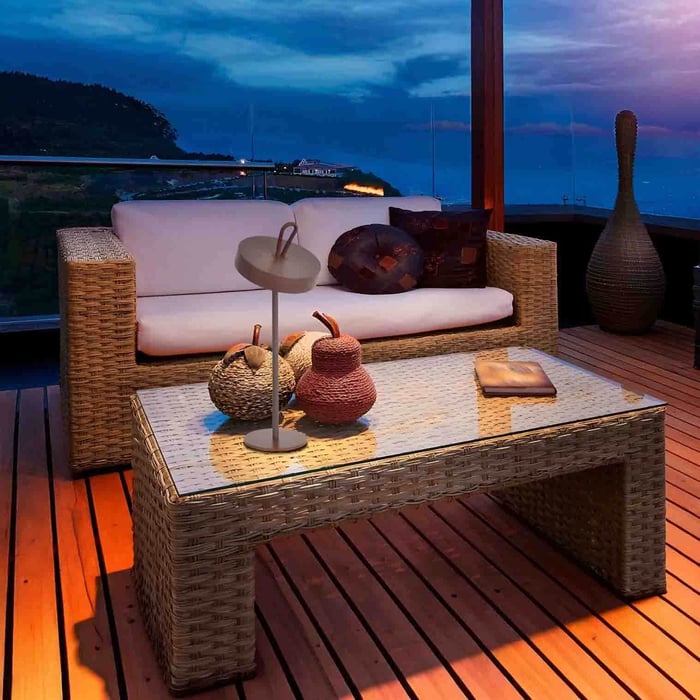
Choose outdoor table lamps that are bright enough to be useful but not so bright that they kill the mood. As a general guide, warm light is the safest choice outdoors because it makes greenery and natural materials look richer.
What to aim for:
Warm white (2700K-3000K) for a welcoming look
Dimming if you want one lamp to suit both early-evening meals and later-night ambience
Even diffusion to avoid glare and harsh hotspots
If you’re lighting a table for meals, you can go a touch brighter, but keep the tone warm. Cool white light can make outdoor spaces feel stark, especially against stone, concrete, or pale fencing.
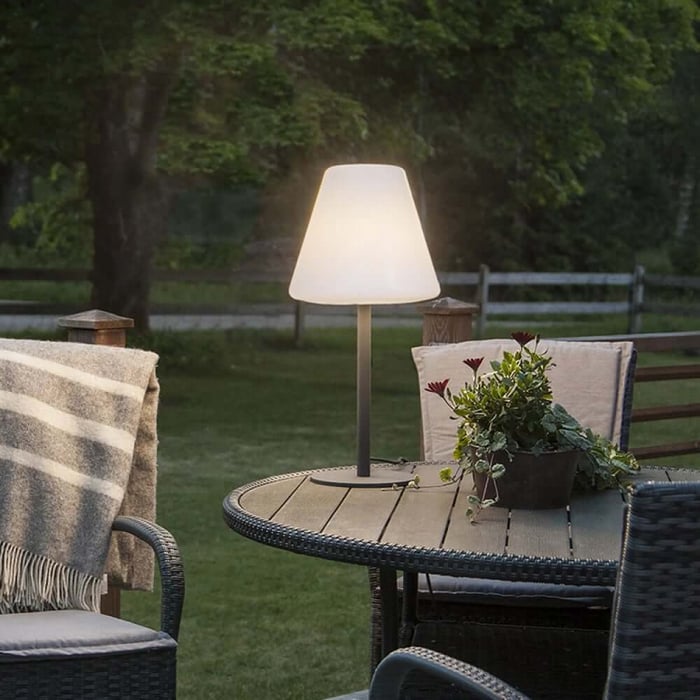
How Important Is The IP Rating When Choosing Outdoor Table Lamps?
The IP rating matters because it tells you how well the lamp is protected against dust and water. Even on a covered terrace, moisture can still reach the fitting through wind-driven drizzle and overnight condensation.
A practical approach:
IP44 usually works for sheltered outdoor use (splashes and light exposure)
IP65 is better for areas that may face rain or more direct exposure
It’s also worth checking the build quality of switches, charging ports, and joins. A lamp can look suitable, but weak seals are often where problems start.
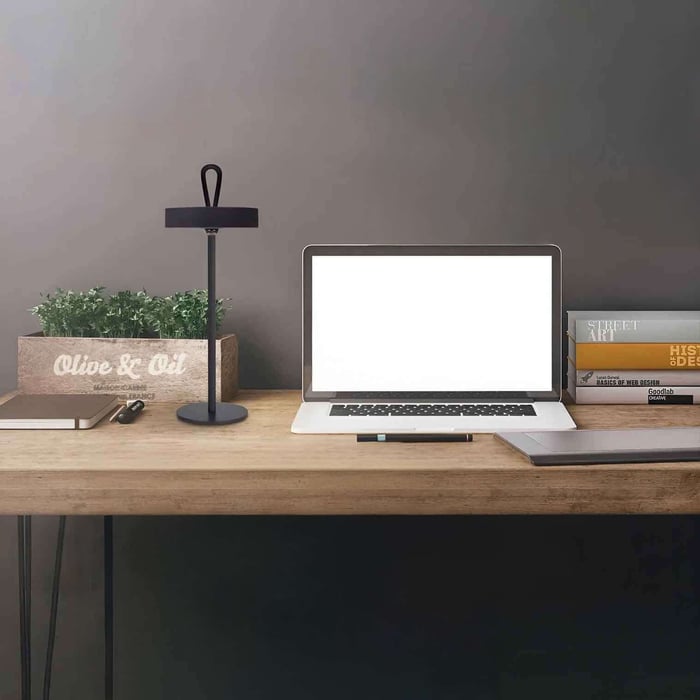
How Do You Choose Between Rechargeable, Solar, And Plug-In Options?
Pick the power type based on how flexible you want the setup to be. Each option has strengths, and the “best” choice depends on your space and habits.
Rechargeable: ideal for moving between dining and lounge areas; great for balconies and renters
Solar: useful for occasional glow, but performance depends on daylight and panel size
Plug-in (mains): reliable for regular use, especially if you already have an outdoor socket
Rechargeable lamps are often the easiest starting point because they’re portable and don’t require installation. If you want something that feels more permanent, a mains option can be a good fit, provided you can manage cables neatly and safely.
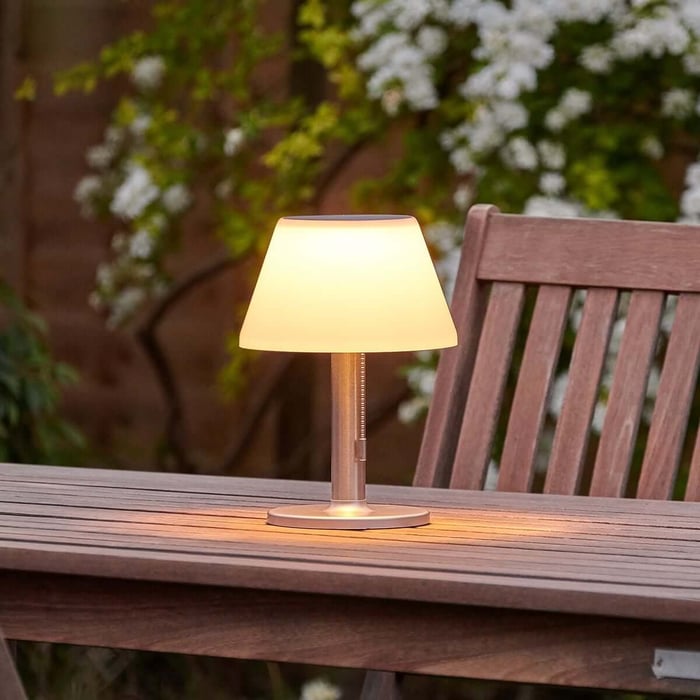
How Can Outdoor Table Lamps Solve Hard-To-Light Spaces?
Outdoor table lamps work well in tricky areas because they put light exactly where you need it, without rewiring or adding fixed fittings. They’re an easy fix for spaces that feel dim even when you have wall lights.
They’re particularly helpful for:
Deep balconies where light doesn’t reach the far end
Pergolas and garden rooms where overhead lighting feels harsh
Seating away from the house where fixed lighting is limited
If you’re lighting a path to that seating area, lamp posts can provide safer navigation lighting while table lamps keep the seating zone relaxed and comfortable.
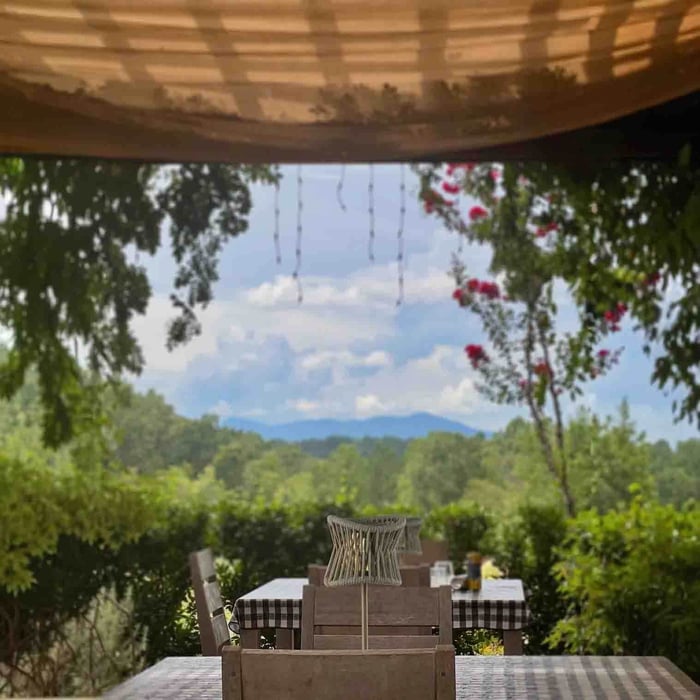
How Do You Layer Lighting With Outdoor Table Lamps For A Balanced Look?
Layered lighting means using more than one type of light so the space has depth, comfort, and flexibility. Outdoor table lamps are perfect for the lower layer close to where people sit.
A simple layering setup:
Background light: wall lights or overhead fittings for general visibility
Mid-level light: lanterns or sconces to soften shadows
Low-level light: outdoor table lamps on tables or low walls for warmth
This approach avoids the “one bright light” problem and helps outdoor spaces feel intentional. It also gives you control: you can keep the background light low and rely on table lamps to do the atmosphere work.
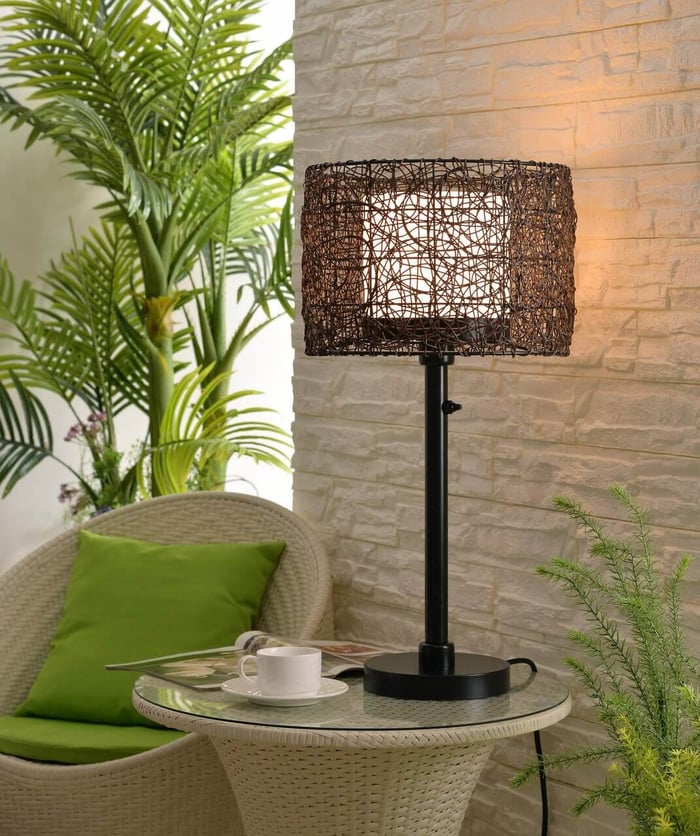
Step-by-Step: How To Choose The Right Outdoor Table Lamp
Choosing the right outdoor table lamp is easier when you follow a clear order.
Decide the main purpose
Is it for dining, ambience, or a mix of both?Measure the surface it will sit on
A lamp should feel stable and proportionate, not cramped.Choose the power type
Rechargeable for flexibility, mains for consistency, solar for occasional use.Check the IP rating and materials
Make sure it’s genuinely suitable for outdoor conditions.Pick warm light with good diffusion
Warm tones and a shade or diffuser create a softer look.Match the style to your outdoor setting
A modern terrace suits clean lines; rustic spaces suit natural textures.Plan where it will live when not in use
If the lamp is portable, think about storage and charging.
This process stops you buying something that looks great online but doesn’t work in your space.
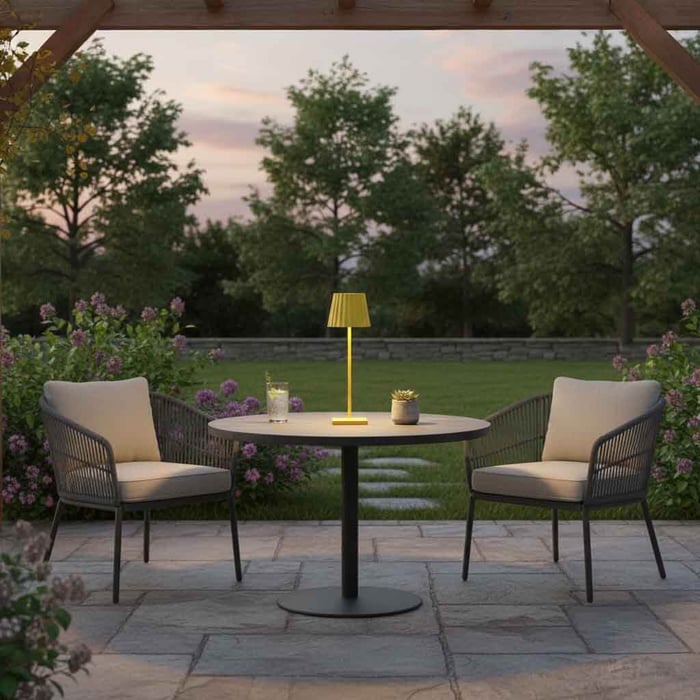
What Styles Create The Most Welcoming Look Outdoors?
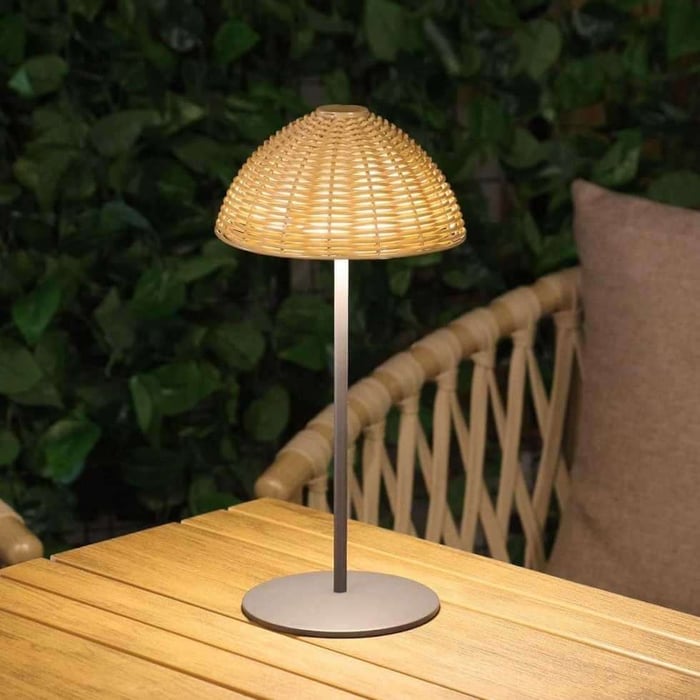
Outdoor table lamps look most inviting when they suit the materials around them and don’t fight the rest of the design. Rather than chasing trends, focus on finishes that will still look good after a couple of seasons outside.
Styles that work well:
Lantern-inspired shapes for a classic, relaxed feel
Soft diffusers for dining tables and close seating
Slim, minimal designs for smaller balconies where visual clutter is an issue
If you like a refined, contemporary look, Mantra designs often suit modern outdoor setups, particularly when paired with clean-lined furniture and neutral cushions.
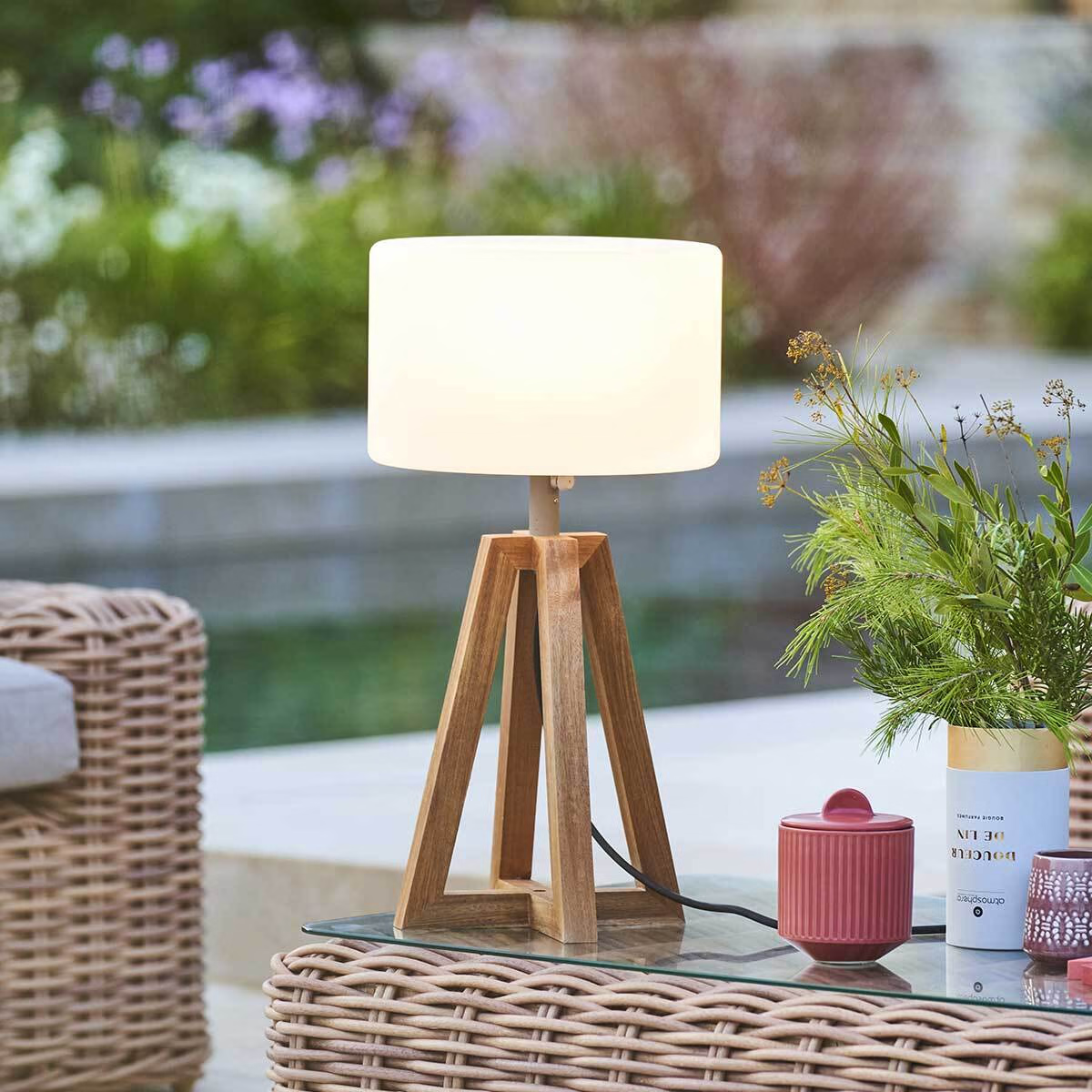
Where Should Outdoor Table Lamps Be Placed For The Best Effect?
Outdoor table lamps work best when they’re close to the people using the space. Placement should support how you move, sit, and serve food or drinks outdoors.
Good placement ideas:
Centre of a dining table or slightly off-centre if you’re serving dishes
Side tables next to seating at arm’s reach for convenience
Low walls or built-in benches creating a gentle wash of light
If the lamp creates glare, move it slightly to the side rather than raising brightness. A small shift in position often fixes the problem without changing the atmosphere.
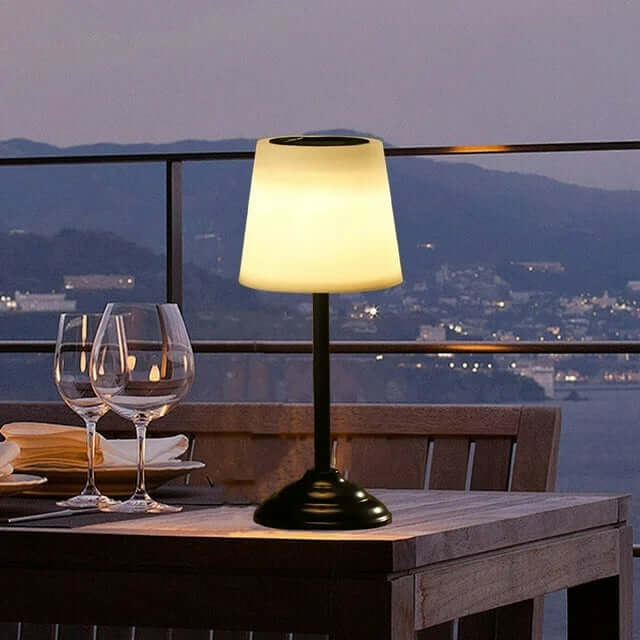
What Common Mistakes Should You Avoid With Outdoor Table Lamps?
Most outdoor lighting issues come down to choosing the wrong size, the wrong light tone, or ignoring outdoor durability.
Common mistakes:
Picking a lamp that’s too small to have any real impact
Choosing cool white light that looks harsh against natural materials
Skipping the IP rating because the space is “covered”
Placing the lamp too far from where people sit
Using a single lamp to light an entire area rather than creating layers
Avoiding these keeps your setup comfortable, practical, and better looking.
Conclusion
Outdoor table lamps are a simple, flexible way to make patios, balconies, and garden seating areas feel warm and welcoming after dark. The key is choosing a lamp that suits how you use the space, offers warm and comfortable light, and has the right outdoor protection. By thinking about brightness, colour temperature, power type, and placement, you can light hard-to-reach areas and create a layered look that feels relaxed rather than overlit. With a few thoughtful choices, outdoor table lamps can turn an outdoor space into somewhere you genuinely want to spend time in the evening.
FAQs
Can outdoor table lamps stay outside in the rain?
Only if they have a suitable IP rating for rain exposure, such as IP65. Even then, long-term exposure can shorten lifespan, so storing them during storms helps.
What’s the best colour temperature for outdoor table lamps?
Warm white (around 2700K-3000K) is the most flattering and inviting outdoors. It suits natural materials like wood, stone, and planting.
Are rechargeable outdoor table lamps bright enough for dining?
Many are, especially models designed with dining in mind. Look for good diffusion and dimming so you can adjust the light as the evening changes.
Do solar outdoor table lamps work in winter?
They can, but performance often drops due to shorter days and low light levels. They’re better for gentle ambience than dependable task lighting.
How tall should an outdoor table lamp be?
A height around 30-45 cm works well for most dining and lounge tables. The goal is a comfortable glow without blocking sightlines across the table.
Will outdoor table lamps attract insects?
Warm light tends to attract fewer insects than cool light. Using a shaded or diffused lamp also helps reduce attraction.
Can I use an indoor table lamp outside under a canopy?
It’s not recommended because moisture and condensation can still reach the lamp. Outdoor-rated fittings are safer and last longer.
How many outdoor table lamps do I need?
Often one lamp is enough for a small balcony, while larger terraces may need two or more. It’s usually better to layer a few softer lights than rely on one bright source.
What materials last best for outdoor table lamps?
Powder-coated aluminium, stainless steel, and UV-stable plastics tend to perform well outdoors. Natural materials can work, but they may need more care.
How do I stop outdoor table lamps from causing glare?
Choose lamps with diffusers or shades and use warm light rather than cool. If glare persists, reposition the lamp slightly to the side instead of increasing brightness.