
Table of Contents
- Introduction
- When Should You Use Outdoor Ceiling Lights Instead Of Other Outdoor Lighting?
- What Counts As An Outdoor Ceiling Light, And What Doesn’t?
- Which Outdoor Spaces Benefit Most From Outdoor Ceiling Lights?
- When Do Outdoor Ceiling Lights Outperform Wall Lights And Decorative Lighting?
- When Is The Best Time To Install Outdoor Ceiling Lights?
- How Do Outdoor Ceiling Lights Create Ambience Without Washing Everything Out?
- Seasonal Uses: When Do Outdoor Ceiling Lights Earn Their Keep?
- When Should You Replace Outdated Outdoor Ceiling Lights?
- Step-by-Step: How To Plan Outdoor Ceiling Lights For The Best Result
- What Mistakes Should You Avoid When Using Outdoor Ceiling Lights?
- Quick Summary
- Conclusion
- FAQs
Introduction
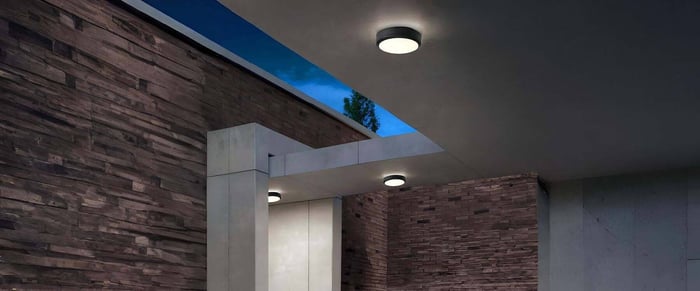
Outdoor ceiling lights are the right choice when you want comfortable, overhead illumination that makes a covered outdoor area feel inviting and genuinely usable after dark. The biggest difference comes when you stop thinking of lighting as a finishing touch and start treating it as part of how the space works how you walk through it, dine in it, and relax in it.
The timing matters too. Knowing when to install, upgrade, or switch to outdoor ceiling lights helps you avoid wasted spend and disappointing results. It also prevents patchy brightness, awkward shadows, and glare that can ruin the feel of a covered space. With the right timing, you’ll get lighting that looks intentional, feels comfortable, and works properly through the seasons.
When Should You Use Outdoor Ceiling Lights Instead Of Other Outdoor Lighting?
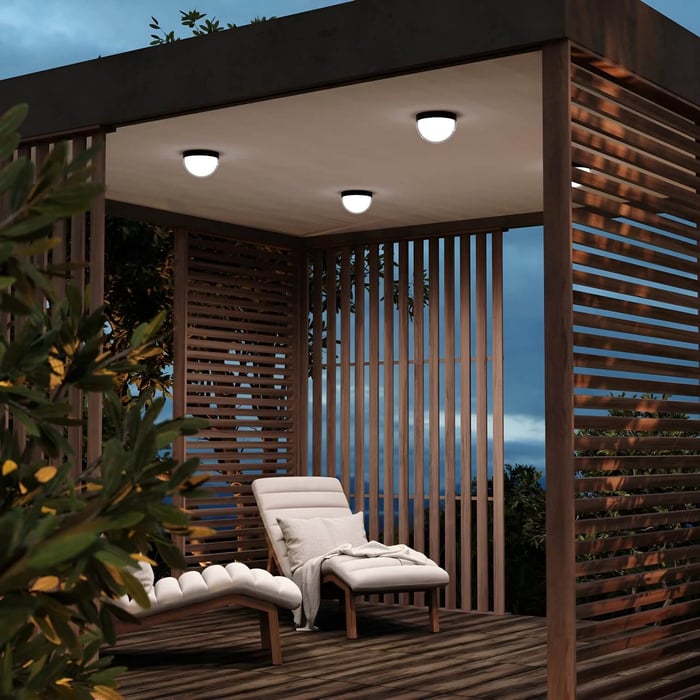
You should use outdoor ceiling lights when you need even, downward light in a covered area where people gather or pass through regularly. Overhead fittings spread light more consistently than many wall-mounted options, which can leave darker pockets between beams.
They’re especially effective when you want:
A welcoming “outdoor room” feel rather than a spotlight effect
Clear visibility for faces, food, and surfaces
Better safety on thresholds, steps, and pathways under cover
Light that stays pleasant rather than glaring
If you have a ceiling porch canopy, veranda roof, covered terrace, or sheltered pergola ceiling lighting is often the most natural solution.

What Counts As An Outdoor Ceiling Light, And What Doesn’t?
An outdoor ceiling light is a weather-rated fitting mounted overhead on an exterior ceiling or structure, designed to illuminate the space below. This can include flush mounts, semi-flush fittings, and certain covered pendants rated for outdoor use.
It’s not the same as:
Indoor ceiling fittings placed outdoors (these often fail quickly)
Decorative festoons alone (lovely, but rarely bright enough for practical use)
Ground spikes or uplighters (great for landscaping, not for overhead coverage)
When we design schemes at Niori, we treat overhead light as the anchor layer the one that makes the space functional then add accent lighting if the space needs extra depth.
Which Outdoor Spaces Benefit Most From Outdoor Ceiling Lights?
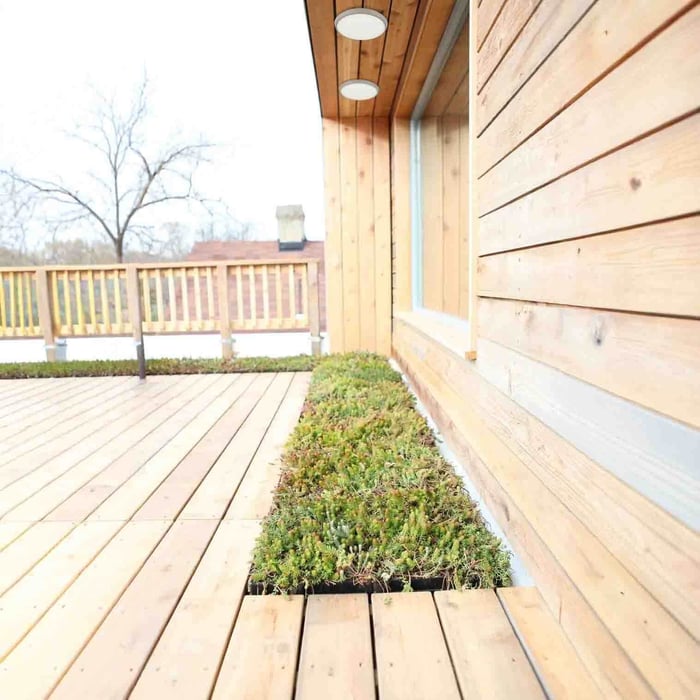
Outdoor ceiling lights work best in spaces with a fixed overhead surface and a clear activity zone beneath it. If you can define “where people will be” under that cover, you can light it properly.
The strongest candidates are:
Porches and entrance canopies
Covered patios and terraces
Outdoor kitchens under a roof
Verandas and lean-tos
Pergolas with solid panels or a roof system
Gazebos and sheltered seating areas
If you’re lighting an open garden with no cover, other lighting types will often be more suitable. But for sheltered areas, ceiling fittings create calm, reliable brightness without scattering light where you don’t need it.
When Do Outdoor Ceiling Lights Outperform Wall Lights And Decorative Lighting?
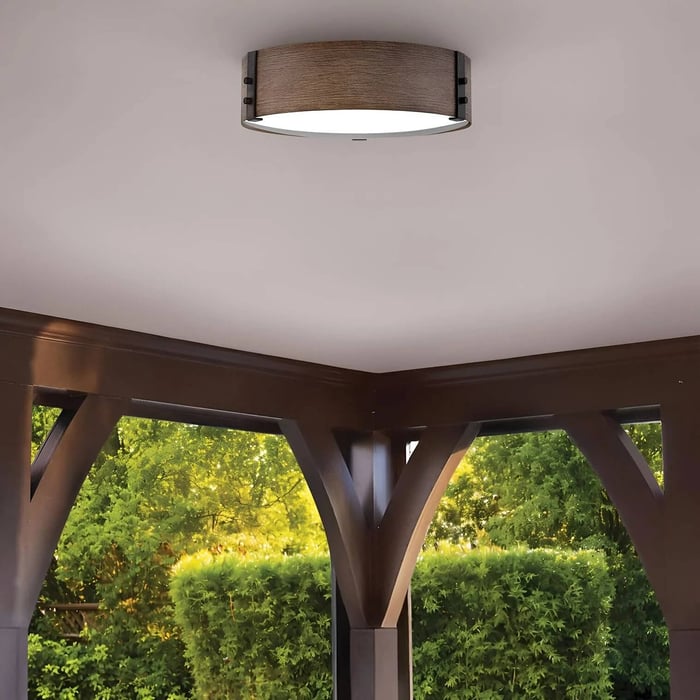
Outdoor ceiling lights outperform other options when the goal is consistent brightness rather than dramatic contrast. Wall lighting can look stylish, but it often creates bright spots near the fitting and darker zones elsewhere.
You’ll feel the advantage most when:
You’re eating outdoors and want the table evenly lit
You’re entertaining and want guests’ faces softly illuminated
You need safer footing at the door or steps
You’re using the area for practical tasks (serving, clearing, reading)
That doesn’t mean wall lighting has no place layering matters. For example, one well-placed run of outdoor wall lights can complement overhead light by adding gentle side glow and visual warmth.

When Is The Best Time To Install Outdoor Ceiling Lights?
The best time to install outdoor ceiling lights is when you’re already building, renovating, or reworking the covered structure. Access to wiring routes and mounting points is easier and the finish will look cleaner.
Ideal moments include:
During a patio refurbishment or extension
When replacing soffits, cladding, or roofing
While building a veranda or covered outdoor kitchen
Before final decorating and furniture placement
Retrofitting is still possible, but it usually requires more careful planning to avoid visible conduit and awkward switch placement.
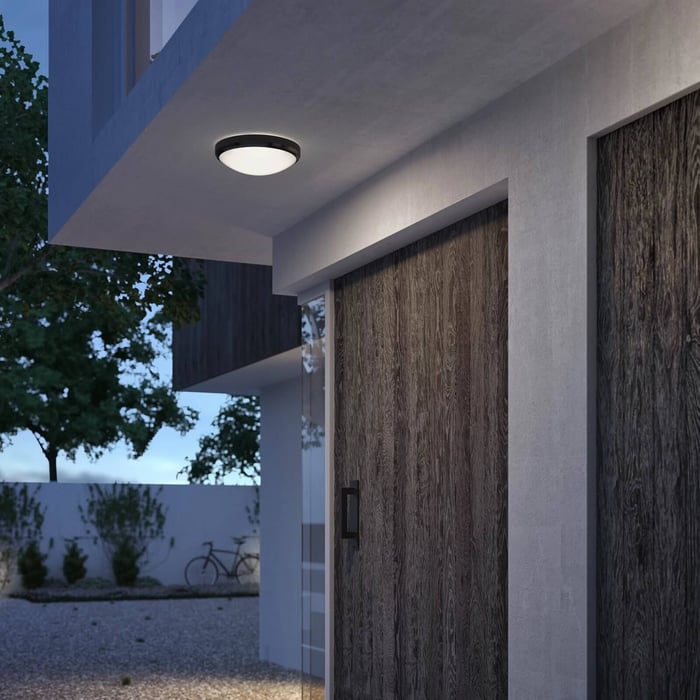
How Do Outdoor Ceiling Lights Create Ambience Without Washing Everything Out?
Outdoor ceiling lights create ambience when you choose gentle brightness, warm colour temperature, and glare control. The aim is to light people and surfaces comfortably, not to flood the space like a security lamp.
For a welcoming result, we typically recommend:
Warm white output (around 2700K-3000K) for a relaxed feel
Diffused shades or opal covers to soften the light
Dimmable control for flexibility between dining and lounging
Multiple smaller fittings instead of one overly bright centrepiece
A single high-output fitting can make a covered patio feel flat and exposed. Two to four well-spaced lights often feel softer and more premium, even at similar overall brightness.
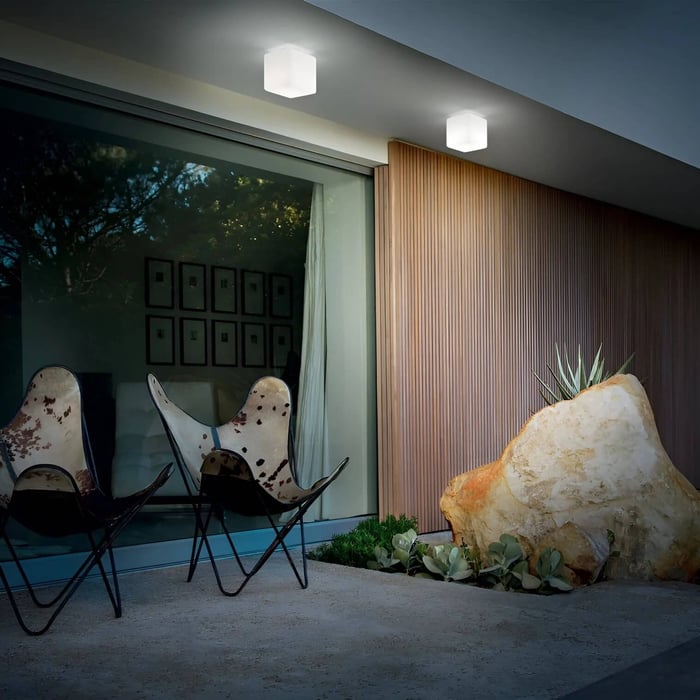
Seasonal Uses: When Do Outdoor Ceiling Lights Earn Their Keep?
Outdoor ceiling lights matter most when daylight fades early and you still want the space to feel comfortable and safe. In the UK, that’s a large part of the year not just summer evenings.
Here’s how seasonal use often plays out:
Spring: You start spending more time outdoors, but evenings are still cool and dim; overhead light keeps dining and chatting easy.
Summer: You want the space to stay relaxed late into the night without harsh glare; dimming becomes particularly valuable.
Autumn: Light drops earlier and weather turns changeable; sheltered areas become the main outdoor zones, and overhead brightness is what makes them usable.
Winter: Even if you’re not dining outside, porch and canopy lighting improves visibility, reduces slips, and makes arrivals feel welcoming.
If you only rely on decorative lighting, you often end up bringing out temporary lamps or struggling with dark corners. A proper ceiling setup keeps the space ready whenever you choose to use it.

When Should You Replace Outdated Outdoor Ceiling Lights?
You should replace outdoor ceiling lights when performance, safety, or appearance no longer matches how you use the space. Older fittings can corrode, lose clarity, or provide uneven output that makes the area feel dull.
Common signs it’s time to upgrade:
Yellowed diffusers that block light
Rust, pitting, or flaking finishes
Flicker or slow start-up
Water ingress marks or condensation inside the fitting
Very bright “cold” light that feels unwelcoming
Upgrading to modern LED fittings can improve brightness, reduce running costs, and give you better control especially if you add dimming or smart switching.
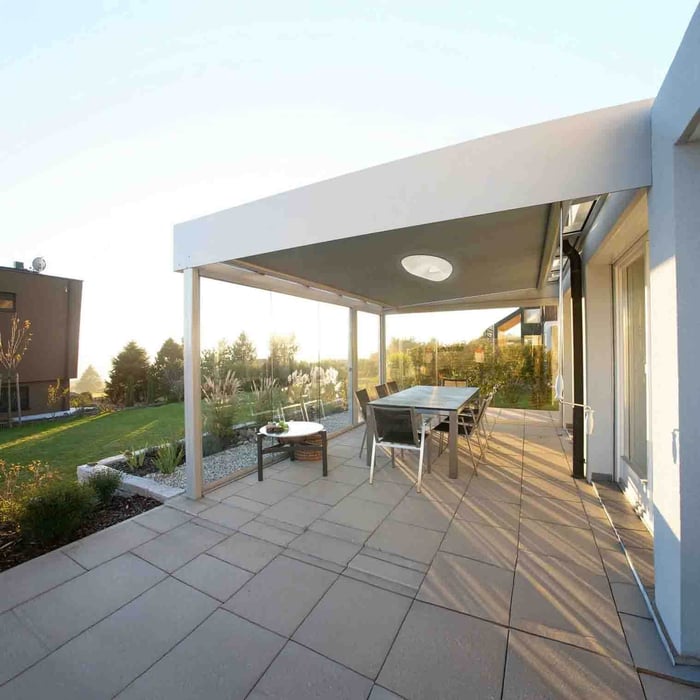
Step-by-Step: How To Plan Outdoor Ceiling Lights For The Best Result
You’ll get the best outcome when you plan outdoor ceiling lights around use, spacing, and control rather than choosing a fitting first. Here’s the approach we use with clients.
Define the main activity zone
Decide whether the space is for dining, lounging, cooking, or mainly passing through. Each needs a different balance of brightness and softness.Check ceiling height and structure
Lower ceilings need more glare control and often benefit from flush or diffused fittings. Higher ceilings may need multiple fittings or stronger output.Choose the mood first, then the brightness
If you want a relaxed feel, start with warm light and dimming, then build brightness in layers rather than going too strong overhead.Plan spacing to avoid shadows
Spread fittings to cover key areas (table, seating, doorway) so you don’t get a bright centre and dim edges.Select weather-appropriate specifications
Match the fitting to exposure. Sheltered areas can often use IP44; more exposed ceilings may need higher protection.Decide how you’ll control it
Separate switching for different zones is a game-changer especially if you entertain. If you’re adding other layers, consider pairing overhead lighting with outdoor downlights to sharpen task zones without increasing glare.Finish with styling and scale
The fitting should suit the architecture. For a refined contemporary look, many clients like the clean lines found in ranges such as ideal-lux.
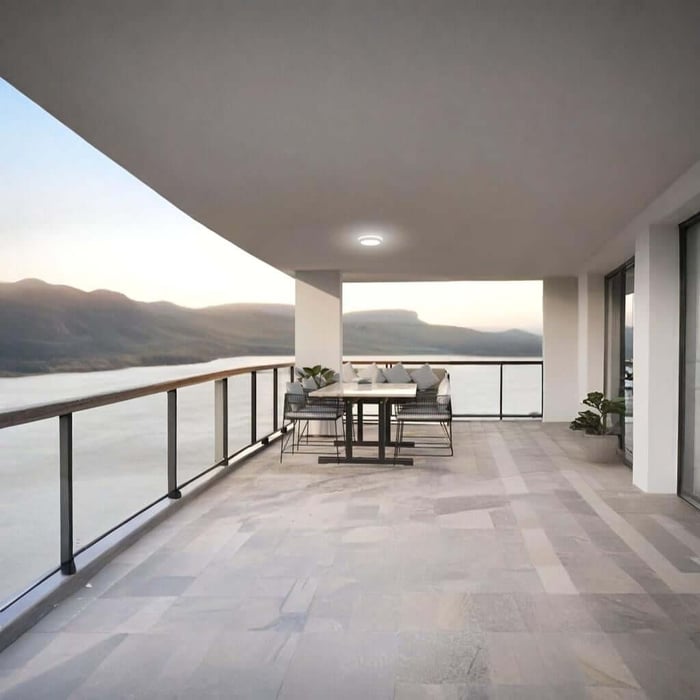
What Mistakes Should You Avoid When Using Outdoor Ceiling Lights?
The biggest mistakes happen when people prioritise looks over comfort and placement. Outdoor spaces behave differently at night, so what seems fine in daylight can feel wrong after dark.
Avoid these common issues:
Choosing a light that’s too bright for the ceiling height
Ignoring glare control (clear glass can be uncomfortable overhead)
Picking cool white light that feels stark outdoors
Installing one central fitting in a wide area and leaving edges dim
Forgetting switching zones and dimming
Using indoor-rated fittings that degrade quickly
If your space includes a covered dining spot, a sheltered lounge area, and a route to the door, treat them as separate lighting needs even if they sit under the same roof.
Quick Summary
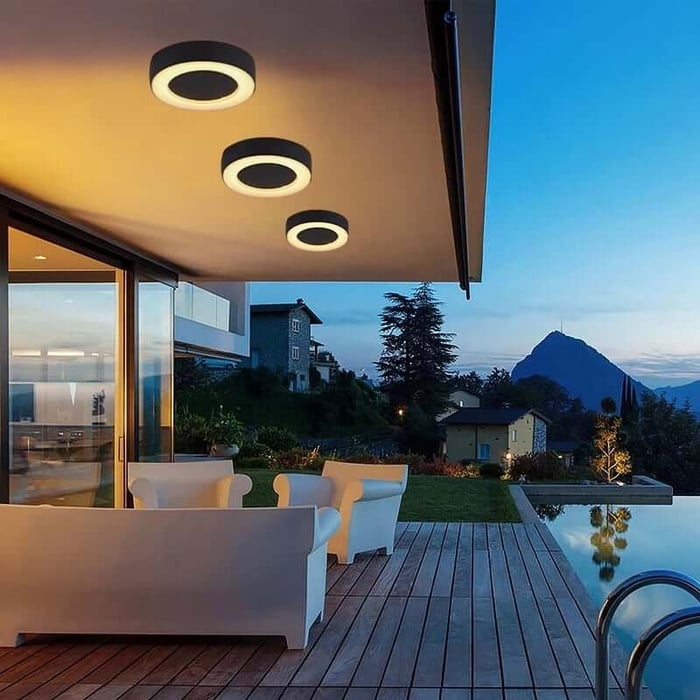
Outdoor ceiling lights are most useful in covered spaces where you want dependable brightness and a comfortable atmosphere. They’re ideal for porches, verandas, and sheltered patios because overhead light makes faces, food, and walkways easier to see without patchy shadows. The best results come from warm tones, diffused glare control, good spacing, and flexible switching. If older fittings are corroded, dim, or harsh, upgrading to modern LED options can improve both ambience and everyday usability.
Conclusion
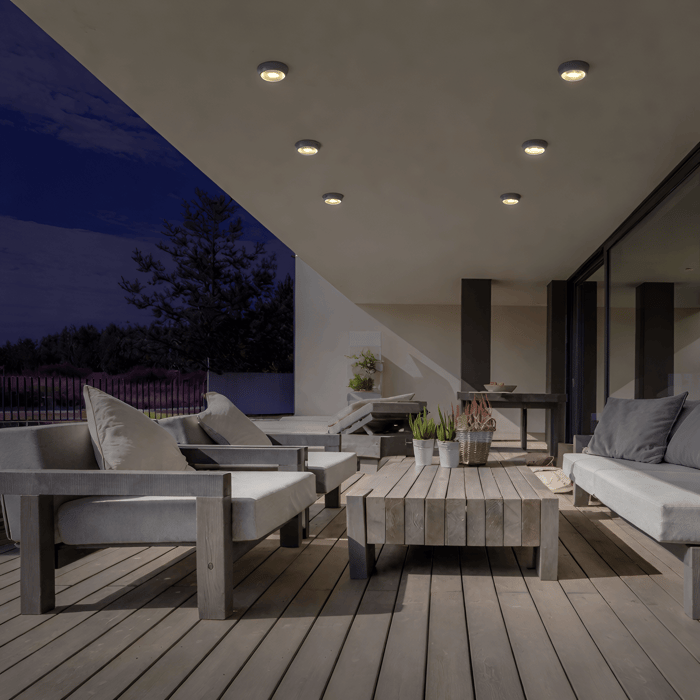
Outdoor ceiling lights work best when you want a covered outdoor area to feel welcoming, practical, and consistently bright after dark. They’re the go-to option for porches, canopies, verandas, and sheltered patios because they light the space evenly and help it function like an extension of your home. Time installations to coincide with building or renovation work where possible, and replace older fittings when corrosion, poor output, or dated light quality starts to undermine comfort. With warm, glare-controlled lighting, sensible spacing, and flexible control, you’ll create an outdoor setting that looks good and feels easy to use in every season.
FAQs
How many outdoor ceiling lights do I need for a covered patio?
It depends on the size and ceiling height, but two to four fittings often provide more comfortable coverage than one central light. Spacing them across key zones reduces shadows and keeps brightness even.
What colour temperature feels best outdoors?
Warm white (roughly 2700K-3000K) usually feels the most welcoming. It complements brick, timber, and planting far better than cooler tones.
Do I always need a high IP rating?
You need a rating appropriate to exposure. Sheltered ceilings often suit IP44, while more exposed areas may require higher protection to handle wind-driven rain.
Can I retrofit outdoor ceiling lights if there’s no existing wiring?
Yes, but it’s best planned carefully to avoid visible cabling and awkward switch positions. A qualified installer can advise on the cleanest routing.
Are flush fittings better than pendants outdoors?
Flush fittings are usually better in low-ceiling areas because they reduce glare and avoid head-height issues. In higher, well-sheltered ceilings, a single outdoor pendant lights option can add character if it’s correctly rated.
Why do my outdoor ceiling lights feel too harsh?
Harshness usually comes from too much brightness, cool white light, or clear glass that shows the LED source. Switching to a diffused cover or adding dimming often fixes it.
Should I add dimmers to outdoor ceiling lights?
If you use the space for both dining and relaxing, dimming is one of the most worthwhile upgrades. It lets you shift from practical brightness to a softer mood in seconds.
How do I stop shadows on a dining table?
Position fittings so the table sits under even coverage rather than at the edge of a beam. Two smaller lights placed thoughtfully often outperform one brighter light.
When should I replace an older outdoor fitting?
Replace it when you see corrosion, water ingress, flicker, or reduced brightness. It’s also worth upgrading if the light colour feels cold and uninviting.
Can outdoor ceiling lights be part of layered lighting?
Yes, they’re often the base layer that makes the area functional. Add side lighting or targeted task lighting only where the space needs extra depth or definition.