
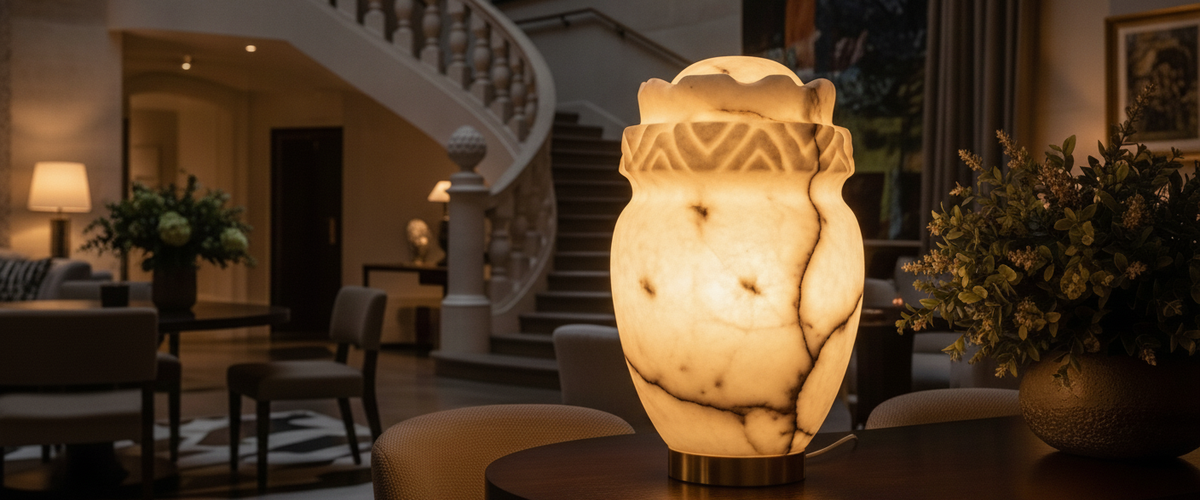

Reach for the kitchen spray and a damp sponge, and you can take the bloom off an alabaster lamp in a single wipe. We have seen it happen: a client in the studio mentioned their lamp base had developed a faint cloudy patch, and the culprit was a multi-surface cleaner used "just the once". Alabaster does not behave like glass or glazed ceramic. Keeping clean alabaster lamps looking their best is mostly about what you do not do, and that starts with understanding the stone. Knowing how to clean alabaster lamps the right way is less about technique and more about restraint.
Alabaster is a soft form of gypsum, soft enough to scratch with a fingernail in places, and naturally porous. That combination is exactly what gives it the warm, milky glow Niori is known for, and exactly why aggressive cleaning is a problem. The same open structure that lets light pass through also lets water, oils, and acids soak in, so clean alabaster lamps stay that way only with a gentle hand.

Quick Answer: Cleaning Alabaster Lamps at a Glance
Dust dry first, always. A soft, dry microfibre cloth removes most grime before it sticks.
Use distilled water, not tap. Tap water leaves a chalky mineral film on porous stone.
Damp, never wet. Wring the cloth almost dry and dry the surface straight after.
No vinegar, citrus, or bathroom sprays. Acids and many household cleaners etch the surface.
Switch off and cool down first. Clean a lamp that is unplugged and at room temperature.
Spot-treat oil marks near the switch rather than scrubbing the whole base.

Why Alabaster Is Softer and More Porous Than You Think
On the Mohs hardness scale, gypsum alabaster sits around 2, which is barely harder than a fingernail and far softer than marble or granite. The Victoria and Albert Museum notes that gypsum alabaster is water-soluble and easily marked, which is why conservators handle it with such care. In practice that rules out a few things immediately when you want clean alabaster lamps: abrasive pads, scouring powders, stiff brushes, and any "deep clean" instinct you might apply to a tiled bathroom.
It also means dust is not harmless. Left on the surface, fine grit can act like sandpaper the moment you wipe with any pressure. So the first rule of caring for these lamps is to lift dust away gently before you ever introduce moisture. The pieces in our alabaster lighting range are finished and sealed in the workshop, but no finish makes the stone behave like glass. Treat it as the soft, breathable material it is, and your clean alabaster lamps will reward the patience.
The Dry-Dust-First Habit That Prevents Most Damage
If you take one thing from this guide, make it this. Most of the damage we are asked about could have been avoided by dusting dry and dusting often. This single habit keeps alabaster lamps clean longer than any product does.
Use a clean, dry microfibre cloth or a soft, natural-bristle brush. For carved or fluted pieces, a soft makeup brush or a clean paintbrush gets into the grooves where a flat cloth skips over. Work in light strokes and let the cloth do the work; you are lifting dust, not polishing. A quick weekly pass keeps a lamp from ever reaching the state where it "needs a proper clean".
For a chandelier or a linear suspension light mounted overhead, dust settles on the upper faces you cannot see from below. A long-handled soft duster, used while the fitting is switched off and cool, saves you from ladders every fortnight. Linear pieces with several alabaster shades, the kind that run the length of a dining table such as the Valenro 24 Light Cylindrical Alabaster Linear Suspension Light, collect dust along their top edges first, so that is where to start.
Damp Cloth, Distilled Water, and the Chalky-Film Problem
When dusting alone is not enough, a barely damp cloth is the next step toward clean alabaster lamps. Two details matter more than people expect.
First, use distilled water. Tap water carries dissolved minerals, and on porous stone those minerals dry into a faint chalky film that builds up over time and dulls the surface. Distilled or deionised water leaves nothing behind. Second, the cloth should be wrung almost dry, then the surface dried immediately with a second soft cloth. You are wiping, not soaking. Standing water is the enemy, because alabaster will draw it in and can develop dull or darkened patches where moisture lingers.
Work in small sections, dry as you go, and never let droplets sit in carved recesses. If you are cleaning a lamp with a brass base or brass detailing, keep the damp cloth on the stone and dry the metal separately so you are not dragging moisture across the join. On pieces where stone globes meet exposed metalwork, like the Aurelio 10 Light Large Alabaster Globe Chandelier, that separation matters most around the fixings where the two materials meet. If you are weighing up a brass-and-stone piece in the first place, our guide to choosing between alabaster and marble lighting is a useful companion read.
Products That Quietly Etch the Surface
This is where well-meaning owners cause the most harm to otherwise clean alabaster lamps. Alabaster is sensitive to acids, and a lot of everyday cleaners are mildly acidic.
White vinegar and any "natural" vinegar-based cleaner. Acidic, and it dissolves the surface.
Lemon or citrus cleaners. Same problem, often with added oils.
Most bathroom and limescale sprays. Designed to dissolve mineral deposits, which is exactly what alabaster is made of.
Bleach and ammonia. Harsh, drying, and capable of discolouring the stone.
Glass cleaner. Tempting because the lamp looks glassy, but the solvents and ammonia are wrong for stone.
Alcohol wipes and hand-sanitiser residue. Can leave dull marks, especially near a switch you touch often.
If plain distilled water is not shifting a mark, a tiny amount of pH-neutral stone soap diluted well is the strongest thing we would suggest, used sparingly and rinsed off with a damp distilled-water cloth. When in doubt, do less. You can always clean again; you cannot un-etch a surface. That restraint is what keeps alabaster lamps clean year after year.
Sealing and Waxing: When It Helps and When It Traps Grime
Owners often ask whether they should seal or wax an alabaster lamp at home. The honest answer is: usually not, and rarely without testing first.
A breathable, stone-appropriate sealer can add a thin layer of protection against fingerprints and minor spills, which is worth considering on a lamp base that gets handled a lot. The risk is applying the wrong product, or too much of it. A heavy wax or a film-forming sealer can sit on the surface, trap dust and grime underneath, and leave a cloudy or uneven sheen that is hard to reverse on something this soft. The Natural Stone Institute stresses matching any sealer to the specific stone and finish rather than reaching for a general product.
Our workshop finishing is done with the stone's porosity in mind, so most Niori clean alabaster lamps do not need an owner-applied sealer to look their best. If you are set on adding protection, test on the underside of the base first, use a product specified for soft, calcareous or gypsum stone, and apply the thinnest possible coat. If you would rather not gamble, ask us before you reach for anything.
Spot-Treating Fingerprints and Oil Marks Near the Switch
The base of an alabaster table lamp, right around the switch or dimmer, is where skin oils land most. Over months those oils soak into porous stone and show as a slightly darker, shinier patch. It is the single most common mark we are asked about by owners of clean alabaster lamps.
Catch it early and a barely damp distilled-water cloth, followed by an immediate dry buff, often lifts a fresh fingerprint. For an oil mark that has set in, a stone poultice is the gentle route: a paste that draws the oil back out of the stone rather than scrubbing at the surface. A simple version is white kaolin clay or talc mixed with a little distilled water into a thick paste, spread over the mark, covered with cling film, and left to dry for a day or so before you brush it off. It pulls the staining upward as it dries.
Do not improvise with kitchen abrasives or scrubbing, and do not soak the area. If a mark sits in a visible spot on a piece you care about, it is worth treating slowly across a few sessions rather than forcing it in one go.
A Short Care Checklist Worth Saving
Switch off, unplug, and let the lamp cool before cleaning.
Dust dry, weekly, with a soft cloth or brush.
For marks, use a wrung-out cloth and distilled water only.
Dry the surface straight away; never leave standing water.
Avoid vinegar, citrus, bathroom sprays, bleach, and glass cleaner.
Treat oil marks near the switch with a poultice, not a scrub.
Skip home sealing unless the product is matched to the stone and tested first.
Cared for this way, alabaster ages gracefully and keeps the soft, diffused glow that makes clean alabaster lamps worth owning in the first place. Now that you know how to clean alabaster lamps and keep them that way, choosing the right piece is the fun part. If you want to compare pendants, chandeliers, wall lights, and table lamps across the range, the full lighting collection is the place to browse.