
Introduction
The best lighting doesn’t shout its shapes. Thoughtfully chosen ceiling lights bridge function and design, setting the mood, balancing proportions, and guiding the eye through modern interiors. Today’s fixtures lean into clean lines and quiet innovation: integrated LEDs, smart dimming, and refined materials that feel at home in a gallery-white loft or a character-filled brownstone. This guide distills what to choose, why it works, and how to keep it performing beautifully so your overhead lighting delivers clarity, comfort, and long-term value. For a playful, off-ceiling accent, Alabaster Lighting can add a nostalgic, color-washed glow without competing with your main scheme.

Classic Ceiling Lights: Heritage Craftsmanship & Timeless Elegance
Classic ceiling fixtures, especially ceiling lights, are defined by ornate bases, rich finishes, detailed shades, and silhouettes that echo heritage craftsmanship. Think cast brass canopies, hand-turned stems, and pleated or etched glass diffusers. Materials such as solid brass, ceramic, and stained glass create warmth and visual weight, while patinated finishes (antique brass, old bronze) lend a lived-in gravitas. These choices trace back to traditional ateliers where metalwork and glassmaking emphasized longevity as much as beauty. In rooms with moldings, archways, or vintage furniture, ceiling lights emphasize architectural rhythm, offering a soft, even glow and a timeless focal point.
Decorative escutcheon or canopy with stepped or beaded details
Opal, alabaster, or stained glass shades
Pull-chain or knob motifs (even if purely decorative)
Warm metallic finishes: unlacquered brass, bronze, pewter

Contemporary Ceiling Lights: Clean Lines & Advanced LEDs
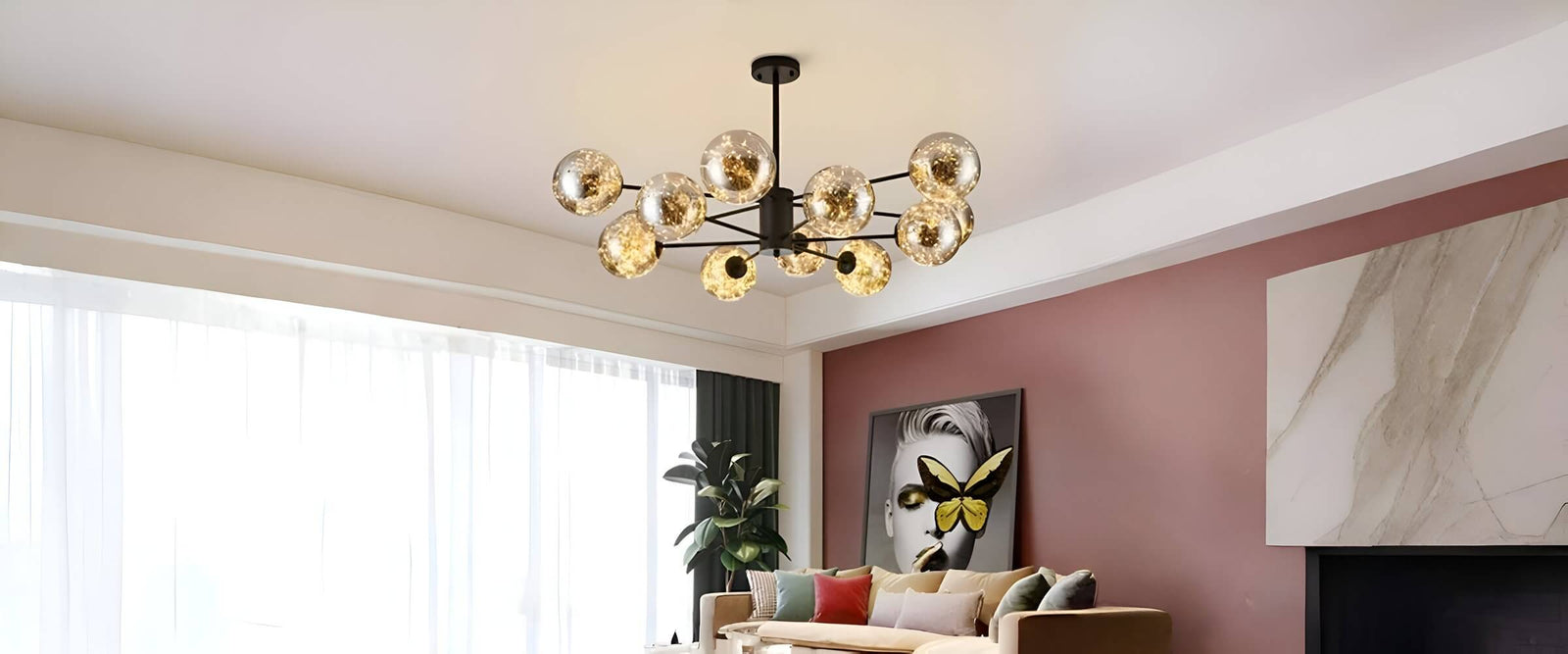
By contrast, modern ceiling lights favor minimal forms, smooth planes, and neutral palettes that highlight material integrity. The language is reductive: slim discs and rods, knife-edge bezels, floating planes of glass. You’ll see a rise in brushed or bead-blasted aluminum, blackened steel, and matte powder coats, plus precise touches of marble, travertine, or honed stone. LED integration in 2025 continues to mature: higher color fidelity (95+ CRI), tunable white ranges (2700-5000K), and chip-on-board modules that disappear into impossibly thin housings. This is modern lighting design at its most considerate quiet hardware, beautiful light from thoughtfully engineered ceiling lights.
Highlights for contemporary interiors
LED ceiling lights fixtures: with field-adjustable color temperature
Micro-prismatic lenses: for glare control without bulk
Hybrid glass: clear outer with frosted inner cylinders for depth
Magnetic modular systems: for easy swaps and upgrades

Blended Ceiling Lights Timeless Craft, Clean Geometry
Many homes don’t live at design extremes, and that’s where ceiling lights that blend classic craftsmanship with modern geometry thrive. Picture a spun-brass dome (classic) with a razor-thin edge and a flush, frameless lens (modern). Or a minimalist linear bar in a hand-rubbed bronze finish. The trick is to mix one ornate element with one clean element so the fixture feels intentional, not busy.
Styling tips
Balance silhouette and finish: Pair a simple form with a storied finish (e.g., unlacquered brass) or a detailed shape with a restrained coating (matte black).
Echo one material elsewhere: Repeat the metal on door hardware or a mirror frame for cohesive home décor inspiration.
Scale with purpose: In rooms with tall ceilings, slightly oversize the fixture diameter or span; the negative space makes minimal lines read purposeful.

Controls & Performance: Dimmers, Bulbs & Smart Home Lighting
Technology affects comfort as much as style. Traditional sockets accept a range of bulbs; integrated LED designs hide the source for better diffusion. Many ceiling lights are now dimmable out of the box, but check compatibility:
Dimmers: Pair ELV (electronic low voltage) dimmers with most LED drivers to avoid flicker and “step” dimming.
Color temperature: 2700K delivers warmth; 3000K balances crispness and comfort; tunable fixtures let you shift from task to wind-down.
Smart controls: From voice scenes to occupancy sensors, smart home lighting increases usability and energy savings. Choose ecosystems that support Matter or Thread for future proofing and smoother automations.
Bulbs: If you’re using replaceable lamps, look for ENERGY STAR ratings, 95+ CRI for natural tones, and enclosed-fixture-rated models for safety and life span.

Mixing Ceiling Lights: Finish, Form & Room-by-Room Rhythm
Designers often blend eras and finishes to add depth. You can, too, without visual chaos. Introduce ceiling lights that share one unifying element (finish, shade shape, or lens detail), then let other attributes vary.
How to blend effectively
Same finish, varied forms: A patinated brass flush mount in the entry and a slender brass linear in the kitchen read cohesive but not matchy.
Shared lens language: Choose frosted diffusers across rooms, even if one is a round drum and another a ring, so light quality stays consistent.
Swap tops and bottom: In semi-flush designs, a traditional base with a modern drum shade (or the reverse) can bridge styles gracefully.
Room-by-room rhythm: Vary intensity and geometry as you move through the home to cue transitions while maintaining harmony.

Room-by-Room Lighting: Choose Ceiling Lights by Scale & Function
Selecting ceiling lights by room is part art, part math. Use the room’s dimensions, tasks, and daylight to pick output (lumens), beam spread, and placement.
Living rooms & libraries (classic strength): Opt for layered diffusion drum flush mounts, multi-arm semi-flush fixtures, scaled-down chandeliers or a shallow bowl with opal glass. Warm metals and textured shades complement bookshelves and paneling, delivering calm ambient light solutions for conversation and reading.
Offices & studios (modern edge): Linear bars, ultra-thin discs, and track-style modules give uniform task illumination without glare. Pair with a neutral finish (white, black, soft gray). Keep CCT around 3000-3500K for alertness. This is where integrated LED ceiling lights fixtures shine.
Bedrooms (either/or): Choose a soft, enclosed diffuser for calm mornings; add a 5-10% night-light scene through a smart dimmer. In small rooms, a compact surface-mount keeps clearance above wardrobes and doors.
Kitchens & dining: Use a primary overhead for general lighting, then supplement with pendant lights or under-cabinet strips. Reference a lighting placement guide: center the main fixture on the island or table span; in galley kitchens, align two or three small mounts evenly.
Hallways & entries: Repeat a flush mount every 8-10 feet to eliminate dark pockets. In narrow entries, choose shallow profiles to avoid door conflicts.

The List: 10 Curated Fixture Ideas
Use these interior lighting ideas as a springboard for timeless ceiling lights that mix easily across décor styles and budgets.
Slim Disc Flush Mount - A wafer-thin profile with a frosted underside for even wash. Perfect for low ceilings.
Micro-Ribbed Glass Drum - Subtle texture that sparkles softly; works in living rooms and bedrooms.
Marble-Tipped Semi-Flush - A modern stem with a stone accent that warms up monochrome schemes.
Convertible Bowl - Swap between semi-flush and pendant drop to adapt to renovations.
Linear Bar with Indirect Glow -Throws light up and down, great over islands or study tables.
Two-Ring Halo - Sculptural and airy; dim to set dining moods.
Classic Schoolhouse Shade - Milk-glass nostalgia that flatters wood tones and patterned tile.
Prismatic Lens Utility Mount - Industrial chic with excellent glare control for laundry or workshop.
Low-Profile Lantern - Framed glass sides, updated with clean miters for a transitional look.
Magnetic Modular Rail - Snap-on spots and panels; reconfigure as needs change.

Layout Essentials: Proportions & Placement
Good placement makes ceiling lights feel intentional.
Sizing rule of thumb: Fixture diameter (in inches) ≈ + room width + room length (in feet). A 10' × 12' room suggests ~22" diameter; adjust for furniture density and ceiling height.
Mounting height: In rooms under 8'-6", prefer low-profile mounts; in 9' and taller, semi-flush options create presence without sightline clutter.
Spacing: For sequences (hallways, kitchens), place fixtures 8-10 feet apart; align with doorways, windows, or cabinet runs.
Glare control: Choose deep-set optics or frosted lenses when the fixture lives in common sight lines (seated areas, bedside).

Finishes & Shades for Consistency
Material strategy is your design glue. When you select ceiling lights, let finishes echo your hardware and furniture tones.
Warm metals: (brass/bronze) with natural stone, linen shades, and walnut furniture feel classic and cozy.
Cool finishes: (nickel/chrome) pair with glass, concrete, and pale oak for crisper spaces.
Black or deep bronze: frames outline architecture in white-walled rooms, particularly effective with minimal molding.
Shades & diffusers: Linen softens output; opal glass evens hotspots; micro-prismatic acrylic controls glare in task zones. Keep one diffuser type consistent across adjacent rooms to weave continuity.
These choices keep classic lighting in harmony with architecture while giving contemporary rooms depth.

Care, Safety & Longevity
A little maintenance keeps ceiling lights performing at their best and preserves true color. Clean, well-tended ceiling lights last longer and look better.
Cleaning
Dust monthly with a microfiber cloth; avoid paper towels that can scratch lenses.
For glass, remove shades and wash with lukewarm water and a drop of mild soap; dry fully before reinstallation.
For metal, use a damp cloth; skip abrasive polishes on lacquered finishes. Unlacquered brass can be left to patinate or treated with a gentle metal polish as desired.
Bulb & LED Care
If your fixture uses replaceable lamps, choose 95+ CRI, 2700-3000K for living areas.
For integrated LED, avoid enclosed spaces beyond the fixture’s rating; heat shortens life. Expect 50,000+ hours with proper ventilation.
Safety
Always cut power at the breaker before cleaning or swapping parts.
Use the correct wattage and enclosed-fixture-rated bulbs where specified.
Consider AFCI/GFCI protection in kitchens, baths, and garages; consult a licensed electrician for installations beyond a simple swap.
Smart systems
Update firmware periodically to maintain compatibility and security within your smart home lighting ecosystem.
Create “scenes” (morning, work, dining, movie) to simplify routines and ensure consistent outcomes across rooms.

Conclusion
When you curate overhead lighting with intent, honoring architecture, controlling glare, and balancing warmth, you get spaces that feel both elevated and effortless. From heritage metalwork to wafer-thin LED planes, ceiling lights can be the quiet backbone of your home’s design language and the daily comfort you notice every time you flip a switch.
Explore our curated collections of ceiling lights at Niori browse the latest lighting placement guide, and see room-by-room lookbooks for home décor inspiration and ambient light solutions tailored to your space.