
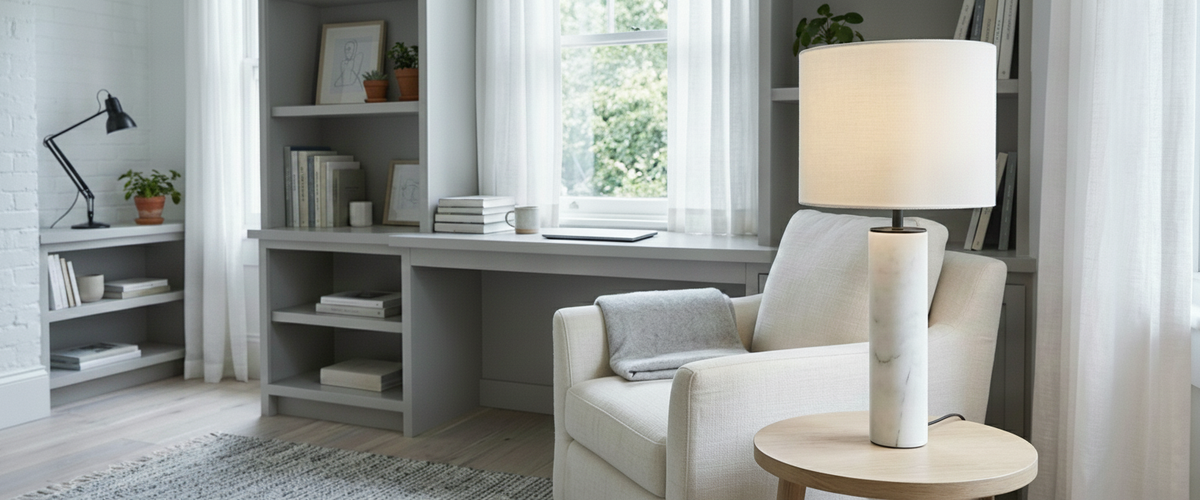

Alabaster forgives a lot, but it does not forgive the wrong cleaner. We have had clients ring the studio after a single pass with a kitchen spray, asking why their once-luminous alabaster lamp base now looks chalky and flat. The stone is porous and water-soluble in a way most surfaces are not, so a clean alabaster lamp base is less about scrubbing and more about restraint. Get the method right and the light stays warm, the veining stays crisp, and the piece holds its quiet authority for decades.
Here is the short version before the detail.
Dust dry and often. A soft dry cloth or natural-bristle brush, used weekly, prevents most problems on an alabaster lamp base.
Avoid water where you can. Alabaster is gypsum-based and slightly soluble; standing moisture dulls the surface.
Never use acids, vinegar, citrus, or all-purpose sprays. They etch the stone permanently.
Switch off and cool down first. Clean a base that is unplugged and at room temperature, not warm from the bulb.
Marks happen. Light surface grime lifts with a barely damp cloth; deep stains need a specialist, not a stronger product.

Why Cleaning Alabaster Is Different
Alabaster is a fine-grained form of gypsum, much softer than marble or onyx. It sits low on the hardness scale, which is exactly why it carves into those slim translucent walls that let light through. That softness is also its vulnerability. Where granite shrugs off a damp cloth, this stone can absorb moisture, cloud, and lose the polished sheen that makes the veining read so well under a warm bulb. The British Museum's conservation work on gypsum-based stone notes its sensitivity to water and humidity, which is worth keeping in mind every time you reach for a cloth to wipe down an alabaster lamp base (britishmuseum.org). If you want the wider context on the material itself, our guide to what alabaster is and why it works so well in lighting is a good companion read.
So the goal is not a sparkling, just-polished look. It is keeping dust out of the surface texture and the translucency intact, so the stone keeps doing its real job: turning a single bulb into a soft, even wash of light.

How to Clean an Alabaster Lamp Base: The Method We Recommend
If you have ever wondered how to clean an alabaster lamp base without dulling the surface, this is the method we trust. It applies to table lamps, floor lamp bases, and the solid stone bodies on many of our pieces across the alabaster lighting range. Work patiently and you will rarely need anything stronger than a dry cloth on an alabaster lamp base.
Step One: Switch Off and Let It Cool
Unplug the lamp at the wall. A warm alabaster lamp base draws moisture in faster and any residue dries unevenly. Give it ten minutes to reach room temperature before you start.
Step Two: Dry Dust First
Use a clean, dry microfibre or lint-free cotton cloth and wipe in the direction of the veining. For carved or fluted bases, a soft natural-bristle brush, an artist's brush or a clean makeup brush, gets dust out of the grooves without scratching. This dry pass removes most of what builds up week to week.
Step Three: Spot-Clean Sparingly
If a mark survives dry dusting, dampen a cloth with plain lukewarm water and wring it out until it is barely moist. Wipe the mark, then immediately dry the area with a second clean cloth. Never let water pool, sit, or run down into a join or a brass collar. If you want a touch more cleaning power for fingerprints, a single drop of pH-neutral soap in the water is the absolute ceiling. No vinegar, no lemon, no bathroom or glass spray.
Step Four: Dry Completely
Buff the surface dry and leave the lamp unplugged for an hour or two before switching it back on. Trapped moisture under a warm bulb is what causes that cloudy bloom people panic about on an alabaster lamp base.
Dealing With a Stain
Surface grime and a genuine stain are different problems. Surface grime sits on top and lifts easily. A stain, oil from hands, a drink ring, a candle splash, has soaked into the porous stone, and no amount of wiping pulls it back out.
For oily marks, some conservators use a poultice: an absorbent paste that draws the stain up out of the stone over several hours. It works, but it is easy to make things worse on a soft, polished piece, and a botched attempt can leave a permanent pale patch. On an alabaster lamp base you care about, this is the point to stop and ask a stone restorer or come back to us for advice rather than experiment. A base like this is worth protecting; an over-treated one rarely recovers its even surface.
One thing to avoid entirely: abrasive pads, scouring cream, melamine sponges, and so-called magic erasers. They are mildly abrasive by design and will scuff the polish off the stone in seconds.
Keeping It Clean: Placement Decisions That Reduce Cleaning Forever
The easiest stain to remove is the one that never lands. Where you put an alabaster lamp base changes how often you will be cleaning it.
Keep it back from splashes. A base on a kitchen island or beside a bathroom basin will collect water spots and cooking film. Move it to a console, sideboard, or bedside table instead.
Mind the windowsill. Direct, prolonged sunlight can warm and dry the stone unevenly over years. A table lamp a metre or so back from the glass is happier than one baking on the sill.
Watch humidity. Steamy rooms and conservatories raise the moisture load. Alabaster prefers a stable, dry indoor spot.
Lift it off high-traffic surfaces. Hallway tables near the door catch dust and hands. A few inches of clearance and a felt pad underneath keep grit from grinding against the base.
Where a room sees enough traffic that a surface lamp would be wiped daily, taking the stone overhead solves the problem entirely. Over a dining table or kitchen island, a piece such as the Oria LED Linear Alabaster Suspension Light keeps the same translucent glow at eye level without the splashes and fingerprints, and our wider lighting collection includes other wall and suspension pieces that work the same way.
Common Mistakes We See in Client Projects
These come up again and again, and every one is avoidable when you handle an alabaster lamp base.
Reaching for the household spray. Most contain acids, surfactants, or solvents that etch the stone. If a product is not explicitly safe for soft, polished gypsum, do not use it.
Soaking the cloth. A wet cloth, not a damp one, is the single most common cause of cloudy patches. Wring until it feels almost dry.
Cleaning a hot base. Warmth pulls moisture in and dries residue into streaks. Always cool and unplug first.
Forgetting the brass. Many of our bases pair alabaster with brass collars and detailing. Clean the brass separately with a dry cloth and keep any brass product well away from the stone; metal polishes are far too aggressive here. The same applies to fixtures that combine the two materials at scale, like the Aurelio 10 Light Alabaster Globe Chandelier, where the brass and stone want separate, gentle care.
Polishing out a stain. Rubbing harder does not lift a soaked-in mark; it just wears the surface. Stop and get specialist advice.
Bulbs, Heat, and the Long Game
Cleaning is only half of keeping an alabaster lamp base looking right. The bulb matters too. A warm LED, somewhere around 2700K, flatters the natural cream and amber tones of alabaster and runs cool, which means less thermal stress on the stone and fewer dust-attracting warm spots. Older incandescent and halogen bulbs run hot and can, over many years, dry the surface unevenly. The lighting profession's guidance on warm, low-glare sources is a useful reference if you want to read further (cibse.org).
A dimmer helps as well. Dropping the output in the evening reduces heat, extends bulb life, and lets that translucent glow do what it does best. Keep the dimmer matched to the LED driver so you avoid flicker, and the whole fixture stays kinder to itself over time.
A Simple Routine to Keep To
Weekly dry dust. Monthly check for fingerprints and lift them with a barely damp cloth. Twice a year, give the base a proper slow once-over with a soft brush in the carved areas and inspect any joins or brass fittings. That is genuinely all most pieces need. Alabaster has been carved into lamps and vessels since antiquity precisely because it lasts when treated gently, and an alabaster lamp base looked after this way will outlive most of the furniture around it.