
Leaner Mirrors
Our leaner mirror range covers freestanding designs made to rest against the wall rather than fix to it. Frames run from wooden and metal through beaded and bevelled glass, in chrome, gold, black, silver and natural finishes, across rectangular, arched and oversized shapes. We hand-pick each piece from specialist mirror makers we work with directly, choosing for decor breadth rather than depth in any one maker's catalogue. We ship to the UK, US and worldwide.
- Featured
- Alphabetically, A-Z
- Alphabetically, Z-A
- Price, low to high
- Price, high to low
- Date, new to old
- Date, old to new
- Featured
- Price, low to high
- Price, high to low
- Alphabetically, A-Z
- Alphabetically, Z-A
- Date, new to old
- Date, old to new

 Save 28%£39699£55000Unit price Translation missing: en.products.product.price.unit_price_separatorUnavailable
 Free Delivery
 Save 10%£79299£88000Unit price Translation missing: en.products.product.price.unit_price_separatorUnavailableFree Delivery
 Save 28%£43299£60000Unit price Translation missing: en.products.product.price.unit_price_separatorUnavailable
Leon Groove Edge Cheval Leaner Mirror - Natural Mango Wood 70x170cm
Free Delivery
 Save 28%£50499£70000Unit price Translation missing: en.products.product.price.unit_price_separatorUnavailableFree Delivery
 Save 28%£54099£75000Unit price Translation missing: en.products.product.price.unit_price_separatorUnavailable
Blakely Floor Standing Leaner Mirror - 100x180cm Champagne Gold
Free Delivery £34999Unit price Translation missing: en.products.product.price.unit_price_separatorUnavailableFree Delivery
 £23999Unit price Translation missing: en.products.product.price.unit_price_separatorUnavailableFree Delivery
 From £14999Unit price Translation missing: en.products.product.price.unit_price_separatorUnavailableFree Delivery
 From £23999Unit price Translation missing: en.products.product.price.unit_price_separatorUnavailableFree Delivery
 From £17999Unit price Translation missing: en.products.product.price.unit_price_separatorUnavailableFree Delivery
 From £23999Unit price Translation missing: en.products.product.price.unit_price_separatorUnavailable
Echo Leaner Mirror 85x60cm - Dark Concrete Lacquered Wood Frame
Free Delivery £19999Unit price Translation missing: en.products.product.price.unit_price_separatorUnavailableFree Delivery
 From £26999Unit price Translation missing: en.products.product.price.unit_price_separatorUnavailableFree Delivery
 From £26999Unit price Translation missing: en.products.product.price.unit_price_separatorUnavailableFree Delivery
 From £23999Unit price Translation missing: en.products.product.price.unit_price_separatorUnavailableFree Delivery
 £24999Unit price Translation missing: en.products.product.price.unit_price_separatorUnavailableFree Delivery
 £31999Unit price Translation missing: en.products.product.price.unit_price_separatorUnavailableFree Delivery
 £62999Unit price Translation missing: en.products.product.price.unit_price_separatorUnavailableFree Delivery
 £62999Unit price Translation missing: en.products.product.price.unit_price_separatorUnavailableFree Delivery
 £62999Unit price Translation missing: en.products.product.price.unit_price_separatorUnavailableFree Delivery
 £62999Unit price Translation missing: en.products.product.price.unit_price_separatorUnavailableFree Delivery
 £19999Unit price Translation missing: en.products.product.price.unit_price_separatorUnavailableFree Delivery
 £19999Unit price Translation missing: en.products.product.price.unit_price_separatorUnavailableFree Delivery
 £15999Unit price Translation missing: en.products.product.price.unit_price_separatorUnavailableFree Delivery
 From £17999Unit price Translation missing: en.products.product.price.unit_price_separatorUnavailableFree Delivery


How we hand-pick our leaner mirror range
We hand-pick our leaner mirrors from specialist mirror makers we work with directly, choosing each piece for the range rather than stocking any one maker's full set. The selection covers freestanding designs built to lean against the wall as a decor piece, with no fixing or drilling needed to put one in place. Most of the range sits in tall rectangular and arched profiles; a smaller group covers oversized horizontal-leaning formats and decorative beaded edges. Frames run across wooden, metal, mirrored-glass and bevelled-glass constructions, in chrome, champagne gold, bronze, silver, black, white and natural-wood finishes, so the range reads across contemporary, modern, art deco and traditional schemes. We select across finishes, frame shapes and materials so the range spans different rooms and decorating styles.
Leaner mirrors and freestanding mirrors: what the terms mean
A leaner mirror is a product type, not just a way of using one. The frame, base profile and weight distribution are designed for the mirror to rest at a shallow angle against the wall, with the base sitting on the floor. "Freestanding mirror" is the broader UK term covering the same category alongside fully self-standing designs that don't rely on the wall at all. "Leaning mirror" is the gerund form used across both the UK and US for the same product. What sets a leaner apart from a wall-mounted or built-in mirror is that nothing fixes to the wall: the mirror sits where you place it, and it moves with you if the room changes. That distinction shapes everything about the range, from the frame depth through to the base treatment.
Lean-anywhere mirrors for rented homes and flexible layouts
A leaner mirror suits any home where drilling into the wall isn't an option or isn't wanted. Rented flats and apartments are the obvious case: most tenancy agreements rule out fixings of any meaningful size, and a leaner gives a floor-to-near-ceiling mirror without touching the wall surface. Beyond rentals, the same flexibility helps in homes where the layout is still settling in, where rooms get restyled often, or where a mirror needs to move between rooms with the seasons. The piece leans against whichever wall suits the current scheme, and shifts to a new spot when the furniture does. For new-build interiors with plasterboard walls, where heavy fixings can be awkward, a leaner sidesteps the problem entirely. The trade-off is floor space rather than wall space, which usually reads as the easier compromise in a flat.
Wooden, metal, beaded and chrome leaner mirror frames
Frame material is the main decor lever in the range. Wooden-framed leaner mirrors, including mango wood and oak constructions, read warm and tactile and pair naturally with linen upholstery, rattan and softer interior schemes. Natural and distressed wood finishes lean traditional and country; lacquered dark-wood frames sit closer to contemporary. Metal-framed leaners in chrome, bronze and champagne gold read sharper and more architectural, working well in modern, minimalist and art deco rooms. Chrome and silver frames pair with brushed steel and glass; champagne gold and bronze warm up a cooler scheme. Beaded leaner mirrors, with decorative bead detailing across the frame edge, sit in the more decorative end of the range and work well in dressing areas and feminine bedrooms. Bevelled-glass leaners, where the mirror surface itself forms the frame edge, read close to frameless and slip into modern interiors without adding a visible frame line. We stock leaner frames across these materials, so the finish can follow a room's existing scheme rather than set it.
Arched, rectangular and oversized leaner mirrors as room features
Shape and scale turn a leaner mirror into a room feature in its own right. Rectangular leaners are the workhorse profile, leaning cleanly into corners and against long walls. Arched leaners soften the line of the room and read as a single decorative gesture rather than a furniture piece, which makes them well suited to hallways and entrance areas where they act as the focal point rather than a functional reflection. Oversized and large leaning mirrors, taking up most of a wall's height, work as living-room centrepieces: the scale bounces daylight back into the room and visually doubles the depth of the space, which earns its keep in apartment living rooms and narrower hallways in particular. Narrower leaner profiles suit hallways where floor width is limited; wider profiles read better against an open wall in a living room or bedroom corner. Across both, the leaner format means you can test scale and position in the room before committing, which a wall-fixed mirror doesn't allow.
Browse related ranges
To browse the wider mirror range, see our parent mirrors page. For tall head-to-toe pieces including cheval frames and dressing-mirror sizing, see full-length mirrors. For wall-mounted pieces rather than freestanding, see wall mirrors. For shape-led sub-ranges, see round mirrors and our own-brand alabaster mirrors.
Frequently Asked Questions
What is a leaner mirror?
What is a leaner mirror?
What's the difference between a leaner mirror and a freestanding mirror?
What's the difference between a leaner mirror and a freestanding mirror?
Do leaner mirrors work in rented flats and apartments?
Do leaner mirrors work in rented flats and apartments?
What is a leaning floor mirror, and is it the same as a leaner mirror?
What is a leaning floor mirror, and is it the same as a leaner mirror?
What size leaner mirror should I choose for a hallway or living room?
What size leaner mirror should I choose for a hallway or living room?
Related Collections


BestSellers
-

 £45999Unit price Translation missing: en.products.product.price.unit_price_separatorUnavailableFree Delivery
 -

 £1,29999Unit price Translation missing: en.products.product.price.unit_price_separatorUnavailable
Seraphis LED Medium Alabaster Ring Chandelier - Brushed Brass
Free Delivery -

 £10,79999Unit price Translation missing: en.products.product.price.unit_price_separatorUnavailable
Aureon LED Triple Ring Alabaster Suspension Light - Brushed Brass
Free Delivery -

 £1,49999Unit price Translation missing: en.products.product.price.unit_price_separatorUnavailableFree Delivery
 -

 £2699Unit price Translation missing: en.products.product.price.unit_price_separatorUnavailable
Panasonic Eneloop AA HR6 Rechargeable Batteries 2000mAh - 8 Pack
-

 £97999Unit price Translation missing: en.products.product.price.unit_price_separatorUnavailableIn StockFree Delivery
 In our showroom
 -

 Save 45%£59399£1,08000Unit price Translation missing: en.products.product.price.unit_price_separatorUnavailableFree Delivery
 -

 £79999Unit price Translation missing: en.products.product.price.unit_price_separatorUnavailableFree DeliveryIn our showroom
 -

 Save 10%£2,25099£2,50000Unit price Translation missing: en.products.product.price.unit_price_separatorUnavailableFree Delivery
 -

 £2,09999Unit price Translation missing: en.products.product.price.unit_price_separatorUnavailable
Stratalux LED Stacked Alabaster Column Floor Lamp - Matt Black
Free Delivery -
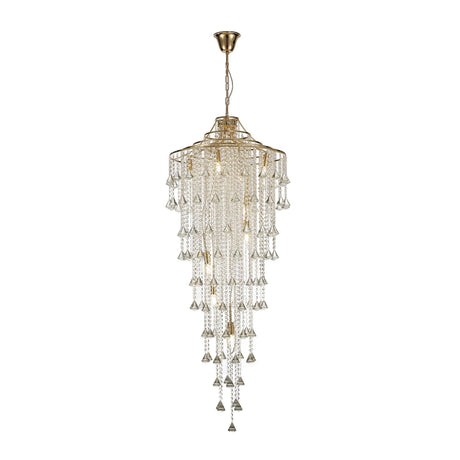
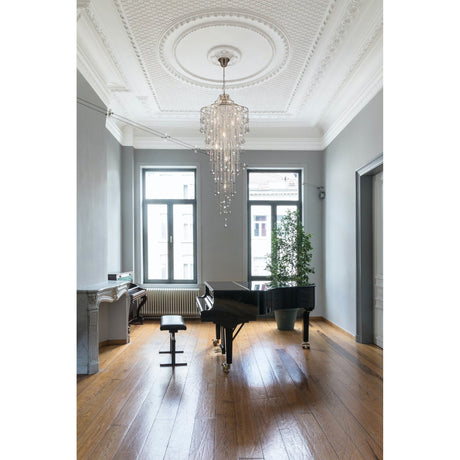 Save 16%£83899£99500Unit price Translation missing: en.products.product.price.unit_price_separatorUnavailableFree Delivery
 -

 Save 16%£1,51299£1,79500Unit price Translation missing: en.products.product.price.unit_price_separatorUnavailable
Wisteria 16 Light Crystal Linear Suspension Light - French Gold
Free Delivery


Recommended For You
Our Reviews
-
Free UK Delivery
Over £99. Ships worldwide.
-
Price Match Promise
We'll match any like-for-like price.
-

Birmingham Based
British heritage. Worldwide delivery.
-
Hand-Picked Range
Beautiful Pieces Selected
