
Table of Contents
- Introduction
- Why Do Designers Recommend LED Panel Lights So Often?
- What Are LED Panel Lights, And What Makes Them Different?
- How Do LED Panel Lights Change The Look Of A Room?
- How Do LED Panel Lights Improve Ambience Without Feeling Harsh?
- Why Do LED Panel Lights Make Overall Brightness Feel Better?
- What Are The Practical Benefits Of Using Panels In Modern Homes?
- How Do Designers Plan Placement So The Room Feels Balanced?
- Step-by-Step: How Do You Choose The Right Panel For Your Room?
- What Mistakes Stop Panels From Looking Their Best?
- Quick Summary
- Conclusion
- FAQs
Introduction
LED panel lights are one of the easiest ways to refresh a room without changing the furniture, flooring, or layout. After specifying lighting for a wide range of homes at Niori, I recommend them when a space feels flat, shadowy, or visually cluttered, because a single, well-planned upgrade can lift brightness and make the whole room feel calmer and more intentional.
Good lighting design isn’t about making everything “as bright as possible”; it’s about making light feel effortless. The right panels soften harsh contrasts, help colours look truer, and support the way you actually use each room cooking, relaxing, working, hosting, and everything in between.
Why Do Designers Recommend LED Panel Lights So Often?
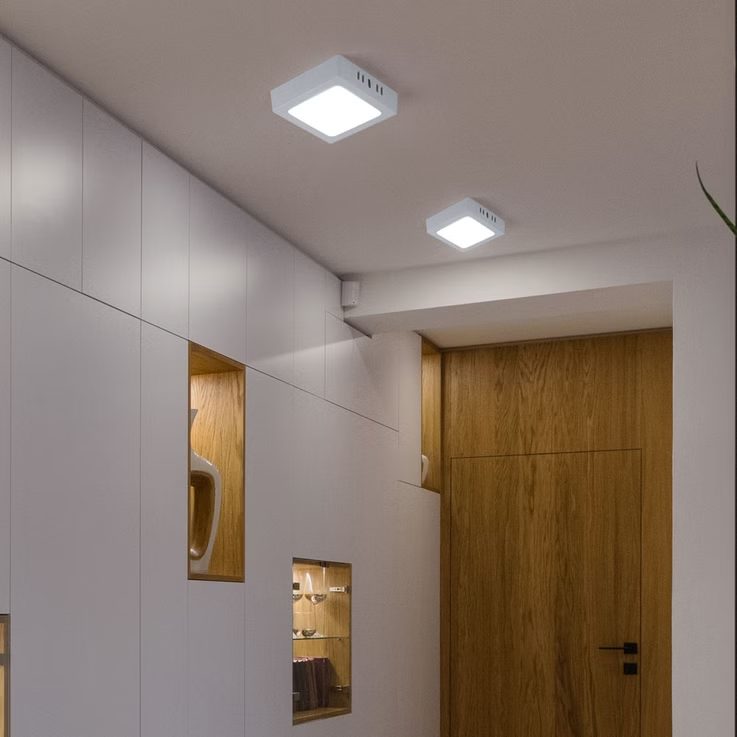
Designers recommend LED panel lights because they create smooth, even illumination that makes rooms look cleaner and feel more comfortable.
Unlike point-source fittings that can produce hotspots and gloomy corners, a panel spreads light across a broad surface, so the room reads as balanced from every angle. This matters in modern homes where open-plan layouts, pale walls, and mixed materials can easily show shadows and patchy lighting.
You’ll often see panels specified when a designer wants:
A crisp ceiling line without bulky fixtures
Consistent light coverage across the whole room
Reduced glare compared with some exposed lamps
A calmer mood that supports modern interiors
What Are LED Panel Lights, And What Makes Them Different?
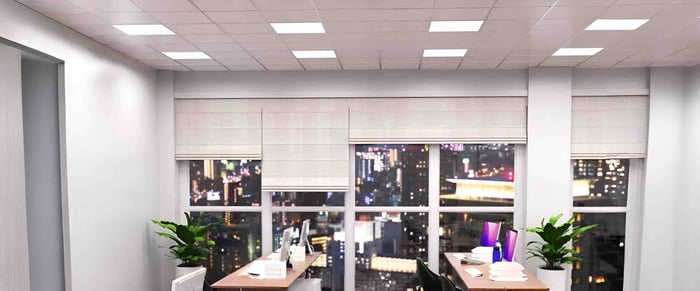
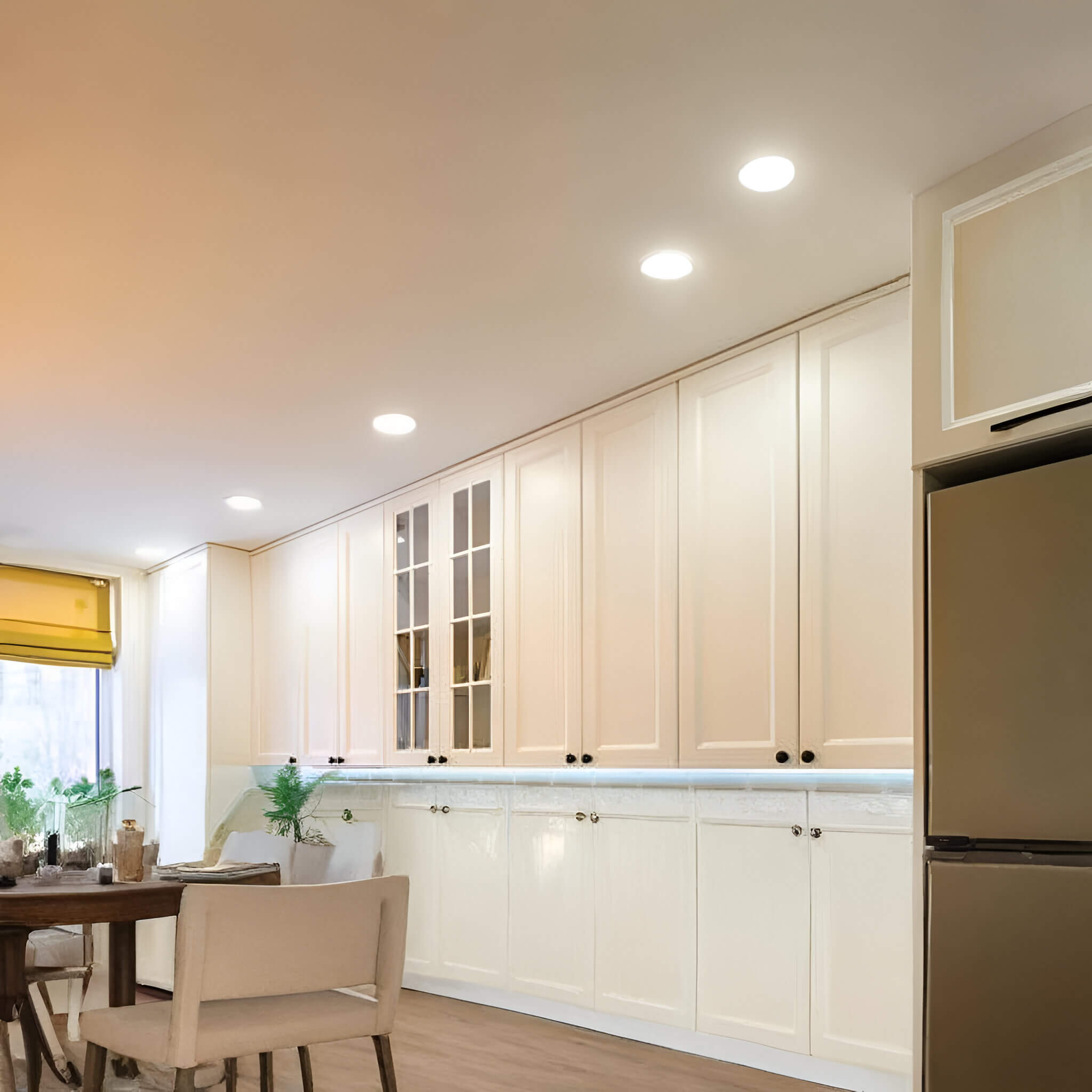
LED panel lights are slim fixtures that use a diffuser to distribute light evenly across a flat surface.
In practice, that means you get a wide “wash” of light rather than a narrow beam, which is why they can replace several small fittings in the right setting.
Most panels fall into a few common styles:
Recessed panels that sit flush for a minimal look
Surface-mounted panels when you can’t cut into the ceiling
Suspended panels for higher ceilings or feature spaces
When we plan a lighting scheme at Niori, we also look at colour temperature, lumen output, and beam diffusion, because those factors decide whether a room feels cosy, fresh, or clinical.
How Do LED Panel Lights Change The Look Of A Room?
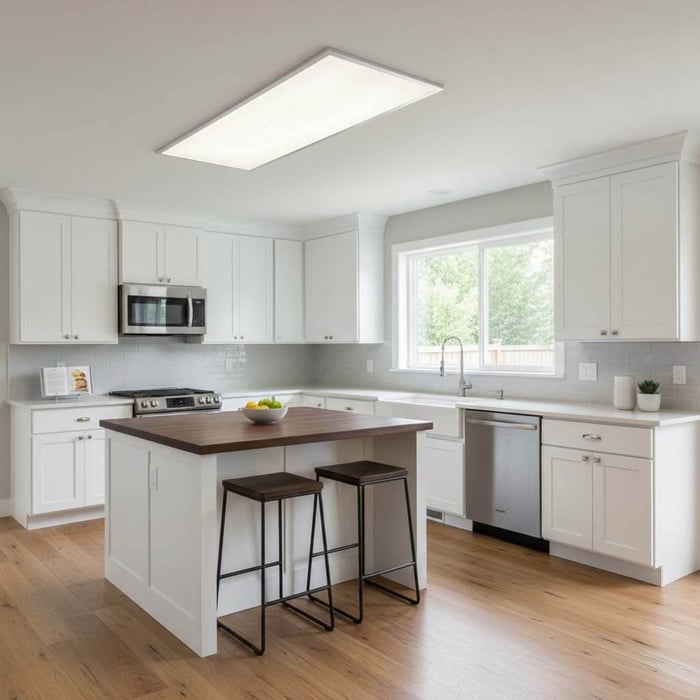
LED panel lights change the look of a room by reducing visual clutter and smoothing out harsh contrasts.
A ceiling packed with multiple spot fittings can draw the eye upward and fragment the space. A well-sized panel, on the other hand, gives a cleaner ceiling plane and lets finishes wood grain, stone, fabric, artwork take centre stage.
Here are a few real-world examples we see often:
Kitchen-diner: A panel over the main prep zone reduces shadows on worktops and makes surfaces look more uniform.
Living room: Even ambient light makes the space feel larger, especially with light-coloured walls and reflective finishes.
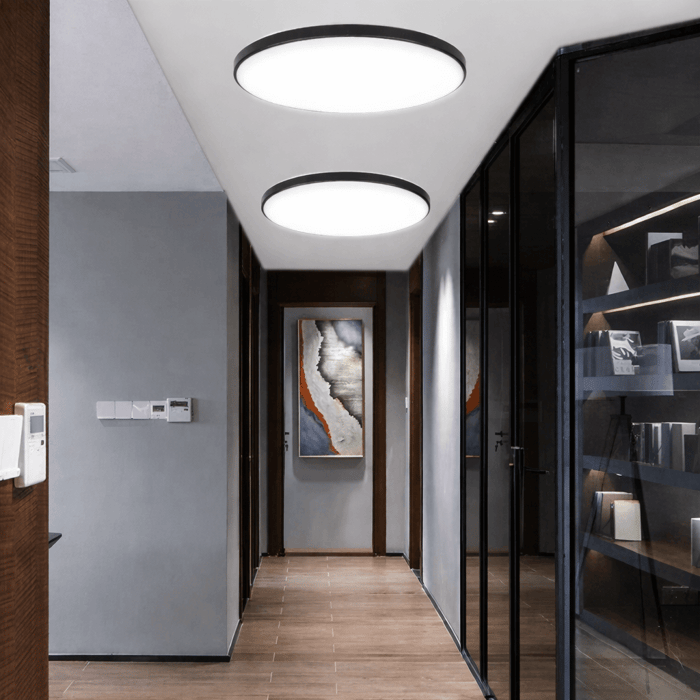
Hallway: A single panel can brighten the full length of the corridor without the “pool of light” effect.
The key is matching the panel’s output to the room. Too weak and it feels dull; too strong and it feels stark.
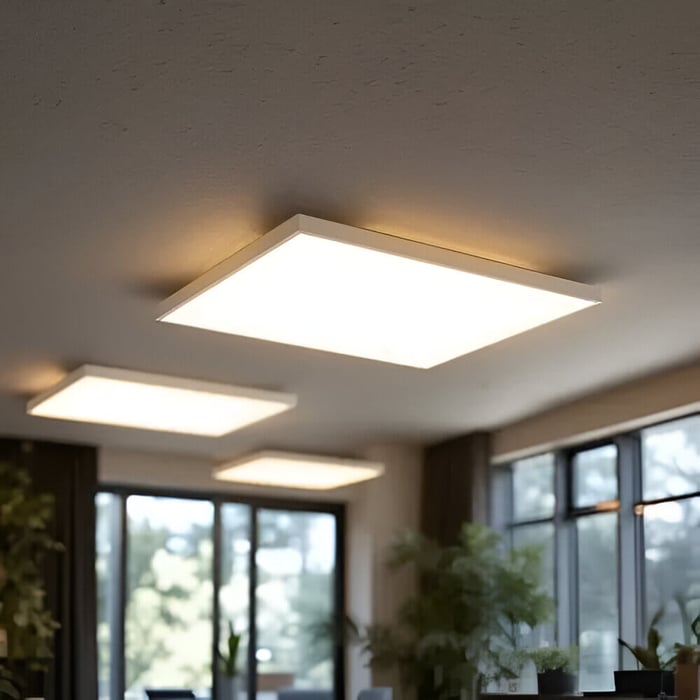
How Do LED Panel Lights Improve Ambience Without Feeling Harsh?
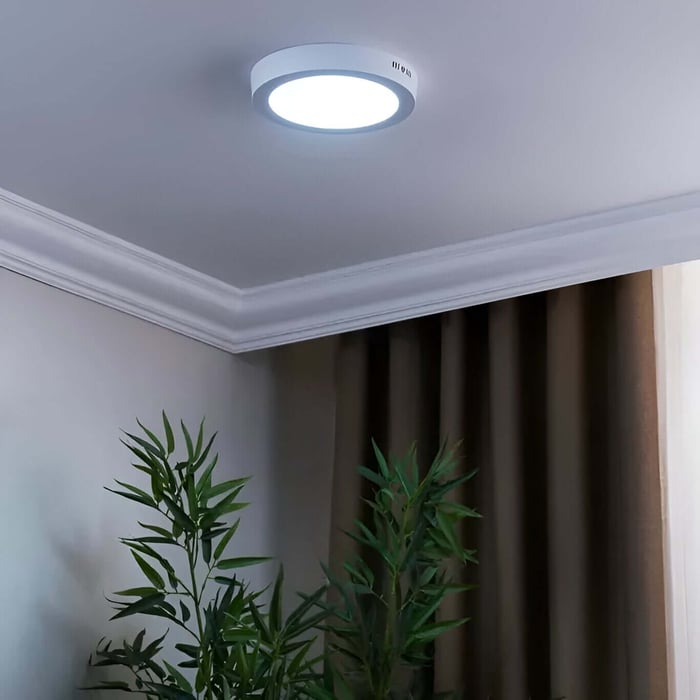
LED panel lights improve ambience by giving soft, consistent background light that doesn’t fight the room’s mood.
Ambience comes from comfort: gentle transitions, fewer sharp shadows, and light that supports your evening routine rather than overpowering it.
To keep things warm and inviting, I usually suggest:
Warm or neutral tones in relaxing areas (rather than very cool light)
Dimming in lounges, bedrooms, and open-plan living
Layered lighting use the panel as the base, then add table lamps or wall lights for depth
A panel provides the “canvas”, while accents provide the character. If you want a flexible scheme, pairing a panel with modular lights in key zones can help you adjust the feel of the room without redesigning everything.
Why Do LED Panel Lights Make Overall Brightness Feel Better?
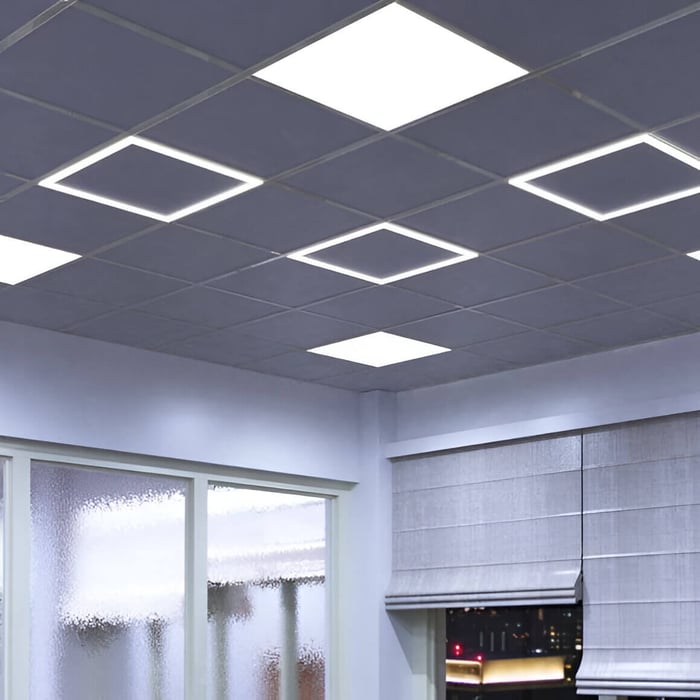
LED panel lights make brightness feel better because they distribute light broadly, so your eyes aren’t constantly adjusting between bright spots and dark patches.
That broad spread is what turns “bright” into “comfortable bright” the difference between a room that looks lit and a room that feels good to be in.
This is especially noticeable in:
Rooms with matte paint, which can absorb light and exaggerate shadows
Spaces with dark cabinetry or flooring, where uneven lighting looks more dramatic
Home offices, where glare and contrast can cause fatigue over a long day
If a room needs reliable light for safety and clarity stairs, exits, garages, or utility areas it can also make sense to coordinate your plan with emergency lighting so the overall scheme stays consistent.
What Are The Practical Benefits Of Using Panels In Modern Homes?
Panels suit modern homes because they combine efficiency, longevity, and clean design in one fitting.
Beyond looks, homeowners notice day-to-day improvements: fewer gloomy corners, less reliance on floor lamps, and a more “finished” feel even when the décor is simple.
Key benefits include:
Energy savings compared with older fittings
Long service life so you replace less often
Low-profile design ideal for lower ceilings
Even light for multitasking from cooking to homework
If you’re choosing products, look for reputable lines with clear specs and good consistency. For example, Knightsbridge ranges are often specified on projects where matching output and finish across multiple rooms matters.
How Do Designers Plan Placement So The Room Feels Balanced?
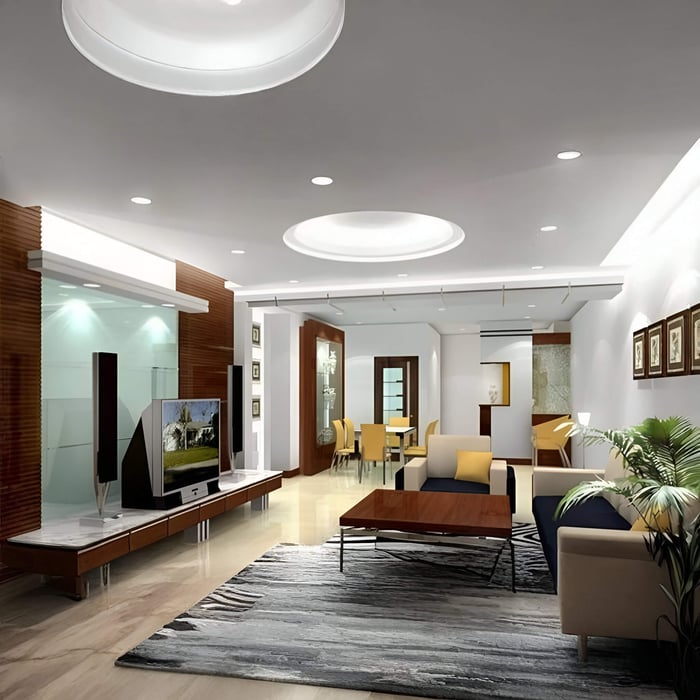
Designers plan placement by working from how the room is used, then choosing panel size and position to support that routine.
It’s not just “centre the light”; it’s “centre the light where the room needs it”.
A simple approach we use in consultations:
Cooking zones first: Prioritise prep and hob areas
Seating zones next: Avoid glare above sofas and TV viewing lines
Circulation paths last: Make sure walkways don’t fall into shadow
For open-plan spaces, I often recommend thinking in “light zones”:
One panel over the kitchen/work area
A calmer, dimmable base light for the lounge area
Accent lighting to add warmth and texture in the evenings
Step-by-Step: How Do You Choose The Right Panel For Your Room?
You choose the right panel by matching output, tone, and fitting style to the space you live in, not just the room size.
Follow these steps to avoid the most common misfires.
Measure the room and note ceiling height
Larger rooms or higher ceilings usually need higher output or multiple fittings.Decide the purpose of the space
Relaxing spaces need softer light; task spaces need clearer visibility.Pick a colour temperature that suits the room
Warm/neutral works well for homes; very cool tones can feel clinical.Choose recessed or surface-mounted based on your ceiling
If cutting into the ceiling isn’t practical, surface mounting is often the cleanest solution.Plan switching and dimming early
The best results come from lighting you can adjust especially in open-plan rooms.Check glare control and diffusion
A good diffuser helps prevent that “flat white sheet” feel and keeps light comfortable.
What Mistakes Stop Panels From Looking Their Best?
The biggest mistake is installing LED panel lights with the wrong tone or output for the room’s function. Even a high-quality fitting can disappoint if it’s too cool for a lounge or too weak for a kitchen.
Common issues we correct:
Over-lighting small rooms so they feel sterile
Under-lighting open-plan areas so they look gloomy at the edges
Skipping dimming, then relying on lamps to fix the mood
Poor placement, causing glare where you sit or work
If something feels “off”, it’s usually not the technology it’s the plan.
Quick Summary
LED panel lights are designer favourites because they create clean ceilings, smooth brightness, and a comfortable mood with minimal visual fuss. They work especially well in modern homes where open layouts and mixed finishes can show shadows and uneven lighting. When you choose the right tone, output, and placementand combine them with layered lighting you get a space that looks sharper in the day and feels calmer at night.
Conclusion
LED panel lights can transform the look and mood of a room by delivering even illumination, reducing harsh shadows, and keeping ceilings visually tidy. Designers recommend LED panel lights because they improve how a space functions, making kitchens clearer, living areas more comfortable, and corridors brighter, all while supporting a modern, uncluttered style. With thoughtful placement, the right colour temperature, and options like dimming and layered accents, these panels don’t just light a room; they make it feel finished.
FAQs
Why do designers recommend led panel lights over downlights?
Designers prefer led panel lights because they provide more even illumination and reduce harsh shadows. They also create a cleaner ceiling appearance with fewer fixtures.
Are led panel lights suitable for living rooms?
Yes, led panel lights work very well in living rooms when paired with the correct colour temperature and dimming. They create a relaxed, welcoming atmosphere.
Do led panel lights make rooms look bigger?
Led panel lights can make rooms feel larger by evenly lighting the entire space. This reduces dark corners and visual clutter.
What colour temperature is best for led panel lights at home?
Warm white is best for bedrooms and lounges, while neutral white suits kitchens and offices. The choice depends on how the room is used.
Are led panel lights energy efficient?
Yes, they consume significantly less energy than traditional lighting while delivering high brightness. This makes them ideal for modern homes.
Can led panel lights be dimmed?
Many led panel lights are dimmable, but compatibility depends on the driver and dimmer used. Always check specifications before installation.
How long do led panel lights last?
High-quality led panel lights typically last 30,000 to 50,000 hours. This reduces maintenance and replacement costs.
Are led panel lights suitable for low ceilings?
Yes, their slim profile makes them ideal for low ceilings where hanging fixtures would feel intrusive.
Can led panel lights be used as feature lighting?
They can be used creatively as feature lighting when combined with accent lights. Shape, size, and placement play a key role.
Why do modern homes favour led panel lights?
Modern homes favour led panel lights for their clean design, efficiency, and ability to improve both ambience and brightness simultaneously.