
Table of Contents
- Introduction
- Why Are Alabaster Table Lamps Ideal for Bedrooms?
- What Makes Alabaster Different From Other Lamp Materials?
- How Do You Choose the Right Size For Bedside Tables?
- Which Styles Suit Modern Bedrooms?
- How Bright Should Alabaster Bedside Lamps be?
- How Do You Match Alabaster Table Lamps WIth Decor?
- Should Bedside Lamps Always Match?
- How Can You Layer Lighting Around Alabaster Bedside Lamps?
- What Common Mistakes Should You Avoid?
- Conclusion
- FAQs
Introduction
Alabaster table lamps are one of the most refined ways to bring warmth and softness into a bedroom. Their natural stone surface diffuses light gently, creating a calm atmosphere that feels both luxurious and inviting. When chosen carefully, they do far more than light a room they shape its mood.
At Niori, we regularly guide clients in selecting alabaster table lamps specifically for bedside tables. The focus goes beyond appearance it’s about achieving the right scale, flattering light output, and a design that works seamlessly within the wider scheme.
If you're searching for the best alabaster table lamps for bedrooms, considering small alabaster table lamp ideas, or wondering how to match alabaster table lamps with decor, this guide will walk you through every key detail.
Why Are Alabaster Table Lamps Ideal for Bedrooms?
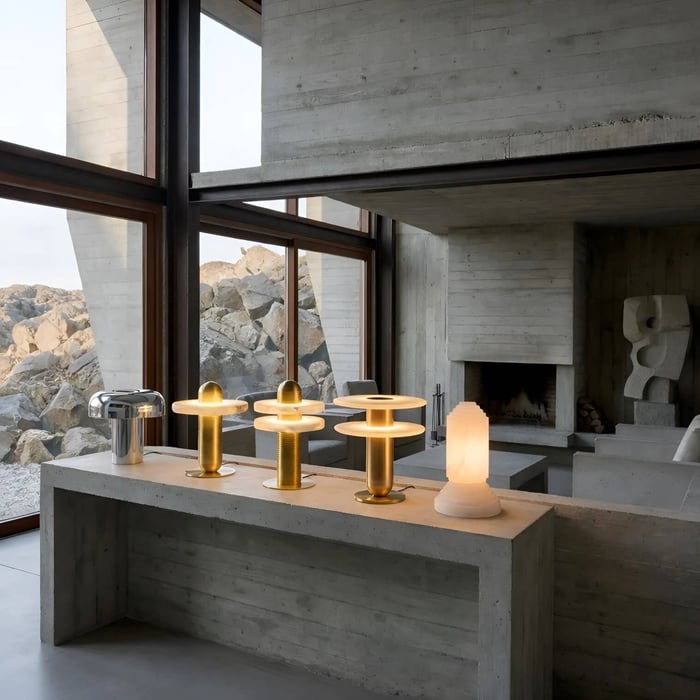
Alabaster table lamps are ideal for bedrooms because they create a soft, diffused glow that encourages relaxation.
Bedrooms require gentle lighting rather than harsh overhead brightness. Alabaster’s translucent quality allows light to pass through the stone, producing a warm halo effect that feels restful and intimate.
They also bring:
Natural texture that softens clean-lined furniture
Subtle veining that adds character without visual noise
A timeless look that works in both modern and classic settings
A sculptural presence, even when switched off
In a bedroom environment, that combination of comfort and elegance is especially valuable.
What Makes Alabaster Different From Other Lamp Materials?
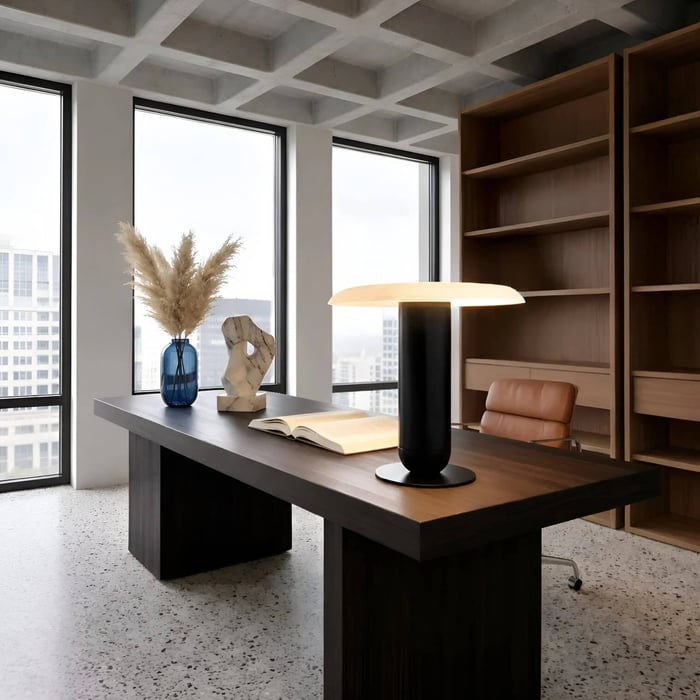
Alabaster differs from glass or ceramic because it filters light rather than simply reflecting it.
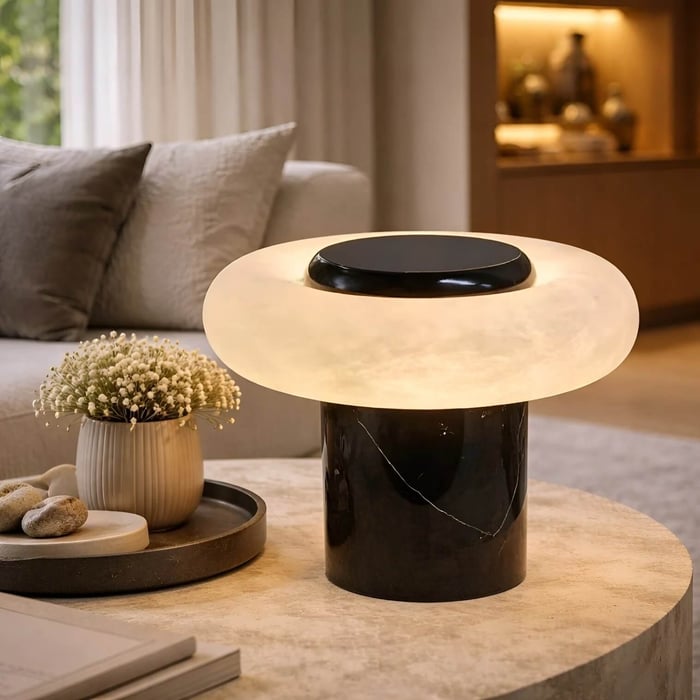
This material is a fine-grained stone formed over time, which gives each lamp unique veining patterns. No two pieces are identical. When illuminated, the light glows from within the stone rather than shining outward from a bulb alone.
Compared with other materials:
Glass can feel cooler and more reflective
Metal bases create directional brightness
Ceramic blocks light entirely
Alabaster lighting, by contrast, softens edges and reduces glare. That makes it particularly suited to bedside use, where comfort is the priority.
How Do You Choose the Right Size For Bedside Tables?
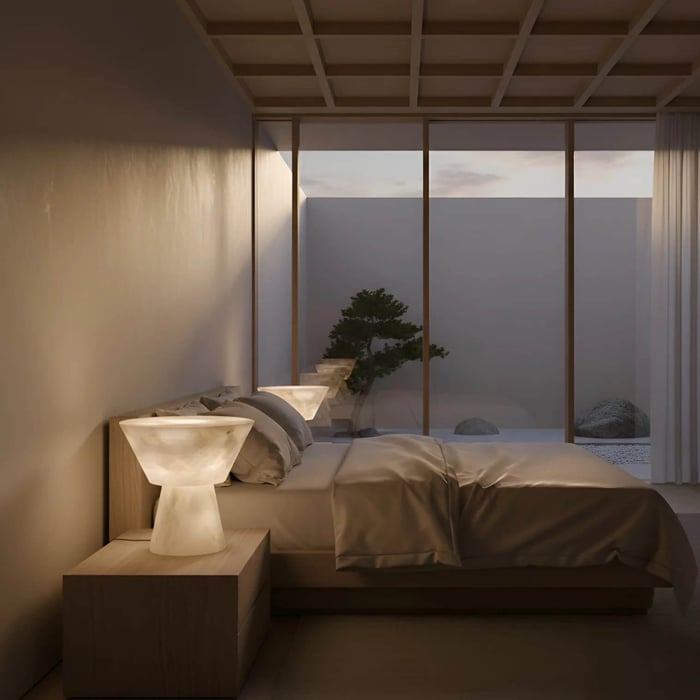
Choosing the correct size ensures the lamp feels balanced rather than awkward.
Proportion is the most common issue we correct during bedroom consultations at Niori.
Step-by-step sizing guide
Step 1: Measure your bedside table width
The lamp base should not exceed two-thirds of the table’s width. This prevents crowding and leaves room for practical items.
Step 2: Consider overall height
When seated upright in bed, the bottom of the lampshade should sit roughly at eye level. This reduces glare and provides comfortable illumination.
Step 3: Allow for symmetry
If you’re placing lamps on both sides of the bed, matching heights create visual calm.
Small alabaster table lamp ideas
For compact bedrooms or narrow floating shelves:
Choose cylindrical or globe designs
Opt for slim column bases
Keep height between 30-40cm
Avoid oversized shades
Smaller lamps still provide ample glow because alabaster distributes light evenly.
Which Styles Suit Modern Bedrooms?
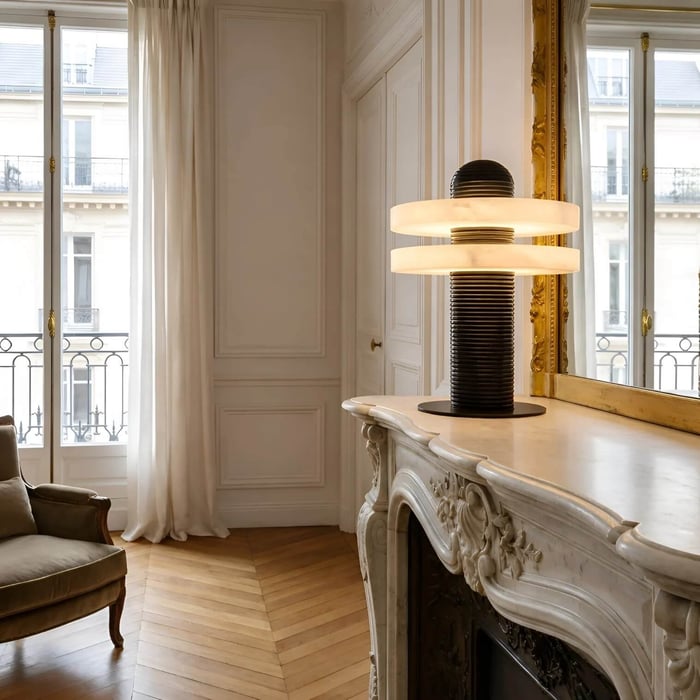
Modern alabaster bedside lamps typically feature simple shapes and minimal detailing.
Clean lines ensure the stone remains the focal point without appearing ornate.
Popular modern styles include:
Smooth orb bases
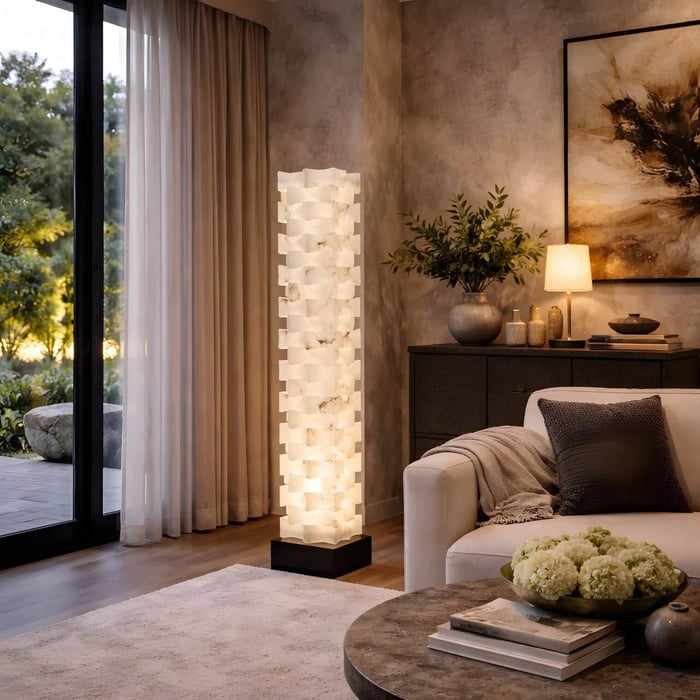
Tall, slender columns
Low-profile drum silhouettes
Designs with subtle brass accents
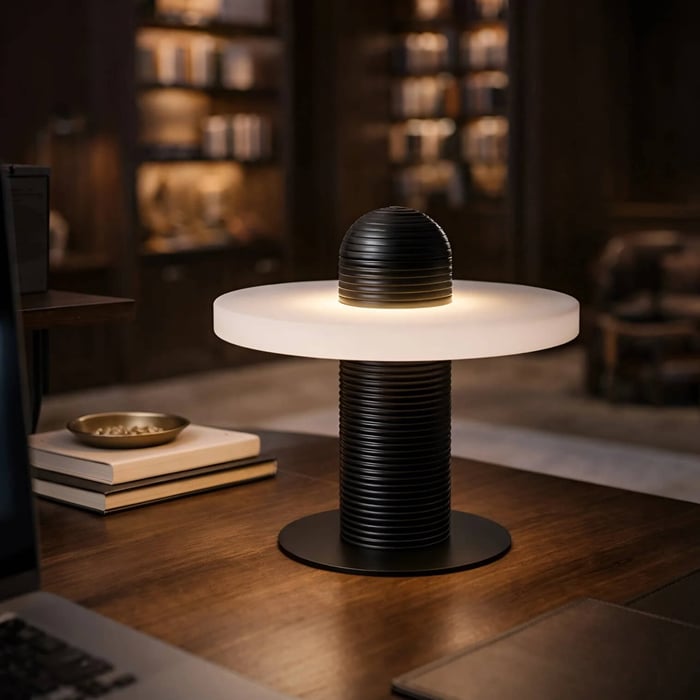
In contemporary settings, pairing alabaster with brushed brass or matte black details adds contrast while maintaining warmth.
For clients seeking a cohesive look, we often recommend complementing bedside lamps with alabaster floor lamps elsewhere in the room. This layered approach reinforces material continuity without overwhelming the space.
How Bright Should Alabaster Bedside Lamps be?
When choosing brightness levels for alabaster table lamps, bedside lighting should feel warm and adjustable rather than intense.
Because alabaster softens light naturally, high-wattage bulbs are unnecessary.
Recommended specifications:
2700K warm white bulbs
4-6W LED equivalent
Dimmable fittings
Dimming is particularly important in bedrooms. It allows you to transition from reading brightness to a soft evening glow.
Avoid cool white bulbs, which can flatten the stone’s natural warmth and make the room feel clinical.
How Do You Match Alabaster Table Lamps WIth Decor?
To match alabaster table lamps with decor, echo their warmth and texture in surrounding finishes.
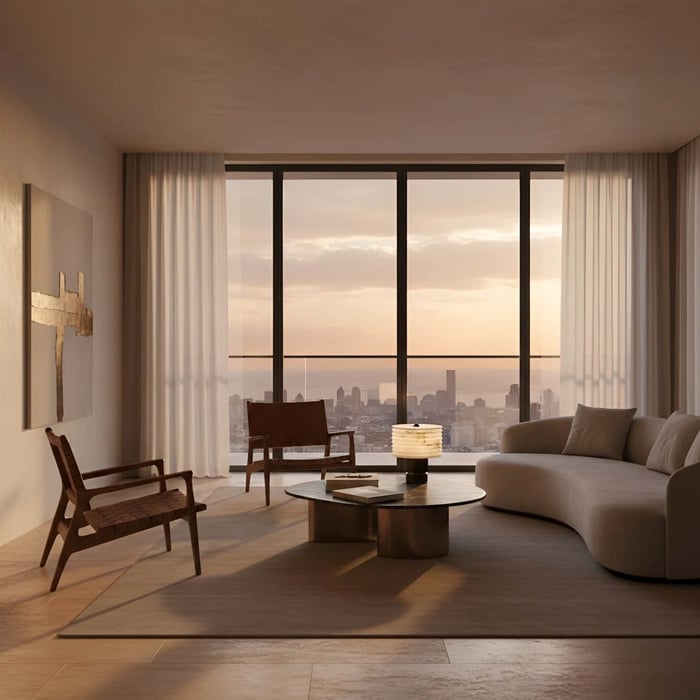
Alabaster usually carries creamy, off-white undertones with natural veining. It works best within warm colour palettes.
Ideal pairings include:
Neutral bedding in ivory, oat, or sand
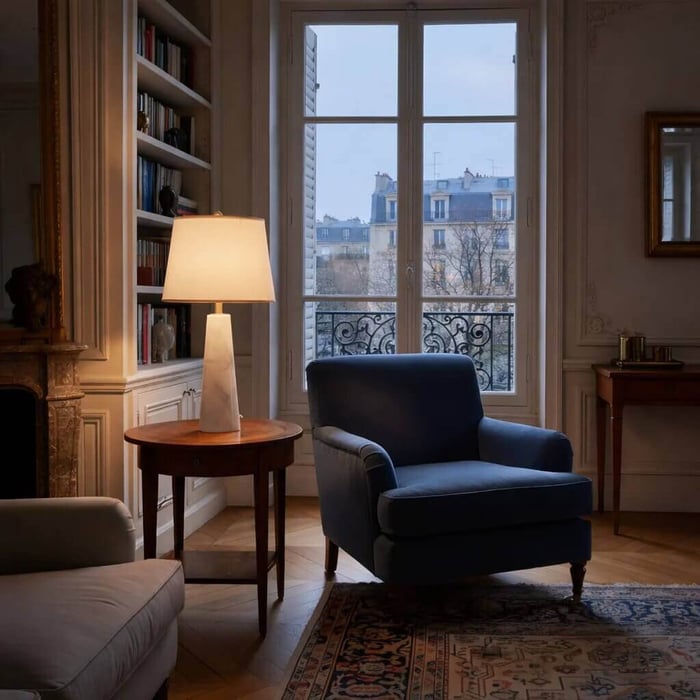
Wooden bedside tables in oak or walnut
Soft linen or cotton lampshades
Brass or champagne-toned hardware
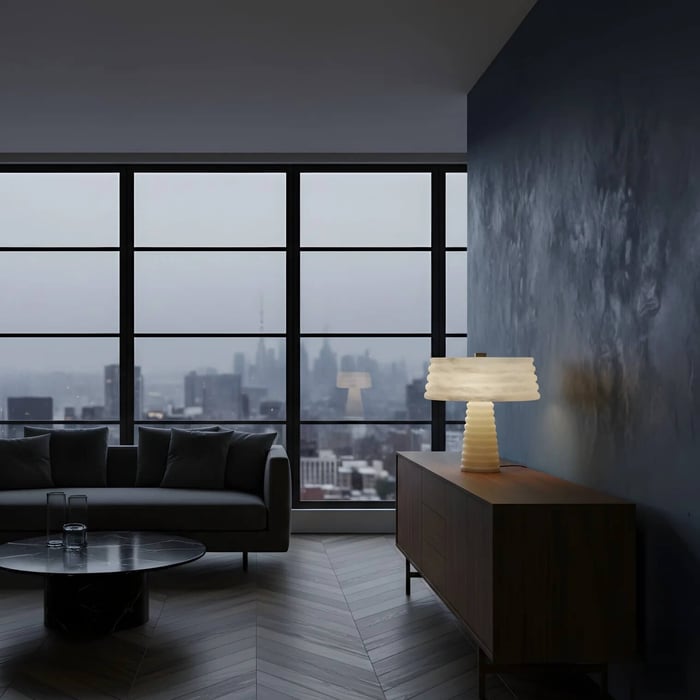
If your bedroom features darker walls such as charcoal or deep green alabaster provides contrast and warmth. In lighter spaces, it enhances softness and cohesion.
The key is consistency in tone. Mixing cool chrome finishes with warm stone often creates imbalance.
Should Bedside Lamps Always Match?
Matching alabaster table lamps on either side of the bed creates a sense of order and symmetry, which suits most primary bedrooms.
However, variation can work if done carefully.
You may choose to:
Match material but vary height slightly
Use identical bases with different shade fabrics
Pair a bedside lamp with a complementary piece from a wider alabaster lighting collection
The goal is harmony rather than strict uniformity.
How Can You Layer Lighting Around Alabaster Bedside Lamps?
Alabaster table lamps should form part of a layered lighting scheme.
Relying on one source rarely achieves the right atmosphere.
A balanced bedroom layout typically includes:
Ceiling lighting for general illumination
Bedside lamps for ambient glow
Wall-mounted reading lights for task use
Optional floor lighting in corners
This approach creates flexibility. For example, ceiling lights may remain off in the evening while alabaster lamps provide gentle illumination.
At Niori, we design bedroom lighting so that no single fixture dominates. Instead, each layer supports the next.
What Common Mistakes Should You Avoid?
Avoiding proportion and brightness mistakes ensures your alabaster table lamps perform as beautifully as they look.
Common issues include:
Choosing lamps that are too tall for low headboards
Using bulbs that are too cool in colour
Selecting bases that overcrowd narrow tables
Forgetting dimmable fittings
Mixing too many statement materials
Another mistake is overlooking practical use. Bedside tables need space for books, glasses, or chargers. Always measure carefully before purchasing.
Conclusion
Alabaster table lamps are a refined and practical choice for bedroom lighting. Their translucent stone creates a soft glow that promotes relaxation while adding natural texture and timeless appeal. Choosing the correct size ensures balance on bedside tables, while selecting warm, dimmable bulbs enhances overall comfort.
Modern styles favour clean silhouettes, and thoughtful pairing with wood, brass, and neutral textiles creates cohesion. Layering lighting throughout the room strengthens both function and atmosphere. At Niori, we design alabaster table lamps with this balance in mind ensuring each piece delivers softness, proportion, and lasting elegance. By paying attention to scale, brightness, and surrounding decor, alabaster table lamps become more than decorative pieces; they become the foundation of a calm and beautifully lit bedroom.
FAQs
Are alabaster table lamps good for reading in bed?
Yes, but they should be paired with the right bulb and possibly a secondary reading light. Alabaster diffuses light softly, so it’s ideal for ambient glow but may not replace a focused reading lamp entirely.
Do alabaster lamps suit small bedrooms?
Absolutely. Small alabaster table lamp ideas such as compact globes or slim columns work beautifully in limited spaces without overwhelming the room.
Are modern alabaster bedside lamps still timeless?
Yes. Simple, minimal designs remain timeless because the stone itself is classic. Clean silhouettes prevent them from feeling trend-driven.
What colour bulb works best with alabaster?
A warm white bulb around 2700K works best. Cooler bulbs can make the stone appear flat and reduce its natural warmth.
Can alabaster table lamps work with dark bedroom walls?
Yes, and they often look stunning. The soft glow contrasts beautifully with deep tones like navy, charcoal or forest green.
Should I choose matching bedside lamps?
Matching lamps create a balanced and calming look, especially in master bedrooms. However, coordinated variations can work in more relaxed spaces.
Are alabaster lamps fragile?
Alabaster is a natural stone and should be handled with care. It’s durable for everyday use but should not be knocked or dropped.
How do I clean alabaster table lamps?
Use a soft, dry cloth only. Avoid harsh cleaners or water, as alabaster is porous and can stain.
Do alabaster lamps give off enough light?
Yes, when paired with appropriate wattage and dimmable bulbs. They provide excellent ambient lighting for bedrooms.