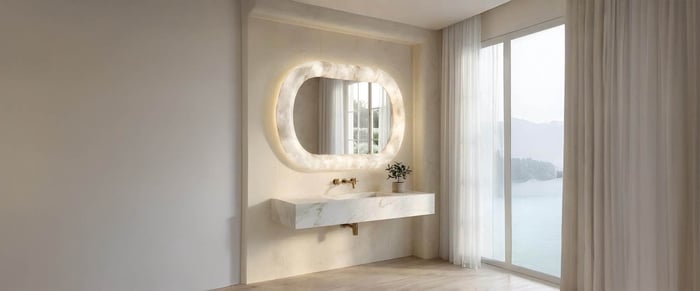
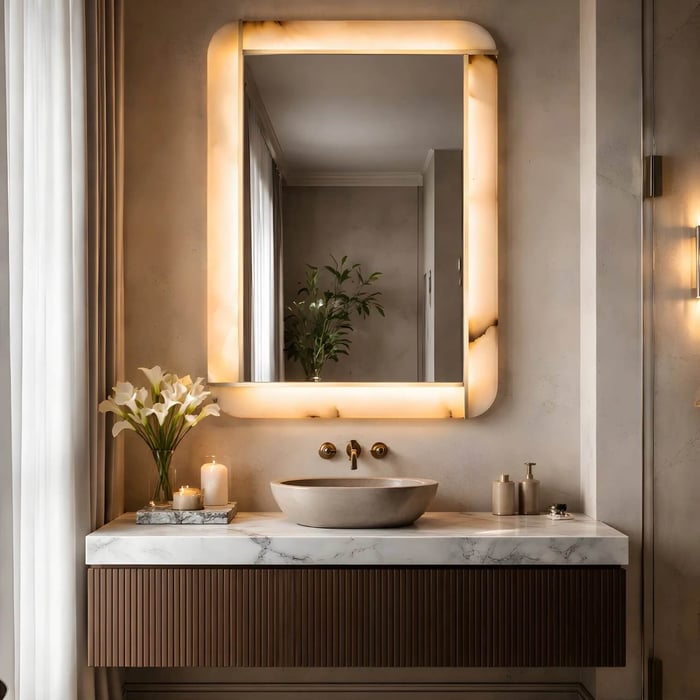
Alabaster mirrors are one of the most effective ways to amplify natural light while introducing warmth and quiet elegance into a home. These mirrors reflect daylight beautifully while adding a soft architectural presence that elevates any interior.
Unlike standard mirrors with metal or timber frames, alabaster brings a soft translucency that works in harmony with daylight. When positioned correctly, it reflects light while gently diffusing it at the edges. The result is a space that feels brighter, calmer and more expansive.
This guide explores how to use them to enhance natural light, including decorative options for hallways, round mirror ideas, practical styling guidance and honest advice on durability.
Quick Summary
Alabaster mirrors reflect and soften natural daylight
They are especially effective in hallways and low-light areas
Round shapes distribute brightness evenly
Properly crafted pieces are durable for everyday interiors
Placement opposite or near windows maximises impact
Warm layered lighting enhances the stone’s glow
What are Alabaster Mirrors and Why are They Different?
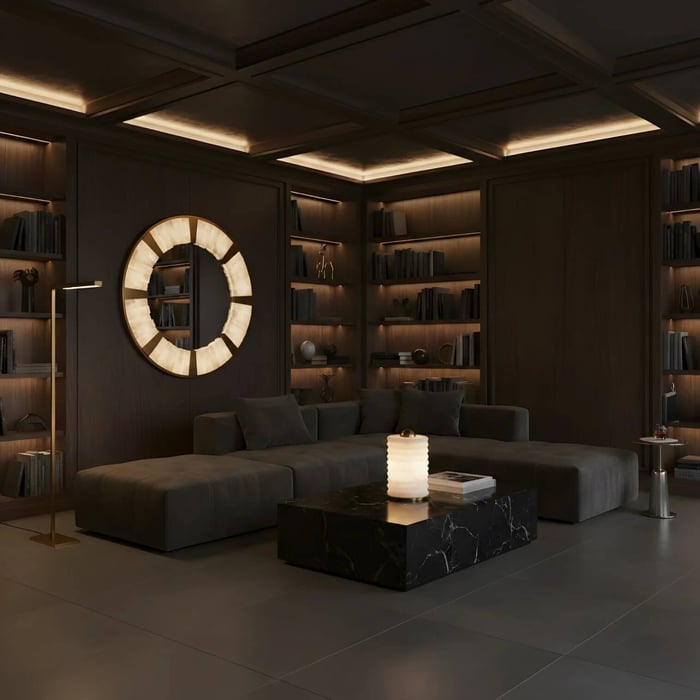
Alabaster mirrors are mirrors framed or detailed with natural alabaster stone, known for its soft veining and gentle translucency.
Alabaster has been used in architecture and lighting for centuries because it interacts beautifully with light. Unlike opaque stone, it allows a subtle passage of light through its surface. When used as a mirror frame, it softens reflections and reduces the stark contrast often seen with highly polished materials.
This makes them particularly suitable for homes where comfort and atmosphere matter just as much as brightness.
Why do Alabaster Mirrors Enhance Natural Light so Effectively?
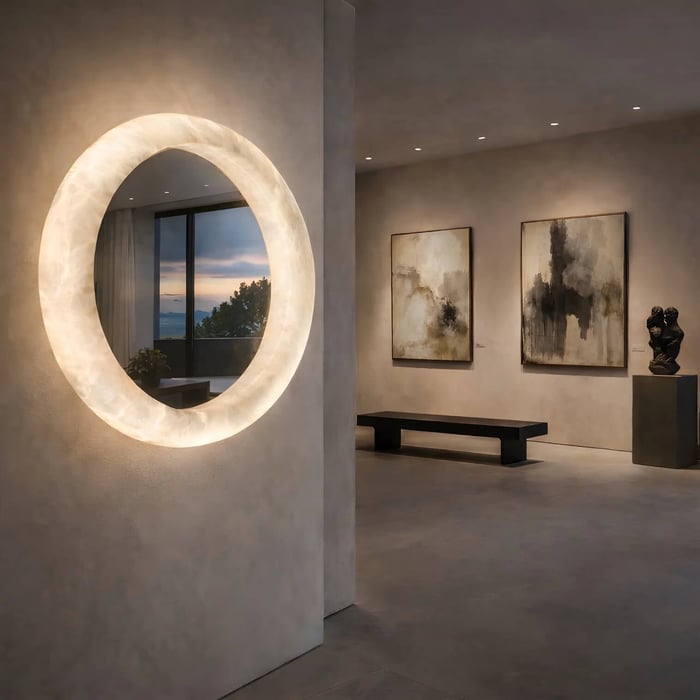
Alabaster mirrors enhance natural light because they both reflect it and soften its intensity.
Traditional mirrors simply bounce light back into a room. While this increases brightness, it can also create glare or cold reflections. Alabaster adds a layer of diffusion around the mirror’s edge, which balances the reflected light and gives it warmth.
This is particularly beneficial in:
The stone’s pale, creamy tone also prevents the blue cast that can appear in shaded interiors.
Where Should Alabaster Mirrors Be Placed For The Best Results?
Alabaster mirrors should be placed opposite or adjacent to natural light sources to maximise their effect.
Positioning determines whether the mirror simply decorates a wall or transforms the space. The most effective placements include:
Opposite a window
This doubles the daylight entering the room and spreads it further into darker corners.
Perpendicular to a window
This placement allows light to travel across the wall surface, reducing shadows.
At the end of a hallway
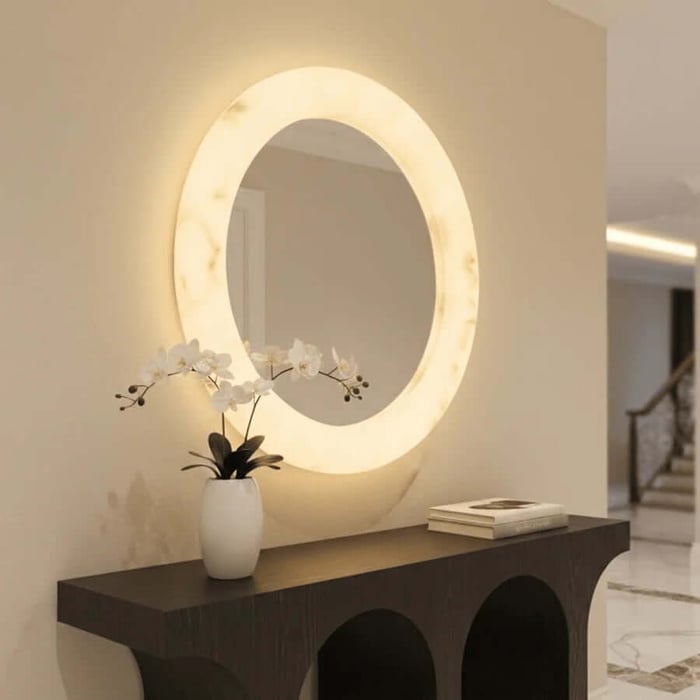
Decorative alabaster mirrors for hallways are especially powerful when placed at the far end of a corridor. They reflect light from adjoining rooms and visually extend the space.
Above a console near an entrance
This captures light from open doors and brightens entryways instantly.
When paired with soft surrounding finishes, the effect is subtle yet noticeable.
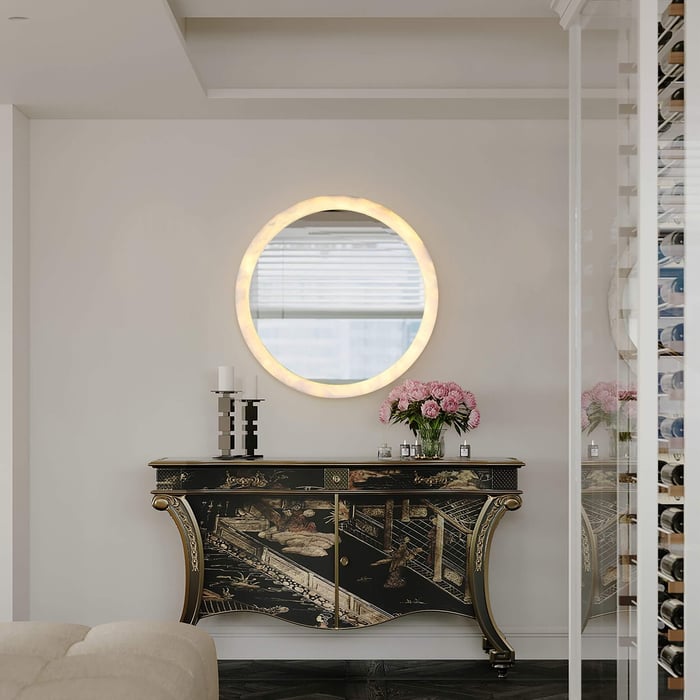
Decorative alabaster mirrors for hallways create the illusion of width and brightness in areas that often lack windows.
Hallways are typically narrow and dependent on artificial lighting. A well-placed alabaster mirror reflects available daylight from nearby rooms while softening overhead light.
To achieve the best result:
Choose a tall vertical design to elongate the space
Keep wall colours light and neutral
Add a slim console beneath the mirror
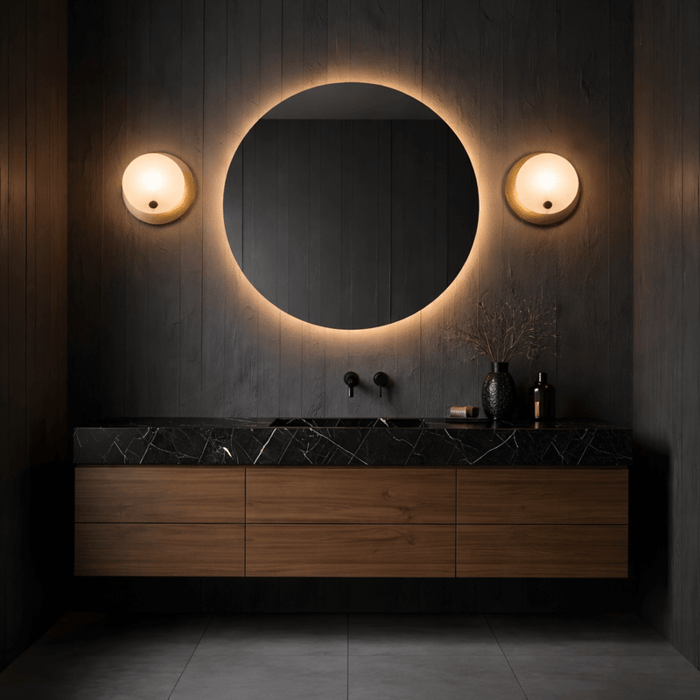
Install warm wall lighting nearby
For a layered look, pairing a hallway mirror with coordinated alabaster wall lights on either side enhances the glow and creates balance without overwhelming the corridor.
Are Alabaster Mirrors Durable For Everyday Interiors?
Yes, alabaster are durable when crafted and installed correctly.
Although alabaster is softer than marble or granite, it performs well in standard residential environments. High-quality sealing and secure framing protect the stone from surface wear.
To maintain longevity:
Avoid placing in high-impact zones
Keep away from direct water exposure
Dust with a soft dry cloth
Avoid abrasive cleaners
With proper care, alabaster mirrors remain beautiful for many years and age gracefully.
Why Are Round Alabaster Mirror Ideas So Effective?
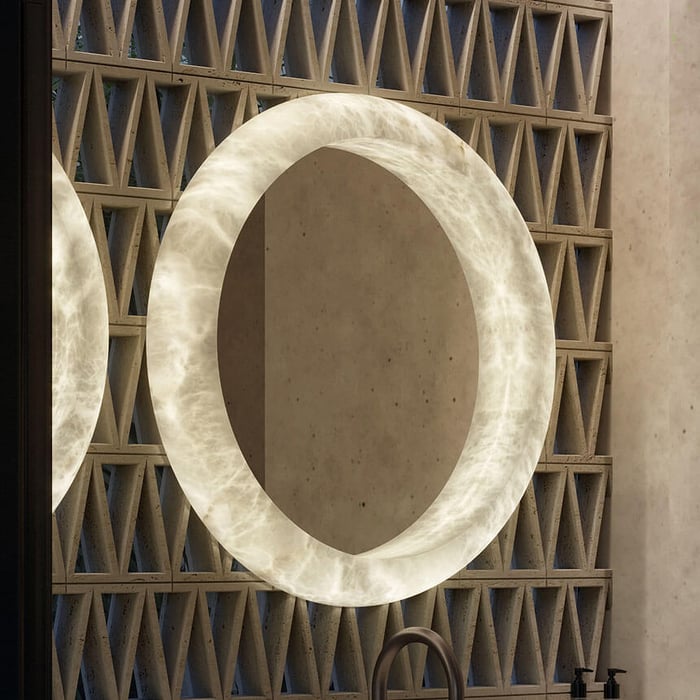
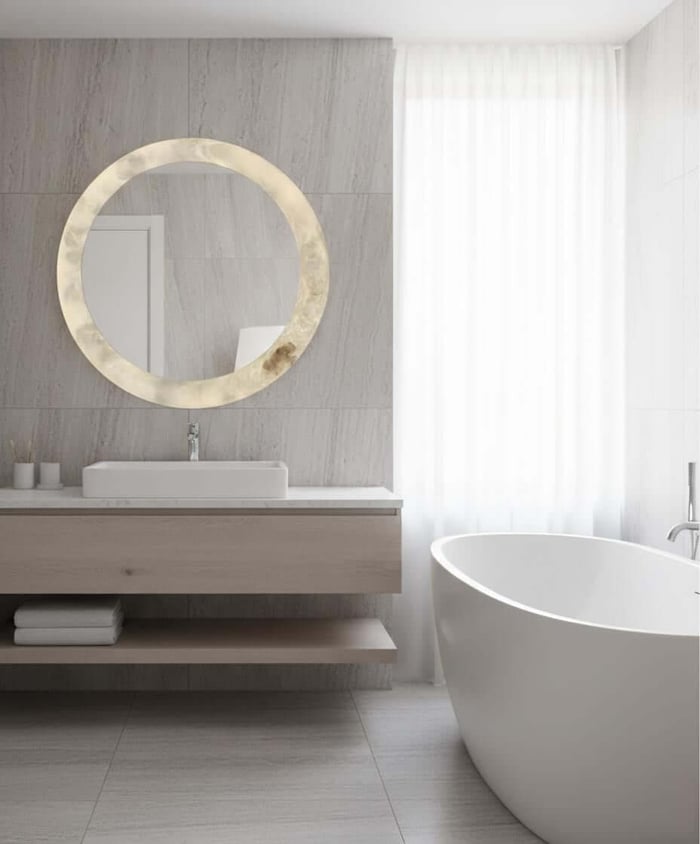
Round alabaster mirror ideas work particularly well because curved shapes distribute light evenly.
Circular forms prevent directional glare and create a softer visual flow. When combined with alabaster’s natural translucency, the reflection feels balanced and calm.
Round designs suit:
They also offset angular furniture and architectural lines, introducing visual harmony.
How Can You Style Alabaster Mirrors To Maximise Brightness?
Alabaster mirror styling tips focus on restraint, warmth and thoughtful layering.
Start by keeping surrounding décor minimal so the reflected light is not interrupted by clutter. Mirrors double whatever they face, so ensure the view includes something attractive a window, artwork or architectural detail.
Effective styling techniques include:
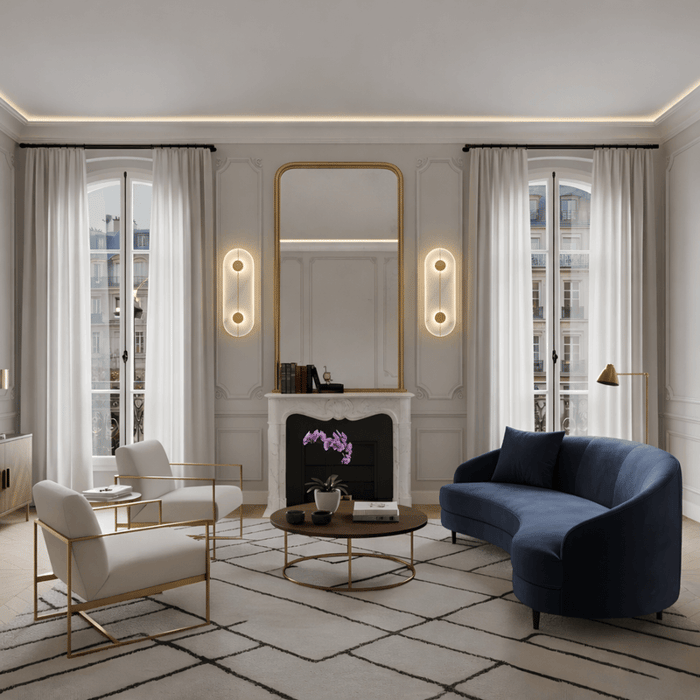
Pairing with warm metals such as aged brass
Using textured materials like linen or plaster nearby
Incorporating soft ambient lighting
Maintaining clear wall space around the frame
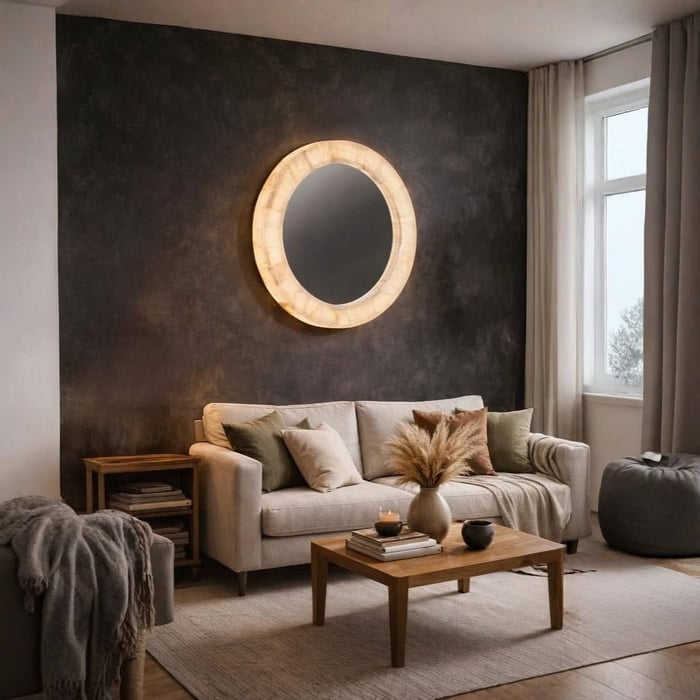
In living rooms or bedrooms, combining a mirror with complementary alabaster lighting elsewhere in the scheme creates a cohesive and luminous atmosphere without repetition.
Step-by-step: How To Enhance Natural Light Using Alabaster Mirrors
Enhancing natural light with alabaster mirrors requires careful assessment and placement.
Step 1: Identify your primary light source
Observe where daylight enters the room and note its direction throughout the day.
Step 2: Select the appropriate size
Larger mirrors reflect more light, but proportion is key. The mirror should feel balanced within the wall space.
Step 3: Choose the right shape
Step 4: Position with purpose
Install opposite or adjacent to windows. Avoid reflecting dark corners or clutter.
Step 5: Layer warm artificial lighting
Use warm white bulbs between 2700K and 3000K to enhance the stone’s natural warmth after sunset.
Step 6: Keep surrounding finishes light
Neutral walls allow reflected daylight to travel further into the room.
When applied together, these steps noticeably increase perceived brightness without structural changes.
What Mistakes Should You Avoid?
The most common mistake is placing alabaster mirrors without considering what they reflect.
Avoid:
Hanging them too high in hallways
Positioning them where they reflect blank walls
Using overly cool LED lighting nearby
Overcrowding the surrounding wall space
Installing in damp, poorly ventilated areas
Thoughtful placement is far more important than size alone.
Can Alabaster Mirrors Suit Modern Interiors?
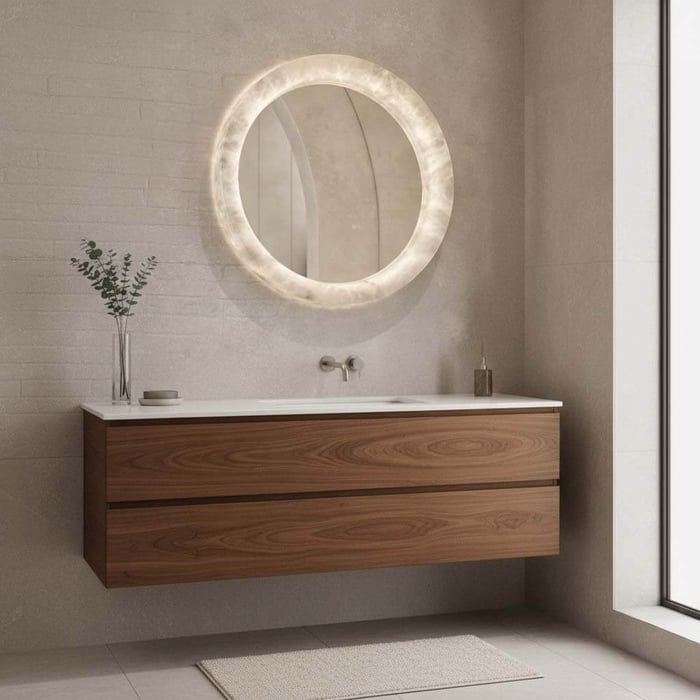
Yes, alabaster mirrors suit both traditional and contemporary homes because of their understated material quality and soft interaction with light. In minimalist spaces, a single round mirror against a plaster wall creates a sculptural focal point without overwhelming the room. The natural veining adds quiet texture while maintaining clean lines. This balance allows the mirror to feel intentional rather than ornamental.
In period properties, the same material complements mouldings, panelling and other architectural details with ease. Within modern schemes, we often use them to introduce warmth without adding visual weight. The stone’s subtle translucency keeps the overall look refined and cohesive. As a result, the finish feels organic, timeless and entirely at home in a wide range of interiors.
Conclusion
Alabaster mirrors enhance natural light by reflecting and gently diffusing it, creating interiors that feel brighter and more balanced. Their soft translucency prevents glare while adding warmth, making them ideal for hallways, living spaces and north-facing rooms. Proper placement opposite or near windows maximises their impact, and thoughtful styling ensures the reflected light works in your favour. When crafted well and cared for correctly, they are durable and long-lasting. At Niori, we value this balance of function and elegance, designing pieces that enhance both light and atmosphere.