
Table of Contents
- Introduction
- Quick Summary
- What Is a Chandelier And Why Does It Matter In a Home?
- How Do You Choose The Right Chandeliers For Your Space?
- Step-by-Step: How To Choose Chandeliers That Actually Work
- Where Should Chandeliers Be Installed For The Best Results?
- How Do Chandeliers Fit Into Layered Lighting?
- Chandeliers Ideas For Tricky Rooms
- How Do You Choose The Right Chandelier Style?
- How Bright Should Chandeliers Be?
- What Mistakes Should You Avoid When Choosing Chandeliers?
- Do Brand Quality And Materials Matter?
- Conclusion
- FAQs
Introduction
Choosing the right chandeliers can completely change how a home looks and feels. More than just a light source, a chandelier influences brightness, atmosphere, and how a space is perceived. When selected thoughtfully, it becomes both a practical fixture and a design feature that brings balance and cohesion to the room. This guide walks you through the key decisions so the final look suits both your room and your routine.
Quick Summary
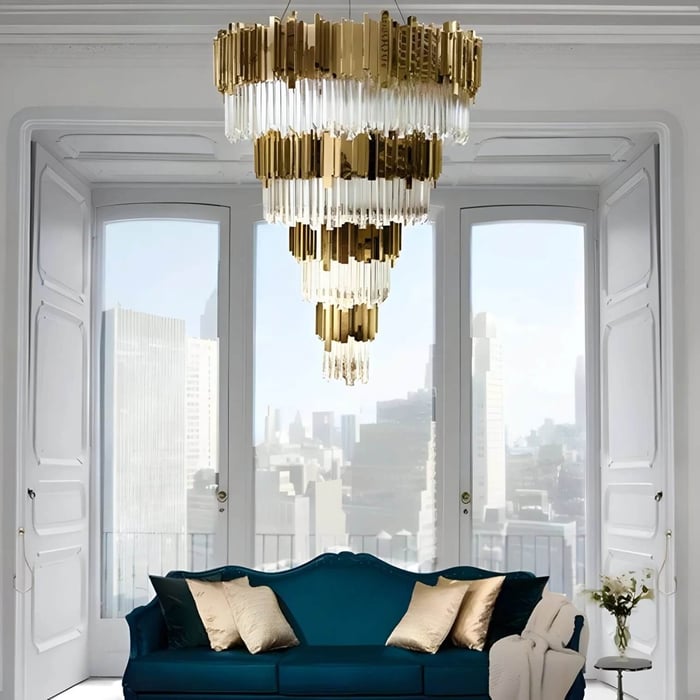
Chandeliers provide ambient light and visual structure
Size, ceiling height, and placement determine success
Layered lighting is essential for comfort and flexibility
Tricky rooms benefit from carefully chosen chandelier designs
Correct installation avoids glare and imbalance
What Is a Chandelier And Why Does It Matter In a Home?
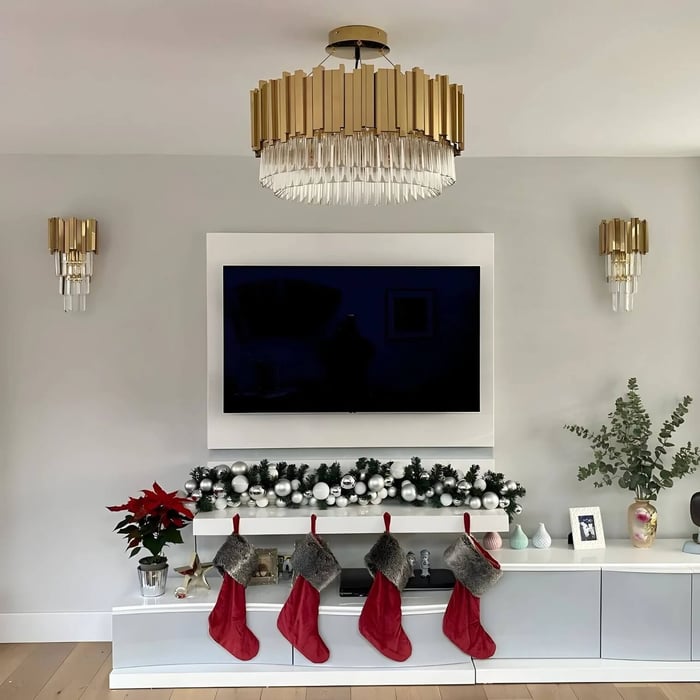
A chandelier is a ceiling-mounted light fitting designed to spread light across a space while acting as a visual anchor. Unlike simple ceiling lights, it shapes how light travels through a room and how the space feels once the sun goes down.
A well-chosen fixture can:
Improve overall brightness without harsh glare
Add depth and proportion to a room
Create a clear focal point
Help define zones in open-plan layouts
Because it sits at eye level or above, it tends to have a stronger impact on how a room is experienced compared to most other light fittings.
How Do You Choose The Right Chandeliers For Your Space?
The best chandeliers are chosen by understanding the room first, rather than starting with style. Think about the space’s proportions, the ceiling height, and what the room is used for day to day. These details determine how large the fitting should be, how much light you need, and what shape will feel balanced. When you get the practical side right, the finished look feels intentional instead of forced.
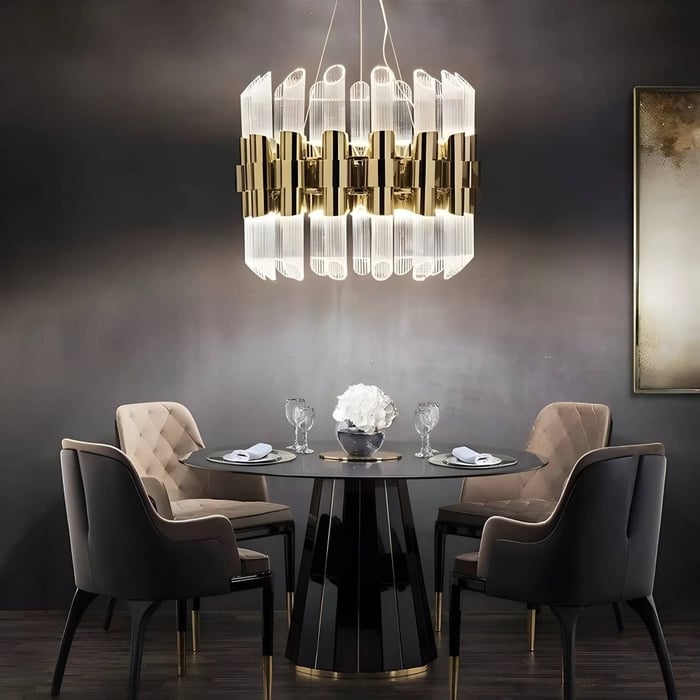
A dining room fitting needs to light faces and food comfortably, while a hallway piece should guide you through the space without glare. Bedrooms usually suit softer, calmer light, especially when paired with bedside lamps. Once you’re clear on the job the fixture needs to do, it becomes easier to choose materials and finishes that make sense. That’s when the design starts to feel confident, cohesive, and right for your home.
Step-by-Step: How To Choose Chandeliers That Actually Work
Step 1: Measure the room accurately
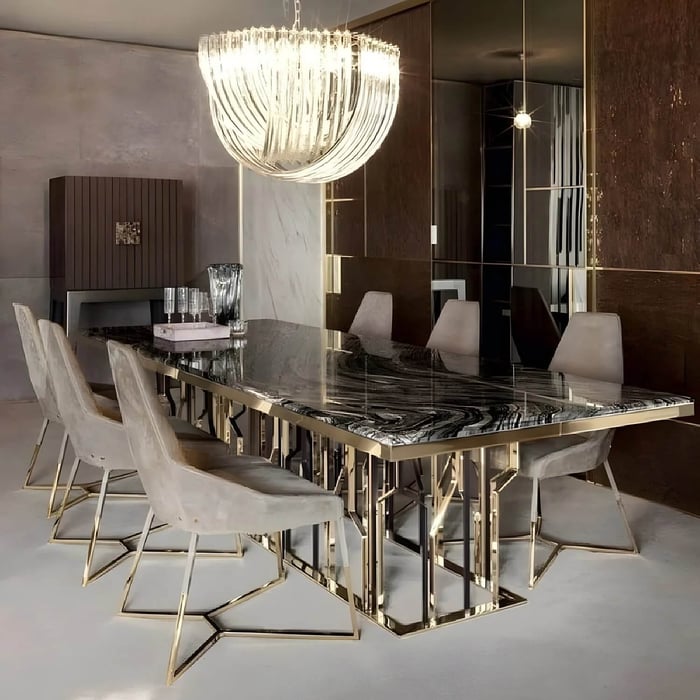
Correct proportions are essential. A fitting that’s too small disappears, while one that’s too large dominates the space.
A reliable guideline is:
Add the room’s length and width (in feet)
Convert that number to inches for the fixture diameter
This keeps the design visually balanced within the room.
Step 2: Factor in ceiling height
Ceiling height determines how much visual presence your ceiling fitting can have.
Standard ceilings: Compact or semi-flush designs prevent crowding
High ceilings: Taller or multi-tier designs add drama without overwhelming
Staircases: Vertical designs help draw the eye upward and enhance scale
Poor height planning is one of the most common causes of uncomfortable lighting.
Step 3: Match the fitting to the room’s function
Every room uses light differently, and the main ceiling feature should reflect that.
Dining rooms: Focused light with a warm tone creates intimacy
Living rooms: Softer ambient light supported by lamps
Bedrooms: Decorative presence with low glare
Hallways: Statement lighting that guides movement
In rooms where task lighting is needed, the main ceiling fitting should complement it rather than replace it.
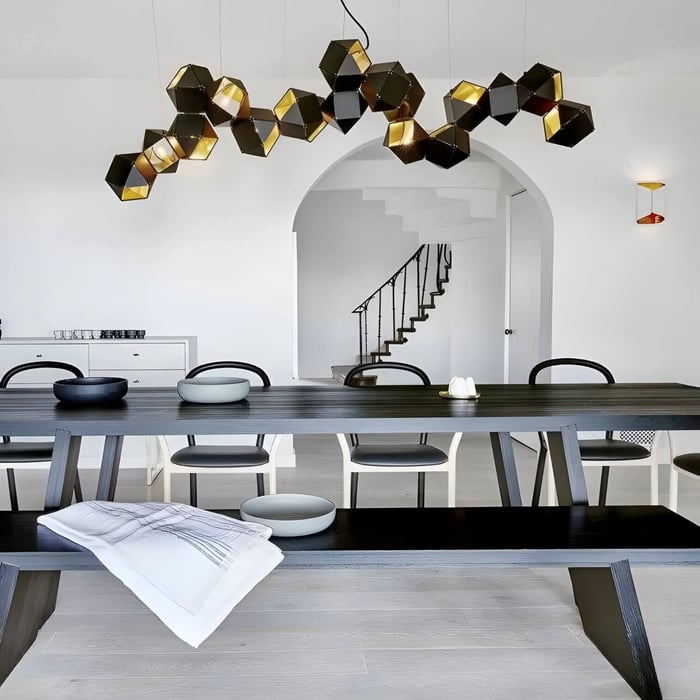
Where Should Chandeliers Be Installed For The Best Results?
Chandeliers work best when they are visually connected to the layout of the room. Placement affects not just brightness but how balanced the space feels.
Effective positions include:
Centred above dining tables
Over seating areas in living rooms
In stairwells or entrance halls
In large bedrooms where bedside lighting is already present
In long spaces, a chandelier can be paired with other fittings, such as pendant lights, to maintain even light distribution without repetition.
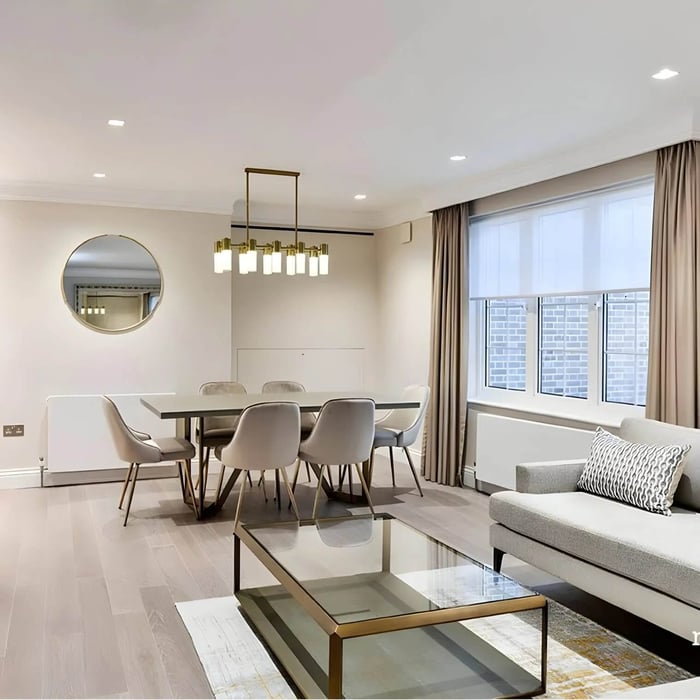
How Do Chandeliers Fit Into Layered Lighting?
Chandeliers should be part of a layered lighting plan rather than the only light source. Layering combines ambient, task, and accent lighting to make a room adaptable throughout the day.
A chandelier provides ambient light, while wall lights reduce shadows and lamps add warmth at eye level. This combination prevents glare and creates a more relaxed atmosphere in the evening.
Using dimmers further improves flexibility, allowing chandeliers to shift from functional brightness to soft background light.
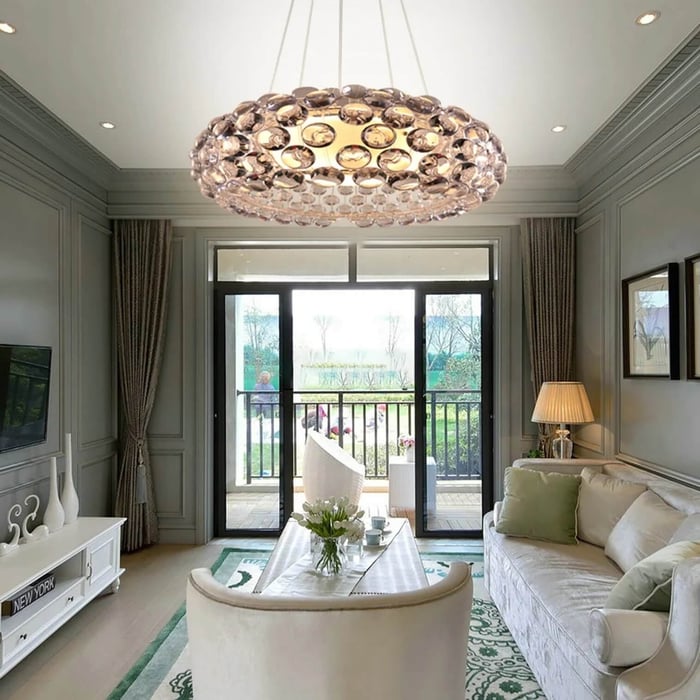
Chandeliers Ideas For Tricky Rooms
Some rooms are difficult to light evenly, but the right chandelier can help solve common issues.
Small rooms
Open-frame or glass chandeliers allow light to spread without feeling heavy. Reflective finishes help brighten the space without increasing wattage.
Low ceilings
Flush or semi-flush chandeliers keep visual weight close to the ceiling while still adding character.
Awkward layouts
In open-plan spaces, chandeliers can define dining or seating zones, creating structure without walls.
Dark rooms
Designs with lighter materials or finishes work particularly well alongside alabaster lighting, which naturally soften and diffuse illumination.
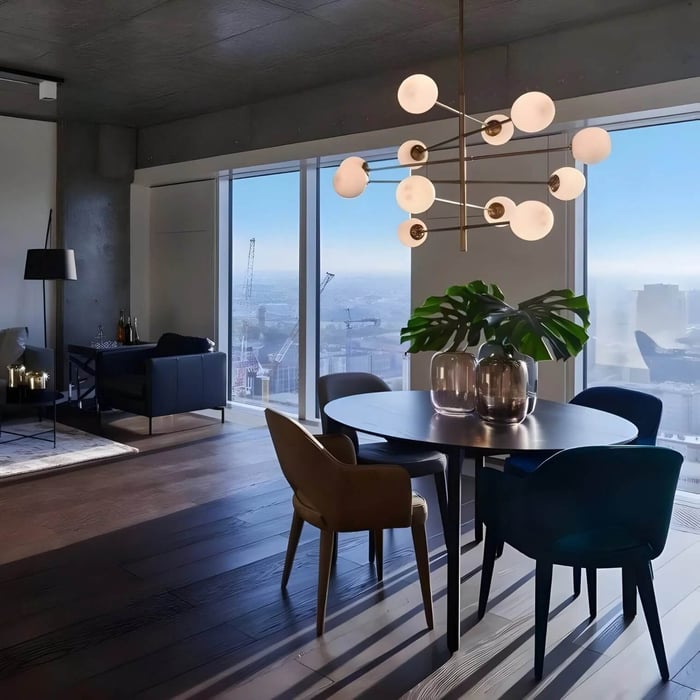
How Do You Choose The Right Chandelier Style?
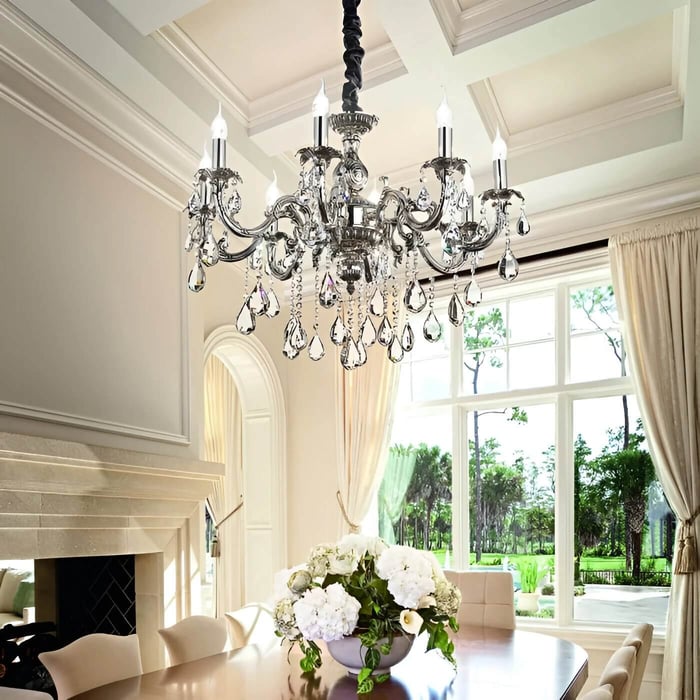
Chandelier style should respect the architecture of your home before personal taste is layered in. When the shape and finish suit the room’s features, the whole space feels more cohesive and intentional.
Contemporary homes suit clean lines, open frames, and sculptural shapes
Period properties benefit from classic silhouettes and warmer metal finishes
Transitional interiors work well with simple designs in refined, timeless materials
Open-plan spaces often suit lighter, airier styles that don’t visually crowd the room
Rooms with strong features (like beams or ornate cornicing) suit simpler fittings that won’t compete
Mixing styles carefully often produces a more considered result than strict matching.
How Bright Should Chandeliers Be?
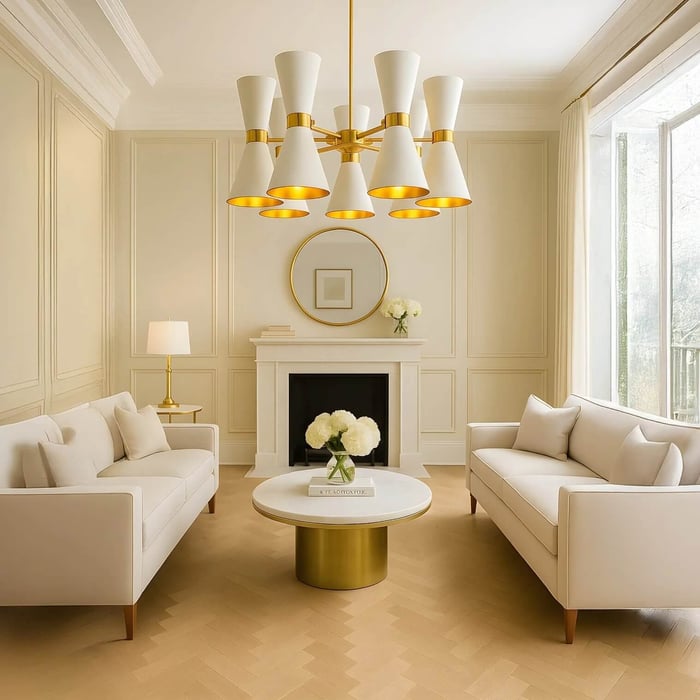
Chandeliers should create comfortable ambient light rather than overpowering brightness. Light output depends on room size, ceiling height, and supporting fixtures.
As a general guide:
Living areas feel best with warm light around 2700-3000K
Dining spaces benefit from dimmable options
Bedrooms require softer output supported by lamps
Hallways and landings suit a moderate glow that avoids harsh hotspots, especially when paired with wall lights
In open-plan rooms, aim for even ambient light across zones and use dimmers to fine-tune brightness throughout the day
High brightness without layering often leads to glare and discomfort.
What Mistakes Should You Avoid When Choosing Chandeliers?
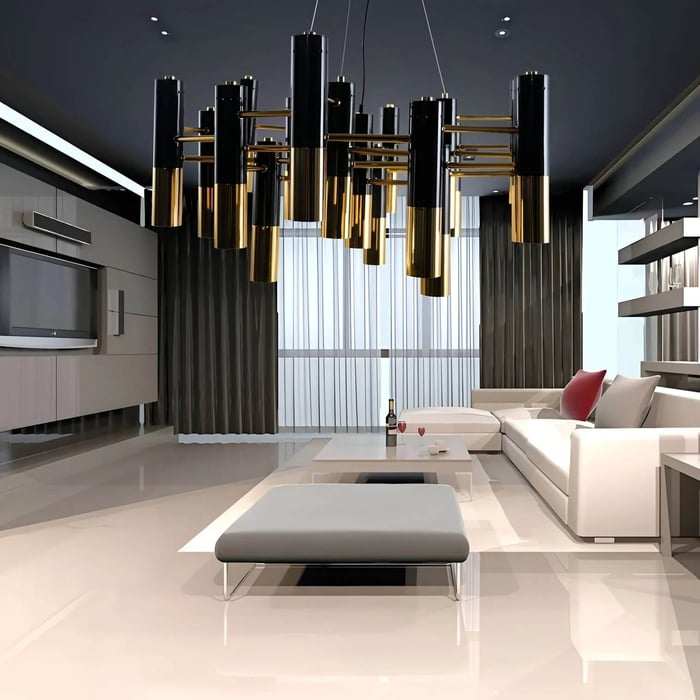
The most common mistake is choosing a chandelier purely for appearance without considering scale, ceiling height, or placement. Other frequent issues include:
Hanging the fitting too high or too low
Ignoring dimmer controls
Using cool white bulbs in living spaces
Relying on a single ceiling fixture as the only light source
Choosing a design that feels too bulky for the room’s layout
Avoiding these errors ensures the chandelier enhances the room rather than creating lighting problems.
Do Brand Quality And Materials Matter?
Quality matters more than most people expect, because it affects both light performance and long-term reliability. Well-made chandeliers distribute light more evenly, feel sturdier in daily use, and are less likely to develop rattles or loose fittings over time. Better construction also tends to mean cleaner joins, smoother finishes, and a more refined look when the lights are off as well as on.
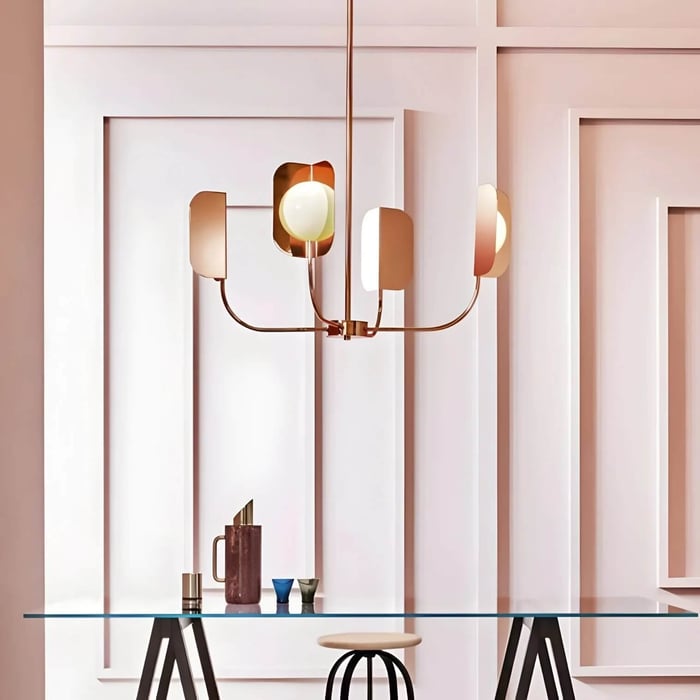
Materials make a noticeable difference to the atmosphere a fitting creates. Glass and crystal can lift brightness and add sparkle, while fabric or frosted shades soften glare and make a room feel calmer. Metal finishes also play a role, with polished surfaces reflecting more light and matte finishes giving a quieter, more modern feel.
Brand choice matters because it often reflects consistency in design, safety, and build standards. Established names such as Ideal Lux are known for pairing attractive styling with dependable construction, which is exactly what you want for a piece that’s installed overhead. If you’re unsure, look for clear specifications, quality lampholders, and a reassuring weight and finish when handled.
Conclusion
FAQs
What size chandelier should I choose for my room?
Measure the room and use the combined length and width to guide diameter. This keeps the chandelier proportionate.
Can chandeliers be used in modern interiors?
Yes, many contemporary designs suit modern homes perfectly. Clean lines and subtle finishes work especially well.
Are chandeliers suitable for small spaces?
They are, provided the scale is correct. Compact designs can add interest without crowding.
Should chandeliers always be centred?
Not always. In open-plan rooms, placement can be used to define zones.
Do chandeliers need dimmers?
Dimmers are strongly recommended. They improve comfort and flexibility.
Can chandeliers work in bedrooms?
Yes, especially in larger bedrooms. They should be paired with bedside lighting.
How high should a chandelier hang above a table?
Around 75-90cm above the tabletop is ideal.
Are LED bulbs suitable for chandeliers?
Yes, they are efficient, long-lasting, and available in warm tones.
Can chandeliers improve dark rooms?
Yes, reflective materials and open designs help distribute light more effectively.
How long should a chandelier last?
With good materials and LED bulbs, chandeliers can last many years with minimal upkeep.