
Table of Contents
- Introduction
- Quick Summary
- How Do You Choose Bedroom Lights That Feel Comfortable Every Day?
- Why Does Room Size Change What Bedroom Lights You Should Pick?
- What Bedroom Lights Options Work Best For Small Rooms?
- How Much Brightness Do Bedroom Lights Need?
- What Colour Temperature Should Bedroom Lights Be?
- How Do You Layer Bedroom Lights So The Room Looks Better?
- Step-by-Step: How To Choose Bedroom Lights Based On Your Routine
- How Do You Match Bedroom Lights With Décor Without Overthinking It?
- Where Should Bedroom Lights Be Placed To Avoid Glare And Shadows?
- What Are The Best Interior Uses For Bedroom Lights Beyond “Just Lighting The Room”?
- What Mistakes Should You Avoid When Choosing Bedroom Lights?
- Conclusion
- FAQs
Introduction
Choosing the right bedroom lights comes down to comfort, function, and how your room is put together. The bedroom is where you start and end your day, so the lighting should feel gentle when you’re winding down and clear enough when you’re getting dressed or making the bed. Well-planned lighting can make the space feel calmer, look more polished, and work better for everyday routines. It also helps reduce harsh shadows and glare, which is especially important around the bed and mirrors.
In this guide, I’ll show you how to choose bedroom lights that suit your room size, layout, and the way you use the space. We’ll look at how to balance ambient, task, and accent lighting so you’re not relying on one overhead fitting. You’ll also learn where to place lights for the best results and how to match them with your décor without disrupting the flow of the room. By the end, you’ll be able to create a bedroom lighting plan that feels practical in the daytime and relaxing at night.
Quick Summary
Choose a warm, relaxing base light for your bedroom lights, then add focused lights where you need them
Small rooms benefit from compact fittings and wall-mounted options
Larger rooms feel best when lighting is spread across zones, not concentrated in one spot
Place lights to avoid glare and harsh shadows, especially around the bed and mirrors
Use dimmers to shift from daytime practicality to evening calm
How Do You Choose Bedroom Lights That Feel Comfortable Every Day?
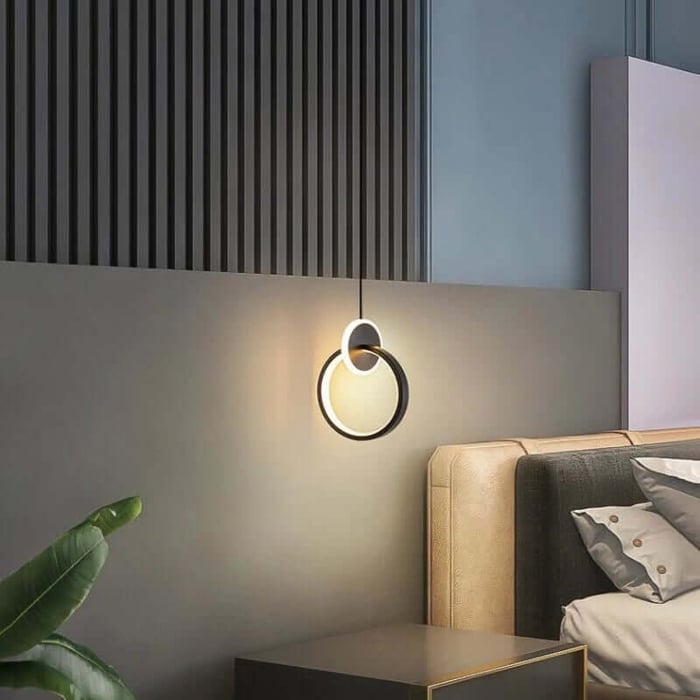
The best way to choose bedroom lights is to plan for three things: overall brightness, task areas, and a softer evening mood. When bedroom lights are chosen with these layers in mind, a single ceiling fitting no longer has to do all the work. Instead, aim for a main light that gives comfortable background brightness, then add lights for reading, wardrobes, and mirrors, and finish with a lower-level option for winding down.
This approach also helps the room feel more spacious and thoughtfully planned, even if the décor is simple. By spreading light across different zones, you avoid harsh shadows and reduce the need to rely on one bright overhead fitting. The result is a bedroom that feels practical in the morning and calmer in the evening.
Why Does Room Size Change What Bedroom Lights You Should Pick?
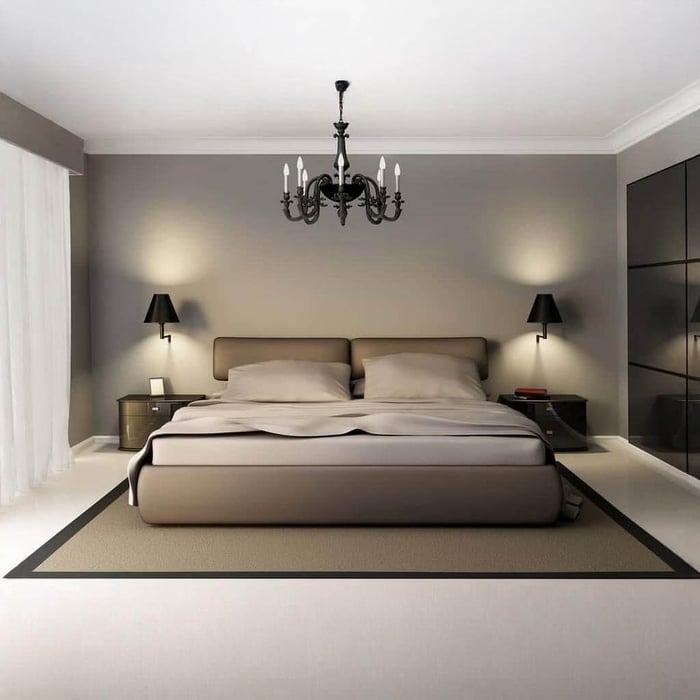
Room size affects how light spreads, how bright fittings feel, and how visually “heavy” certain styles look, so choosing bedroom lights needs a slightly different approach depending on the space. In a small bedroom, a large pendant can dominate the room, and an overly bright lamp can feel harsh because there’s nowhere for the light to soften. In a larger bedroom, one fitting can leave corners dim and make the room feel flat.
As a rule:
Smaller rooms suit compact fittings, softer diffusion, and fewer “big” statement pieces
Larger rooms suit layered lighting and separate zones (bedside, dressing, seating)
Low ceilings often look best with flush or semi-flush fittings rather than long drops
Rooms with darker wall colours or limited daylight often need extra layers of light to prevent the space feeling gloomy
Narrow or awkward layouts benefit from wall lights and corner lighting to even out shadows and make the room feel more balanced
What Bedroom Lights Options Work Best For Small Rooms?
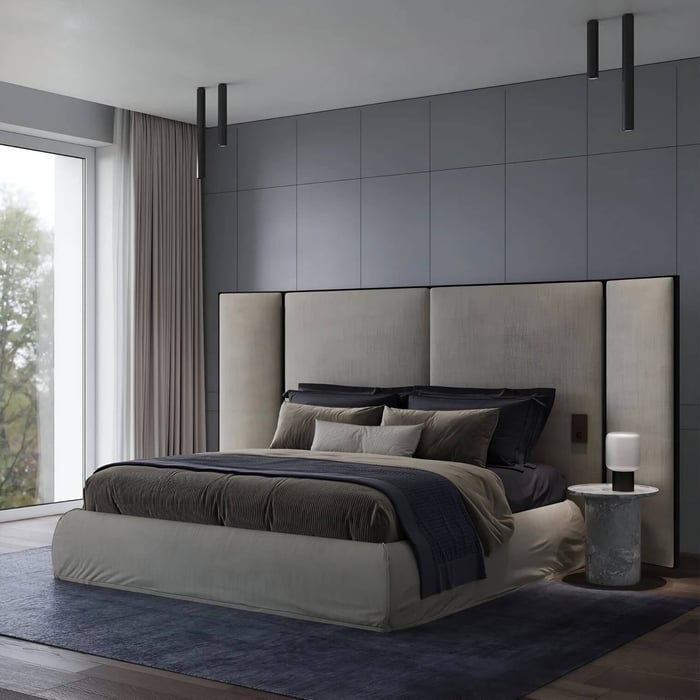
For small bedrooms, choose fittings that save space and reduce clutter while still giving you control over brightness. Wall-mounted options are often the easiest win because they free up bedside tables and can be aimed precisely.
Good choices include:
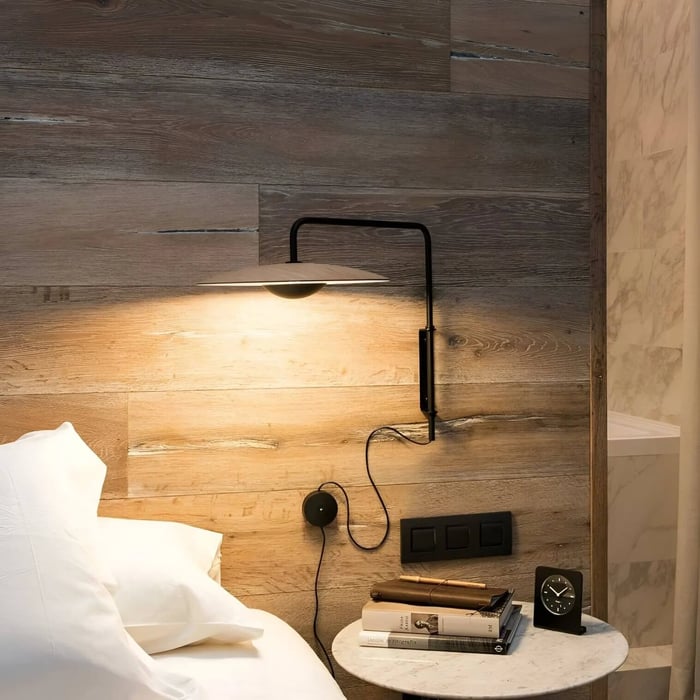
Wall lights or swing-arm reading lights beside the bed
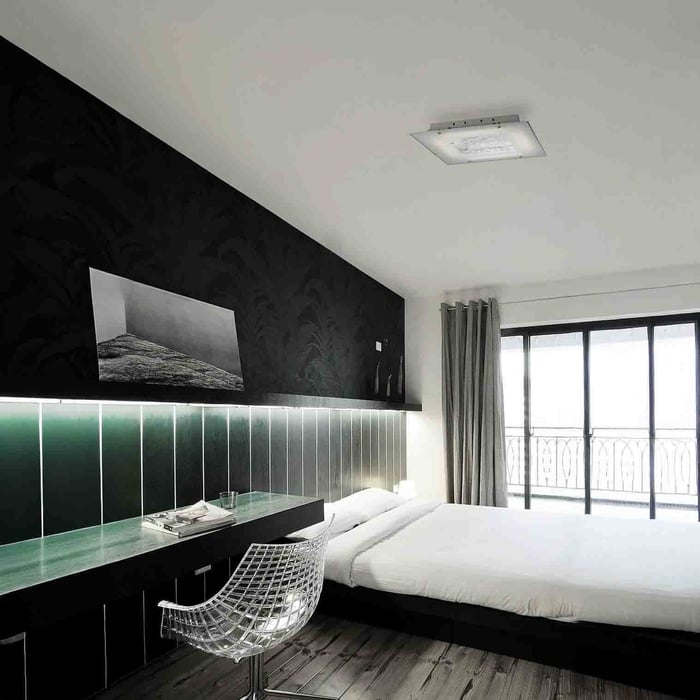
Flush or semi-flush ceiling fittings to keep the ceiling line clean
Slim bedside lamps with shades that soften glare
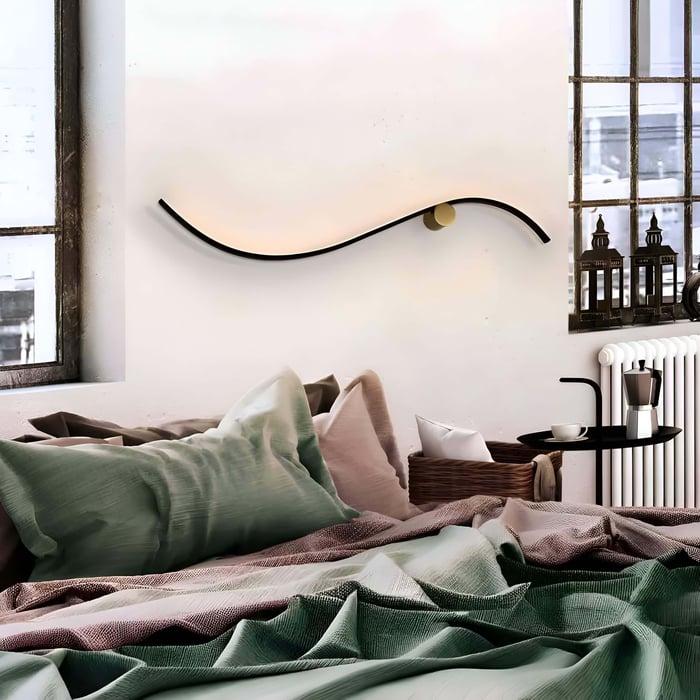
Discreet LED strips under shelves or behind a headboard for a gentle glow
One common mistake in compact rooms is relying on a bright central light and nothing else. That can make the room feel stark at night and doesn’t help much when you want light only on one side of the bed.
How Much Brightness Do Bedroom Lights Need?
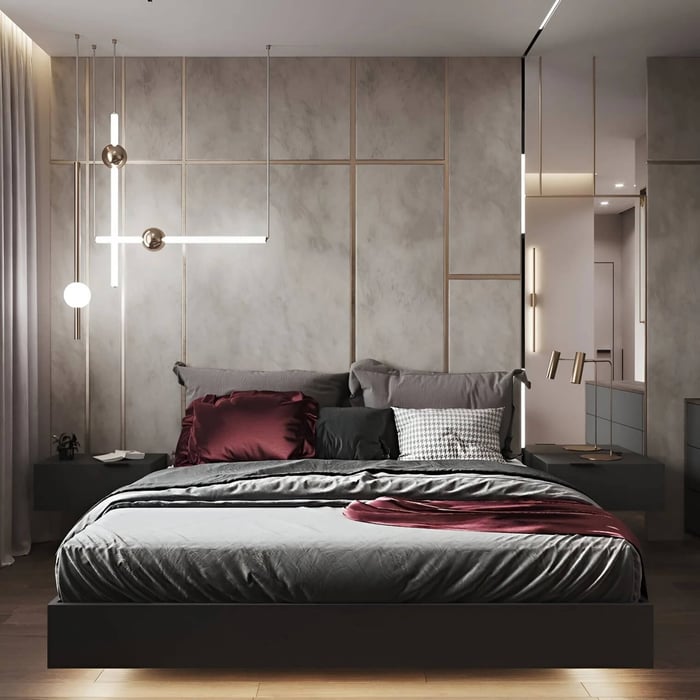
Most bedrooms need softer overall brightness than kitchens or workspaces, with targeted light where tasks happen. For the main light, you want comfortable, even illumination. For bedside reading, you want focused light that doesn’t spill across the whole room. For wardrobes and mirrors, you want clearer light that reduces shadows.
A practical way to think about it is:
Ambient lighting: soft and spread out, used most often
Task lighting: brighter and directed, used for reading or dressing
Accent lighting: low-level and atmospheric, used in the evening
If you’ve ever felt your bedroom was either “too dim” or “too bright,” it’s usually because one fitting is trying to do all three jobs.
What Colour Temperature Should Bedroom Lights Be?
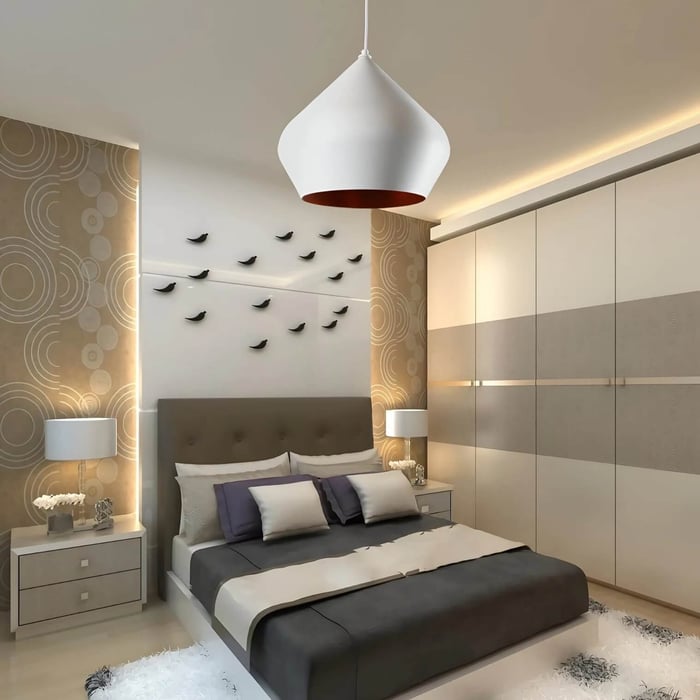
Warm white light is usually best for bedrooms because it feels relaxing and flattering. Cooler tones can look harsh in a bedroom and make the space feel less restful, especially at night.
For most bedrooms, aim for:
Warm white for the main light and bedside lights
Slightly brighter warm light around wardrobes if needed
Avoid cool white near the bed unless the room is used as a workspace
If you have a dressing table or a mirror you use in the morning, you can still keep things warm while improving clarity by positioning lights carefully rather than switching to a cold tone.

How Do You Layer Bedroom Lights So The Room Looks Better?
Layering means using more than one type of light so you can change the feel of the room without changing the furniture. It also helps reduce shadows, adds depth, and makes the space easier to use.
A strong lighting plan usually includes:
A ceiling fitting or indirect lighting for your base layer
Bedside lighting on both sides (even if one side is used more)
A dressing or wardrobe light so mornings are easier
A softer “evening” option such as a shaded lamp or hidden LED
Layering is also what stops a room feeling “unfinished.” Even a beautiful fitting can look underwhelming if it’s the only source of light.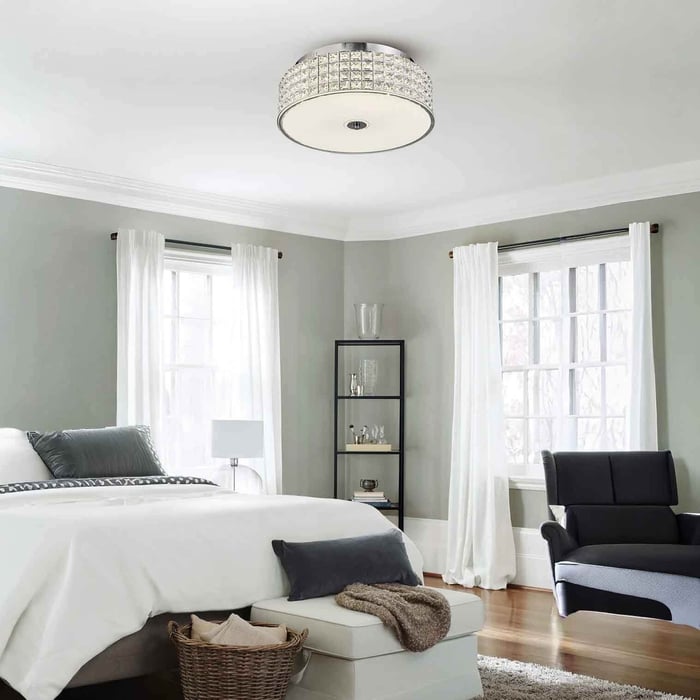
Step-by-Step: How To Choose Bedroom Lights Based On Your Routine
Start with how you use the room, then match fittings to each need to make sure your bedroom lights support everyday comfort. This prevents wasted money on lights that look good but don’t work well.
Step 1: Measure the space and note ceiling height
Write down the room dimensions and check whether the ceiling is low, standard, or high. This helps you avoid fittings that feel oversized or hang too low.
Step 2: Mark out key zones
Most bedrooms have at least two zones: sleeping and dressing. Some also have a desk, a reading chair, or a vanity area.
Step 3: Choose your ambient light
Pick a ceiling light that gives comfortable overall brightness without glare. Shades, diffusers, and frosted glass help soften the effect.
Step 4: Add bedside task lighting
If you read in bed, choose a light that directs illumination onto the page, not into your eyes. Wall lights work especially well here.
Step 5: Light the wardrobe and mirror properly
Shadows make it harder to choose outfits and can be frustrating in the morning. Consider lighting near the wardrobe or a light that supports the mirror area.
Step 6: Add a softer evening layer
This might be a shaded lamp, a dimmed wall light, or subtle LED. The goal is a calm glow that’s easy on the eyes.
Step 7: Check control and switching
Make sure switches are convenient, especially from the bed. Dimmers are worth it if you want the room to shift from practical to restful.
How Do You Match Bedroom Lights With Décor Without Overthinking It?
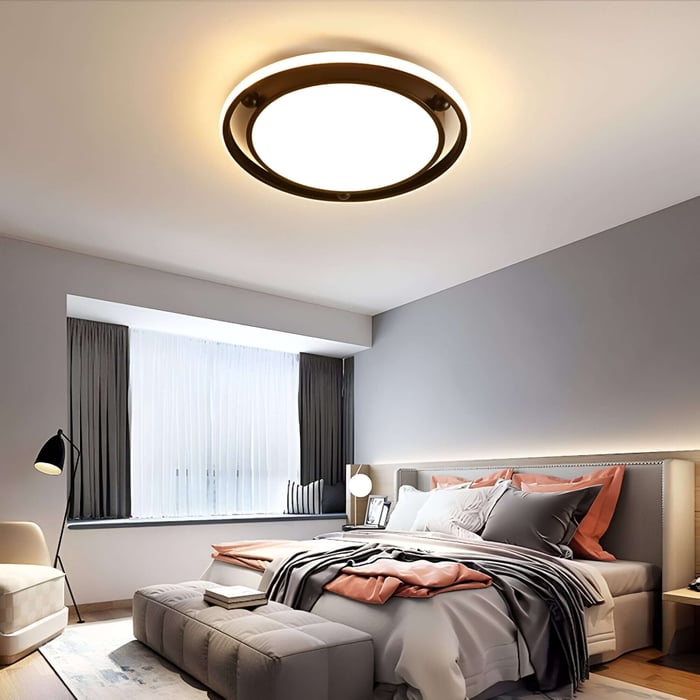
To match bedroom lights with décor, focus on finishes, shapes, and how the light itself looks in the room. The fitting should suit your style, but the glow it creates matters just as much.
Here are simple ways to keep things cohesive:
Pick a finish that echoes your handles, frames, or side tables (brass, chrome, matte black, aged metal)
Match the “visual weight” of the fitting to the furniture (chunky in a bold room, slim in a minimal room)
Use shades or glass that complement your textiles and wall colour
Keep the light tone warm so the room feels inviting
If you’re aiming for a classic, decorative look, Elstead Lighting is often a strong match because the styles tend to suit traditional and transitional bedrooms without looking overly fussy.
Where Should Bedroom Lights Be Placed To Avoid Glare And Shadows?
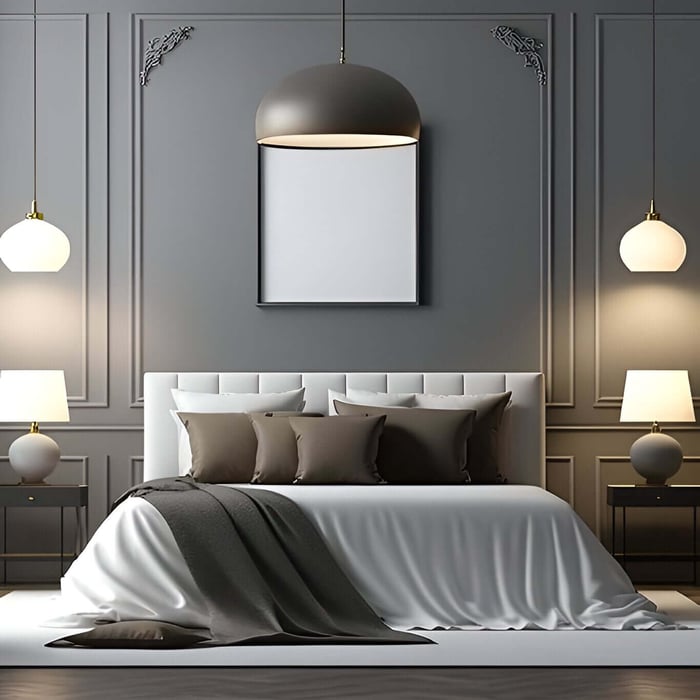
Placement is what makes lighting feel comfortable. Even the right fitting can be annoying if it’s installed in the wrong spot.
Helpful placement tips:
Bedside wall lights should sit roughly at shoulder height when seated in bed
Avoid placing a downlight directly above your pillow line
If you use a mirror often, place light to either side or slightly in front, not only above
For wardrobes, aim light into the storage area rather than behind you
If you’re updating other rooms too, it helps to keep the lighting logic consistent across the home. For example, the same approach to glare and mirror lighting is useful when planning bathroom lights, and the same layering idea works beautifully for living room lights where you want multiple moods.
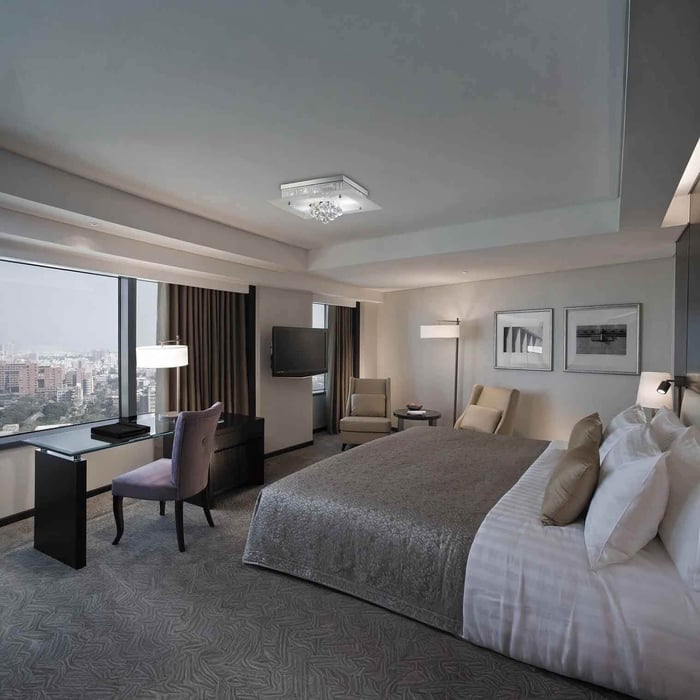
What Are The Best Interior Uses For Bedroom Lights Beyond “Just Lighting The Room”?
Great lighting does more than make the room bright enough to see. It can make the bedroom feel calmer, larger, and more put together, even with simple décor.
Practical and stylish uses include:
Creating a soft glow behind a headboard to add depth
Highlighting textured walls, panelling, or artwork
Using a warm lamp in the evening instead of overhead light
Adding a low-level night light so you can move around without waking fully
If you enjoy hosting and want a similar warm atmosphere elsewhere, the same principles apply to dining room lights, where controlled brightness and a flattering glow help the room feel welcoming.
What Mistakes Should You Avoid When Choosing Bedroom Lights?
Most bedroom lights problems come from using one fitting to do everything or choosing brightness without thinking about comfort.
Avoid these common issues:
One central ceiling light with no bedside or accent lighting
Bulbs that are too cool or too bright for a relaxing room
Lights positioned to shine into your eyes when lying down
No dimmers, making the room feel “on or off” rather than adaptable
Ignoring wardrobe and mirror lighting, leading to heavy shadows
A bedroom should support rest first, so comfort always wins over harsh brightness.
Conclusion
Choosing bedroom lights is easiest when you plan around room size, daily routines, and the mood you want at night. Start with a comfortable ambient light, add focused task lighting for reading and dressing, then finish with a softer layer that helps the room feel calm in the evening. Pay attention to warm light colour, sensible placement to avoid glare, and finishes that suit your décor. With these choices working together, your bedroom becomes more practical in the morning, more relaxing at night, and more cohesive overall.
FAQs
How many lights should a bedroom have?
Most bedrooms work best with at least three light sources: one ambient, one task and one accent. Larger rooms may need more to avoid dark corners.
Are wall lights better than bedside lamps?
Wall lights save space and create a cleaner look, especially in smaller rooms. They’re ideal if positioned correctly for reading.
Should bedroom lights be on dimmers?
Yes, dimmers are highly recommended because they let you adjust brightness for different times of day and moods.
Can I mix different light styles in one bedroom?
You can, as long as finishes and light colour are consistent. Mixing styles works best when there’s a unifying element.
What ceiling light is best for a low bedroom ceiling?
Flush or semi-flush ceiling lights are best as they provide good light without reducing headroom.
Is LED lighting suitable for bedrooms?
LED lighting is ideal because it’s energy-efficient, long-lasting and available in warm tones suitable for bedrooms.
Where should reading lights be placed?
Reading lights should be positioned slightly above shoulder height and angled towards the book, not the eyes.
Can bedroom lights affect sleep quality?
Yes, overly bright or cool lighting can interfere with sleep. Warm, dimmable lights support better rest.
What lighting works best in a guest bedroom?
Guest bedrooms benefit from simple, intuitive lighting with clear bedside controls and soft ambient light.
When should accent lighting be used in bedrooms?
Accent lighting works best in the evening to create atmosphere and reduce reliance on main lights.